
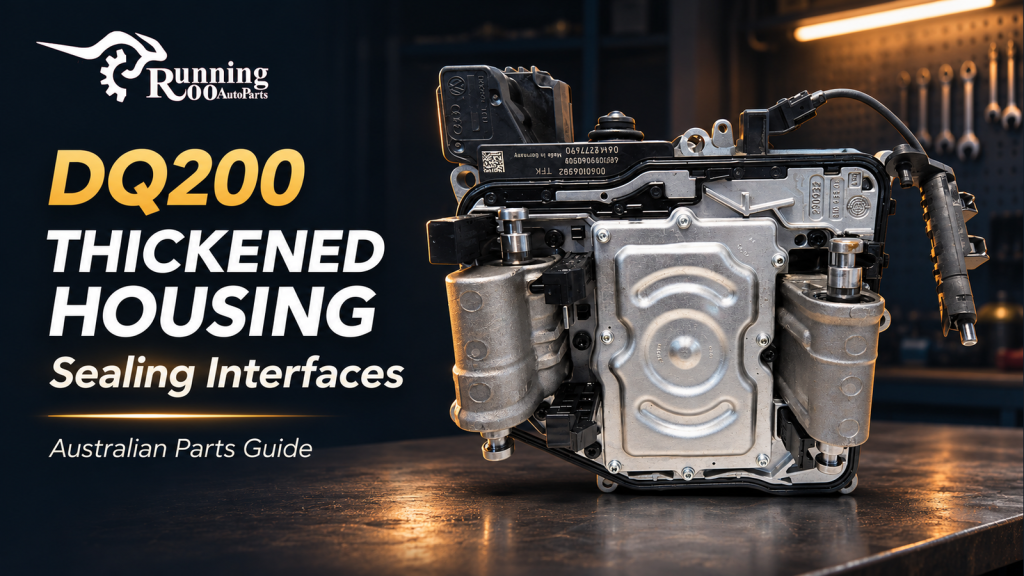
A DQ200 thickened valve body is easier to assess when the housing, accumulator and sealing interfaces are treated as separate parts of the purchasing conversation. A reinforced casting can be an important feature of an offered repair assembly, but the customer still needs to know what connects to it, which components are included and how the complete unit is prepared. “Thicker” describes one feature; it is not a complete component list.
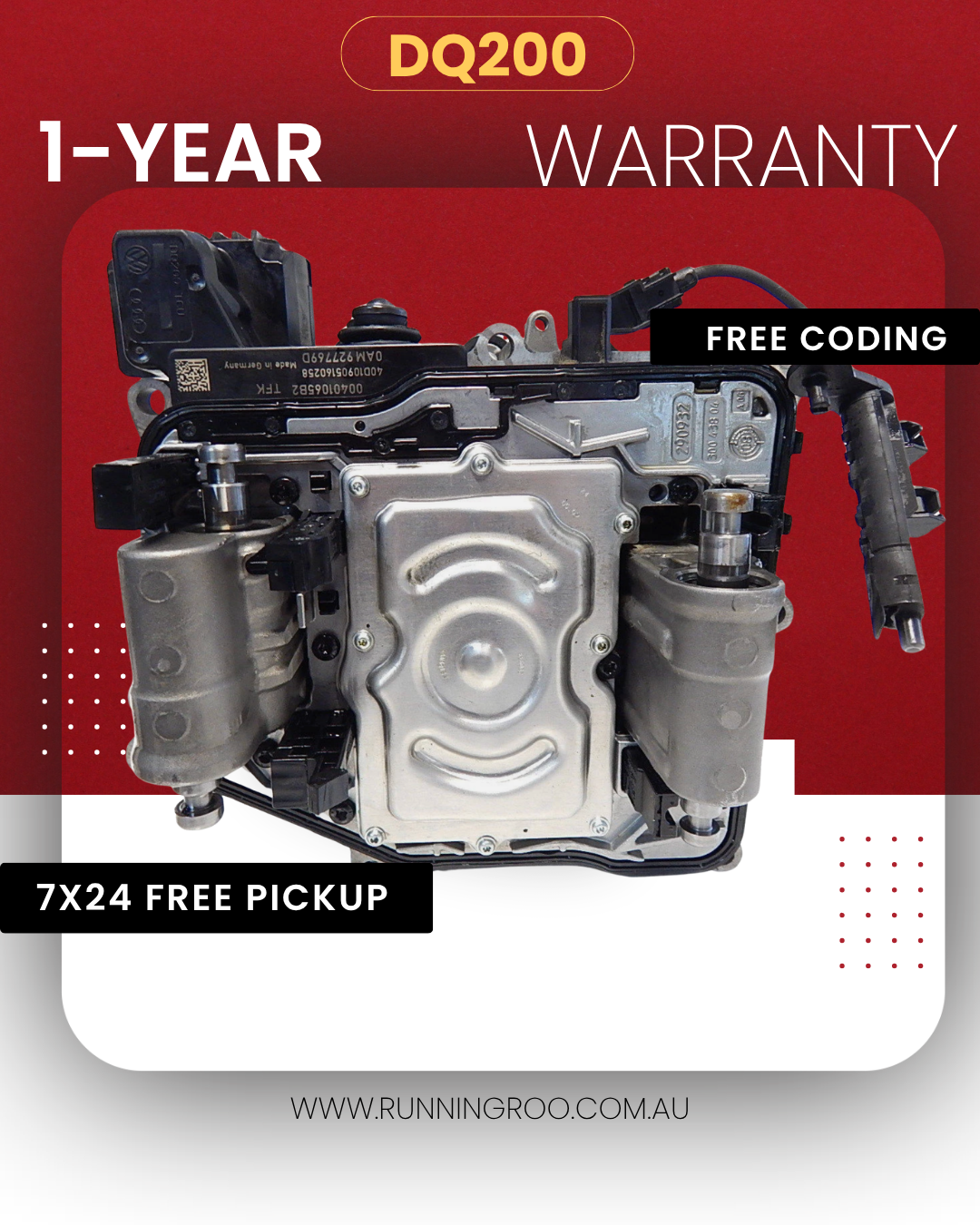
For Australian buyers, this guide concentrates on those physical boundaries. It explains the questions worth asking before ordering a reinforced DQ200 assembly from RunningRoo, especially when a workshop has identified damage around the hydraulic housing. It does not reproduce the existing wall-measurement guide, provide thread dimensions or teach accumulator removal. The intended outcome is a better specified purchase supported by a professional diagnosis.
Give each component its own name
In an informal conversation, “accumulator”, “valve body” and “mechatronic” can be used as though they describe the same item. That creates problems when one quotation is for a housing and another is for an assembly containing hydraulic and electronic components. Ask the workshop to identify the damaged component precisely and ask the supplier to identify the supplied component just as precisely.
Volkswagen's 34J6 campaign repair information distinguishes hydraulic components and includes instructions for trained technicians working on the mechatronic assembly. The document demonstrates that the accumulator and its interfaces require controlled professional handling. It is a campaign document for specified vehicles, not a universal procedure for every Australian DQ200 or approval of an aftermarket thickened housing. Volkswagen 34J6 campaign repair information (US scope; not Australian eligibility)
Separate structural condition from sealing condition
A useful enquiry asks whether the workshop has identified a structural defect, an issue at an interface, or an unresolved hydraulic concern. These descriptions should not be collapsed into the single word “leak”. Ask the technician to name the location and explain the evidence available. A visible exterior stain, a diagnosed internal concern and a damaged part found during authorised disassembly are different observations.
The customer does not need to identify a sealing surface by touch or examine a pressurised unit. Obtain the technician's photographs and written conclusion where available. If the diagnosis is not complete, keep the parts enquiry provisional. A photograph can document an identified feature, but it does not independently establish the full condition of every component that will be reused or supplied with the repair.
The interface matters as much as the component label
When two components meet, the relevant questions include whether they are the correct matched parts, whether the mating areas are suitable and whether the applicable sealing components are included. These are questions for the supplier and installing specialist to answer using the actual assembly and current service information. They should not be resolved by comparing a low-resolution product image with an internet diagram.
Do not infer compatibility from external similarity. A housing can look familiar while still needing confirmation of its complete reference and intended assembly. Likewise, a casting mark shown in a photograph may identify the casting rather than the complete programmed mechatronic unit. Record the full reference in its proper context and let the supplier reconcile it with the VIN, gearbox identity and fitted controller.
| Item in the enquiry | What to confirm | Evidence to request |
|---|---|---|
| Reinforced housing | Exact modified component and supplied condition | Product reference and order-specific description |
| Accumulator | Whether included and which matching assembly is intended | Written contents confirmation |
| Seals and related consumables | Included items and installer-supplied items | Separate parts list |
| Mating interfaces | Assessment within the agreed repair scope | Workshop findings, where applicable |
| Electronic controller | Identity and preparation included with the unit | Controller reference and programming agreement |
| Completed assembly | What checks accompany the supply | Actual test or inspection scope, not a generic slogan |
What the linked product actually supplies
The linked RunningRoo website offer lists a DQ200/0AM mechatronic assembly with valve body and TCU. Its references include 0AM325065S for the valve body and 0AM927769D for the controller. The package description calls the assembly remanufactured. This is therefore a different purchase from a loose casting or a bag of sealing components, even if the images or search results use similar words.
Ask RunningRoo to confirm the contents for the particular order, including the reinforced housing feature, accumulator-related components and any supplied seals or preparation. Do not add components to the order description merely because they appear in a general workshop illustration. If a component is important to the agreed repair, have its inclusion or exclusion written down before the installation appointment is fixed.
Why photographs need accompanying descriptions
Product photographs are useful for recognising the advertised assembly and discussing a visible feature. They are less useful for proving unseen surfaces, confirming a complete inventory or determining the preparation of electronic components. The most productive use of a photograph is to attach it to a specific question: “Is this the housing feature included in my confirmed order?”
The user-supplied measurement photograph discussed in earlier RunningRoo content illustrates a wall measurement on a photographed component. That is a separate subject from the condition and suitability of every interface on a delivered assembly. Do not infer seal dimensions, thread compatibility or a service-life increase from that picture. A well-documented order links the photograph to a supplied part description and an installer-approved application.
Keep the removed part and replacement identity traceable
Where the workshop records the original assembly before removal, retain that identification with the job paperwork. The replacement should have a corresponding supply record. This is especially helpful if a vehicle has had earlier mechatronic work, because a model name or registration search may not fully explain the hardware currently fitted. Ask the installer to reconcile the installed unit with the vehicle record.
Traceability should remain practical. Clear reference photographs, the VIN, gearbox code, relevant engine code and the supplier's invoice are more useful than a folder of unrelated internet images. If a label is unreadable, tell the supplier rather than guessing a suffix. A single uncertain character can matter when checking an assembly, even though the product family name appears to be correct.
Do not turn this into a home inspection procedure
The mechatronic assembly is not an appropriate place for improvised pressure release, trial tightening or exploratory removal. The manufacturer campaign document is directed to trained technicians with appropriate equipment. This article deliberately leaves the handling and inspection sequence to the qualified workshop using the procedure applicable to the actual unit. Volkswagen 34J6 campaign repair information (US scope; not Australian eligibility)
From the customer's perspective, the useful action is to request a documented assessment and agree on the repair scope. Do not ask a family member to open the assembly to obtain a better picture for a parts enquiry. If the workshop needs additional information from RunningRoo, arrange a direct technical clarification tied to the exact order and vehicle identity.
Clarify remanufacturing without making assumptions
A remanufactured assembly can contain components with different preparation histories. The word does not tell the buyer which individual items are new, retained, renewed or tested. Ask the supplier to explain the actual process and documentation provided for this offer. Avoid describing the entire unit as factory-new unless the supplier has explicitly confirmed that condition for the order.
Similarly, original-looking marks on a casting do not establish that the whole offered assembly is an untouched factory unit or a manufacturer-approved modification. Keep branding, casting identity, refurbishment and the reinforced feature separate in the written description. Accurate language protects the customer and helps the installer understand what has actually been supplied.
A sealing-related enquiry is still a complete vehicle enquiry
Even when the workshop has identified a specific housing-area defect, fitment remains necessary. Send the VIN, engine code, gearbox identification, full OE references and professional diagnosis. Explain whether the vehicle has had previous gearbox or controller replacement. The exact mechanical repair and the electronic preparation must be compatible with the fitted system rather than merely with a broad seven-speed DSG label.
The linked offer's programming wording also needs confirmation: its title refers to programming, while the description requests VIN information where programming is required and includes unprogrammed-unit wording. Ask what is prepared before dispatch and what remains to be performed at the vehicle. Do not allow a detailed discussion of seals to obscure this separate requirement for the complete mechatronic purchase.
Plan for missing items before the vehicle is dismantled
Have the installer compare its required materials with the supplier's confirmed contents. Anything not explicitly included should be placed on a separate list for checking. That may include job-specific consumables or additional parts identified during assessment; the exact list must come from the applicable procedure and the vehicle's condition. Do not use this article as a universal installation shopping list.
Agree how additional findings will be handled if the workshop discovers something beyond the original diagnosis. A short approval process is better than assuming the purchased assembly covers every possible issue. The customer should understand which work was authorised, what would require another decision and whether the vehicle may need to remain at the workshop while that decision is made.
What a clear order confirmation looks like
A useful confirmation names the linked product, vehicle identity, supplied condition and assembly references. It describes the reinforced component, lists any agreed included items, states the electronic preparation and identifies outstanding installer responsibilities. That is more informative than a message saying only “yes, DQ200 fits”. Keep the confirmation with the invoice and workshop recommendation.
For Melbourne customers, confirm availability before arranging Blackburn VIC pickup by appointment. For other Australian locations, discuss dispatch after the part and preparation are settled. RunningRoo's Australian-operated service and friendly support can make those checks easier, but neither a quick response nor fast dispatch replaces the need to match the assembly and repair scope correctly.
Document the completed job in the same language
The final invoice should identify the actual assembly fitted and the work performed. If the workshop's original finding concerned a particular housing or interface, ask it to explain how the agreed work addressed that finding. This keeps the repair record connected to the original complaint rather than ending with a vague statement that the DSG was upgraded.
Keep promises about future performance proportionate to the evidence. A reinforced housing feature does not establish unlimited service life, additional torque capacity or immunity from unrelated faults. A precise description of the supplied part, the installation and the completion checks is more useful to a future owner or technician than a broad claim that the gearbox has been permanently fixed.
Related RunningRoo video
Full Assembly and Testing Process of VW DQ200 Mechatronic Unit#runningrooautoparts. This channel video provides related educational context. It is not proof that the filmed component is the exact supplied item, a vehicle-specific diagnosis or a substitute for current manufacturer procedures.
Frequently asked questions
Are the accumulator and reinforced housing the same part?
They should be named separately in the enquiry. Ask the supplier and workshop to identify the relevant components and the exact scope of the supplied assembly. Informal use of “valve body” can otherwise conceal important differences between a bare component and a complete mechatronic package.
Does a thicker wall prove all sealing interfaces are correct?
No. Wall thickness, component identity and interface condition are separate questions. Confirm the actual assembly and the workshop's assessment. A photograph of one measurement does not establish the suitability of every mating component or the contents of a delivered order.
Can I inspect the accumulator connection myself?
Leave removal and inspection to a qualified specialist using the applicable manufacturer procedure. Request photographs or a written report from that workshop when needed for the enquiry. Do not improvise disassembly or pressure release to identify a part for purchase.
Does the RunningRoo offer include a controller?
The linked website description lists valve body plus TCU and calls the assembly remanufactured. Confirm the exact supplied contents and controller reference for your order. Electronic preparation and vehicle-side work should be agreed separately and recorded in writing.
Should I buy seals separately before asking the installer?
Ask the installer to compare its required materials with the confirmed package first. Buying additional items from a generic list can create duplicates or omit the parts the actual procedure requires. The vehicle-specific repair plan should determine what is ordered.
How do I arrange local supply?
Send RunningRoo the VIN, engine code, gearbox and OE identification, diagnosis and linked offer. Confirm stock, preparation and contents before arranging Melbourne pickup by appointment or Australian dispatch. Friendly support is available to help make the product enquiry clear.
Related RunningRoo reading: DQ200 Thickened Valve Body Australia: Understanding the Reinforced Housing Claim. That article addresses a related but separate question or application; it does not establish interchangeability with this product.
Sources and scope
Offer and stock information checked on 14 November 2026. Retailer descriptions identify the offered contents; the manufacturer sources support the technical points attributed to them within their stated market and model scope. The purchasing examples and suggested questions are editorial guidance. Use current vehicle-specific manufacturer information and professional diagnosis for the actual repair.