
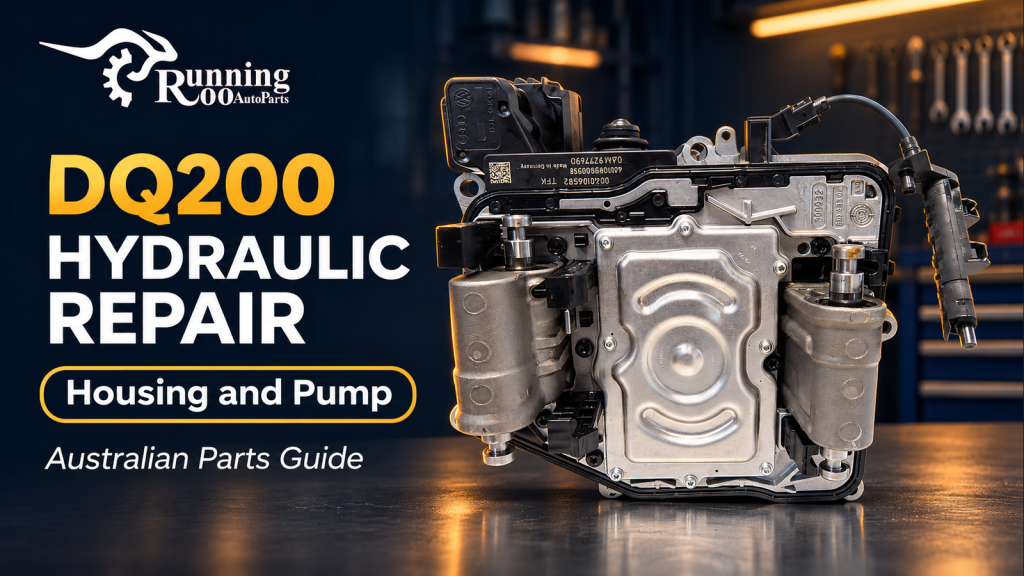
When a workshop recommends a reinforced DQ200 valve body after a confirmed hydraulic housing problem, the next question is often about the pump: should it be retained, assessed separately or included in a replacement assembly? The answer should come from the actual repair findings and the confirmed supply scope. It should not be guessed from the sound of the pump, the word upgraded or a general claim that every pressure fault damages the same components.
This Australian guide focuses on that pump-and-housing boundary. It is intended for owners and workshops discussing a diagnosed repair, not for identifying a fault from a dashboard warning. The practical goal is to make sure the ordered assembly addresses the established problem and that the condition of other relevant components has not been left as an undocumented assumption.
Why the pump belongs in the repair conversation
Volkswagen's original seven-speed DSG presentation describes an electrically driven hydraulic pump and a pressure accumulator in the mechatronic system. That architecture explains why the source of pressure and the components associated with storing and distributing it belong in the same repair assessment. It does not mean that every pump-related observation identifies a defective housing, or that every housing defect proves the pump needs replacement. Volkswagen original seven-speed DSG design (2008)
Keep those two possibilities separate. A technician may confirm a housing-related problem and still need to assess the remainder of the assembly. Alternatively, the report may identify another cause of the hydraulic complaint. The customer should ask what has been established, what remains uncertain and which findings justify the proposed parts. The reinforced feature should be connected to a confirmed need rather than used as a substitute for one.
A pump noise is an observation, not a parts list
Owners may hear a pump or notice a change in operating behaviour and conclude that a motor has failed. A recording can be useful history, but it cannot by itself establish the condition of the pump, the hydraulic circuit or the housing. Let the workshop interpret the observation using the correct manufacturer information and its examination of the vehicle. Do not repeatedly operate a faulty system simply to make a longer recording.
When describing the complaint, record when it happened and what else the vehicle displayed. Avoid adding an assumed cause. “A sound repeated before the warning appeared” is a more useful starting statement than “the pump burnt out because the housing cracked” unless that causal sequence has actually been established. Clear language leaves the technician free to investigate rather than inherit an untested diagnosis.
Ask whether pump condition was assessed directly
A repair recommendation should explain whether the pump was assessed as part of the investigation and what conclusion was reached. Ask the technician to distinguish a confirmed defect from a concern that further checking is required. If the workshop recommends replacing a complete assembly, ask which documented findings make that scope appropriate. There may be a sensible reason, but the customer should understand it.
This guide deliberately gives no universal pump run time, current threshold or pressure specification. Those figures need the correct system version, operating conditions and test procedure. A number taken from a different vehicle or an online discussion can produce a misleading pass or fail result. The useful purchasing evidence is the qualified interpretation of the applicable assessment, including any limitations.
| Workshop finding | Question before ordering | Scope to clarify |
|---|---|---|
| Confirmed housing-related defect | Has the pump and remaining assembly been assessed? | Replacement housing versus supplied assembly |
| Confirmed pump concern | What evidence supports replacement or further investigation? | Pump inclusion and condition |
| Several confirmed defects | Which components does the recommended unit address? | Complete component and preparation list |
| Incomplete diagnosis | What must be checked before committing to parts? | Provisional enquiry only |
| Replacement assembly proposed | What condition and testing accompany the supply? | New, retained or remanufactured components |
Avoid an automatic chain of assumptions
It is tempting to turn a pressure-loss complaint into a simple story: the housing leaked, the pump worked harder, and the pump must now be unusable. That may sound plausible, but the condition of an individual vehicle still requires evidence. Do not present an unverified sequence as the reason a customer must buy additional parts. Ask the workshop what it found and what it can support.
The reverse assumption is equally unhelpful. A housing repair should not be treated as proof that every other component is satisfactory without assessment. The right approach is neither automatic replacement of everything nor automatic reuse of everything. It is a documented repair scope based on the actual findings, the applicable procedure and the condition of the offered replacement assembly.
Understand what RunningRoo is offering
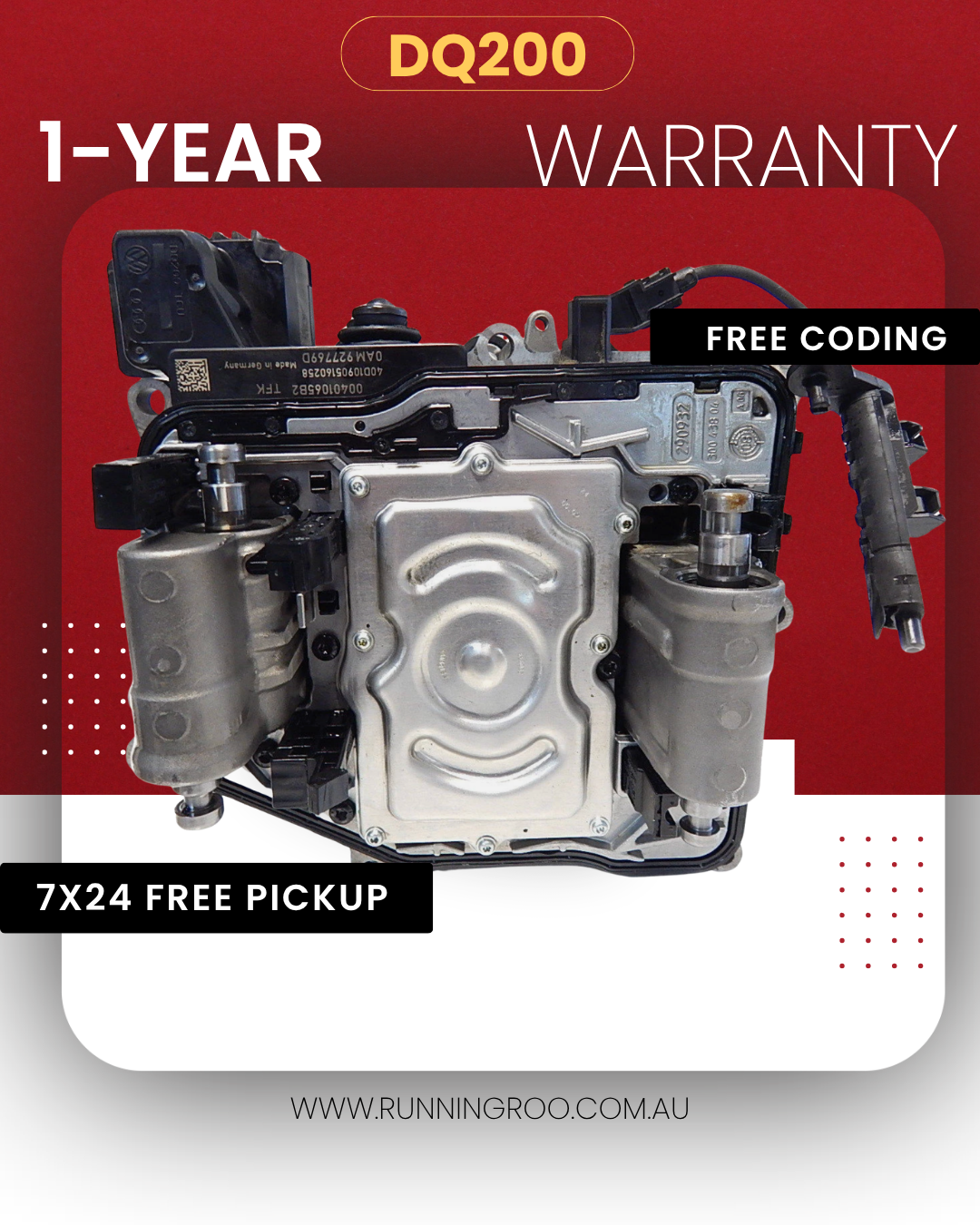
The linked RunningRoo product is a reinforced thick DQ200/0AM valve body and TCU package. The description lists 0AM325065S and 0AM927769D and describes the included mechatronic assembly as remanufactured. That is the starting point for a parts conversation; it is not a detailed declaration that every individual component is new or that a specific pump preparation process has been included.
Ask RunningRoo to confirm whether the pump is included in the supplied assembly and what is stated about its condition and checks. If the workshop has a particular requirement, communicate it before payment. Do not assume that a general photograph, the package title or the word remanufactured answers every question about internal components. Written confirmation keeps the supplier and installer working from the same scope.
Compare whole assemblies and component repairs properly
A quotation for a complete remanufactured mechatronic unit should be compared with another offer of equivalent scope. A bare reinforced housing may leave more work and more component decisions with the installer. A pump-only offer addresses a different component again. The cheapest headline price is not necessarily the cheapest completed repair, and the broadest package is not automatically necessary for every diagnosed fault.
Ask the workshop to identify the required outcome and the parts needed to achieve it. Then compare offers against that specification. Keep electronic preparation, any old-unit return arrangement, installation materials and completion checks visible as separate items. This is a purchasing comparison, not a recommendation to replace extra components without evidence or to choose the most expensive assembly available.
Keep the electronic preparation separate
A confirmed hydraulic repair does not settle controller fitment. Send the VIN, engine code, gearbox identification and full OE references with the workshop diagnosis. If the vehicle has had an earlier controller or gearbox replacement, include that history. A familiar model badge or the phrase seven-speed DSG is not sufficient to establish the correct complete assembly.
The linked product's title mentions programming, while its description contains unprogrammed-unit wording and requests VIN information if programming is required. Resolve the arrangement for the specific order. Ask what the supplier prepares, what data is required and which vehicle-side tasks remain with the installer. The housing and pump conversation should not distract from this separate part of commissioning the supplied unit.
Plan removal and handling through the workshop
Manufacturer campaign information for certain DQ200 applications contains pressure-related handling precautions and is intended for skilled technicians. That supports leaving removal and disassembly to a properly equipped specialist. It does not give a customer permission to apply that campaign's procedure to every vehicle or to open an assembly merely to inspect a pump for a parts enquiry. Volkswagen 34J6 campaign repair information (US scope; not Australian eligibility)
Where the supplier needs more identification, ask the workshop for accessible labels or information already recorded during its work. Do not improvise powering a removed pump, opening the accumulator or testing components on a bench. The useful customer role is coordinating accurate information and approvals while the qualified technician remains responsible for the applicable diagnosis and handling procedure.
What to ask about the supplied checks
Ask for a plain description of the inspection or testing supplied with the remanufactured assembly. What does the supplier actually confirm, and what remains to be checked after installation? If a test record is available, ask how it identifies the particular unit. A generic statement that products are quality checked is less specific than a record tied to the supplied assembly.
Do not invent a certification requirement that the offer does not claim to meet. Equally, do not describe a unit as factory-certified or manufacturer-approved without evidence. The accurate language is the supplier's confirmed process, condition and scope. That creates a useful record without overstating what the reinforced feature or remanufactured description proves.
Coordinate parts and labour before committing to a date
Once the workshop has agreed the repair scope, confirm stock and any preparation lead time with RunningRoo. Melbourne local pickup in Blackburn VIC is by appointment. Australian dispatch can be discussed after the exact assembly and preparation are confirmed. A fast parcel dispatch estimate should not be treated as a promise that the vehicle will be ready for collection on the same day.
If the pump assessment or another part of the diagnosis is still pending, tell the supplier. A provisional enquiry can identify the likely offer without turning it into a confirmed order. This is particularly useful for customers arranging alternative transport: establish the diagnostic decision, parts availability and workshop booking as connected but separate steps.
A useful repair record after installation
Ask the final paperwork to identify the original confirmed defect, the supplied assembly and the work performed. If pump condition was part of the repair decision, retain that finding with the report. Record the replacement references and the agreed electronic preparation so that a future technician can understand what changed. “DSG upgraded” is not a substitute for that information.
The completion record should explain the workshop's applicable checks without turning them into a lifetime guarantee. A reinforced housing does not promise that no unrelated component will ever fail. A successful repair should be described in terms of the established complaint and verified work, with any remaining recommendations stated clearly rather than hidden behind marketing language.
A customer example focused on evidence
Consider an owner who has been told that a housing defect is confirmed and a reinforced assembly is recommended. The useful next question is whether the proposal includes the pump, how its condition is addressed and what remains with the installer. This helps the owner understand the chosen package without challenging the technician to make unsupported predictions about every component's future life.
If the answer is that further assessment is needed, allow that step to occur before finalising the order. If the answer supports a complete assembly, send the identified scope to RunningRoo with the vehicle and OE details. In both cases, the purchasing decision follows the evidence. The thickened feature remains relevant to the diagnosed housing concern rather than becoming a general explanation for every DSG symptom.
Related RunningRoo video
DQ200 DSG Mechatronic Diagnosis, Replacement & Adaptation | RunningRoo. This channel video provides related educational context. It is not proof that the filmed component is the exact supplied item, a vehicle-specific diagnosis or a substitute for current manufacturer procedures.
Frequently asked questions
Does a housing fault always mean the hydraulic pump is damaged?
No automatic conclusion should be made. Ask the workshop whether pump condition was assessed and what evidence supports its recommendation. A housing-related defect and a pump defect are distinct findings even when both are considered within the same hydraulic repair.
Can I diagnose pump condition from its sound?
A recording can provide useful history but is not a complete diagnosis. Have a qualified technician interpret it alongside the vehicle's symptoms and applicable tests. Do not repeatedly operate a faulty transmission merely to collect more examples for an online parts enquiry.
Is the pump definitely included in the linked assembly?
Confirm the exact contents with RunningRoo for the order. The website describes a remanufactured valve-body-and-TCU mechatronic package, but the preparation of each individual component should not be inferred from the title. Ask any pump-specific questions before payment.
Should I order a complete unit or separate parts?
Use the workshop's confirmed findings and repair recommendation. A complete remanufactured assembly and a component repair are different scopes. Compare the included components, preparation and remaining labour rather than choosing solely by the lowest advertised parts price.
Will the reinforced assembly increase gearbox performance?
This article makes no torque, power or lifetime claim. The relevant benefit to discuss is the supplied housing feature within a properly diagnosed repair. Confirm all suitability and performance-related questions with the supplier and specialist before relying on them.
What is the best way to contact RunningRoo?
Use the linked product or matching eBay offer and provide the VIN, engine code, full OE references and diagnosis. Ask about contents, programming and availability together. RunningRoo provides friendly Australian support, appointment-based Melbourne pickup and fast dispatch subject to confirmed stock and preparation.
Related RunningRoo reading: DQ200 Valve Body Repair vs Mechatronic Replacement: Cost & How to Choose. That article addresses a related but separate question or application; it does not establish interchangeability with this product.
Sources and scope
Offer and stock information checked on 14 November 2026. Retailer descriptions identify the offered contents; the manufacturer sources support the technical points attributed to them within their stated market and model scope. The purchasing examples and suggested questions are editorial guidance. Use current vehicle-specific manufacturer information and professional diagnosis for the actual repair.