
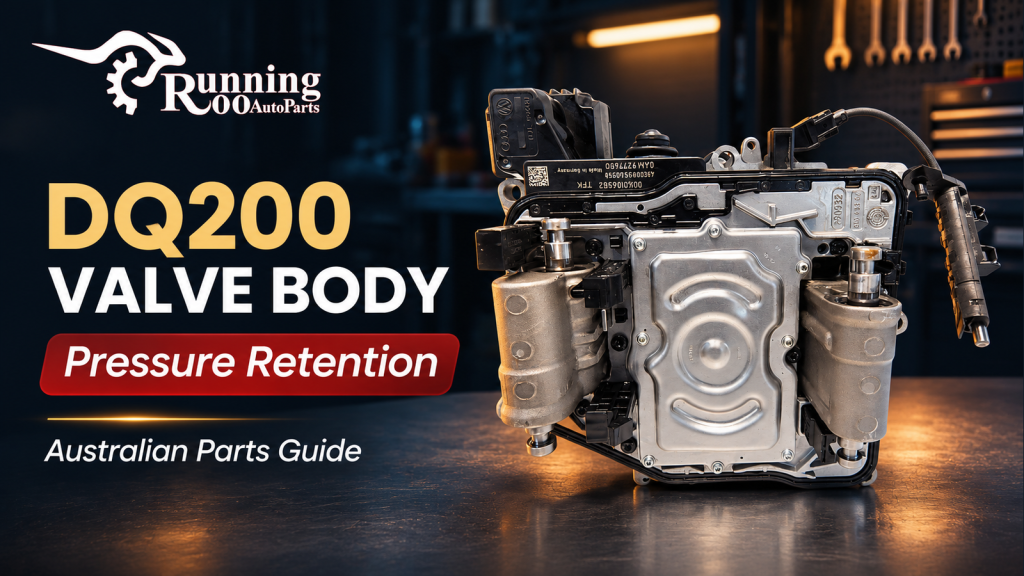
A DQ200 reinforced valve body should be selected against evidence of the hydraulic fault being repaired. For an Australian owner comparing a thickened mechatronic assembly, one of the most useful documents is the workshop's explanation of how the system builds and retains pressure. Those are related questions, but they are not interchangeable. A statement that pressure was low does not, on its own, identify the failed component or prove that a reinforced housing is the correct purchase.
This guide is about reading that explanation before ordering. It does not provide a pressure-test procedure, a universal pass value or instructions for opening a pressurised assembly. Its purpose is to help customers and workshops turn a confirmed hydraulic finding into a clearly defined parts enquiry. The focus is pressure retention and the evidence accompanying the repair recommendation, rather than a general list of DSG warning lights.
Start with the two jobs in the hydraulic system
Volkswagen's original seven-speed DSG presentation describes a hydraulic pump and pressure accumulator within the mechatronic system. The pump supplies hydraulic pressure, while the accumulator supports the system's pressure supply. This establishes why a workshop considers both pressure generation and storage when assessing a hydraulic complaint. It does not establish a universal diagnosis for every later DQ200 version or certify a particular aftermarket modification. Volkswagen original seven-speed DSG design (2008)
For purchasing purposes, ask the technician to explain what was actually demonstrated. Was the concern that the required pressure could not be established under the applicable test conditions? Was the concern that pressure did not remain within the expected behaviour after it had been established? Or was the observation made while the system was carrying out a commanded operation? The written interpretation matters more than an isolated number copied into a text message.
A reading needs its operating context
Imagine receiving a screenshot labelled simply “low pressure”. It may look decisive, but several pieces of information are missing: which vehicle and controller produced it, what operating state was being examined, what diagnostic routine was running, and which manufacturer criterion the technician applied. Without that context, a parts supplier cannot responsibly convert the screenshot into a specific replacement recommendation.
A useful report does not have to be long. It should identify the vehicle, record the relevant fault information, describe the test used and state the conclusion with its limitations. If the concern was intermittent, the report should say whether it occurred during the assessment. If the technician could not reproduce the problem, that is an important finding to preserve rather than hide behind a confident-sounding component name.
Distinguish observation, interpretation and recommendation
These three stages are easy to blur. An observation might describe how a recorded pressure value changed during the workshop's approved test. An interpretation explains why that behaviour is considered abnormal for the particular system. A recommendation identifies the work justified by the finding. Ask for all three, because a replacement recommendation without the first two stages is difficult to compare with a second opinion.
For example, “replace mechatronic” is a proposed action, not the complete diagnostic explanation. A more useful accompanying note identifies the confirmed defect and explains which part of the assembly addresses it. There is no need for the customer to demand confidential workshop methods or to repeat the test at home. The aim is a clear connection between the reported problem and the proposed purchase.
| Report detail | Useful purchasing question | Avoid assuming |
|---|---|---|
| Vehicle and module identity | Does this report belong to my fitted assembly? | Every DQ200 uses identical hardware |
| Test conditions | Was the assessment performed under the correct procedure? | Any pressure screenshot is a completed test |
| Recorded behaviour | Was the concern generation, retention or another function? | Low pressure identifies one specific part |
| Confirmed defect | What physical or functional evidence supports the conclusion? | A warning message proves a housing crack |
| Repair recommendation | Which supplied components address the established defect? | A thicker housing repairs every hydraulic problem |
What a reinforced housing contributes to the decision
A thickened housing is a structural feature of the advertised product. Its relevance to your repair depends on the defect the workshop has identified and on the precise modified component being supplied. A pressure-retention concern may justify further investigation of the assembly, but the word reinforced should not be used as a shortcut around that investigation. Ask what finding makes the housing-related feature relevant to this particular job.
Equally, do not treat a revised housing as a performance certificate for the complete unit. The linked product includes more than a bare casting, and the condition, preparation and compatibility of the supplied assembly still matter. The buyer should understand which components are remanufactured, which are replaced, what checks are performed, and what written evidence accompanies the order. Ask the supplier for the actual scope rather than assuming it from a photograph.
Match the report to the actual RunningRoo offer
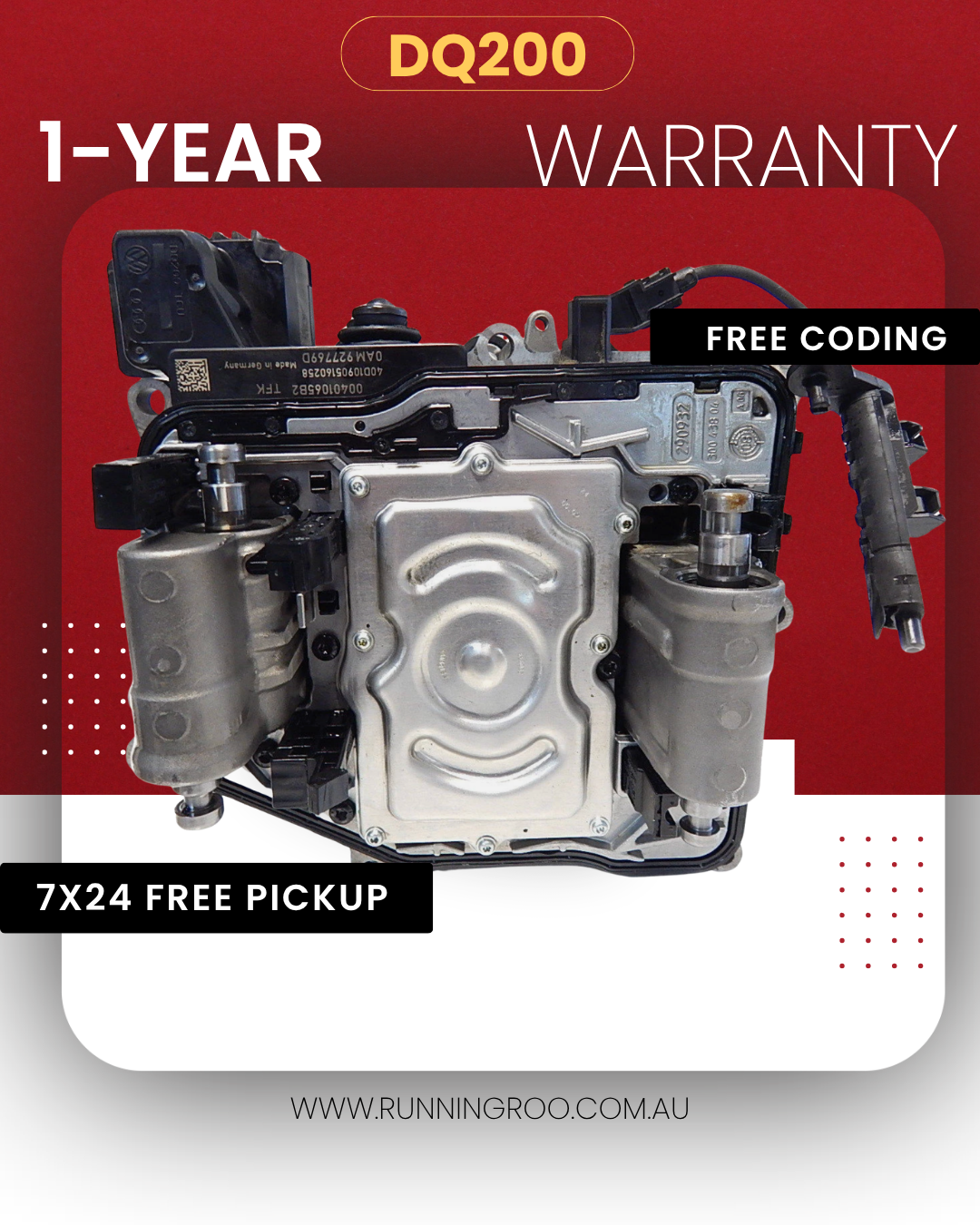
RunningRoo's linked offer is described as a DQ200/0AM reinforced thick valve body and TCU assembly. The product information lists valve-body reference 0AM325065S and controller reference 0AM927769D. It also describes the package as remanufactured. These identifiers and the stated condition should appear in the enquiry so that the supplier and workshop are discussing the same offered assembly.
The title mentions programming, while the description includes wording about an unprogrammed unit and requests VIN information if programming is needed. That requires order-specific confirmation. Ask what electronic preparation is included, which information the supplier needs and which vehicle-side operations remain with the installer. A pressure report does not resolve controller compatibility, and a compatible controller does not establish the cause of hydraulic pressure loss.
Ask what has been ruled in, not just ruled out
A report that says “not the clutch” may narrow the investigation without confirming the valve body. Ask what positive evidence identifies the recommended repair. Similarly, a statement that no external oil leak was seen does not tell the buyer where pressure was lost or whether the complete hydraulic assessment is finished. Keep the workshop's actual conclusion separate from assumptions made while discussing it.
This distinction is particularly useful when several businesses are involved. A general workshop may record the complaint, a transmission specialist may perform the assessment, and RunningRoo may supply the confirmed replacement. Give each party the same vehicle identity and the same written recommendation. That reduces the risk of an early suspicion becoming a supposedly confirmed diagnosis as it passes from one conversation to another.
Compare a before-and-after report fairly
If the workshop plans to compare behaviour before and after the repair, ask it to use its applicable procedure and document the relevant conditions. A comparison is meaningful when the technician can explain why the two observations are comparable. A cold initial visit and a different operating state after repair should not be presented to the customer as identical tests merely because both include a pressure reading.
The report should also separate completion of the repair from claims about future life. A satisfactory result under the prescribed checks supports handover of the completed job. It does not establish that the transmission will never develop another fault or that the reinforced casting has a quantified durability advantage. Those are different claims requiring different evidence. Keep the final documentation precise and useful.
When the evidence is incomplete
It is reasonable to pause a parts decision when the workshop has not isolated the concern. Ask what additional assessment is needed and whether the vehicle should remain out of service while the issue is investigated. Follow the vehicle's warnings and professional advice; do not carry out repeated road tests simply to generate another screenshot for a supplier.
A clear enquiry can still help while diagnosis is underway. RunningRoo can identify the advertised assembly, explain what information is needed for a fitment check and confirm the proposed supply arrangement. Label the enquiry as provisional. That allows the workshop to plan without turning a possible product into an approved repair before the supporting evidence exists.
Build a short parts-enquiry file
Include the VIN, engine code, gearbox identification, complete OE references and the workshop's written diagnosis. Where accessible identification photographs have been supplied by the technician, include those too. Record any previous gearbox or mechatronic replacement, because the fitted assembly may require closer checking than a model-year search suggests. Do not remove components yourself merely to obtain a photograph.
Add a short statement of the decision you need: confirmation that the linked remanufactured reinforced assembly is appropriate for the identified vehicle and the agreed repair scope. Ask the supplier to state any remaining information required. This creates a traceable answer that can be reviewed by the installer, rather than a vague assurance that a part fits a broad list of Volkswagen, Audi, Skoda or Seat vehicles.
Avoid comparing incomplete prices
A bare housing, an accumulator-related repair and a remanufactured mechatronic assembly are different supply scopes. The pressure-retention report helps the workshop decide which scope is justified; it does not make those offers directly interchangeable. When comparing quotations, keep the component list, electronic preparation, installation work and completion checks visible. Ask about any old-unit return requirement rather than assuming one applies.
Australian customers should also coordinate stock confirmation with workshop availability. Melbourne local pickup in Blackburn VIC is by appointment. Interstate buyers should confirm preparation and dispatch timing before booking a vehicle collection date. Fast dispatch concerns the supply process; it is not a promise that a diagnosis, programming arrangement and installation can all be completed within the same delivery window.
A practical conversation with the workshop
A useful customer question is: “Can you explain whether the evidence shows a pressure-retention problem, which defect you have confirmed, and why the reinforced assembly is the proposed repair?” This invites a clear answer without asking the customer to become the diagnostician. It also leaves room for the technician to explain that more investigation is needed before a parts choice can be made.
At collection, return to the same question. Ask what work addressed the original finding and what completion evidence is available. Keep the original report, final invoice and replacement identification together. If another issue appears later, these records will help the next technician understand what was established and repaired, rather than treating every subsequent complaint as proof that the same component has failed again.
Related RunningRoo video
VW DQ200 dual-clutch, mechatronic valve body pressure loss repair.#runningrooautoparts #automobile. This channel video provides related educational context. It is not proof that the filmed component is the exact supplied item, a vehicle-specific diagnosis or a substitute for current manufacturer procedures.
Frequently asked questions
Does low DQ200 pressure prove that the valve body is cracked?
No. A low-pressure observation needs the correct operating context and professional interpretation. Ask the workshop which defect it has confirmed and how that supports the proposed repair. Do not select a reinforced housing from a warning message or one screenshot alone.
Is pressure retention the same as pump performance?
They are separate questions within the hydraulic assessment. The workshop should explain whether its findings concern establishing pressure, retaining it or another operating condition. This article does not give a universal test threshold because the correct procedure must match the actual vehicle and system.
Will a thickened housing automatically correct every pressure fault?
That should not be assumed. Confirm the diagnosed defect and the complete supplied assembly. The structural feature does not replace checks of the other components involved in the repair, and it does not establish a universal cure for every hydraulic or electronic complaint.
What should I send RunningRoo before ordering?
Send the VIN, engine code, gearbox and module identification, full OE references and the workshop diagnosis. Include the exact website or eBay offer being considered. Ask for written confirmation of fitment, condition, supplied contents and programming scope before approving the order.
Is this assembly sold as new?
The linked website description calls the included mechatronic assembly remanufactured. Confirm the condition and preparation for your particular order. A clean product photograph or an upgraded housing description should not be treated as proof that every component in the assembly is brand new.
Can I arrange pickup in Melbourne?
Yes, ask RunningRoo to confirm stock and preparation, then arrange Blackburn VIC pickup by appointment. Australian-operated service, friendly support and fast dispatch subject to availability are available. Use the linked offer and your workshop report to keep the conversation specific to the required part.
Related RunningRoo reading: DQ200 Mechatronic Accumulator Failure: Symptoms, Repair Kit & Replacement. That article addresses a related but separate question or application; it does not establish interchangeability with this product.
Sources and scope
Offer and stock information checked on 14 November 2026. Retailer descriptions identify the offered contents; the manufacturer sources support the technical points attributed to them within their stated market and model scope. The purchasing examples and suggested questions are editorial guidance. Use current vehicle-specific manufacturer information and professional diagnosis for the actual repair.