
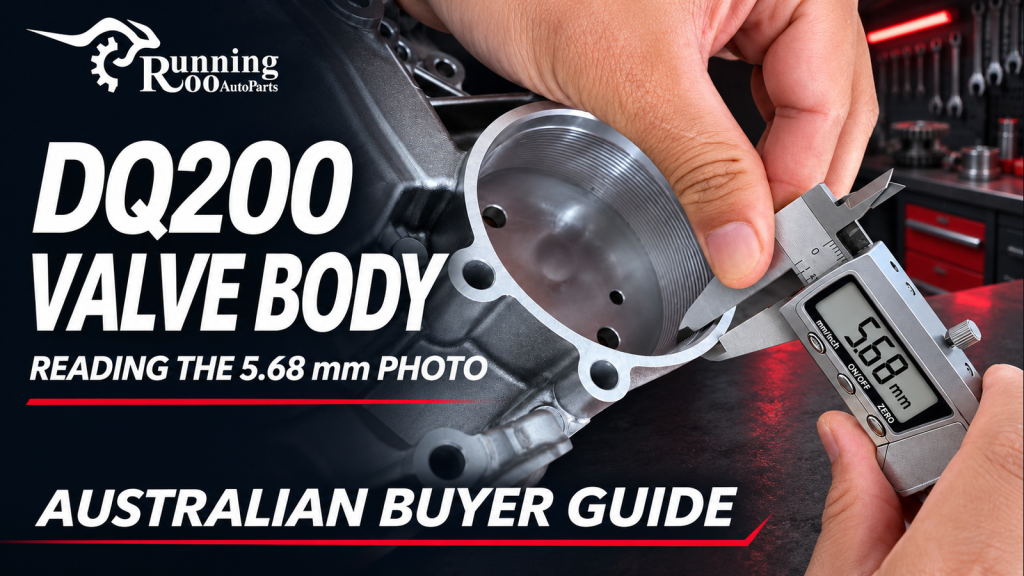
A photograph showing 5.68 mm on a digital caliper can help an Australian buyer ask better questions about a DQ200 thickened valve body. It cannot, on its own, establish a factory minimum wall thickness, a pressure rating or the remaining life of a transmission. The useful question is more precise: what does this particular measurement describe, and can it be connected to the component you are ordering?
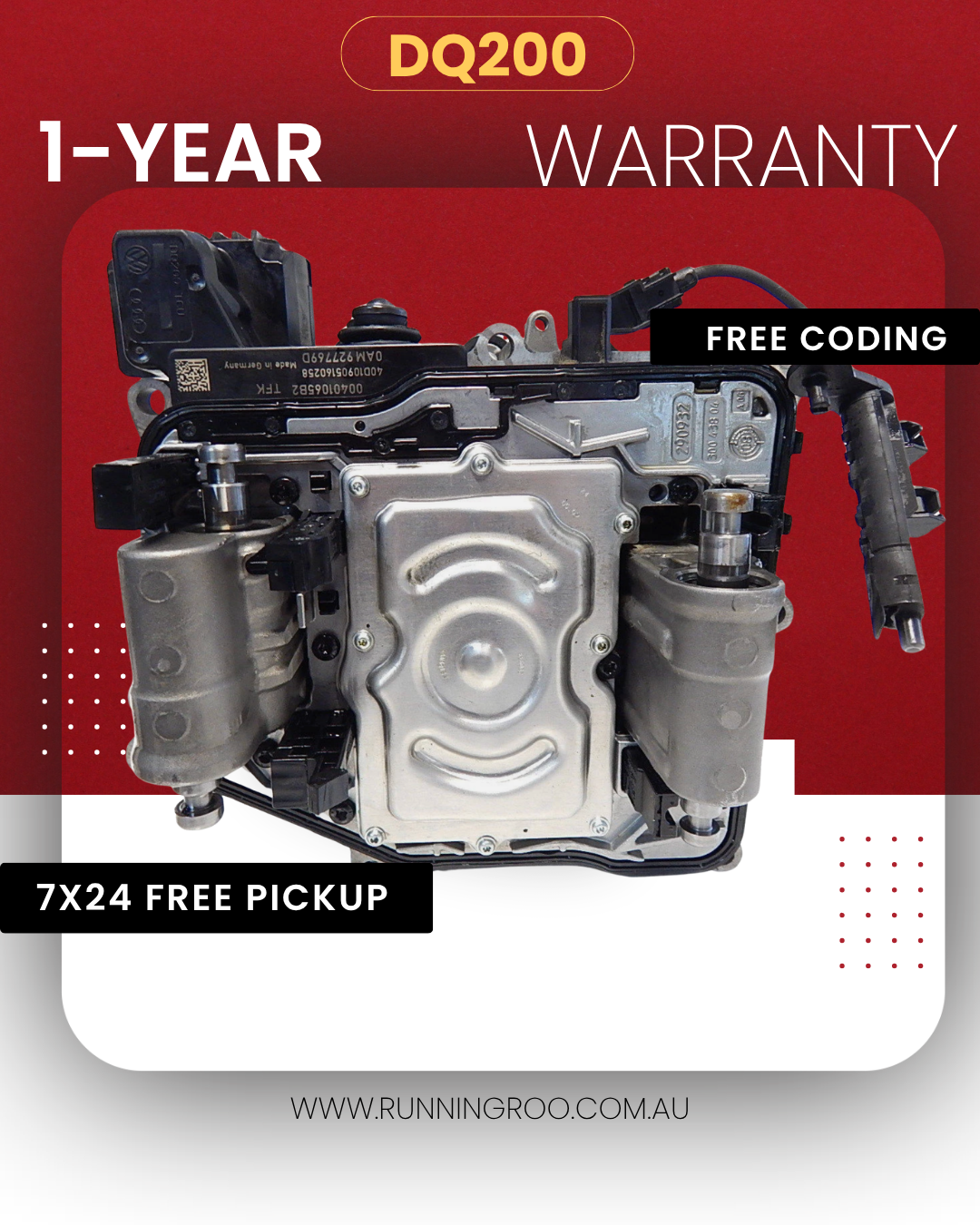
This guide interprets the measurement image supplied by RunningRoo for its reinforced valve-body offer. It is intended for owners and workshops comparing evidence before an order, rather than as a machining specification. Keep the original image, product identity and any written measurement explanation together. A number separated from its location and sample is much less useful than a complete, traceable record.
What is actually visible in the supplied photograph?
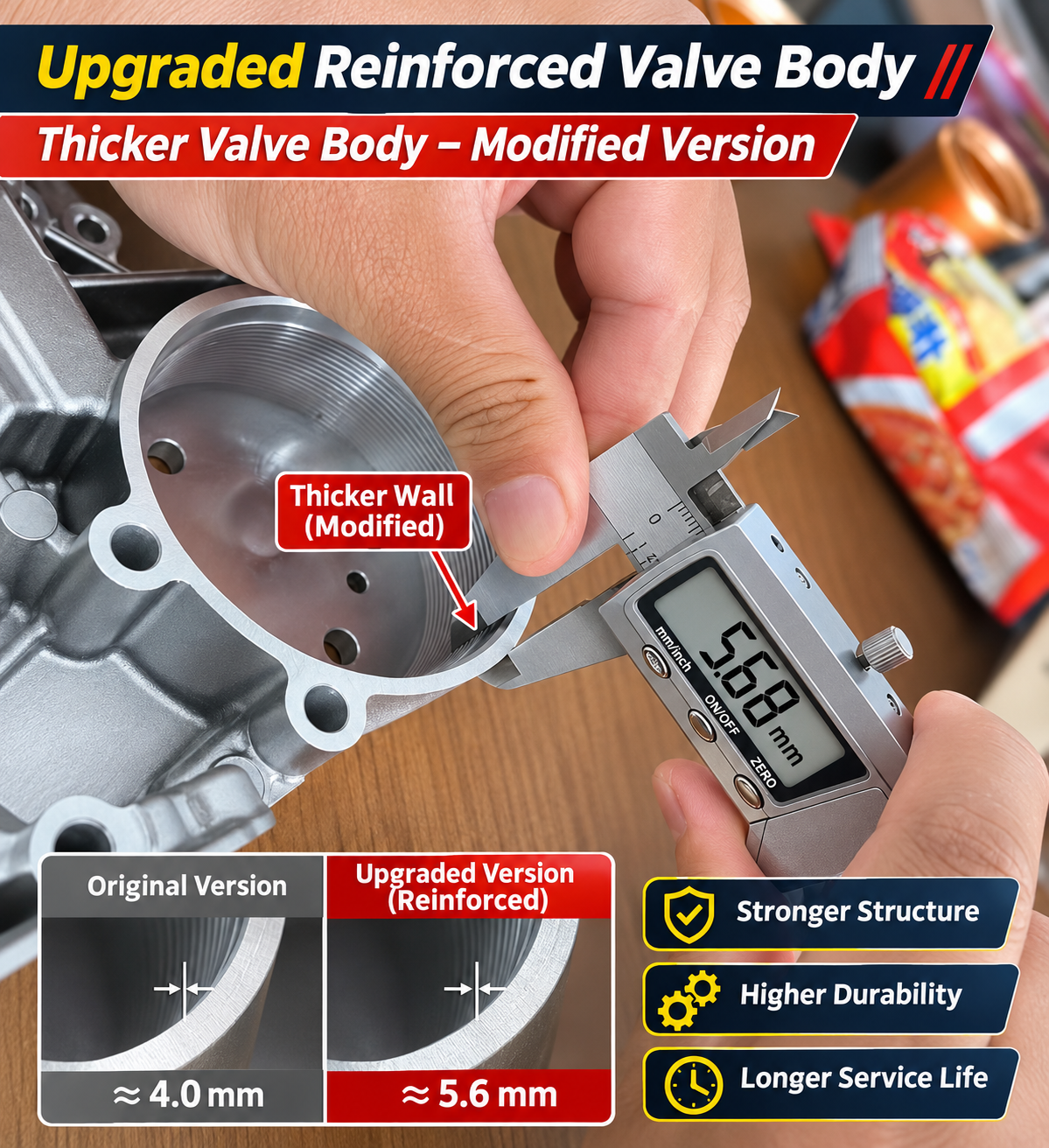
The supplied image shows a housing, a handheld digital caliper and a display reading 5.68 mm. Its comparison graphic labels an original version at approximately 4.0 mm and an upgraded version at approximately 5.6 mm. Those are the supplier image's annotations. They are not independently verified Volkswagen production dimensions, and the photograph does not identify a factory tolerance drawing.
Notice the distinction between the display and the rounded graphic. A caption saying the pictured display reads 5.68 mm accurately describes the visible image. A statement that every reinforced DQ200 housing must measure exactly 5.68 mm goes beyond it. Similarly, the two approximate labels cannot establish a measured difference between two individually identified production samples unless supporting records connect those samples and their measuring locations.
Ask for the uncompressed photograph when a small detail matters. A social preview can obscure the jaw contact or the unit symbol. Use the original product photograph for discussion with the supplier, and describe the feature in words as well as circling it on a copy. Keep the untouched original so later annotations cannot be mistaken for evidence supplied with the part.
Turn a visible number into a useful question
A productive enquiry might say: “Does this photo represent the current reinforced housing supplied with my quoted 0AM assembly, and which feature is being measured?” This invites a specific answer. Asking whether the unit is simply “the strongest version” invites a broad comparison that may not identify your part, the modification or the sample shown.
Request the sample or batch reference if one is available. If the image is illustrative of the product range rather than a photograph of your allocated assembly, record that distinction. There is nothing inherently wrong with a representative photograph, but it should not be presented as an individual inspection certificate. The buyer should know which level of evidence has actually been provided.
An annotated location drawing can also be useful if the supplier has one. The purpose is to identify the measured feature, not to reverse-engineer a repair specification from an online image. Do not ask a technician to dismantle an otherwise serviceable mechatronic unit solely to reproduce a marketing photograph. Inspection access and safe handling belong to the qualified workshop's procedure.
What measurement guidance supports—and what it does not
Mitutoyo's official caliper guidance explains that contact condition, measuring force, alignment and temperature can affect a reading. It also distinguishes an instrument's displayed resolution from its accuracy and calibration. These principles explain why a close-up of a digital display is incomplete measurement evidence. They do not establish the accuracy of the unidentified tool in this particular photograph. Mitutoyo: Quick Guide to Precision Measuring Instruments; general caliper measurement principles
For a supplier-generated measurement record, ask whether the tool was checked, where the jaws contacted the sample and whether the result was repeated at the defined location. A measurement made on a different feature is not a repeat of the first result. These are questions about evidence quality; the correct instrument and acceptance criteria must come from the responsible technical professional.
The buyer does not need to become a metrologist. A useful response can be short: the image is a representative sample, the marked feature is the subject, and the supplied part will be confirmed against the agreed specification. What matters is avoiding an unsupported leap from a photograph to an engineering guarantee. If a critical dimension is part of the purchase agreement, have it stated explicitly.
| Evidence available | What it can support | What still needs confirmation |
|---|---|---|
| Caliper display in a photograph | The displayed reading on that image | Instrument status, contact location and sample identity |
| Approximate comparison labels | The supplier's stated comparison | Comparable measurement method and reference samples |
| Housing marking | A visible identifier on the photographed casting | Relationship to the complete assembly being supplied |
| Current written product confirmation | The supplier's description of the ordered version | Vehicle compatibility and workshop requirements |
| Vehicle-specific diagnostic report | The workshop's recorded findings | Whether this part is the appropriate repair |
Do not calculate a reliability percentage from wall thickness
It may be tempting to compare 5.6 with 4.0 and convert the difference into a percentage improvement. Even a correct arithmetic comparison would describe only the two stated dimensions. It would not establish a percentage increase in service life, pressure capacity or reliability. This article deliberately does not make those claims, because no comparative test report has been supplied to support them.
Keep marketing language and acceptance evidence in separate columns of your notes. “Reinforced” describes the offer being discussed. A material certificate, engineering drawing or validated test report would answer a different question. If such evidence is important to your decision, request it rather than assuming that a product photograph contains it indirectly.
For the same reason, do not treat a thicker housing as proof that every other part of the gearbox is healthy. The purchase remains tied to the workshop's diagnosis. The evidence needed to identify the vehicle's actual fault is separate from the evidence needed to describe the supplied replacement. Keeping those two decisions separate helps avoid an expensive but poorly targeted parts order.
Match the photograph to the actual RunningRoo offer
The current RunningRoo listing is a remanufactured DQ200 0AM mechatronic assembly described as valve body plus TCU. Its description references valve-body number 0AM325065S and control-unit number 0AM927769D. Those are listing references, not permission to fit the assembly to every vehicle carrying a DSG badge. Ask RunningRoo to confirm the exact supplied version against your vehicle information.
There is also a programming detail to resolve before payment: the product title mentions programming, while the description says no program is inside and asks for vehicle information if programming is required. Obtain a written answer for your particular order. Neither a caliper photograph nor a housing marking tells you whether software preparation, coding or workshop commissioning has been included.
Send the VIN, engine code, transmission identification, full OE numbers including suffixes, existing unit label photographs and professional diagnostic findings. Where the fitted unit has previously been replaced, say so. A vehicle description from a sales advertisement is less useful than the identifiers on the car and installed assembly. Friendly support can then focus on the right product question instead of guessing from model names.
Three photographs should remain three different kinds of evidence
RunningRoo has supplied a housing photograph, the measurement image and a kit-layout image. The kit image includes a visible 0GC325061M marking; RunningRoo has confirmed that the image relates to the same offered product. Preserve that explanation with the images rather than changing the visible marking or implying that all identifiers shown are interchangeable OE ordering numbers.
Use the housing photograph to discuss the visible casting and markings. Use the measurement photograph to discuss the illustrated feature and sample reading. Use the kit layout to ask which components are included in your order. A picture showing several seals and components is not a substitute for a current packing list, particularly when the main product is described as an assembled remanufactured unit.
Do not combine the images into a claim that every displayed component is new, factory supplied or covered by the same specification. Obtain those details from the seller where they affect your choice. An honest image caption can remain useful without attempting to settle every provenance or engineering question. The strongest record connects each claim to a clear, identifiable source.
A practical enquiry before arranging the repair
Imagine a Melbourne owner whose workshop has recommended a replacement mechatronic assembly. The owner sees the 5.68 mm image and wants the reinforced version. A sensible enquiry includes the workshop's unit identification and asks RunningRoo to confirm that the quoted assembly is the version represented by the photo. It then asks what programming preparation is included and who will complete the vehicle-specific workshop work.
The owner should retain that reply with the order confirmation. There is no need to insist that the workshop reproduce the promotional image after installation. Instead, the supplier's evidence describes the part supplied, while the workshop's records describe the repair performed. This division avoids making an inaccessible post-installation measurement the condition for accepting an otherwise properly documented job.
For an interstate buyer, request the same written confirmation before arranging delivery. A courier booking should follow product identification, not replace it. RunningRoo is Australian-operated in Blackburn VIC and can discuss fast dispatch subject to stock and preparation. Melbourne local pickup is available by appointment; call 0425 890 125 to coordinate the right part and collection timing.
Keep a compact measurement evidence file
Create a folder containing the original image, the dated product description, the supplier's response and the order reference. Add a short note distinguishing representative photographs from any inspection of the individual supplied unit. This makes later questions easier to answer without searching through social messages or relying on a screenshot that has lost its date.
If a supplier provides an updated photograph, retain both versions with their dates rather than silently replacing the earlier record. A changed photo does not automatically indicate a changed product, and an unchanged photo does not prove that every production detail is identical. Ask what changed. Clear version history is more useful than drawing conclusions from a different background or lighting angle.
Give your workshop only the information it needs to identify the part and understand the agreed supply. Do not let a collection of marketing images overwhelm the diagnostic report. The aim is a clear chain from vehicle identification to supplier confirmation to repair record. That is the practical value of treating a measurement photograph carefully.
Frequently asked questions
Does the 5.68 mm display prove every supplied housing has that thickness?
No. It shows the reading visible in the supplied photograph. Confirm whether it represents a sample, a batch or your individual unit. If a dimension is important to the order, ask for its defined location and written specification. Do not convert a representative image into a universal tolerance or manufacturing requirement.
Is the approximately 4.0 mm label a Volkswagen factory specification?
Not on the evidence provided here. It is a comparison label within the supplier graphic. A factory specification would require the relevant manufacturer document and application. This article preserves that distinction so buyers can discuss the image without treating its annotations as an official production drawing.
Can I use the photograph to choose between 0AM and 0CW parts?
No. A measurement photograph does not establish interchangeability. Supply the VIN, engine code, gearbox identification and full OE references to RunningRoo and your workshop. The existing unit and vehicle-specific parts information must establish compatibility before a reinforced assembly is selected or ordered.
Does a reinforced housing remove the need for professional diagnosis?
No. The reason for replacing the assembly must come from the vehicle's condition and professional assessment. A product feature cannot diagnose the fault. Ask the workshop to explain why the proposed part addresses its findings, and keep that explanation separate from the supplier's description of the housing.
Is programming automatically included because the title says “Program”?
Do not assume so. The current description and title need to be reconciled for the specific order. Ask what preparation is included, what vehicle information is required and what remains for the installer. A written answer prevents a photo-led purchase from overlooking an essential service detail.
Can RunningRoo help me compare the photo with the part I need?
Yes. Send clear identification photographs, the VIN, engine code, OE number and workshop diagnosis, then ask about the current reinforced version. RunningRoo offers friendly Australian support, Melbourne pickup by appointment and fast dispatch subject to confirmed stock and preparation. Call 0425 890 125 before arranging your repair booking.
Related RunningRoo workshop video
RunningRoo: DQ200 mechatronic valve-body pressure-loss repair. This is related workshop context, not proof that the filmed component is the exact supplied item. Verify all procedures against current manufacturer information for the vehicle; the video does not establish product dimensions, fitment or performance guarantees.
Related reading: DQ200 Thickened Valve Body Australia: Understanding the Reinforced Housing Claim. This separate guide covers a different component or search question; it does not establish interchangeability with the product discussed here.
Supplier measurement photograph
Sources and scope
Product details and availability were checked on 11 November 2026. Retailer listings establish the offer; manufacturer sources below support only the technical points identified in the article. Current vehicle-specific workshop information takes priority over general background.