
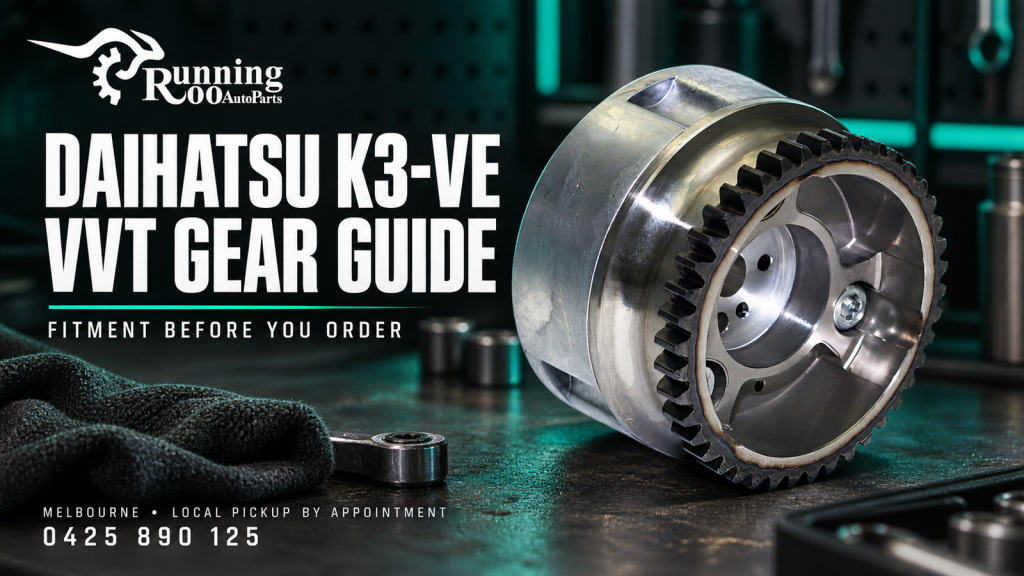
Start a K3-VE VVT gear enquiry with the engine identity
Finding a Daihatsu K3-VE VVT gear can be confusing when advertisements mention Terios, Sirion and Toyota Avanza together. The useful starting point is the actual engine and the component reference, not the broadest model list. Identify the engine code, VIN or chassis details and the workshop’s required part before comparing listings. An imported vehicle or a car with a replacement engine deserves particular care because a familiar badge may not describe the current mechanical specification.
RunningRoo lists a K3-VE camshaft timing VVT gear for selected applications, with the matching RunningRoo eBay item available as another purchasing route. These are real product listings, but they do not establish universal compatibility across every vehicle named in the title. Send the engine code, vehicle identity, OE markings and diagnostic findings before ordering. Call 0425 890 125 for friendly Australian support, Melbourne local pickup by appointment and current fast dispatch options.
What Daihatsu’s official releases establish
Daihatsu’s 2004 European Sirion announcement names both a 1.0-litre 1KR-FE and a 1.3-litre K3-VE engine. That official model information shows why the name Sirion alone does not identify an engine. It is a European announcement, not an Australian aftermarket parts catalogue. See Daihatsu’s original Sirion release.
The company’s July 2006 Xenia announcement describes a change from the earlier K3-DE to a K3-VE 1.3-litre engine with VVT-i. It also discusses Toyota Avanza in the production context. This supports keeping K3-DE and K3-VE distinct in an enquiry; it does not prove that every Avanza accepts the gear in the RunningRoo listing. See Daihatsu’s official Xenia VVT-i announcement.
Daihatsu also identified a K3-VE engine in its 2001 announcement about Terios production in Venezuela. That is further evidence of an engine designation appearing across particular models and markets, not an interchange guarantee for every Terios. The release is available directly from Daihatsu’s official news archive. Current vehicle-specific parts and repair information must determine the component required for your vehicle.
Treat market history as context, not a compatibility chart
A model sold in more than one market can generate a long list of apparently relevant search results. The safest way to organise those results is to keep the engine identifier visible and compare the proposed component against the vehicle’s own reference. Do not choose a part simply because the advertisement contains more model names than another listing. More names do not provide more evidence for your particular car.
If your vehicle is an import, supply the chassis identification and market details that are available to you. Do not invent a conventional VIN if the vehicle’s documentation uses a different chassis identifier. Send the actual records and ask the workshop or supplier how they should be used for the parts check. Accurate information is more useful than forcing an unusual vehicle into an incomplete online model selector.
Tell RunningRoo if the engine has been replaced. Where the history is uncertain, say so rather than assuming that a registration record establishes the engine now fitted. The workshop may be able to identify the engine and the existing component directly. That confirmation can turn a vague “Terios timing gear” request into an enquiry that the supplier can assess against a specific product.
Keep K3-VE separate from similar engine descriptions
Write K3-VE in full when requesting a quote. The official Daihatsu material distinguishes it from K3-DE, so the shorter label “K3” leaves an important question unresolved. Do not expand the selected listing to K3-DE, another K3 variant or a 3SZ engine by assumption. If the workshop identifies a different code, ask for a product appropriate to that code instead of trying to make this listing fit the search.
The same discipline applies to capacity. “Daihatsu 1.3” is useful conversational shorthand but an incomplete order description. Combine the capacity with the full engine code, vehicle identification and existing component markings. If any of those details conflict, resolve the conflict before checkout. A photograph of a familiar-looking gear does not settle a disagreement between the vehicle records and the engine identification.
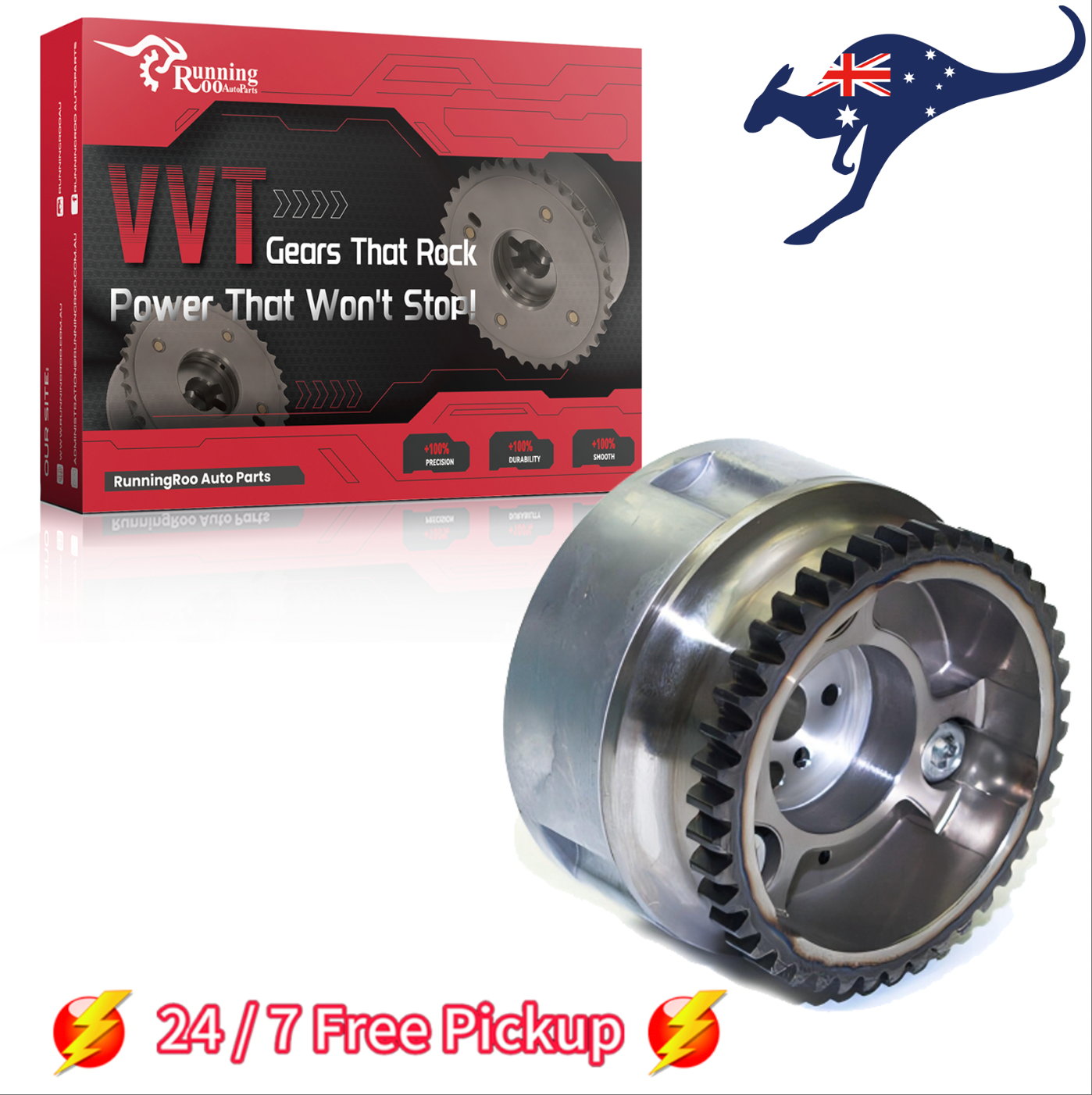
| Identification detail | What to provide | What remains to be confirmed |
|---|---|---|
| Vehicle record | VIN or chassis identifier, build and market | Exact application in the relevant catalogue |
| Engine | Complete K3-VE identifier, or the actual alternative | Whether this selected listing is appropriate |
| Existing part | Readable OE markings and photographs if accessible | Correct reference and proposed match |
| Repair scope | Technician’s diagnosis and required component | Whether a gear is the approved purchase |
| Quantity | Number required and confirmed supplied contents | Whether the order meets the workshop request |
| Fulfilment | Postcode or booked Blackburn collection | Current stock and practical timing |
Do not mistake an inventory label for an OE number
The selected website listing does not provide a detailed OE cross-reference in its description. That absence should lead to a question, not a guessed number. Ask RunningRoo to confirm the proposed item against the reference from the workshop or the removed component. The most useful enquiry includes the actual marking, a clear photograph and the full vehicle details.
A seller’s stock-keeping code or custom inventory label is not automatically a manufacturer part number. It may help the seller locate a box, but it should not be copied into an OE compatibility claim. Similarly, an eBay item number identifies a listing, not the engineering specification of its contents. Keep these identifiers separate in the order record so the workshop knows which number answers which question.
If the original marking is unreadable, tell the supplier and ask the workshop to use the appropriate vehicle-specific parts information. Do not guess the missing digits or borrow a number from a visually similar product. A little extra clarification before purchase is preferable to discovering that two people have approved different references under the same generic product name.
Let the workshop define the repair requirement
Owners often begin with a noise, a change in running behaviour or a comment made during a service. Record the complaint in straightforward terms and give the mechanic the relevant service history. Explain when it began and whether previous work immediately preceded it. That information supports an investigation without requiring you to interpret a scan report or select an internal component yourself.
Ask the workshop what evidence supports replacing the camshaft timing gear. A useful answer distinguishes the observed concern from the technician’s conclusion and identifies the proposed component clearly. If diagnosis is still underway, tell RunningRoo that the enquiry is provisional. Stock information can help planning, but availability alone does not establish that a part is necessary.
Do not treat a product title as a repair instruction. The appropriate factory procedure should determine the installation requirements for the actual engine and vehicle. This guide deliberately avoids universal torque settings, timing marks or disassembly steps. Those details need to come from the correct repair information and the professional responsible for carrying out the job.
Confirm the contents of this specific order
The RunningRoo K3-VE VVT gear page identifies the item discussed here, but it does not publish a detailed package schedule. Ask for the supplied quantity and contents before payment. Do not assume that a chain, tensioner, seals or other installation materials are included because related items appear in search results or because a different supplier offers a larger kit.
Have the installer list any additional materials it needs under the applicable procedure and decide who will supply them. This is especially important when an owner buys the gear independently. The workshop should not have to discover on the appointment day that both parties expected the other to provide a separate item. An agreed list makes the repair booking more realistic.
Clarify the supplied brand and product description if you are comparing genuine and aftermarket options. The use of Daihatsu or Toyota model names identifies an intended application; it does not mean the manufacturer endorses the product. The official sources in this article establish limited engine and model context. They are not a certification of the RunningRoo part or a substitute for its fitment confirmation.
Compare quotes with the same identifiers
Two listings can look similar while leaving different questions unanswered. Compare the exact proposed component, supplied quantity, confirmed application and current terms before comparing the price. Ask a seller to resolve missing information rather than rewarding the longest title or the largest collection of search keywords. A well-documented match is more useful to the installer than a low price attached to an uncertain reference.
The matching RunningRoo eBay listing offers an alternative to the website product page. Include the exact link in your enquiry so the reply is tied to the intended item. Read the current terms on the channel where you plan to order and retain any written clarification. This guide does not replace a current stock reply, reserve an item or promise a particular delivery date.
If you are organising the repair from outside Melbourne, give the supplier the destination postcode and the workshop’s intended booking date. If the workshop is buying directly, nominate its contact person. A single accurate vehicle description and one confirmed item reference are easier to manage than several messages referring variously to Sirion, Terios and Avanza without explaining which vehicle is actually being repaired.
Use local support to organise the handover
RunningRoo is an Australian-operated parts business based in Blackburn, VIC. Melbourne local pickup is available by appointment, subject to confirmation of the order and readiness. Arrange the collection before travelling. If someone else is collecting, provide the agreed order reference and make sure RunningRoo knows the arrangement. A local collection should be a planned handover, not a substitute for the fitment check.
For delivery, ask about the current fast dispatch options and distinguish dispatch timing from the carrier’s arrival estimate. Stock and freight circumstances can change between researching a product and ordering it. Friendly support can help organise the practical details when the product match, quantity and destination have already been established.
Inspect the parcel before the workshop fits the part
Check the supplied item and packaging against the confirmed order. Keep the labels and take clear photographs if something is inconsistent. Contact RunningRoo with the order number before installation if the workshop raises a fitment question. Do not modify a component to overcome an unresolved identification problem merely because the vehicle has already been booked in.
After the repair, retain the invoice and a workshop summary naming the component that was replaced. Ask what checks were used to assess the original complaint at handover. For an older or imported vehicle, that record can be particularly helpful when another workshop later needs to understand its history. It also keeps the purchased item and the repair outcome clearly connected without making unsupported claims about future service life.
Frequently asked questions about K3-VE VVT gear orders
Does every Sirion use a K3-VE engine?
No such claim is made here. Daihatsu’s official Sirion announcement itself names different engines. Identify the engine actually fitted to your vehicle and provide the VIN or chassis details. The model badge is the beginning of the enquiry, not the final compatibility check.
Can this listing be used for a K3-DE engine?
Do not assume that it can. Daihatsu’s official material distinguishes K3-DE from K3-VE. Tell the supplier the actual code and ask for the appropriate component. A shared portion of an engine name does not establish that a VVT gear is interchangeable.
Is every Toyota Avanza covered by the product title?
No universal Avanza fitment is promised. The title names selected applications, while the exact vehicle and OE reference still require checking. Send the full identification details and workshop findings before ordering, including the market or import information where known.
What if I cannot find the OE number?
Tell RunningRoo that the number is unavailable and provide the vehicle identity, full engine code and any clear photographs already obtainable. Ask the workshop to identify the required reference through the appropriate parts information. Do not substitute a seller inventory label or invent missing digits.
Does the gear come with a timing chain kit?
Do not assume additional components are included. Request written confirmation of quantity and contents, then compare that reply with the workshop’s parts list. Any chains, guides, seals or other required materials should be identified separately unless expressly included in the confirmed order.
Can I collect in Melbourne?
Call 0425 890 125 to arrange Blackburn pickup by appointment after fitment and stock are confirmed. For delivery elsewhere in Australia, ask about current dispatch options with your postcode. Include the K3-VE product link so the conversation concerns the correct item.
A complete enquiry is the most useful next step
Combine the vehicle record, full engine code, workshop diagnosis and existing OE information in one message. Explain any uncertainty about an import or replacement engine. Ask RunningRoo to confirm the proposed match, supplied contents, availability and collection or freight arrangement. Once those details agree with the installer’s plan, choose the website listing or matching eBay item for the order.
This approach uses local support for the questions a parts supplier can answer while preserving the workshop’s responsibility for diagnosis and installation. It also gives you a practical record to check when the parcel arrives. For a K3-VE enquiry with several model names in the background, that clarity is more valuable than a broad promise that one gear fits everything.
Related reading and Australian support
For the broader purchasing process, read VVT gear intake versus exhaust fitment and VVT gear versus camshaft position sensor diagnosis. These guides provide supporting context; the engine and product reference in this article remain the focus of your order.
Visit RunningRoo Auto Parts or the contact page to discuss your enquiry. Australian customers can call 0425 890 125; from overseas, use +61 425 890 125. RunningRoo is Australian-operated in Blackburn, VIC, offering friendly support, Melbourne local pickup by appointment and current fast dispatch options subject to stock and order confirmation. Send your VIN or chassis identification, complete engine code, OE number and professional diagnostic findings before ordering.
Factory and official source notes
- Daihatsu introduces the new Sirion in Europe, 29 November 2004 — Official manufacturer site. European Sirion engine identifiers, not Australian component fitment.
- Daihatsu Xenia VVT-i announcement, 12 July 2006 — Official manufacturer site. K3-DE/K3-VE distinction and historical model context, not part interchange.
- Daihatsu and Toyota producing Terios in Venezuela, 22 November 2001 — Official manufacturer site. Market-specific Terios K3-VE identification, not universal compatibility.
Technical context is drawn from the named manufacturer documents. Product descriptions establish advertised supply scope; they do not replace factory fitment or diagnosis. Historical documents are not represented as the latest repair instructions.