
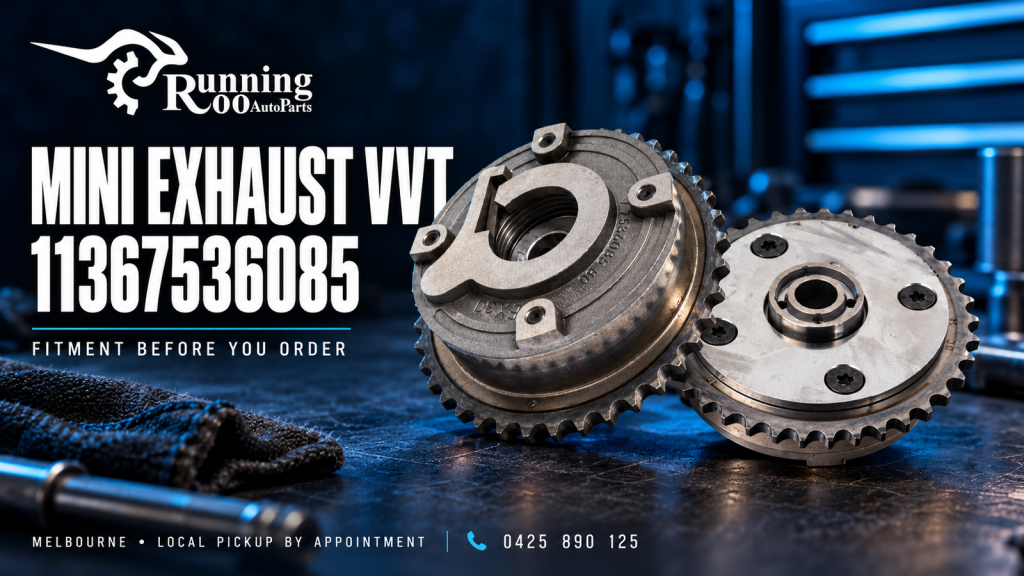
Identify the MINI exhaust gear before you buy
The MINI exhaust VVT gear 11367536085 is a specific parts enquiry, not a general answer to every MINI timing complaint. RunningRoo’s listing names selected N12, N16 and N18 applications across an R56–R61 model range. Those identifiers are useful starting points, but the actual vehicle, engine variant and exhaust-side OE reference still need to be checked. Begin with the VIN and the workshop’s diagnosis, then confirm the product against the component the technician intends to replace.
You can review the RunningRoo MINI exhaust VVT gear or use the corresponding eBay listing. Both links identify the specific item discussed here. Before ordering, send your VIN, engine code, build date, OE number and repair findings. For friendly support from an Australian-operated parts business, call 0425 890 125. Ask about Melbourne local pickup by appointment in Blackburn and current fast dispatch options for your postcode.
Why N12, N14, N16 and N18 cannot be treated as one label
MINI’s factory N12/N14 electrical training distinguishes the VANOS arrangements of those two engines: it describes intake adjustment for both, with exhaust adjustment applying to the N12 in that comparison. This makes a useful historical example of why “MINI 1.6” is too broad a description for an exhaust adjuster order. The original training is available as a reproduced MINI N12/N14 electrical systems document, in the VANOS solenoid section.
That document is not an N16 or N18 fitment chart, and it does not validate the RunningRoo item’s entire application list. Its role here is limited to showing a factory-documented distinction between engine configurations. The current parts catalogue and repair information for your VIN must establish the actual requirement. Do not extend an N12 statement to every later engine merely because several engine codes appear together in an advertisement.
The practical consequence is simple: write the engine code exactly as the workshop identifies it. Do not silently change N14 to N18, omit the final digits or replace the code with “Cooper S”. If the paperwork and the engine fitted to the vehicle disagree, tell the supplier. An honest note about an engine replacement is more useful than a confident but incomplete registration-based description.
Make exhaust position part of the product name
When forwarding a quote or ordering for a mechanic, retain the word “exhaust” next to the reference number. A message shortened to “MINI VVT gear” loses the very detail that distinguishes this purchase. Ask the installer to confirm that the requested component is an exhaust camshaft adjustment gear and to provide the expected OE reference or a documented replacement reference.
Likewise, distinguish a gear order from a request for another component in the timing-control system. Ask the workshop to use the full component name on the estimate. The purpose is not to diagnose the vehicle yourself; it is to prevent a brief phone conversation from turning into the wrong shopping basket. If the estimate and the product title use different names, pause the purchase while the workshop clarifies the intended part.
| Item to record | Example of a useful enquiry detail | What it prevents |
|---|---|---|
| Engine identity | Full engine code supplied by the workshop | Ordering by “MINI 1.6” alone |
| Vehicle record | VIN, build date and model designation | Confusing model range with fitment |
| Component position | Exhaust camshaft adjustment gear | Losing the intake/exhaust distinction |
| OE reference | 11367536085 or the workshop’s verified alternative | Guessing a supersession |
| Quantity | Confirmed number of supplied components | Mistaking multiple views for a pair |
| Repair status | Diagnosed replacement or investigation still underway | Treating a product search as diagnosis |
Use 11367536085 carefully
The number in the listing should be compared with the reference identified for your vehicle. If your workshop gives you a different number, do not decide that the two are equivalent because a search engine displays them together. Ask for the relationship to be checked. A supersession should be confirmed through appropriate parts information, with the supplier explaining which item it proposes to supply.
Photographs are useful when the original part is already accessible. Ask for a readable view of its markings and an overall view that the workshop considers helpful. Keep the written reference with the photograph, since either can contain an ambiguity on its own. There is no need to dismantle a vehicle just to create a shopping photograph before a qualified person has established the repair requirement.
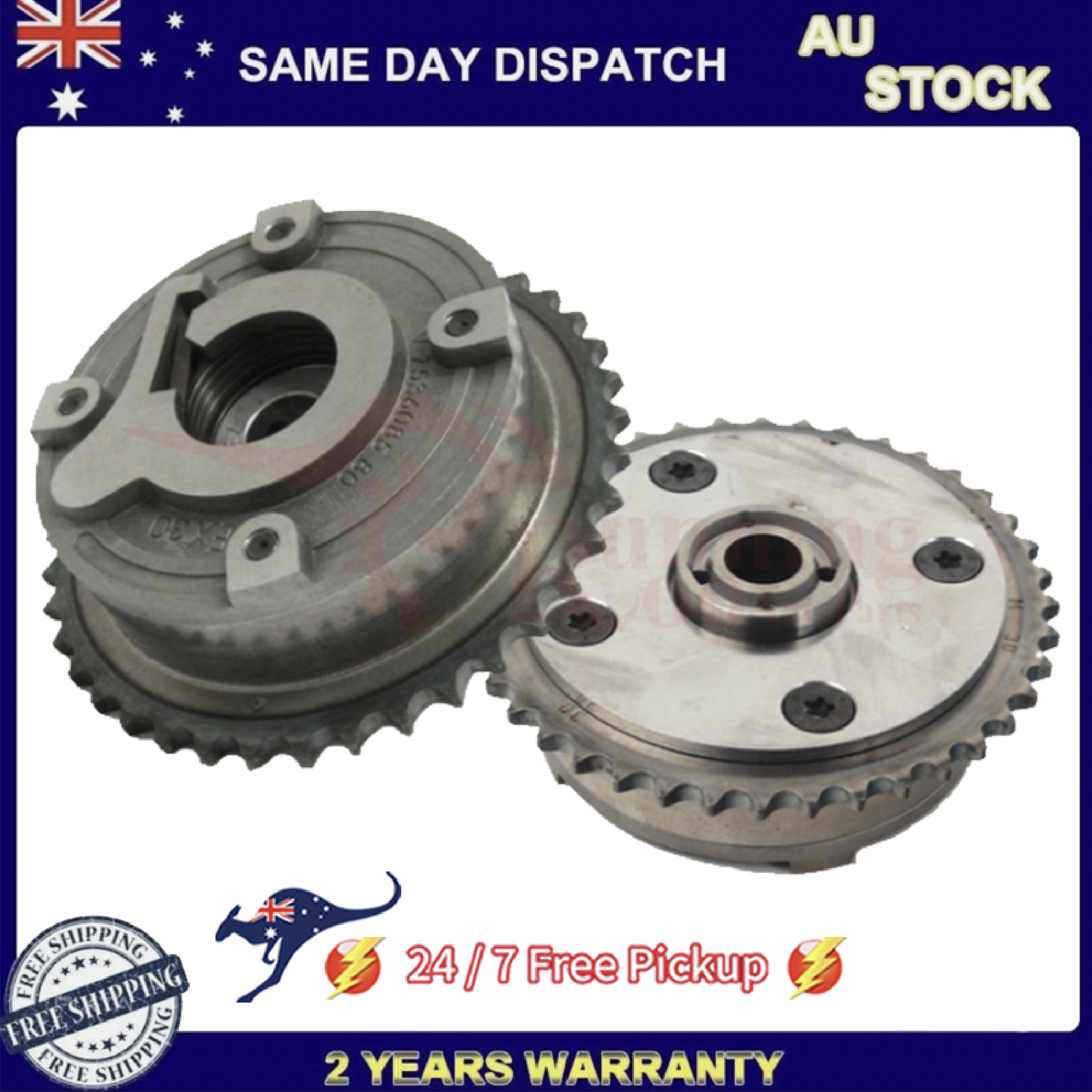
The product image can show different sides of the same gear. Do not count the views as separate supplied parts. Ask RunningRoo to confirm the quantity and contents in writing, especially when the workshop’s estimate calls for more than one item. The selected website entry does not provide a detailed contents schedule, so this is a sensible question to resolve before payment rather than an assumption to make from the image.
What to give the workshop before ordering
Prepare a short account of the complaint. State when it began, whether it occurs under particular conditions and what work was carried out beforehand. Include any relevant invoices and the complete diagnostic report you have been given. This helps the technician understand the sequence without forcing you to interpret technical data or choose a replacement part from an online discussion.
Ask the workshop to explain the evidence for replacing this particular gear. A useful answer identifies the affected component and the relevant checks, not merely a general timing-related phrase. If the diagnosis is still incomplete, say so when asking RunningRoo about availability. You can investigate stock and delivery options without presenting an unconfirmed part as an approved repair.
Agree who will authorise any additional parts once access is available. An owner supplying a gear may assume the workshop has everything else; a workshop may assume the owner has ordered a larger package. A written scope prevents that misunderstanding. Ask the installer to list any separate consumables or hardware required by the applicable factory procedure and to confirm which items it will source itself.
Keep this purchase separate from a complete timing overhaul
The listed MINI exhaust gear is the focus of this guide. A chain kit, a set of guides or other adjustment components are separate purchasing questions unless the written order explicitly includes them. The presence of related products in search results does not make them part of this item. Review the invoice and confirmed contents before scheduling the job around an assumed package.
A broader repair may be appropriate if the workshop identifies additional requirements, but the explanation should be itemised. Ask which items are being replaced because of a confirmed finding, which are required by the procedure and which are proposed for another stated reason. This helps you assess the total estimate without demanding that a supplier make decisions about components it has not inspected.
The same approach applies when comparing quotes. One quote may describe a single gear, while another includes diagnosis, labour and several additional parts. Compare like-for-like scopes before comparing totals. Keep the agreed part number and position visible on both documents so a price discussion does not accidentally move from an exhaust component to a different product.
Choosing website checkout or the matching eBay item
Use the RunningRoo website product page for a direct order, or the matching RunningRoo eBay item if that channel suits your purchasing records. Send the exact link with the fitment enquiry. A screenshot cropped to a generic title can omit the item number, while a saved link keeps the discussion connected to the intended listing.
Read the current price, fulfilment and warranty or returns wording on the channel where you intend to buy. If anything is unclear, ask before completing checkout and keep the response. This article does not replace those current terms or promise a delivery date. It helps you arrive at checkout with the important parts questions already resolved.
For a workshop order, include the business name, delivery address and the contact responsible for receiving it. For an owner-supplied part, obtain the installer’s agreement to the selected item before payment. One clear contact and one written confirmation usually provide a better record than several disconnected messages containing different vehicle descriptions.
Melbourne pickup and dispatch planning
RunningRoo supports Melbourne customers from Blackburn, VIC, with appointment-based local pickup. Arrange collection only after the item and quantity have been confirmed and the order is ready. Give the collector the correct order reference. If a mechanic or courier is collecting on your behalf, make the arrangement with RunningRoo first so the handover does not depend on a last-minute explanation at the door.
For customers elsewhere in Australia, ask about current fast dispatch options using the destination postcode. Explain the workshop’s planned booking date, but distinguish the seller’s dispatch estimate from the carrier’s delivery estimate. Leave room for a fitment question to be resolved before the vehicle is committed to a schedule. Friendly support is most useful when there is enough information to answer the actual order question.
A practical handover from supplier to installer
Once the parcel arrives, compare the packaging label, item reference and quantity with the agreed order. Keep the packaging while the workshop checks the part. If the label or physical item raises a question, send photographs and the order number to RunningRoo before installation. Do not ask the installer to adapt a questionable part merely because the vehicle is already in the workshop.
At completion, ask the mechanic to record the position and reference of the replaced component and the checks made against the original complaint. Retain that record with the invoice. It gives future service work a clearer history and makes any later parts enquiry more precise. A note identifying an exhaust gear is substantially more useful than a receipt that says only “MINI timing repair”.
Frequently asked questions about this MINI exhaust VVT gear
Is this suitable for every R56–R61 MINI?
No blanket compatibility claim is made. The model range in the title does not replace a VIN and engine-code check. Provide the full vehicle details, the workshop’s exhaust-side reference and any information about a replacement engine. Ask RunningRoo to confirm the match before ordering.
Is an N14 automatically covered because other MINI engines are listed?
No. The selected title names N12, N16 and N18. The historical MINI training also shows that engine configurations differ. Do not add N14 or another engine to the advertised range by assumption. Establish the actual requirement from the appropriate vehicle-specific parts information.
Are there two gears because the image shows multiple views?
Do not infer quantity from the number of product views. Ask for the supplied quantity and contents to be confirmed. If your workshop needs two separately identified components, make sure the order lists each required reference and quantity rather than relying on a photograph.
Can an OE number alone guarantee that the repair will work?
It can help identify a component, but it does not establish the cause of a complaint. The workshop must diagnose the vehicle and specify the repair. A confirmed product match and a confirmed diagnosis answer different questions, and both matter before installation.
Can RunningRoo help with an urgent Melbourne order?
Call 0425 890 125 with the exact product link, VIN, engine code and requested quantity. Ask about current stock, fast dispatch or Blackburn pickup by appointment. Availability at the time of enquiry must be confirmed; this guide does not reserve stock or promise same-day collection.
Prepare one clear request for a fitment reply
A complete enquiry can be brief: identify the vehicle, quote the engine code and OE number, state that the workshop requires an exhaust gear, and attach its relevant findings. Include the selected product link and say whether you prefer website checkout or the eBay item. Add your postcode or request an appointment for Melbourne collection. This gives the supplier the information needed to discuss the actual order.
Before paying, make sure the reply covers fitment, supplied quantity, current availability and the fulfilment arrangement. Keep that reply with the workshop estimate. RunningRoo’s Australian-operated service and friendly support can help coordinate the purchase, while your installer remains responsible for the diagnosis and the correct factory repair procedure. Together, those steps create a more reliable path from an online search to a properly specified repair.
Related reading and Australian support
For the broader purchasing process, read VVT gear intake versus exhaust fitment and VVT gear versus camshaft position sensor diagnosis. These guides provide supporting context; the engine and product reference in this article remain the focus of your order.
Visit RunningRoo Auto Parts or the contact page to discuss your enquiry. Australian customers can call 0425 890 125; from overseas, use +61 425 890 125. RunningRoo is Australian-operated in Blackburn, VIC, offering friendly support, Melbourne local pickup by appointment and current fast dispatch options subject to stock and order confirmation. Send your VIN or chassis identification, complete engine code, OE number and professional diagnostic findings before ordering.
Factory and official source notes
- MINI Service Training — N12/N14 Electrical Systems, July 2006, VANOS section — Third-party reproduction of original Spanish factory training. Historical N12/N14 comparison only; does not validate N16/N18 fitment. Original document text used, not uploader summary.
Technical context is drawn from the named manufacturer documents. Product descriptions establish advertised supply scope; they do not replace factory fitment or diagnosis. Historical documents are not represented as the latest repair instructions.