
By RunningRoo Auto Parts — written from the desk of our Product Manager
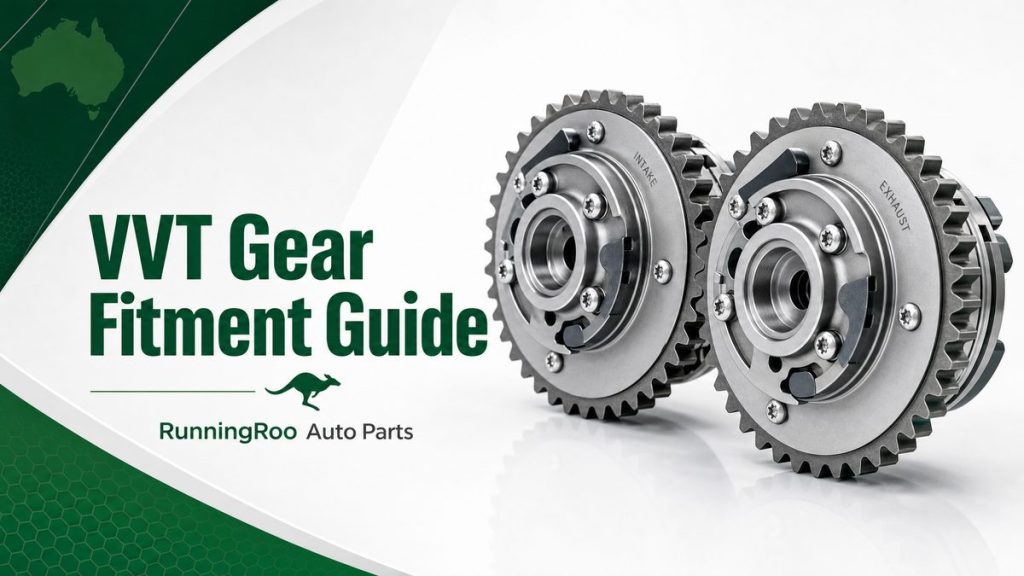
The single most common mistake in a VVT gear repair is fitting the wrong gear — an intake gear on the exhaust cam, or a gear for the wrong engine generation. The intake and exhaust gears look almost identical, but they have different internal stops and adjustment ranges, so the wrong one sets the valve timing wrong from the first start. This guide explains how VVT gears are identified, how to tell intake from exhaust, and how to confirm the right fitment before ordering.
RunningRoo Auto Parts – Based in Melbourne, Australia 🇦🇺
📞 Free 24/7 Pickup Available (Contact 0425890125)
💬 Any questions? Message or Call us anytime! We’re here to help.Why Choose RunningRoo?
✅ Aussie Owned & Operated | 🚚 Fast Shipping | 🤝 Friendly Support
Why intake and exhaust gears differ
The intake and exhaust VVT gears adjust their camshafts through different ranges and in different directions, because the intake and exhaust valve events need different timing. Inside, each gear has a different internal stop and vane geometry, so they are physically keyed to their camshaft but not electrically interchangeable.
The table below summarises the differences.
| Position | Function | Why it matters |
|---|---|---|
| Intake VVT gear | Advances/retards the intake cam | Different stop and range |
| Exhaust VVT gear | Advances/retards the exhaust cam | Different stop and range |
Reading the part number
The most reliable way to identify a VVT gear is the part number stamped on the original unit or listed against the engine code. Each position — intake and exhaust — has its own part number, and the number also identifies the engine generation. If the original gear is legible, use it; otherwise, the engine code and VIN identify the correct part.
Do not rely on the visual appearance alone, because intake and exhaust gears are often nearly identical to the eye.
Matching by engine code and VIN
The engine code is the definitive reference for VVT gear fitment, and the VIN confirms the vehicle and build. Send both to the supplier and confirm the position — intake, exhaust or both — before ordering. On engines with two banks or two cams per bank, each position needs its own correct gear.
A supplier who asks which position you need is doing the job properly, and their confirmation is the cheapest insurance against a wrong gear that cannot be returned once fitted.
Confirming the gear before fitting
Before fitting, compare the new gear with the old one side by side, checking the part number, the locating key and the internal stop. Turn the new gear through its range by hand and confirm it matches the old unit. This minute of checking prevents a timing fault from a gear that looked right but was the wrong position.
How VVT gears are keyed
VVT gears are keyed or bolted to their camshaft so that they can only be fitted in one orientation, and they have an internal locating key or mark that sets the correct timing. The intake and exhaust gears are keyed differently, which is why a gear that looks identical will not fit the wrong camshaft correctly.
When fitting, align the locating key or mark exactly as the old gear was, and do not force the gear into place. A gear that is fitted out of alignment sets the valve timing wrong and can damage the engine on an interference design.
Reading the engine code
The engine code is the definitive reference for VVT gear fitment, and it is found on the vehicle data sticker, in the owner’s manual or stamped on the engine. The VIN confirms the vehicle and build, and together they identify the exact gear for each position.
If the engine is already apart, read the part number off the original gear, because that is the most precise reference of all. Recording the engine code, VIN and original part number before ordering removes the guesswork.
Common fitment mistakes
The most common mistakes are ordering by model name, fitting an intake gear on the exhaust cam, and ignoring the engine generation or revision. Each of these produces a valve-timing fault from the first start, and a fitted gear cannot usually be returned.
The fix is simple: match by engine code, position and part number, and confirm with the supplier before ordering. A few minutes of checking prevents a wrong gear and a repeat of the labour.
Where to find the engine code on your car
The engine code is the most reliable way to confirm VVT gear fitment, and it is easier to find than many owners expect.
| Source | What to look for |
|---|---|
| Compliance or build plate | Engine code listed in the vehicle details |
| Owner’s manual | Engine code in the specifications section |
| Engine block | Stamped code on a machined flat area |
| Original gear | Part number stamped on the old component |
The VIN supports the engine code by confirming the exact build and market, including Australian-delivered specifications. Recording both before ordering removes the guesswork that causes most wrong-gear orders.
How intake and exhaust stops differ in practice
The intake and exhaust gears may look nearly identical, but their internal stops are set to different rotation limits because the intake and exhaust camshafts need different adjustment ranges. In practice, that means the two gears will not behave the same when you turn them by hand against their stops.
Comparing the new gear with the original side by side is the final check. The part number should match, the locating key should line up the same way, and the internal travel should feel the same. If any of those differ, stop and confirm the part before fitting it.
What to send RunningRoo before you order
To make sure the correct gear leaves our Melbourne warehouse the first time, send the engine code, the VIN and a clear photo of the original gear with its part number if it is visible. Tell us whether you need the intake gear, the exhaust gear or both, and confirm the vehicle year and model.
That small amount of information lets us match the part to the exact engine rather than guessing from a model name. It is also the reason a quick message before ordering saves the cost and frustration of a wrong gear that cannot be returned once it has been fitted.
Checking a VVT gear before you accept it
When the gear arrives, check it against the original before the workshop opens the timing system. Confirm the part number, the intake or exhaust position, the locating key and the internal stop. Turn the new gear by hand and compare its travel with the old unit.
This is a two-minute check that catches the most common fitment errors. If anything differs, contact the supplier before fitting, because a gear that has been installed is normally not returnable.
The true cost of a wrong gear
The wrong VVT gear does not just set the valve timing wrong from the first start; it also costs a second lot of labour to correct. On an interference engine it can go further and risk valve-to-piston contact, turning a simple part error into engine damage.
That is why fitment is never a guess. Matching by engine code, position and part number, and comparing the gear with the original, is the cheapest insurance in the whole VVT repair.
Key takeaways
Fitting the correct VVT gear comes down to matching the engine code, the camshaft position and the part number, and confirming the gear against the original before fitting. The intake and exhaust gears are not interchangeable, and the wrong one sets the valve timing wrong from the first start.
For the best result, buy a quality gear matched correctly, compare it with the original, and renew the chain and the paired gear where the engine has two. That is how a VVT repair is done once and done right.
Quick reference: fitment checklist
Use this list to confirm VVT gear fitment before ordering:
- Read the engine code and VIN.
- Identify the position: intake, exhaust or both.
- Read the part number off the original gear if visible.
- Confirm the part number with the supplier before dispatch.
- Compare the new gear with the old before fitting.
- Align the locating key or mark correctly during installation.
Following this list prevents the most expensive VVT mistake — fitting the wrong gear and paying for the labour twice.
Frequently asked questions
Are intake and exhaust VVT gears interchangeable?
No. They have different internal stops and adjustment ranges, so the wrong gear sets the valve timing wrong.
How do I identify my VVT gear?
Read the part number on the original gear, or use the engine code and VIN to confirm the correct part.
Should I replace both gears?
On engines with two gears, it is often wise to replace both while the timing system is open.
Can I match a VVT gear by model name?
Not reliably. Match by engine code, position and part number instead.
What happens if I fit the wrong gear?
The valve timing will be wrong from the first start, producing fault codes and poor running.
Can a fitted VVT gear be returned?
Usually not, which is why fitment is confirmed by engine code, position and part number before ordering.
Do VVT gears have timing marks?
Many have a locating key or mark that must be aligned correctly, so always match the new gear to the old before fitting.
Where is the engine code on an Australian-delivered car?
It is usually on the compliance or build plate, in the owner’s manual, or stamped on the engine block, and it should be read together with the VIN.
Why should I send the VIN and engine code together?
The VIN confirms the exact build and market, while the engine code confirms the engine variant, and together they remove the guesswork from fitment.
Can I match a VVT gear from a photo alone?
No. Intake and exhaust gears look nearly identical, so always match by engine code, position and part number.
Shop the parts mentioned in this guide
- CVVT Timing Camshaft Gear for Hyundai Veloster / Tucson / Elantra 24370-2B700
- 2x Cam Phaser VVT Gears for Peugeot 207 / 208 / 308 / 508 / RCZ 1.4–1.6L
- Intake CVVT Camshaft Gear / Phaser for Kia Forte 2014–2019 — eBay
- VVT Camshaft Gears (Intake & Exhaust) for Toyota Corolla 2007–2012 1.8L 2ZR-FE
Watch on RunningRooAuto YouTube
- RunningRoo Auto Parts – trusted Melbourne parts support
- RunningRoo Auto Parts – product and fitment channel
RunningRoo Auto Parts – Based in Melbourne, Australia 🇦🇺
📞 Free 24/7 Pickup Available (Contact 0425890125)
💬 Any questions? Message or Call us anytime! We’re here to help.Why Choose RunningRoo?
✅ Aussie Owned & Operated | 🚚 Fast Shipping | 🤝 Friendly Support
Sources and further reading
- Variable valve timing — Wikipedia
- BorgWarner — variable cam timing systems
- RACV — car maintenance and repair guidance
- CarsGuide — Australian motoring advice
RunningRoo Auto Parts – Based in Melbourne, Australia 🇦🇺
📞 Free 24/7 Pickup Available (Contact 0425890125)
💬 Any questions? Message or Call us anytime! We’re here to help.Why Choose RunningRoo?
✅ Aussie Owned & Operated | 🚚 Fast Shipping | 🤝 Friendly Support
Fast service and delivery A+