
By RunningRoo Auto Parts — written from the desk of our Product Manager
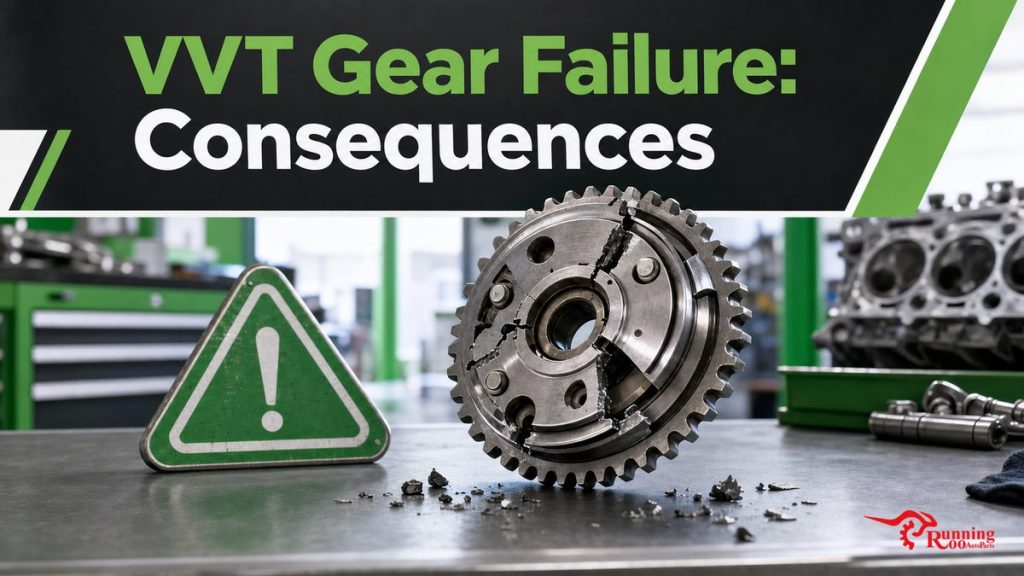
A failing VVT gear rarely fails all at once. It wears gradually, and the consequences arrive in stages, from a harmless-sounding cold-start rattle to a loss of power and, in the worst case, damage to the engine it shares with the timing chain. Understanding what happens at each stage is how you recognise the point where a cheap repair is still possible and the point where it is no longer.
This guide walks through the consequences of a failing VVT gear, stage by stage, and explains why acting early changes the whole cost of the repair. It is written for Australian owners who have heard the rattle and want to know what comes next.
RunningRoo Auto Parts – Based in Melbourne, Australia 🇦🇺
📞 Free 24/7 Pickup Available (Contact 0425890125)
💬 Any questions? Message or Call us anytime! We’re here to help.Why Choose RunningRoo?
✅ Aussie Owned & Operated | 🚚 Fast Shipping | 🤝 Friendly Support
The first stage: a brief cold-start rattle
The earliest consequence of VVT gear wear is usually a brief rattle on the first cold start of the day, as the worn locking pin fails to hold the camshaft while oil pressure builds. At this stage the engine usually drives normally once warm, and there may be no warning light. It is easy to dismiss, but it is the cheapest moment to act.
The rattle is not the problem itself; it is the warning that the gear’s internal hold is wearing. Left alone, the wear progresses to the next stage.
The second stage: fault codes and rough running
As the gear wears further, the engine computer notices the timing drifting and sets camshaft timing codes. The engine may idle roughly, hesitate or lose a little power and economy, and the warning light may appear. This is the stage where the diagnosis should be made, because the gear is now measurably failing.
The table below summarises the stages and their symptoms.
| Stage | Symptoms |
|---|---|
| Early | Brief cold-start rattle, no light |
| Middle | Fault codes, rough idle, hesitation |
| Late | Loss of power, limp mode, risk of damage |
The middle stage is where a correct diagnosis saves the most money.
What the codes mean for the engine
The codes tell you which side of the system is struggling. Camshaft over-advanced or over-retarded codes point to the VVT system, while correlation codes point to the timing chain. The two often appear together, because the gear and the chain wear together and share the same oil.
Reading the codes early, before they are cleared, is how the workshop knows whether it is dealing with a gear, a chain or both, and that information decides the scope of the repair.
The loss of performance and economy
The practical consequence of a failing gear is that the engine stops getting the valve timing it needs. Power, throttle response and fuel economy all suffer, and the engine may feel flat or hesitant. These are the symptoms an owner notices in daily driving, and they are the engine telling you the timing is no longer optimal.
This is not a cosmetic problem. The engine was designed around variable timing, and losing it means running at a permanent compromise.
The risk to the timing chain
The VVT gear is driven by the timing chain, and the two share the same oil, load and service life. A worn gear that rattles and drags puts extra load on the chain, and the chain’s guides and tensioner wear faster as a result. By the time the gear has failed, the chain is usually well into its service life too.
This is why a VVT gear replacement is so often combined with a timing chain service. The two are one system, and neglecting one shortens the life of the other.
The worst-case consequence
In the worst case, a severely worn or failed VVT gear allows the timing to drift far enough to cause damage, particularly on an interference engine. The gear itself may also shed material or allow the chain to jump, and the result is bent valves and a destroyed engine. This is the end of the road that begins with an ignored cold-start rattle.
The table below shows how the cost escalates.
| Action | Typical cost |
|---|---|
| Oil and solenoid service at first sign | Low |
| Gear replacement while early | Moderate |
| Gear plus chain and guides | Higher |
| Bent-valve engine rebuild | Highest |
The cost curve is steep, which is why the early rattle is the cheapest warning an owner will get.
Acting at the right time
The whole message of the VVT gear’s failure is that timing matters, in both senses. The gear controls the engine’s timing, and the owner’s timing of the repair decides its cost. Acting at the first cold-start rattle, with a diagnosis that measures rather than guesses, keeps the repair at the gear or the oil stage and away from the engine-rebuild stage.
Every stage after the first costs more, and every month of ignoring the warning moves the repair one stage further along that curve.
The cost curve explained
The consequences of a VVT gear failure follow a steep cost curve, and understanding it is the whole argument for acting early. At the first rattle, the repair may be an oil service or a solenoid. A little later it is a gear. Later still it is a gear plus a chain and guides, and at the end it is a bent-valve engine rebuild.
The table below puts the curve in order.
| Stage | Typical repair |
|---|---|
| First rattle | Oil or solenoid |
| Fault codes | Gear replacement |
| Chain also worn | Gear plus chain and guides |
| Skipped timing | Engine rebuild |
Each stage multiplies the cost, and the only cheap point is the first one.
How the oil plays a role
The oil is the common thread through every stage, because the gear is moved and lubricated by it. A gear that fails early is often a gear that ran on old or low oil, and a new gear fitted without a fresh oil change starts its life with the same problem. The oil is therefore both a cause and a cure in the VVT story.
This is why a diagnosis always checks the oil first, and why a gear replacement always includes a fresh oil and filter change. The oil is the one variable the owner controls at every service.
The bottom line
The VVT gear rarely fails without warning, and the warning is a cold-start rattle that is easy to dismiss. The consequences of dismissing it are a steep climb from a cheap oil service to an engine rebuild, and the only way to stay at the cheap end is to act on the first reliable sign.
Treat the rattle as the engine’s cheapest warning, and the repair stays at the stage where it belongs.
A simple rule to remember
If there is one rule to take away, it is this: a new cold-start rattle is never normal on an engine with VVT, and the cost of investigating it is always less than the cost of ignoring it. The rattle is the system’s cheapest warning, and it arrives before the fault codes, before the power loss and before the engine damage.
Every stage after that first rattle costs more, and the gap between stages is measured in weeks rather than years. Act on the first sign, and the consequences stay at the cheap end where they belong.
A final word
The VVT gear failure is one of the most predictable failures in the engine, because it announces itself early and escalates on a known path. The cold-start rattle becomes fault codes, the fault codes become performance loss, and the performance loss becomes the risk of engine damage. Knowing the path is knowing where to interrupt it.
Interrupt it at the first rattle, with a diagnosis that checks the oil and the solenoid before the gear, and the consequences stop at the cheapest stage. That is the whole value of understanding what happens when the gear fails.
A note to close
The VVT gear’s consequences follow a known and steep path, from a rattle to a rebuild, and the only cheap exit is at the very beginning. Recognise the rattle for what it is, and act on it, and the expensive end of that path never becomes your problem.
In short
The VVT gear fails on a known, steep path, and the only cheap moment is the first rattle. Interrupt it there with a proper diagnosis, and the expensive end of the path, a damaged engine, never becomes your problem.
That single habit, acting on the first rattle rather than the last warning light, is the difference between a cheap repair and a costly rebuild.
Frequently asked questions
What is the first sign of a failing VVT gear?
A brief rattle on the first cold start of the day, usually before any warning light.
What happens if I ignore the rattle?
The wear progresses to fault codes, rough running, loss of power and, eventually, risk of engine damage.
Does a failing VVT gear affect the timing chain?
Yes. The gear is driven by the chain and shares its oil, so they wear together and one shortens the life of the other.
What codes point to the VVT system?
Camshaft over-advanced or over-retarded codes, while correlation codes point to the chain.
Why does performance drop?
The engine loses the valve timing it was designed around, so power, response and economy suffer.
When should I act?
At the first cold-start rattle or timing code, before the wear spreads.
What is the worst-case consequence?
On an interference engine, a jumped chain or severe timing drift can bend valves and destroy the engine.
How do I keep the repair cheap?
Diagnose early, check the oil, and renew the gear and chain together while the engine is open.
Shop the products mentioned in this guide
- 2-Piece Camshaft Adjusters for Mitsubishi Lancer Evo X 2.0 / ASX / Outlander 4B11 1147
- CVVT Timing Camshaft Gear for Hyundai Veloster / Tucson / Elantra 24370-2B700
- VVT Camshaft Gears Intake & Exhaust for Toyota Corolla 2007–2012 1.8L 2ZR-FE
- VVT camshaft gears on eBay
Watch on RunningRooAuto YouTube
- RunningRoo Auto Parts – trusted Melbourne parts support
- RunningRoo Auto Parts – product and fitment channel
RunningRoo Auto Parts – Based in Melbourne, Australia 🇦🇺
📞 Free 24/7 Pickup Available (Contact 0425890125)
💬 Any questions? Message or Call us anytime! We’re here to help.Why Choose RunningRoo?
✅ Aussie Owned & Operated | 🚚 Fast Shipping | 🤝 Friendly Support
Sources and further reading
- ACCC – Consumer rights and guarantees
- Product Safety Australia – vehicle recalls
- RACV – car maintenance and repair guidance
- API – Engine oil standards
- ACEA – European oil sequences
VVT system operation, fault-code definitions and interference design are engine-specific and are described in each manufacturer’s workshop manual. Confirm your engine code and VIN against the official repair information before diagnosis or repair.
RunningRoo Auto Parts – Based in Melbourne, Australia 🇦🇺
📞 Free 24/7 Pickup Available (Contact 0425890125)
💬 Any questions? Message or Call us anytime! We’re here to help.Why Choose RunningRoo?
✅ Aussie Owned & Operated | 🚚 Fast Shipping | 🤝 Friendly Support