
An unusual sound from a Hyundai D4FB diesel can be difficult to describe once the car reaches a workshop. The engine may already be warm, the sound may have stopped, or a phone recording may emphasise a different noise from the one the driver noticed. A useful D4FB timing chain noise enquiry therefore starts with an observation record. It should preserve what happened without turning a guess about the source into a confirmed diagnosis.
This Australian guide explains how an owner and workshop can organise that record before dismantling or buying parts. It is distinct from a general kit selection guide: the central question is what evidence should support the repair decision. If a qualified technician identifies timing-drive work as appropriate, Timing Chain Kit For Hyundai D4FB 1.6L Diesel Accent i30 Soul — RunningRoo and matching RunningRoo eBay listing are the relevant RunningRoo offers to review. Call 0425 890 125 with the engine identity and workshop findings for friendly parts support.
Start with the event, not the name of a component
Write down when you first noticed the sound and what the vehicle was doing. Useful descriptions include the first start after parking overnight, a restart after a short stop, stationary operation after a journey or a change noticed during normal driving. Do not create a test by repeatedly restarting or revving a vehicle with an unexplained mechanical concern. Record the event that actually occurred and ask the workshop how it wants to investigate.
Describe the sound in your own words before attaching a diagnosis. A brief metallic rattle, a regular ticking or a changing vibration are observations. “Stretched chain” is a proposed cause that still needs evidence. Separating those categories helps the technician avoid being directed towards one part before the vehicle has been assessed. It also keeps an enquiry to the parts supplier focused on the confirmed repair requirement.
Include the duration as accurately as you can without exaggerating. If you did not time it, say that it was an estimate. Note whether it happened once or repeatedly, and whether you noticed a warning message, changed starting behaviour or loss of performance at the same time. A short factual description is more useful than an elaborate theory based on another owner's vehicle.
Identify the D4FB application precisely
The RunningRoo D4FB product page names Hyundai Accent RB, i30 FD/GD and Kia Soul AM applications within stated year ranges. Those are seller catalogue descriptions requiring confirmation. The article does not extend them to every 1.6 diesel or every vehicle wearing one of those badges. Provide the VIN, build date, actual engine code and any relevant replacement history before a chain kit is selected.
If a workshop has already removed parts, ask it to supply the identifying numbers and a labelled photograph. Keep the photograph attached to the job record rather than forwarding an image without context. If the car has had a replacement engine, mention that early: the original vehicle information may not fully describe the fitted assembly. The supplier needs a clear statement of what the workshop is asking to replace.
Use the same identifiers throughout the process. A diary headed only “i30 noise” can become separated from the estimate or kit enquiry. Put the registration reference or workshop job number on your private correspondence, together with the engine designation. Do not publish your VIN in a public comment to obtain an informal diagnosis; send it directly to the workshop or supplier handling the job.
Why an owner manual belongs in the conversation
Hyundai's Australian i30 owner manual warns about the hazards of working on the high-pressure diesel injection system and specifies using the required fuels and lubricants. It also notes that a manual can describe equipment not fitted to every version. These are reasons to use the correct vehicle information and leave intrusive diesel investigation to qualified technicians. They are not a sound-identification chart or evidence that a particular noise is caused by the chain. Hyundai i30 Australian owner manual, maintenance (archived original Hyundai document)
Bring the maintenance record rather than trying to compensate for missing information with a product recommendation. Note the date and distance of the last oil service and provide the invoice where available. If oil was topped up, record what was used and approximately when. If the details are unknown, state that honestly. A workshop can decide what inspection is appropriate; it cannot reliably interpret invented service history.
Do not change oil viscosity, add a treatment or disconnect a component simply to make the noise disappear before the appointment. Such changes can alter the evidence and create a second variable. Ask the repairer first. The aim is to preserve a useful account of the complaint and obtain a justified repair plan, not to find a temporary change that sounds reassuring in a recording.
Making a useful recording without creating a risk
Ask whether the workshop would like a recording and what context to include. If a recording can be made safely from an ordinary standing position, introduce it with the date, whether the engine was cold or warm and what you heard. Keep hands, clothing and the phone away from moving or hot components. Do not remove covers, reach into the engine bay or place a device where it can fall into machinery.
Keep the original file. Messaging services can compress audio, and background traffic or wind can mask the event. A recording is supporting information; it does not establish the location or cause of a sound. Tell the technician where you were standing and whether the bonnet was open. Avoid editing several different events into one clip that makes their timing or conditions unclear.
If the sound is accompanied by a serious warning or the vehicle behaves abnormally, stop gathering recordings and seek professional advice about what to do next. A blog cannot establish whether the vehicle is safe to drive. Describe the warning exactly and follow the vehicle's instructions and the inspecting professional's advice. The parts order can wait until the repair requirement has been established.
A practical noise observation sheet
| Observation | What to record | What not to conclude |
|---|---|---|
| First occurrence | Date, approximate distance and circumstances | That the part failed at that exact moment |
| Temperature context | Overnight start, warm restart or after driving | A precise oil temperature without measurement |
| Duration | Timed duration or clearly labelled estimate | A universal pass/fail time limit |
| Other symptoms | Warning wording, starting or drivability changes | That all symptoms have one cause |
| Maintenance | Available invoices and known oil details | That missing history proves neglect |
| Recording | Original file and recording position | That phone audio identifies a failed chain |
| Workshop result | Written findings and recommended next step | That an online comment replaces inspection |
The sheet should remain concise. A technician does not need a daily essay about every normal operating sound. What matters is a reproducible description and a record of significant changes. If several people drive the vehicle, ask them to keep their observations separate and date them. Combining uncertain memories can accidentally make an intermittent event appear consistent when it was not.
Questions for the diagnostic appointment
Ask what the initial assessment will cover and what the workshop expects to learn before recommending dismantling. Useful questions include whether it has reproduced the complaint, what evidence points towards the timing drive and whether further investigation is required. Let the technician choose the tests using appropriate Hyundai or Kia service information. This article deliberately does not supply generic pressure limits, chain measurements or test shortcuts.
Ask for the distinction between a finding and a possibility. “Timing-drive condition requires inspection” is different from “the inspected guide is damaged”. Both can be legitimate statements at different stages, but they justify different levels of certainty in a parts order. If the next step is exploratory, agree on how the workshop will report the result and obtain approval for additional work.
When the diagnosis is available, pass the actual repair recommendation to RunningRoo. A message saying “please supply the kit listed for this confirmed D4FB job” is more actionable when it includes the engine details and required components. The supplier should not be asked to determine from a phone recording whether an engine needs dismantling. Professional diagnosis and parts matching support each other but remain different tasks.
Turn the findings into a clear parts request
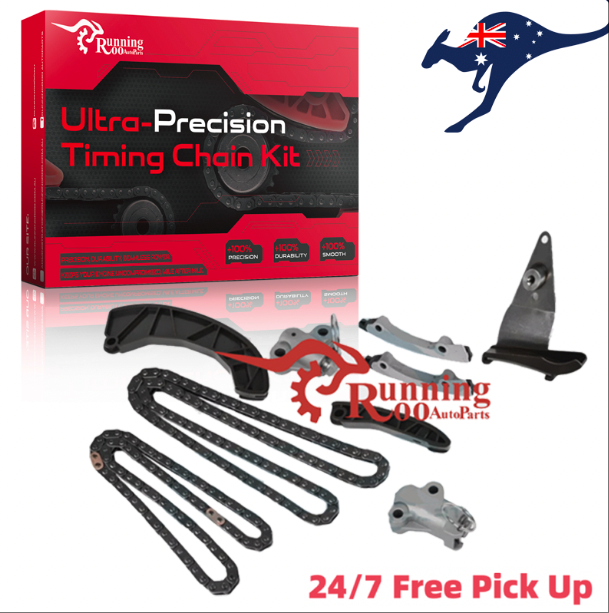
The current website offer is a D4FB timing chain kit; its concise description does not provide a detailed item-by-item inventory. Ask for the package contents in writing. Do not assume every gear, tensioner, guide, seal or fastener is included simply because similar kits elsewhere show those items. The installer should compare the confirmed contents against the repair list before the order is placed.
Review Timing Chain Kit For Hyundai D4FB 1.6L Diesel Accent i30 Soul — RunningRoo and matching RunningRoo eBay listing together, then retain the supplier's clarification with the order. A related listing title is not proof that every package or revision is identical. If a photograph and written description seem inconsistent, pause that part of the order and resolve the difference. This is particularly useful when a workshop needs a specific component rather than a general selection of timing parts.
RunningRoo is Australian-operated, with friendly support for Melbourne and interstate customers. Ask about fast dispatch once the correct stock is confirmed. Melbourne pickup is by appointment; call 0425 890 125 before travelling. If the car is already booked in, tell the workshop when the supplier expects to dispatch and allow it to inspect the delivered package before planning installation around it.
Use the same record after the repair
Keep the original observation sheet for the handover. Ask the workshop how it reassessed the complaint and what conditions were used. A comparison between an overnight concern and a brief warm handover may need explanation. The purpose is not to demand an unsafe or unnecessary repeat test, but to understand how the repairer reached its conclusion about the original complaint.
Retain the invoice, parts references and any relevant inspection photographs. If another sound remains, describe it separately instead of assuming the chain repair has failed. A new observation should be assessed on its own evidence. Likewise, do not represent a changed sound as proof that every aspect of the engine has been restored. The record should describe the specific work and findings without claiming more than the workshop established.
Label recordings so the workshop can use them
Give each existing recording a descriptive filename or a short accompanying note containing the date, parking interval and observation. Keep an unedited original. If several clips exist, provide a simple sequence rather than a montage that hides the time between events. The technician can then decide which recording is relevant to the complaint and whether further assessment needs different appointment conditions.
Include a brief note about where the recording was made without placing yourself near moving components to recreate it. A phone recording captures the surroundings as well as the vehicle, so avoid presenting it as a precise location measurement. The workshop's direct examination remains necessary. If you are unsure whether two clips show the same sound, state that uncertainty rather than labelling both as a chain fault.
After the appointment, keep the technician's interpretation with the original record. This makes a later comparison more useful than relying on memory alone. It also separates what the owner observed from what the workshop established. That distinction should remain visible in the parts enquiry: send the confirmed requirement to RunningRoo, while retaining the full symptom history for the professional managing the repair.
Frequently asked questions
Can a phone video prove the D4FB chain is worn?
No. It can help communicate an intermittent complaint, but it does not establish internal condition. Provide the original recording and context, then rely on a qualified workshop's assessment to determine the next step.
Should I buy a chain kit before the appointment?
It is usually more useful to establish the repair scope first. A parts enquiry can begin with identification, but the final order should match the installer-approved list rather than a guess based on a sound.
Does a cold-only noise identify one failed part?
No specific failed part is established by that description alone. Record the conditions accurately and let the technician decide which observations and tests are relevant. Do not create repeated starts solely to reproduce a concerning noise.
Is this a D4FB installation guide?
No. It is an evidence and communication guide. Timing settings, measurements and installation procedures must come from the correct current service information for the fitted engine and be applied by a qualified technician.
What should I send RunningRoo?
Send the VIN, actual engine code, relevant OE references, workshop repair list and any requested component photographs. Add your postcode or Melbourne pickup preference so stock and delivery arrangements can be discussed together.
Related reading and RunningRoo video
Read the related RunningRoo product-identification guide. Use that guide for the catalogue discussion and this article for the specific workshop question above.
Watch RunningRoo: Timing Chain Rattle — Wear Symptoms and When to Replace. This is general background from the RunningRoo AutoParts channel, not a demonstration of this exact supplied component, confirmation of fitment or a substitute for the vehicle-specific repair procedure.
Confirm your parts enquiry with RunningRoo
Send your VIN privately, fitted engine code, relevant OE number and the installer-approved parts list before ordering. Contact RunningRoo support or call 0425 890 125. RunningRoo is Australian-operated in Blackburn, Victoria. Melbourne local pickup is by appointment; ask about fast dispatch after stock, fitment and order timing are confirmed. Friendly support can help clarify the product enquiry while the qualified repairer remains responsible for diagnosis and installation.
Technical references and scope
Hyundai i30 Australian owner manual, maintenance (archived original Hyundai document). Manufacturer material provides the technical background described in the article. Archived training and general system explanations are not current VIN-specific repair instructions. The discussion questions and planning examples are editorial guidance. Retail descriptions establish the seller’s stated offer, not manufacturer approval or universal compatibility.