
A DQ200 breakdown creates two different jobs: getting the vehicle to a suitable place safely, then establishing what repair it actually needs. Shopping for a reinforced valve body belongs to the second job. For Australian owners dealing with a car that will not move normally, the most useful early action is an accurate handover to roadside assistance and the receiving workshop. That handover can preserve information, avoid misunderstandings and make a later parts enquiry much more precise.
This guide follows the vehicle from the initial call through to a documented recommendation for a DQ200/0AM reinforced mechatronic assembly. It is not a towing procedure or a diagnosis of a no-drive condition. There are no universal towing speeds, distances, selector-release instructions or roadside electrical workarounds here. The recovery professional and the correct vehicle documentation must determine how your particular car is handled.
Deal with the immediate situation first
Follow the vehicle's warnings and obtain appropriate roadside assistance if it cannot be operated safely. Volkswagen Australia maintains an official roadside-assistance page with service contact information and eligibility details. Volkswagen Australia: Roadside Assistance Check the current terms for your vehicle rather than assuming assistance, towing or a destination is automatically covered. Other brands and independent assistance providers have their own arrangements; a Volkswagen page does not establish coverage for every car using a related transmission.
The first phone call should explain the location, the vehicle and its current condition. Tell the provider if the car is obstructing access, is in a restricted-height car park, or has another circumstance affecting recovery. Give observations rather than a guessed component diagnosis. “The warning is displayed and the car will not move normally” is a useful description. “It only needs a valve body” can prematurely narrow the conversation before anyone has assessed the vehicle.
Let the recovery operator determine the method
Consult the correct owner manual and leave the recovery method to the trained provider. Volkswagen's manual portal explains how to obtain vehicle-specific instructions. Volkswagen: correct owner manual, not universal towing instructions A photo of another DSG vehicle on a truck does not establish what is suitable for yours. Model, drivetrain configuration, vehicle condition and the recovery situation can all affect the instructions that need to be checked.
Do not treat a blog as permission to improvise a tow, force a selector or bypass a vehicle function. Tell the operator what the selector display shows and whether anything has already been attempted. If a previous provider moved the car, preserve that information too. The purpose of this article is to make the handover clearer, not to turn the owner into a roadside recovery technician.
Capture a short record without adding risk
Once it is safe, note the date, approximate odometer reading, exact warning wording and what happened immediately beforehand. If you already have a dashboard photograph, keep the original file. Explain whether the problem appeared during starting, after parking or while driving. Include any recent repair, battery event or earlier warning, while making clear which details you observed yourself and which came from another person.
There is no need to provoke the problem again to obtain a more dramatic video. A concise written record is often enough to begin the workshop conversation. If a scan or roadside assessment was performed, request the report rather than transcribing a single code from memory. Preserve the original wording and the provider's conclusion, including any statement that further investigation is required. An incomplete assessment should not be presented to the next workshop as a confirmed diagnosis.
Choose the receiving workshop before the vehicle arrives
Contact a workshop that can assess the actual transmission and confirm that it can receive the vehicle. Discuss access, arrival arrangements and the initial diagnostic scope. Ask whether the car will be assessed on arrival or stored until an appointment. This is particularly useful when a breakdown happens outside business hours or when the car must travel from a regional location to a specialist.
Ask the recovery provider and workshop to confirm the agreed destination. If the workshop changes, update everyone involved. A parts supplier's pickup address is not automatically a repair or recovery destination. RunningRoo's Blackburn VIC local pickup service is for confirmed parts arrangements by appointment; it should not be treated as an instruction to send an undiagnosed vehicle there. Establish vehicle assessment and parts collection as separate bookings.
| Handover item | Who needs it | Why it helps |
|---|---|---|
| Vehicle identity and location | Roadside provider | Plans attendance and suitable handling |
| Current warning and condition | Provider and workshop | Preserves the owner's actual observation |
| Existing scan or roadside report | Diagnosing workshop | Avoids losing the initial assessment context |
| Receiving appointment and destination | Recovery operator and workshop | Prevents an unplanned arrival or unsuitable drop-off |
| VIN, engine code and module reference | Workshop and parts supplier | Supports exact replacement selection after diagnosis |
| Written assembly recommendation | Owner and supplier | Connects a parts order to an assessed repair |
Authorise diagnosis before selecting the assembly
When the car reaches the workshop, ask for an assessment that identifies the fault and explains the proposed repair. A no-drive complaint does not by itself name the failed part. The workshop should use manufacturer information appropriate to the VIN and fitted transmission. Ask what evidence supports a mechatronic recommendation and whether any other concern remains unresolved. You are requesting a clear purchasing basis, not instructing the technician to reach a particular result.
If an earlier conversation suggested a reinforced valve body, share that as an option you are considering, not as a predetermined repair order. The investigation may support it, point elsewhere or require more work before a conclusion. Keeping the decision open avoids pressure to fit a part simply because it was discussed during a stressful roadside event. A specialist's finding is more valuable than matching the first search result to the first warning.
Move from the diagnosis to the exact RunningRoo offer
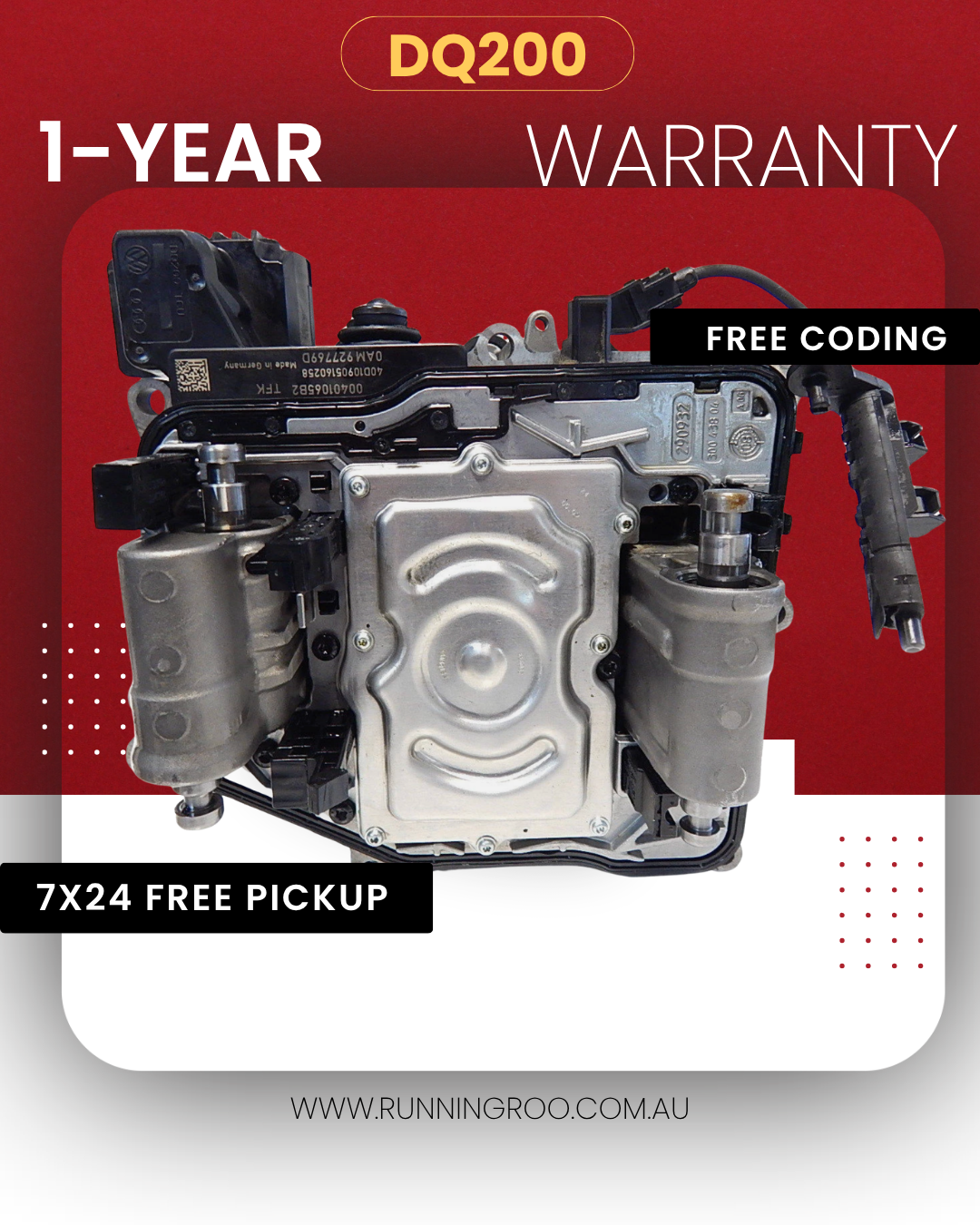
The linked RunningRoo product is advertised as a DQ200/0AM reinforced thick valve body with TCU, with 0AM927769D in the title and 0AM325065S in the description. Those identifiers need to be checked against the assembly fitted to the vehicle and the workshop's intended repair. Do not shorten the references or omit suffix letters in the enquiry. If the car has had previous transmission work, provide the records that explain the current hardware.
Before payment, resolve the programming arrangement. The title mentions programming, but the description also includes an unprogrammed-unit statement and requests VIN information when preparation is required. Ask RunningRoo to confirm the exact order configuration in writing. The workshop should then confirm what vehicle-side installation and commissioning work it will perform. A supplied assembly and a completed vehicle repair are separate stages with separate responsibilities.
Coordinate the practical timeline
Breakdown repairs involve more than a courier estimate. Establish when diagnosis can be completed, when the correct part can be prepared, and when the workshop can fit it. If further inspection might change the recommendation, ask when the order should be placed. A few clear calls can prevent a part arriving before anyone has confirmed that it is the correct component for the vehicle.
For Melbourne customers, local pickup in Blackburn VIC by appointment may simplify the parts handover once the order is ready. For interstate or regional customers, confirm the address, current stock and dispatch arrangements. RunningRoo is Australian-operated and offers friendly support and fast dispatch subject to availability and any required preparation. None of those supply details replaces the workshop's estimate of repair completion or the recovery provider's arrangements.
Keep recovery costs and repair scope distinct
Ask each provider what its service includes. Recovery, storage, diagnosis, parts preparation and installation can be separate activities, even when they happen close together. A clear record makes it easier to understand the total plan without assuming that one quote covers everything. This guide gives no fixed Australian recovery or repair price because the actual route, provider, vehicle and work required determine the quote.
If the initial workshop recommendation changes, ask for the reason and an updated scope before additional work proceeds. A revised finding is not automatically a problem; hidden damage or incomplete early information can change a repair plan. What matters is that the owner understands the new evidence and how it affects the parts already selected. Avoid authorising a vaguely described “complete fix” when the provider can name the work more accurately.
A roadside-to-workshop example
Imagine a DQ200-equipped car that stops moving normally in an underground car park. The useful sequence begins with a description of the location and current vehicle condition to the recovery provider. The receiving workshop confirms access and an assessment appointment. The owner then passes on the warning photograph and roadside report. None of those steps requires deciding at the roadside that a reinforced mechatronic assembly is the cure.
After assessment, the workshop may recommend the linked assembly and provide the identification needed for a parts enquiry. That is the point to confirm the product, programming arrangement and supply timing. Alternatively, the workshop may recommend different work. In both cases, the earlier handover remains useful because it preserved the original complaint and avoided turning a provisional suspicion into an unnecessary purchase.
Close the record when the car is returned
Keep the recovery report, initial scan, diagnosis, supplied part identity and final invoice together. Ask the workshop to explain what was confirmed, what was replaced and which checks were completed. Where there were limitations, such as an intermittent complaint that could not be reproduced, make sure they remain visible in the record. A clear handover is more helpful than an undocumented statement that the vehicle is “all good”.
If a later warning appears, use the current vehicle instructions and contact the workshop with the new details. The earlier repair record helps establish what has already been done, but it does not automatically explain a new event. Do not assume that a recovery incident, a battery event or the replacement assembly caused every future symptom. The same evidence-led approach remains useful after the original repair is complete.
Related RunningRoo video
Full Assembly and Testing Process of VW DQ200 Mechatronic Unit#runningrooautoparts. This channel video provides related educational context. It is not proof that the filmed component is the exact supplied item, a vehicle-specific diagnosis or a substitute for current manufacturer procedures.
Frequently asked questions
Can I tow any DQ200 car in the same way?
Do not assume that. Use the correct vehicle manual and a professional recovery provider. This article intentionally supplies no universal speed, distance or selector procedure. The actual vehicle and its condition must guide the handling decision.
Does a no-drive condition prove the valve body has failed?
No. It describes the complaint rather than the cause. Ask a qualified workshop to identify the fault using applicable manufacturer information before buying a reinforced valve body or any other major component.
Should I order the part while waiting for roadside assistance?
You can collect the product link and prepare an enquiry, but confirm the diagnosis and exact identity before committing to a replacement. The most urgent task is appropriate recovery; an accurate parts order follows the workshop's findings.
Can the recovered vehicle be delivered to RunningRoo?
Do not assume that parts pickup means vehicle recovery or repair reception is available. Arrange the receiving workshop separately. Contact RunningRoo about confirmed parts supply and Blackburn VIC pickup by appointment using 0425 890 125.
What information should accompany the parts enquiry?
Provide the VIN, engine code, transmission identity, full OE/module reference and the workshop recommendation. Include previous replacement records if relevant. Ask for the exact supplied assembly and programming arrangement to be confirmed before the workshop schedules installation.
Is roadside assistance automatically included with the repair?
No such inclusion is stated here. Check your assistance provider's current eligibility and terms, and obtain the workshop and parts quotes separately. The linked manufacturer assistance page is a reference for its own service, not a promise that every owner or vehicle is covered.
Related RunningRoo reading: DQ200 Thickened Valve Body Australia: Understanding the Reinforced Housing Claim. That article addresses a related but separate question or application; it does not establish interchangeability with this product.
Sources and scope
Offer and stock information checked on 13 November 2026. Retailer descriptions identify the offered contents; the manufacturer sources support the technical points attributed to them within their stated market and model scope. The purchasing examples and suggested questions are editorial guidance. Use current vehicle-specific manufacturer information and professional diagnosis for the actual repair.