
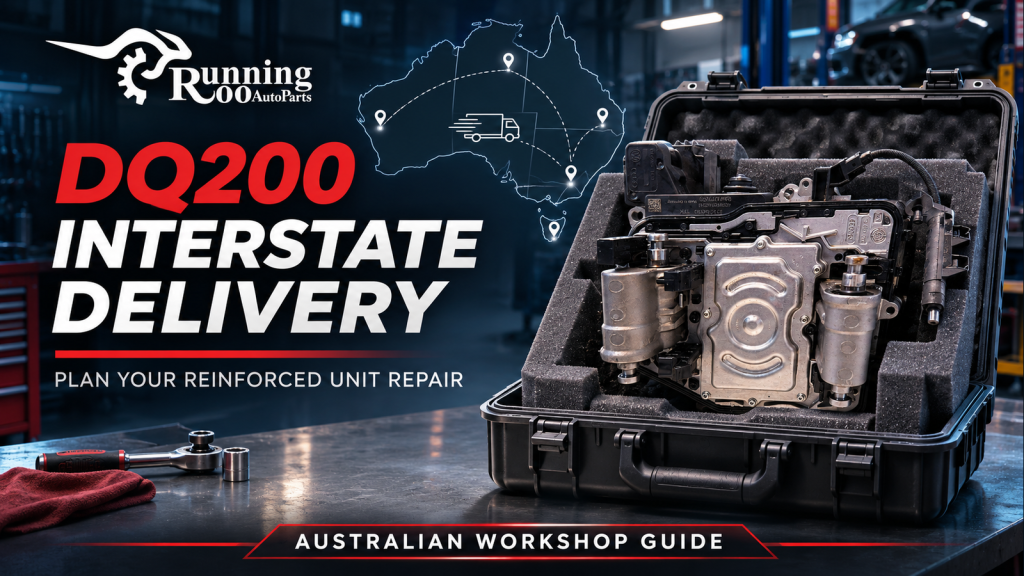
Ordering a DQ200 reinforced mechatronic unit from Melbourne for a workshop in another Australian state involves more than selecting a delivery postcode. The part needs to arrive at the right workshop, with the right identification and preparation, while the vehicle and installer are ready for it. A clear delivery plan can prevent a confirmed parts order from sitting unopened at the wrong address or arriving before essential vehicle information has been supplied.
This guide focuses on the transport and receiving stages of an interstate repair. It does not provide instructions for opening a hydraulic assembly, releasing stored pressure or programming a transmission. Those tasks remain with qualified professionals following the applicable manufacturer procedure. For the owner, the useful work is arranging accurate information, practical delivery details and protected custody of the supplied part.
Identify the order before discussing the courier
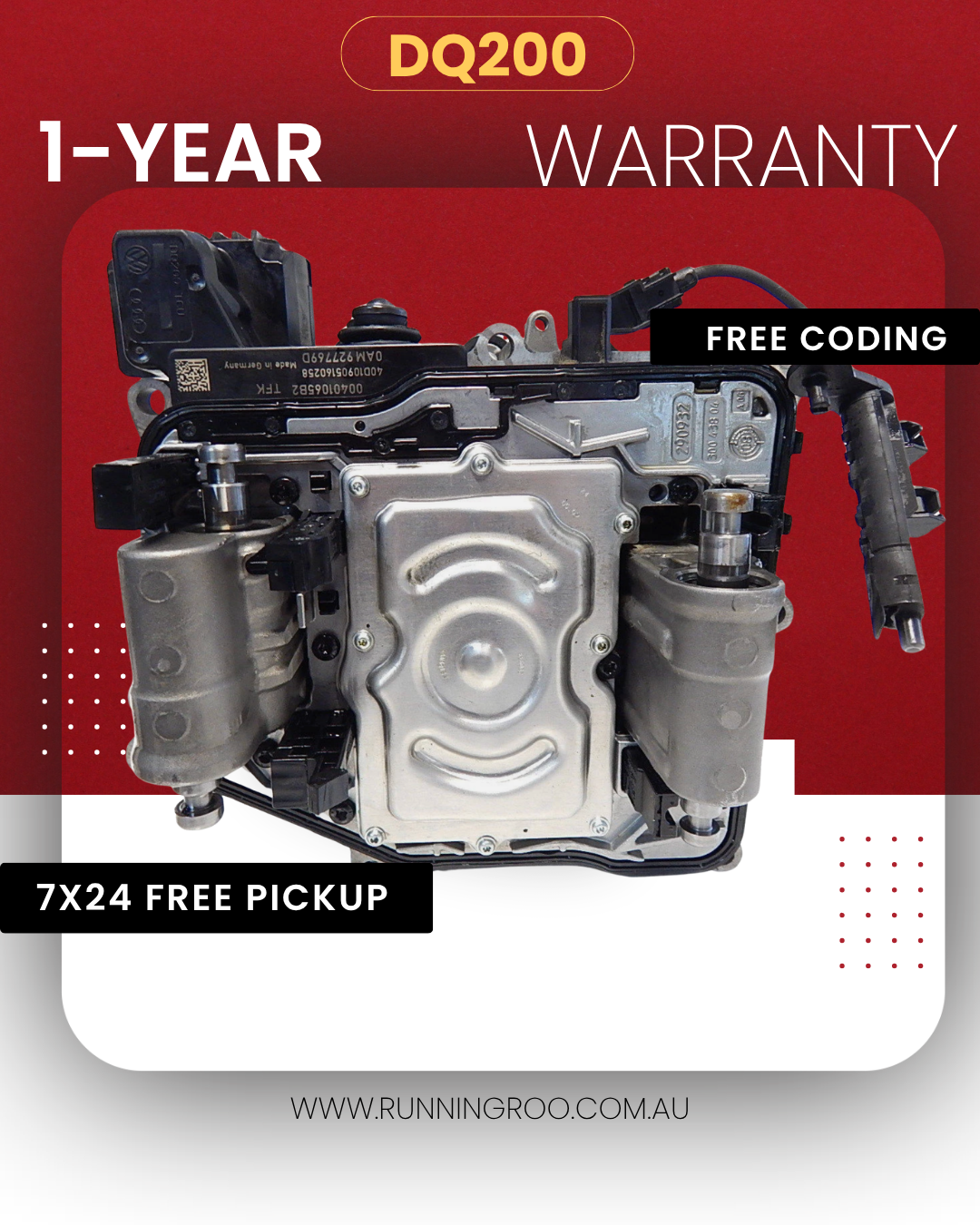
RunningRoo's current offer is described as a remanufactured DQ200 0AM assembly containing a valve body and TCU, with references 0AM325065S and 0AM927769D. The reinforced version must be confirmed for the particular order. A destination address cannot resolve compatibility, and paying for a faster delivery service cannot correct a wrong assembly once the workshop opens the parcel.
Start with the VIN, engine code, transmission identification and existing unit's full OE numbers. Include the workshop's diagnosis and clear label photographs. If the car has a replacement transmission or earlier mechatronic repair, mention it. The information available from the installed assembly can be important when the car's current configuration differs from the original sales description.
Confirm programming preparation separately. The product title mentions programming, while the description states that no program is inside and asks for vehicle information if programming is needed. Ask RunningRoo to explain the agreed preparation for your order before the parcel is booked. Keep that response with the workshop job number so everyone knows what should arrive and what work remains locally.
Nominate one receiving contact
Choose whether the parcel will go to the owner or directly to the repairer. Direct workshop delivery can simplify custody when the workshop agrees, but do not assume any business will accept a customer-supplied transmission component without notice. Give the repairer the product description and ask how incoming customer parts should be labelled and received.
Use the workshop's exact business name, street address, contact telephone number and job reference. Confirm opening hours, particularly for a Friday delivery or a business that closes during lunch. A general building address may be inadequate where several automotive businesses share a site. Put the intended receiving person in the order notes when the seller's process allows it.
Avoid changing the destination casually after dispatch. If the delivery location genuinely needs to change, contact the seller through the order channel and follow the carrier's available process. Keep the owner, seller and receiving workshop informed of the same final address. Conflicting instructions in separate messages can make a simple shipment unnecessarily difficult to trace.
Separate dispatch from arrival and installation
Fast dispatch refers to the seller preparing and handing over the order; it is not the same as guaranteed next-day installation. Transit depends on the selected service and destination, while installation depends on the workshop's booking and vehicle readiness. Treat these as three separate dates in your plan rather than a single promised completion day.
Ask for a realistic dispatch estimate after fitment and any agreed preparation are confirmed. Then ask the workshop when it can receive and assess the delivery. If a vehicle is already dismantled, explain the situation without treating it as a reason to skip identification. A short confirmation step before dispatch is preferable to discovering a mismatch while the car occupies a workshop bay.
For regional addresses, ask which delivery options are currently available rather than copying a metropolitan estimate from an unrelated listing. Give the actual postcode and business hours. RunningRoo can discuss fast dispatch from Melbourne subject to stock and agreed preparation, but a published estimate should not be rewritten as an unconditional arrival promise for every Australian location.
| Stage | Information to agree | Record to retain |
|---|---|---|
| Before order | Vehicle and installed-unit identity | VIN, engine code, gearbox and OE references |
| Before preparation | Exact reinforced assembly and programming scope | Written supplier confirmation |
| Before dispatch | Receiving workshop, address and opening hours | Final delivery details and order number |
| At delivery | Parcel condition and correct recipient | Tracking record and receiving photographs if needed |
| Before installation | Part identity and any concerns | Workshop receiving note |
| If something is wrong | Supplier contact before modification | Photos, packaging and written response |
Keep the supplied packaging until the part is accepted
For an unopened delivery, the practical default is to retain the seller's protective packaging and accompanying instructions. Ask the supplier for any specific storage or handling requirements rather than inventing a temperature limit or preservation method. Do not remove protective closures merely to create a social-media photograph or compare an internal detail with an online image.
If you receive the parcel at home before the workshop appointment, keep it in a secure, dry indoor location where it will not be knocked over or mixed with discarded vehicle parts. This is ordinary parcel custody advice, not a manufacturer storage specification. Any special requirement provided with the assembly takes priority, and any uncertainty should be resolved with the supplier before handling the component.
Keep the order paperwork accessible without attaching loose papers to exposed component surfaces. Label the outer package with the vehicle job reference if useful, but avoid adding markings to the assembly itself. A clear outer label helps the workshop identify ownership while preserving the component's original identifiers and the seller's packaging evidence.
Record delivery condition without dismantling anything
At receipt, check that the parcel belongs to the correct order and note obvious damage to the outer packaging. If the box is crushed, wet or otherwise concerning, photograph it before discarding packing materials and contact the seller. Follow the carrier's and seller's current process; this guide does not prescribe a universal claim deadline or promise a particular claim outcome.
Where inspection of the contents is appropriate, have the receiving workshop follow the supplied handling instructions. The owner's task is not to open hydraulic passages or loosen components to see whether the part “looks upgraded”. A careful receiving check can confirm labels, supplied documents and obvious external concerns without creating a new technical intervention.
Do not install a questionable part simply because the vehicle is booked for that day. Give the supplier clear photographs and the order number, then obtain instructions. Once a component has been modified or fitted, it can become harder to distinguish a delivery concern from an installation issue. Preserving evidence early is useful to every party trying to resolve the problem.
Why a reinforced housing still needs careful handling
The word reinforced describes a feature of the offered product; it is not a statement that the complete assembly is immune to transport damage or contamination. Volkswagen's campaign explanation describes the DQ200 mechatronic unit as converting electronic signals into hydraulic operation. That context helps explain why an assembled unit should be treated as a technical component rather than loose scrap metal. Volkswagen NZ mechatronics campaign background; not Australian eligibility or a handling manual
The official campaign page is New Zealand background, not a packing manual or confirmation that an Australian vehicle is affected. Use the supplier's instructions for the shipped assembly and the workshop's current manufacturer information for any technical work. Do not derive packaging, fluid draining or pressure-release procedures from the campaign description.
If the supplier requests an old unit back, first establish whether a return is actually part of your order. Do not assume an exchange arrangement merely because the replacement is remanufactured. Ask for written return instructions, the correct destination and any preparation required by the seller and carrier. Let the workshop handle technical preparation of a removed assembly.
Build a simple owner–supplier–workshop communication chain
One person should coordinate the order so that fitment details, programming questions and delivery changes do not arrive from several directions with conflicting answers. That person can be the owner or workshop, depending on the purchase arrangement. The essential point is that the supplier receives one consistent set of identifiers and the workshop receives the final agreed supply description.
Use the order number in each message. Describe a concern specifically: “The outer box arrived damaged on one corner” is more actionable than “The delivery is wrong”. Attach the relevant photograph and explain whether the component has been removed from its packaging or fitted. Accurate status information helps the supplier respond without assuming a stage of the repair that has not yet happened.
Keep customer information proportionate. The courier needs the delivery contact and address, while the technical fitment discussion needs the vehicle identifiers. Avoid putting unrelated personal records into the parcel. A neat order file containing the relevant confirmation, tracking and workshop reference is easier to use than a long conversation containing unrelated screenshots.
A realistic interstate example
Consider an Adelaide owner whose local transmission workshop has identified the installed DQ200 unit and recommended replacement. The owner sends those identifiers to RunningRoo, confirms the reinforced assembly and resolves the programming question. The workshop agrees to receive the parcel under the vehicle's job number and provides its opening hours. Only then does the owner finalise the delivery destination.
The seller confirms the expected dispatch stage, and the workshop plans its installation after receipt and checking. If the carrier estimate moves by a day, the workshop can adjust the appointment rather than discovering that the promised completion date depended on an unconfirmed parcel. This example describes coordination, not a guarantee of a particular carrier service or repair duration.
A Melbourne owner can use the same sequence with local collection. RunningRoo is Australian-operated in Blackburn VIC, and Melbourne local pickup is by appointment. Confirm the part and collection time first, then arrange delivery to the installer. Call 0425 890 125 for friendly support and current availability rather than arriving with an incomplete part number and an urgent workshop deadline.
Prepare a receiving note that stays useful later
A concise receiving note can include the order number, date received, outer-package condition, supplied assembly identifiers and the person who received it. Add any seller correspondence about preparation or concerns. This is a recommended organisational record, not a required manufacturer form, and it should not be presented as a certificate of technical performance.
The note also helps separate transport from later workshop work. If the owner asks about a missing document, the receiver can check what arrived. If the workshop needs clarification about software preparation, the supplier's confirmation is already available. This prevents a courier delivery signature from being mistaken for proof that installation or commissioning has been completed.
Frequently asked questions
Can RunningRoo send the reinforced assembly to my interstate workshop?
Discuss the destination, current stock and delivery options with RunningRoo before ordering. Ask the workshop to accept the shipment and provide its correct address, hours and job reference. Do not use a general delivery estimate as a guaranteed arrival time for an unconfirmed regional destination or service.
Should I order first and send the VIN later?
Send the VIN, engine code, transmission and OE details before the order is finalised wherever possible. These details establish compatibility and any agreed preparation. An urgent repair booking does not make a model-name-only order reliable, particularly where the installed unit may have been changed previously.
Does fast dispatch mean the car will be repaired immediately?
No. Seller preparation, carrier transit, workshop receipt and installation are separate stages. Confirm each with the responsible party. RunningRoo can discuss fast dispatch subject to stock and preparation, while the workshop must confirm its own appointment and the work required for the vehicle.
Can I open the unit to check the reinforced housing before delivery to my mechanic?
Do not dismantle the assembly for a visual comparison. Ask the supplier to confirm the supplied version and retain the product evidence. Any technical inspection or handling beyond the supplied instructions should be performed by the qualified repairer using the applicable manufacturer procedure.
What should I do if the package looks damaged?
Record the visible concern, retain packaging and contact the seller with the order number before fitting or modifying the component. Follow the applicable seller and carrier process. Clear photographs and an accurate account of the receiving stage help distinguish a transport concern from later handling or installation.
Is returning the old mechatronic unit always required?
No exchange requirement should be assumed. Confirm the terms of your particular order in writing. If a return is required, ask for the correct address, packing and preparation instructions. Technical preparation of a removed unit belongs with the workshop, not an improvised home packing procedure.
Related RunningRoo workshop video
RunningRoo: DQ200 0AM mechatronic replacement. This is related workshop context, not proof that the filmed component is the exact supplied item. Verify all procedures against current manufacturer information for the vehicle; the video does not establish product dimensions, fitment or performance guarantees.
Related reading: DQ200 Thickened Mechatronic Quote Australia: Parts, Programming and Workshop Scope. This separate guide covers a different component or search question; it does not establish interchangeability with the product discussed here.
Sources and scope
Product details and availability were checked on 11 November 2026. Retailer listings establish the offer; manufacturer sources below support only the technical points identified in the article. Current vehicle-specific workshop information takes priority over general background.