
A Holden LS1 crank sensor search often starts with a car that cranks but will not start, or an engine that stops unexpectedly. Buying reference 12560228 can be a sensible next step when a workshop has identified the sensor as the cause. It is a poor substitute for identifying the engine and checking the circuit. This guide focuses on the actual RunningRoo LS1 listing, the evidence worth gathering before ordering, and the practical questions Australian owners should settle with their repairer.
RunningRoo lists a crank angle sensor for selected Holden Commodore, HSV and Statesman LS1 5.7-litre applications. Review Holden LS1 crank sensor 12560228 Australia at RunningRoo alongside matching RunningRoo eBay listing. The eBay item specifics identify 12560228. These are retail application leads, not a claim that every car carrying a VT, VX, VY or VZ badge uses the same sensor. RunningRoo is Australian-operated, with friendly support, Melbourne local pickup in Blackburn by appointment, and fast dispatch for confirmed available stock. Call 0425 890 125 with the vehicle details before committing to a workshop booking.

What the 12560228 buying decision actually involves
The useful question is whether this reference matches the engine management system currently fitted to your car. A registration description may say Commodore V8 without establishing the exact engine, previous conversion work or installed wiring. A badge is helpful background, but it should not be the sole basis for an electrical component purchase. Ask the workshop to record the engine code and the reference on the removed sensor where readable, then compare those findings with the seller's current item specifics.
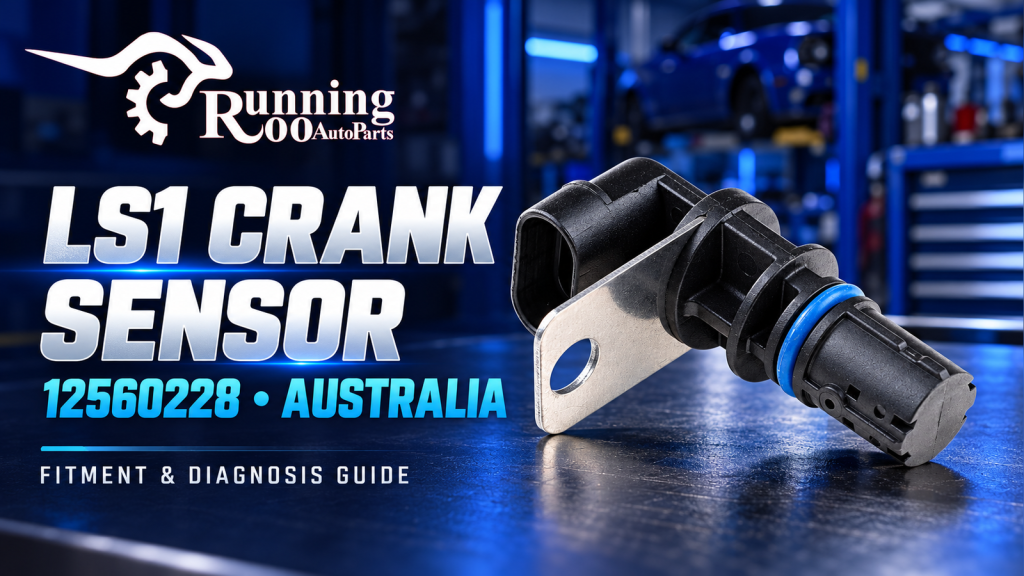
The product photograph shows a separate sensor with a mounting tab, electrical connector and sealing ring. Treat it as a component purchase. Do not assume it includes replacement wiring, a connector repair kit, diagnostic labour or programming services. If the repairer needs additional items, list them separately in the quote. That makes it easier to compare a sensor-only purchase with a complete installed repair without confusing two different scopes of work.
For a standard vehicle, a VIN-based catalogue enquiry is a useful starting point. For an engine-swapped car, the VIN describes the original vehicle and may not establish what is now under the bonnet. Tell RunningRoo about a conversion before ordering, even if the engine looks familiar. Supply any donor-engine details, ECU information already documented by the installer, and a clear photograph of the old component. Do not try to resolve a mismatch by altering the connector.
What official technical information can establish
HELLA explains that crankshaft sensors provide engine-speed and crankshaft-position information to the control unit. Its technical guide distinguishes inductive sensors from Hall-effect designs and stresses that the design must be established before testing. A stored fault, connection problem or damaged signal source may be part of the investigation; appearance alone does not identify every sensor type. HELLA also warns against using an ohmmeter on an unidentified design because a Hall generator can be damaged. See HELLA: crankshaft sensor principles and safe test selection.
That general guidance does not provide a Holden-specific pin assignment, installation torque, signal threshold or proof that this retail part fits a particular VIN. Those details belong in the applicable Holden/GM service information and parts catalogue used by the repairer. This article deliberately does not turn a generic resistance range into a pass-or-fail test for 12560228. The correct test method is more valuable than a convenient number copied from another engine.
Record the symptom before clearing anything
Give the workshop a clear description of what happened. Distinguish an engine that turns normally without starting from a starter that will not turn the engine at all. Record whether the event occurred on the first start of the day, after a short stop, or after the vehicle had been running. Note warning messages and recent work. These observations help the repairer choose an appropriate investigation; they do not prove that temperature or a particular component caused the fault.
Avoid clearing fault information simply to see whether a warning returns before the workshop has had an opportunity to record it. Ask for the actual code description, whether it was current or historical, and the conditions under which it was captured. An invoice stating only “crank sensor code” leaves important questions unanswered. A useful diagnosis explains how the electrical supply, connections and signal were assessed against the correct service information.
If the vehicle stalls unpredictably, arrange professional assistance rather than attempting to reproduce the problem in traffic. A short recording of the dashboard while the vehicle is safely stationary may be useful, but never make a recording while driving. The purpose of your notes is to reduce ambiguity, not to create a home road-test procedure. Let the workshop decide how to investigate an intermittent complaint under controlled conditions.
A practical pre-order comparison table
| Evidence | What to send or ask | Why it changes the purchase |
|---|---|---|
| Vehicle identity | VIN, build month, body style and engine code | Narrows the original application beyond the model badge. |
| Installed engine | Confirm LS1 and disclose any conversion | Original registration information may not describe later changes. |
| Old component | Readable reference and connector photograph | Helps distinguish a genuine match from a visually similar sensor. |
| Diagnostic conclusion | Written reason the sensor requires replacement | Separates a failed component from an unresolved circuit complaint. |
| Package scope | Confirm sensor, seal and any required extra parts | Prevents assumptions about wiring or installation services. |
| Workshop requirements | Ask about applicable post-repair checks | Keeps vehicle-specific procedures with the repairer. |
| Fulfilment | Confirm current stock and pickup or dispatch arrangement | Helps coordinate parts arrival with workshop availability. |
Keep crank and cam sensor enquiries separate
A request for a “position sensor” is too broad for ordering. Write down whether the workshop has specified a crankshaft sensor or a camshaft sensor and retain the complete reference. The two names can appear in the same diagnostic discussion, but they are not interchangeable purchase descriptions. If a quote uses abbreviations, ask the workshop to expand them before sending the parts enquiry. It is quicker to clarify a line on a quote than to return the wrong component.
The same discipline applies when comparing listings for other Holden engines. A product advertised for a V6 is not made appropriate for an LS1 because the vehicle series overlaps. Likewise, a broad list of V8 model names does not establish compatibility with a later engine conversion. Keep this article's scope tied to the 12560228 listing and the installed engine. Use another part only after a documented catalogue match, not because its price or delivery date is more attractive.
What to ask when a replacement has already been tried
If a sensor has already been replaced and the complaint remains, do not automatically order another one. Tell the workshop which reference was fitted, where it came from, when the work was completed and whether the symptom changed. Keep the old component if the repairer considers that useful. The next enquiry should address the unresolved diagnosis, not assume that every recurring warning means the replacement part is defective.
Ask whether the previous job included checking the connector and wiring, confirming the engine identity, and completing the applicable post-installation procedure. These are questions for the repairer, not conclusions about workmanship. A clear record helps everyone distinguish an incorrect application, an installation issue and a fault elsewhere in the system. RunningRoo can help compare supply details, while hands-on diagnosis remains with the qualified workshop inspecting the vehicle.
Plan the repair quote around the actual work
A useful quote separates diagnostic time, the sensor, access labour, any separately required materials and the final verification. Ask whether the workshop expects additional investigation if the original fault cannot be reproduced. This is especially helpful for an intermittent complaint, where a component price alone does not describe the work needed to establish confidence in the repair. Obtain approval arrangements for any expanded work before leaving the vehicle.
Do not compare a bare online sensor price with a workshop's complete invoice and assume the difference is all labour for fitting one bolt. The workshop may be charging for diagnosis, vehicle handling and verification as well as installation. Equally, ask for clarity if a quote includes unspecified programming or additional parts. The correct scope depends on the actual vehicle and service procedure; this guide does not promise that any one extra operation is always required.
For owners outside Melbourne, confirm the destination postcode and the current dispatch arrangement before scheduling the car off the road. For local owners, agree a Blackburn pickup appointment and the exact item being collected. Fast dispatch means prompt handling of available stock under the agreed arrangement, not a guaranteed delivery time to every Australian address. A short confirmation can prevent a repair booking being built around an assumption about availability.
Ordering from RunningRoo with fewer follow-up questions
Open Holden LS1 crank sensor 12560228 Australia at RunningRoo and matching RunningRoo eBay listing together and compare the reference, photograph and package description. Keep the selected listing link in your enquiry rather than saying only “the LS1 sensor on your website”. This is particularly useful when several similar items are available. Include the workshop's requested reference and whether the car is standard or modified, then ask for confirmation of the supplied component and current fulfilment options.
A useful enquiry might read: “I need a crankshaft position sensor for a Holden with an LS1 engine. My workshop has specified 12560228. The VIN and build details are attached, and the engine is standard / has been converted. Please confirm the linked item, included seal, stock and collection arrangement.” This is an example of the information to provide, not a fitment approval for an unidentified vehicle. Call 0425 890 125 if you would prefer friendly local support.
Australian-operated support is most useful when it connects the parts discussion with the repairer's actual requirement. Ask the workshop to review the proposed reference before the order is finalised. If there is a disagreement between a catalogue result and the removed part, resolve it first. Do not treat a matching photograph as permission to overlook a different reference or an undocumented conversion.
Delivery inspection and workshop handover
When the parcel arrives, check the label and quantity against the order while the component is still clean and uninstalled. Photograph any obvious discrepancy and contact the seller before fitting. Keep the packaging and invoice until the workshop has confirmed that the delivered part matches the planned repair. This is an ordinary receiving check, not an attempt to diagnose the sensor on a bench with improvised electrical tests.
Give the repairer the supplier invoice, the original symptom notes and any previous diagnostic report. Ask them to document the final fitted reference and the verification performed. If the car originally failed after a particular operating pattern, describe that pattern again at handover. A repair is easier to assess when everyone agrees what problem was being addressed and what evidence supports the outcome.
Frequently asked questions
Does 12560228 fit every VT, VX, VY and VZ Commodore?
No blanket fitment statement is made here. Those series names appear in the seller's application wording, but engine identity, build information and the actual required reference still need checking. Supply the VIN, LS1 confirmation and old-part details. Disclose any engine or wiring changes because the original vehicle description may no longer represent the installed system.
Is a crank sensor fault code enough reason to buy this part?
It is enough reason to investigate the relevant circuit, not enough to prove this component is the cause. Ask the workshop for its diagnosis and the service information used. Keeping the code description and test findings with the order is more helpful than relying on a short verbal summary or a generic internet symptom list.
Can I use a multimeter resistance test from another vehicle?
Do not transfer a generic resistance test to an unidentified sensor design. HELLA's guidance specifically cautions about test selection. The workshop should identify the sensor technology and use the correct vehicle-specific procedure. This article provides neither a resistance specification nor a wiring diagram for the advertised part.
Is a cam sensor included with the crank sensor?
Do not assume so. The linked offer is for a crankshaft position sensor. Ask RunningRoo to confirm the current written contents and whether the repairer requires any separate component. A diagnostic discussion mentioning both crank and cam signals is not a package list and does not mean both sensors should automatically be replaced.
What if my Holden has an LS engine conversion?
Supply the original VIN plus the installed engine and management-system details available from the conversion records. Explain that the car is modified at the start of the enquiry. The parts decision must reflect the installed arrangement, and a workshop familiar with the conversion should approve the reference before purchase.
Can I collect the sensor in Melbourne?
Ask RunningRoo about current stock and arrange Blackburn pickup by appointment. Do not travel on the assumption that a general online availability message reserves a particular item. Friendly support can help coordinate the order and collection; customers elsewhere in Australia can ask about fast dispatch for confirmed stock and their delivery postcode.
Make the next step a confirmed parts enquiry
For a diagnosed LS1 crank-sensor requirement, compare Holden LS1 crank sensor 12560228 Australia at RunningRoo with matching RunningRoo eBay listing and send the VIN, engine code, OE reference and workshop findings. Call 0425 890 125 to discuss the match and current availability. RunningRoo's Melbourne local pickup by appointment and Australian-operated support can make the supply side straightforward, while the applicable original service procedure remains the basis for installation and verification.
Related guide with a different scope
Crankshaft Position Sensor Failure: Symptoms, Codes and Replacement Guide. This covers a different component, engine or background topic. It is not an interchange claim. The specific buying decision in this article remains tied to its named product and verified vehicle requirement.
Sources and evidence boundaries
HELLA: crankshaft sensor principles and safe test selection. Manufacturer information supports only the limited context described above. Retail contents and application leads come from the linked seller offers and are not independent OEM certification. Use the applicable complete service information for the actual vehicle and repair.
Review the RunningRoo product and the corresponding eBay offer, or call 0425 890 125. Contact RunningRoo with VIN, engine code and OE details for friendly Australian-operated support. Ask about Melbourne local pickup in Blackburn by appointment and fast dispatch for confirmed available stock; confirm item-specific fulfilment before booking labour.