
Searching for 1FZ-FE knock sensors in Australia is more specific than searching for a general Toyota engine sensor. The RunningRoo offer examined here is a pair of replacement sensors carrying the retail reference 89615-60010. Before ordering, establish that this is the reference required for the actual engine and that a sensor purchase is supported by diagnosis. A pair in a listing describes the supply quantity; it does not prove that two sensors on an unidentified vehicle have failed.
Start with 1FZ-FE knock sensors 89615-60010 Australia at RunningRoo and the corresponding matching RunningRoo eBay listing. The website description names LandCruiser 1FZ-FE and Lexus LX450 applications but also includes a much wider list of Toyota vehicles. That mixed application text deserves careful checking. This guide concentrates on the 1FZ-FE enquiry and does not certify the entire list. RunningRoo offers friendly Australian-operated support, Melbourne local pickup in Blackburn by appointment, and fast dispatch for confirmed stock. Call 0425 890 125 with VIN, engine code and OE details.

Identify the engine before interpreting the model list
A LandCruiser model name alone is not a complete parts specification. Record the chassis or frame identification, build month and installed engine code, and distinguish an original vehicle from one with an engine conversion. The 1FZ-FE reference is the focus of this article. Do not assume that another LandCruiser engine takes the same sensor because the body shape, year or connector looks familiar. Ask the repairer to confirm the engine and the catalogue requirement together.
The seller's wording includes FZJ75, FZJ80 and other application references. Use those as leads to a proper enquiry, not as an all-inclusive approval. The page also mentions Camry, RAV4 and other Toyota applications. This article does not extend a 1FZ-FE purchasing decision to those vehicles. A confirmed match for one engine does not automatically validate every line in a long marketplace compatibility table.
For imported or modified vehicles, include the frame information and whatever engine documentation is available. Tell the supplier about changes to the engine or its management system. A VIN lookup can be useful for the original build, but a workshop must reconcile that information with what is actually installed. If the old sensor reference cannot be read, say so rather than guessing a number from a photograph of a similar vehicle online.
What the linked pair includes
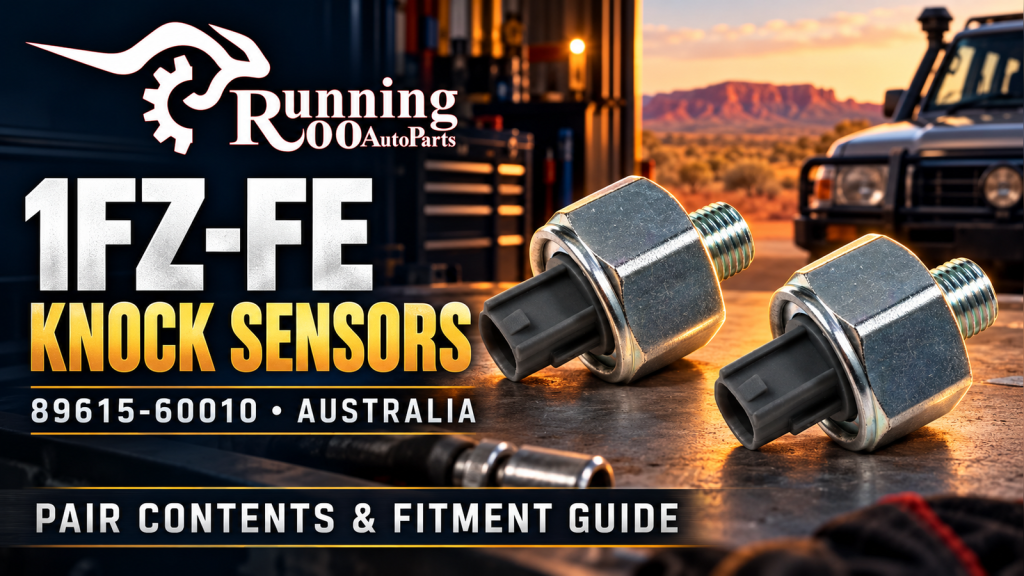
The RunningRoo description specifies two sensors with reference 89615-60010. The retailer photograph shows two threaded metal-bodied components with electrical connectors. Check the current written package contents when ordering, including whether any separate harness, connector repair item or installation material is required by the workshop. Do not infer additional components from a generic engine illustration or assume a pair listing represents a complete repair kit.
The reference is a matching aid, not proof of genuine Toyota manufacture. The seller describes replacement parts, and this article does not label them factory-original Toyota sensors. If provenance, a particular brand or a specific warranty term is important to the purchase, ask for that information in writing before checkout. Keep the order description with the invoice so the supplied product can be compared with the approved repair requirement.
Technical context without borrowing the wrong installation specification
FAE's manufacturer information explains that a knock sensor converts engine vibration associated with knocking into an electrical signal. It also identifies the sensor body, connector and cable as inspection points and notes that visual inspection alone cannot establish whether the sensor functions correctly. Mechanical condition and the mounting interface matter to signal transmission. Read FAE: general knock-sensor function and inspection; not Toyota threaded-sensor installation specs for that general background.
FAE's illustrated sensor construction and mounting advice are not a Toyota 1FZ-FE procedure for the threaded part shown here. Do not copy its tightening value, washer arrangement or surface-treatment advice onto this product. The repairer must use the applicable Toyota service information for the exact engine and sensor design. No universal torque, sealant instruction, pinout or resistance specification is supplied in this buying guide.
Separate a noise complaint from a sensor-circuit complaint
An owner may describe an engine noise as “knocking”, while a workshop may be investigating a stored knock-sensor circuit fault. Those are not the same statement. Give the repairer the original complaint in ordinary language and retain the precise diagnostic wording separately. Buying a sensor should not replace investigation of an unexplained mechanical noise, and a circuit-related code should not be rewritten as proof of internal engine damage.
Record when the complaint occurs, whether a warning is present, and whether any recent work preceded it. Avoid deliberately loading the engine to reproduce a noise yourself. The workshop should decide what tests are appropriate and safe. A clear account of the event is useful; a home experiment based on a generic video may add risk without establishing the cause. If the engine has a serious unexplained noise, seek professional advice before further operation.
Ask the repairer to explain why the sensor itself is being condemned. The answer may involve vehicle-specific electrical tests and examination of the relevant connections. Request the test conclusion, not just a component name written next to a fault code. That record helps if the complaint persists after the repair and makes the parts order easier to justify than a speculative replacement based on symptoms shared by several systems.
The pair-versus-single decision
A pair can be the right purchase when the workshop's repair plan calls for two matching sensors. It may also be the only quantity offered in a particular listing. Neither situation means every owner must replace two components automatically. Ask the workshop whether the quantity is driven by confirmed faults, the planned access work, or a preventive choice agreed with you. Those are different reasons and should be described honestly in the quote.
If one component has been diagnosed, ask whether the second is being inspected, retained or replaced and why. Do not assume that replacing a pair also replaces the connecting wiring. Clarify the supply and labour scopes independently. An order for two sensors can be correct while a repair still requires a separate connector or another item identified during inspection; the seller's package cannot anticipate every vehicle's condition.
Pre-order evidence table
| Question | Evidence to obtain | Decision it supports |
|---|---|---|
| Which engine is installed? | Engine code, VIN or frame details and modification history | Keeps the enquiry specific to the actual 1FZ-FE configuration. |
| Which reference is required? | Old-part marking and workshop catalogue confirmation | Tests the proposed 89615-60010 match. |
| What has failed? | Diagnostic report and exact fault description | Separates a sensor purchase from an unresolved noise or circuit complaint. |
| Why buy two? | Workshop explanation of the agreed repair scope | Distinguishes package quantity from a failure diagnosis. |
| Is wiring included? | Current written contents of the selected offer | Prevents a sensor pair being mistaken for a harness kit. |
| Which installation data applies? | Toyota procedure for the actual engine and sensor | Avoids transferring instructions from a different sensor construction. |
| When are parts needed? | Stock confirmation and pickup or dispatch arrangement | Supports realistic workshop scheduling in Australia. |
Avoid ordering by connector appearance alone
A photograph is useful for spotting an obvious difference, but it cannot establish every internal characteristic or application requirement. Send photographs of the component marking, connector face and mounting arrangement where these can be obtained safely. Let the workshop and supplier compare them with the catalogue information. If a replacement looks different, pause for clarification instead of deciding that the connector can simply be altered to make it fit.
When the original component is still installed, do not dismantle the engine merely to obtain a sales photograph unless the repairer recommends that step. Start with the vehicle information and diagnostic report. The workshop can decide when removal is necessary and record the old part during the planned repair. Good ordering evidence should reduce unnecessary work, not create a separate dismantling job just to complete an online enquiry.
A useful workshop quote for this job
Ask for a quote that identifies diagnosis, the agreed sensor quantity, access labour, separately required parts and final checks. If access work makes other inspections sensible, ask for those to be listed as inspection items rather than automatically approved replacements. This gives you a clear decision if additional wear or damage is found. It also prevents a simple pair price from being mistaken for the total cost of restoring the vehicle to service.
A quote should state how the workshop will handle an inconclusive test or an unexpected application mismatch. For example, agree that the repairer will contact you before fitting a different reference or expanding the job. Keep any photographs or notes supplied by the workshop with the invoice. These records are particularly useful for an older vehicle whose service and modification history may be incomplete.
Avoid choosing between sellers solely by a promise that a sensor will “fix the knock”. A trustworthy parts discussion identifies the supplied item and its verified application, while a repair diagnosis explains the fault. RunningRoo can assist with the former and work with the information your repairer provides. It cannot establish the condition of an engine remotely from the model name or a short description of a noise.
Buying locally or arranging Australian delivery
Compare 1FZ-FE knock sensors 89615-60010 Australia at RunningRoo and matching RunningRoo eBay listing before ordering, keeping the selected URL in your message. Ask for the current pair quantity, reference and stock confirmation. If you prefer Melbourne collection, arrange a Blackburn appointment and confirm the item is ready before travelling. Friendly local support is particularly useful when the workshop needs a clear answer about the exact package rather than a general product-category recommendation.
For delivery elsewhere in Australia, provide the postcode and ask about the available dispatch arrangement. Confirm timing before booking labour or dismantling the vehicle. Fast dispatch for confirmed stock is helpful, but the delivery estimate still depends on the destination and carrier. This article does not promise a universal next-day service or use a past customer's delivery experience as a guarantee for a new order.
A concise enquiry might say: “My workshop has specified two 89615-60010 knock sensors for the installed 1FZ-FE. Here are the VIN/frame details, engine information and old-part photograph. Please confirm the linked pair, any separately supplied items and the current collection or dispatch option.” Call 0425 890 125 if a conversation is easier. Australian-operated support can help resolve the supply details before the workshop commits to installation.
Receive the pair and document the repair
Check that the delivered quantity and label agree with the order before the parts are fitted. Keep both components protected and retain the packaging. If the reference or appearance raises a concern, contact the seller and repairer while the items remain uninstalled. Do not perform improvised impact, heat or electrical tests on new sensors. The appropriate checks belong in a controlled workshop procedure for the actual application.
After the repair, ask for a record of what was replaced and how the original complaint was reassessed. If a warning or noise remains, report the same conditions clearly and provide the previous diagnosis. A new part does not make an unresolved symptom irrelevant. The useful outcome is an explained and verified repair, supported by a traceable parts record, rather than simply an invoice showing that two sensors were purchased.
Frequently asked questions
Is this a pair of sensors or one sensor photographed twice?
The website description examined for this guide specifies two sensors. Check the current offer and order confirmation before purchase because listings can change. Do not infer a harness, tools or additional repair parts from the photograph. Ask for clarification if the package description and checkout quantity do not appear consistent.
Does 89615-60010 fit every Toyota in the listing text?
This guide does not make that claim. The retail page contains a broad application list, while this article focuses on a 1FZ-FE enquiry. Use the actual vehicle identity, installed engine and required OE reference to confirm the match. A previous fitment on another Toyota is not sufficient evidence for your car.
Does buying two mean both existing sensors are defective?
No. Supply quantity and diagnostic findings are separate matters. Ask the workshop why it recommends one or two replacements and whether any wiring work is also required. A pair may suit the agreed job, but the listing itself cannot diagnose either installed component or explain the condition of the vehicle.
Can I use a generic knock-sensor tightening value?
No universal value is provided here. The cited manufacturer page is background information and illustrates a different construction. Use the Toyota procedure applicable to the actual engine and threaded sensor. The same caution applies to washers, sealants and electrical testing instructions copied from unrelated applications.
Is the product genuine Toyota?
This article describes the linked replacement offer and does not certify genuine Toyota origin. A Toyota reference used for matching does not establish who manufactured the supplied part. Ask RunningRoo for the exact brand, provenance and current warranty terms if those details are important to your purchase decision.
Can RunningRoo help with an imported LandCruiser?
Send the frame or VIN details, build information, installed engine code and the workshop's required reference. Explain any conversion history. RunningRoo can help assess the supply match, while the workshop remains responsible for diagnosis and vehicle-specific installation. Melbourne pickup is by appointment, with dispatch options for confirmed available stock.
Confirm the reference before booking the job
For a workshop-supported 1FZ-FE sensor purchase, review 1FZ-FE knock sensors 89615-60010 Australia at RunningRoo and matching RunningRoo eBay listing, then call 0425 890 125 with the vehicle and diagnostic details. RunningRoo's friendly Australian-operated service, Blackburn appointment pickup and fast dispatch for confirmed stock support a clear parts order. Keep the final fitment decision and installation procedure tied to the actual engine rather than the broadest wording in a retail compatibility list.
Sources and evidence boundaries
FAE: general knock-sensor function and inspection; not Toyota threaded-sensor installation specs. Manufacturer information supports only the limited context described above. Retail contents and application leads come from the linked seller offers and are not independent OEM certification. Use the applicable complete service information for the actual vehicle and repair.
Review the RunningRoo product and the corresponding eBay offer, or call 0425 890 125. Contact RunningRoo with VIN, engine code and OE details for friendly Australian-operated support. Ask about Melbourne local pickup in Blackburn by appointment and fast dispatch for confirmed available stock; confirm item-specific fulfilment before booking labour.