
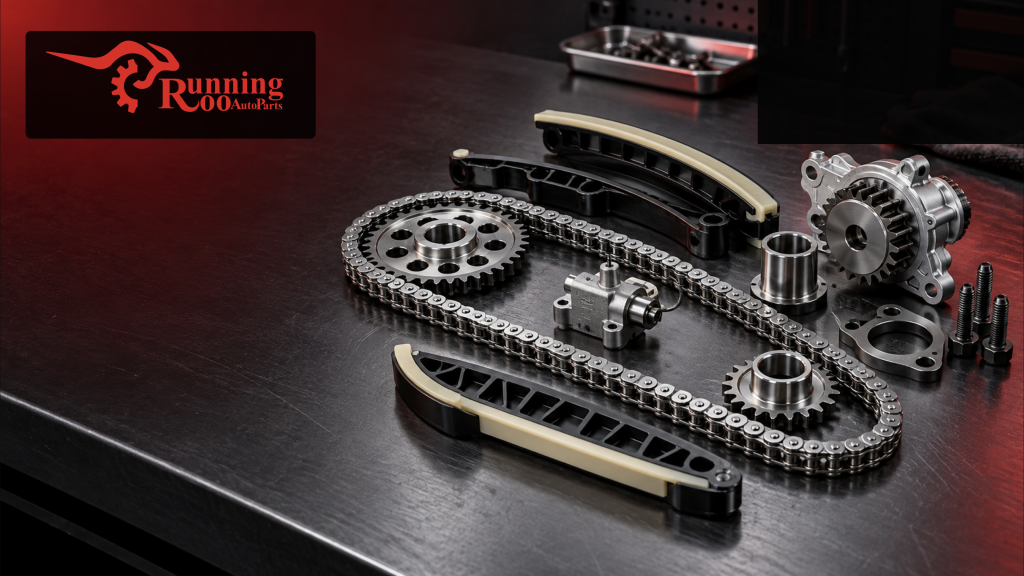
BMW N20/N26 Timing Chain and Oil Pump Drive Set: Repair-Scope Checklist
Searching for a BMW N20 timing chain oil pump chain kit usually means a workshop or owner is planning a significant engine repair. The most useful next step is not to buy on a model name or an internet symptom. It is to confirm the installed engine, document the repair scope and compare that evidence with the live product listing.
This guide is about the RunningRoo set marketed for BMW N20/N26 2.0L applications and described as including timing-chain and oil-pump-drive scope. It is not a generic BMW timing-chain article. It is also not an instruction to replace parts merely because a vehicle has a warning lamp, noise or online discussion about a similar model. A qualified workshop must decide what an individual engine needs.
Start with the live item: RunningRoo BMW N20/N26 timing chain and oil pump drive set. Confirm the VIN, engine code, original component identifiers and the workshop\’s parts list before ordering.
Quick answer: what makes this a different purchase?
The phrase “timing chain and oil pump drive set” matters because it describes a broader component scope than a chain-only search. A timing-system job and a drive-chain-related job may share access work, but the exact requirement depends on the vehicle, engine configuration and inspection findings. A complete-looking kit is not automatically complete for every repair; nor does every repair require every part shown in an online listing.
BMW model series such as F10, F22 and F30 are useful as initial filters, but none confirms an engine by itself. Regional specification, build month, drivetrain and engine option need to be checked. The final comparison should always be between the vehicle data and the current product description. If the product page, old part number or actual component layout conflicts with the assumed application, pause before installation.
The correct high-conversion process is simple: confirm the vehicle first, confirm the repair scope second, and order only then. It lowers the risk of workshop downtime and makes it easier to resolve a question before packaging is opened.
Build an identification record before the engine is opened
Collect the following items in one message or job file:
| Item | Purpose |
|---|---|
| Full 17-character VIN | Confirms original build information |
| Engine designation | Establishes N20/N26 family |
| Build month/year | Helps with production-change checking |
| Exact vehicle variant | Supports the VIN search |
| Old part-number photos | Compares actual installed hardware |
| Technician’s repair notes | Defines why parts are required |
If work has already started, photograph the chain path, guides, sprockets and visible markings before the parts are removed. Do not rely on a memory of how the old hardware looked. For a vehicle with an engine replacement, import history or earlier major engine work, physical identification becomes even more important because original registration data may not describe every installed component.
Ask the workshop to state whether it is addressing timing components, an oil-pump-drive component, another issue found during inspection, or a combination. That statement is more valuable than a generic phrase such as “needs a timing chain”. It ensures the buyer compares the listing\’s contents to the job that is actually planned.
What these systems do—and the limits of online diagnosis
Engine timing hardware maintains a mechanical relationship between crankshaft rotation and valve events. The oil-pump-drive arrangement is part of the wider engine\’s mechanical operating system. Exact layout, testing procedures, measurements, torque specifications and replacement criteria are engine-specific and must come from the relevant manufacturer repair information used by the technician.
This means a symptom cannot be converted into a parts order by a blog. A noise, rough operation, warning lamp, starting concern or stored diagnostic result can have several causes. The technician may need to inspect lubrication condition and service history, scan data, mechanical timing position, related sensors, guides, tensioners and other components before choosing a repair. A listed kit cannot establish the cause of an individual vehicle\’s problem.
For owners, the practical takeaway is to request a written repair scope. It should identify the engine and describe what is being replaced. It does not need to reveal every workshop method or labour calculation; it simply needs enough clarity to decide whether the kit has the right component scope. If the diagnosis is incomplete, wait before ordering.
The pre-order decision path
- Confirm N20 or N26: use VIN-supported workshop or dealer information, not a badge alone.
- Read the live product page: check application wording and the current kit contents.
- Compare the workshop scope: determine whether timing chain, guides, tensioner, oil-pump drive and associated items are actually required.
- Check old identifiers where possible: photographs and numbers are valuable when there has been prior engine work.
- Discuss ancillary items: seals, fasteners, fluids and one-time-use hardware may be outside a kit.
- Order only if all information aligns: if it does not, send VIN and photos for a fitment review.
| Situation | Best action |
|---|---|
| VIN confirms N20/N26 and scope matches listing | Confirm stock, contents and delivery timing |
| Workshop says “timing issue” only | Request a defined parts scope |
| Engine has been replaced or rebuilt | Compare actual part numbers/photos |
| Job needs seals or bolts | Ask workshop for its complete list |
| Delivered contents differ from expectation | Pause and contact seller with evidence |
| Fault remains unconfirmed | Complete diagnosis first |
Workshop planning for Australian BMW owners
This is specialised engine work. It needs suitable tools, vehicle-specific instructions, correct torque and timing procedures, careful cleanliness and post-repair checks. Book with a qualified workshop experienced with the engine family. Give it the VIN and live product link before the appointment, and ask whether it wants to inspect the supplied components before it commits to the final installation schedule.
Make the repair record useful
The repair file should be useful to the person doing the job, not merely a collection of screenshots. Record the date the concern was first noticed, the vehicle kilometres, any scan report supplied by the workshop and the exact condition described by the technician. Keep this separate from conclusions drawn from social media or owner forums. A factual record gives the installer a better starting point and gives the owner a defensible sequence of events.
When the workshop provides a quote, check the language carefully. “Inspect timing components” is not the same as “replace timing-chain set and oil-pump-drive components”. The former is a diagnostic stage; the latter is a defined mechanical repair. A buyer should not expect the seller to decide between those stages. The seller can help compare fitment evidence to a listing; the technician decides whether the work is required and what else the vehicle-specific procedure calls for.
Consider the job timing honestly. A car that is still driving is not necessarily safe to postpone indefinitely, and a car with a concerning symptom is not automatically safe to continue operating. Those judgements require inspection. What the owner can control is avoiding an unnecessary delay caused by incomplete VIN data, an unspecified parts list, or an order placed before workshop advice was available.
After the repair, retain the invoice, product order, work performed and any instructions supplied by the workshop. Future owners and service providers benefit from a clear statement of what was actually replaced. It is much better than a general claim that an “engine chain job” was completed, particularly when different systems can be included under that phrase.
The same discipline applies to any product enquiry. Include the VIN in the first message where the seller requests it, state that the engine is N20 or N26 only when that has been verified, and attach photographs with sufficient light to read markings. If the workshop is uncertain, say that directly. A cautious enquiry is not a weak enquiry: it is the quickest way to prevent an incorrect order and preserve a repair booking.
That sequence keeps the purchase decision based on evidence, not guesswork, and supports a safer, clearer handover between owner, seller and installer.
It also reduces the chance that a workshop must wait on a late correction while the vehicle is partially dismantled and unavailable to its owner.
Plan for inspection findings. A workshop may discover a related seal, fastener, guide or fluid requirement after access is gained. That does not make the initial product unsuitable; it reflects the fact that a repair scope can become clearer during mechanical inspection. The owner should agree in advance how the workshop will communicate any additional requirement and should avoid scheduling a critical trip before the job has been verified.
Before unpacking, compare the order confirmation, live listing and physical components. Keep packaging, photos, invoice and job information together. If there is any question about fitment, do not install, modify or discard the product. Contact the seller with the VIN, engine code, order number and clear photographs. A precise question is much easier to resolve than a statement that the part “looks different”.
For regional and interstate buyers, delivery should be coordinated with workshop availability. Do not leave a car disabled solely because a delivery estimate looked convenient. Confirm stock and dispatch arrangements at the time of purchase, then arrange the booking with an allowance for inspection and any associated items.
Purchase checklist
Before ordering the RunningRoo BMW N20/N26 timing chain and oil pump drive set, make sure you have:
- VIN and N20/N26 engine confirmation;
- current product-page fitment and contents checked;
- a workshop diagnosis or repair scope;
- original component numbers/photos where available;
- a discussion of extra seals, bolts, fluids and booking timing; and
- a plan to inspect received parts before installation.
This is intentionally more rigorous than searching “BMW chain kit”. The process makes the product decision traceable, protects the workshop schedule and helps keep an online transaction focused on a real repair requirement.
FAQ
Will this set fit every BMW with a 2.0L petrol engine?
No. Confirm the VIN, engine designation, build details and live product listing. Displacement alone is not a fitment confirmation.
Does a warning light prove I need a timing chain kit?
No. A warning lamp or stored code needs vehicle-specific diagnosis. It does not identify a component by itself.
Why is the oil-pump-drive wording important?
It signals a different repair scope from chain-only shopping. Compare the live kit contents with the technician\’s actual parts list.
Can I buy the kit before a workshop inspection?
You can request a fitment check, but if the repair cause or scope is uncertain, obtain diagnosis first. This avoids purchasing parts to test a theory.
What if old parts do not look identical to the new ones?
Stop before fitting. Retain the old identifiers, photograph both parts and contact the seller with VIN, engine code and order details.
Does the article provide BMW installation procedures?
No. Use current vehicle-specific manufacturer repair information and a qualified workshop for installation, torque and verification.
Editorial note
RunningRoo is an independent parts seller and is not affiliated with or endorsed by BMW. This guide is a purchase and planning aid, not a diagnosis or repair manual. Recheck the live RunningRoo product page for availability and current product details before ordering.