
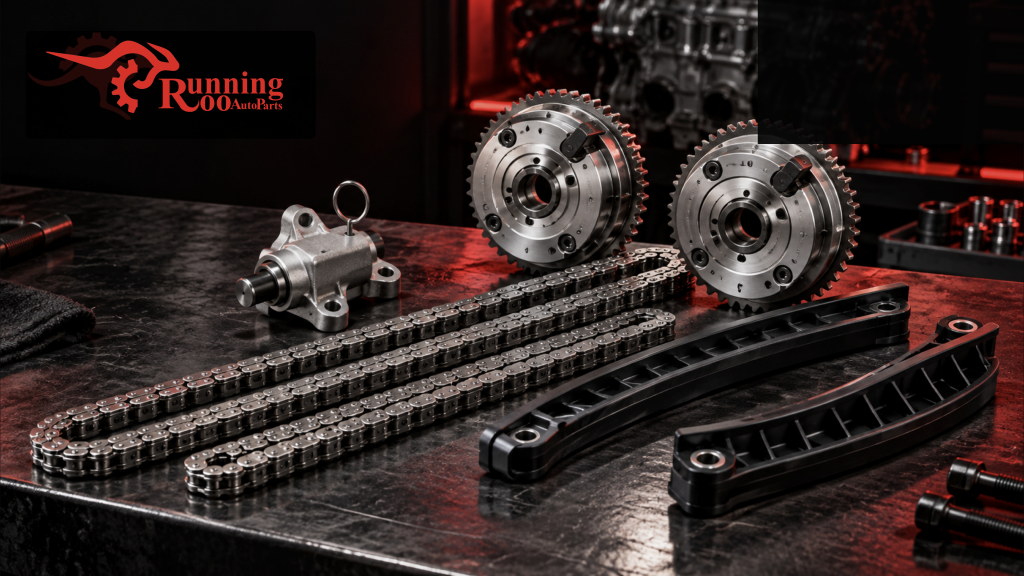
Mercedes M270/M274 Timing Chain Kit With VVT Gears: What to Confirm Before Ordering
An M274 timing chain kit with VVT gears is a purchase for a defined mechanical repair scope, not a general answer to every Mercedes-Benz engine warning, rattle or performance complaint. That difference is important. The M270 and M274 engine families occur across several Mercedes-Benz models and production periods, but vehicle badge, year and online photo are not enough to identify a correct kit.
This Australian buyer guide explains how a workshop or owner can assess the RunningRoo kit application before ordering. Its focus is a complete timing-system job that includes VVT gear scope. It is deliberately separate from an adjuster-only purchase: if a technician has identified one individual camshaft component, an all-in timing kit may not be the relevant product; equally, a broader timing repair may require more than a single actuator or gear.
Check the live listing first: RunningRoo M270/M274 timing chain kit with VVT gears. Before adding it to cart, compare the VIN, engine code, existing part numbers, production information and the workshop\’s documented repair scope with the current listing.
The quick fitment answer
The correct starting point is engine identification. Confirm whether the vehicle actually carries an M270 or M274 engine, then use the VIN and manufacturer parts information to establish the relevant configuration. Model names such as A-Class, C-Class, GLC or CLA can be a useful search filter, but they are not an engineering identifier. The same model name may exist with another petrol or diesel engine, a different market configuration, or a production change.
The live product description is the controlling sales reference for what RunningRoo offers. Product photos illustrate the item; they do not override listed fitment. If a part number, gear count, connector detail, chain layout or packaging differs from the old components, stop and obtain a fitment review before installation.
Mercedes-Benz technical bulletins commonly direct complex diagnosis and repair to trained technicians with suitable diagnostic equipment and approved procedures. A manufacturer-hosted bulletin available through the US NHTSA archive makes that professional-diagnosis principle explicit; see the Mercedes-Benz technical reference. It is cited here for the limited point that professional diagnosis matters. It does not endorse RunningRoo products or establish fitment for a particular Australian vehicle.
Why the words “with VVT gears” change the purchase question
Variable valve timing changes camshaft timing according to engine operating conditions. The exact hardware and control strategy are vehicle-specific. In a parts conversation, “with VVT gears” signals that the proposed repair scope includes more than a chain alone. The buyer should therefore ask two questions: what does the kit actually include, and why has the workshop selected that scope?
Do not infer a diagnosis from the inclusion of gears. A warning lamp, a correlation-related fault record, a driveability issue or a mechanical sound can arise from multiple causes. A scan result is an input to diagnosis, not a shopping list. An experienced workshop may inspect service history, engine oil condition, live data, wiring or actuator operation, timing position and mechanical condition before deciding whether timing-chain work is justified.
This distinction protects conversion quality. A customer who sends the VIN, part number and workshop finding is much more likely to receive a suitable product than a customer who searches “Mercedes timing chain noise” and selects the first image. It also prevents the seller from making an unsafe promise that a part will cure a symptom.
What to collect before you request a fitment check
| Information | Why it is useful |
|---|---|
| Full VIN | Identifies original vehicle specification |
| Engine code | Confirms M270/M274 family before model matching |
| Build month/year | Helps identify production changes |
| Existing part number | Strongest comparison when components are visible |
| Workshop repair scope | Shows whether a chain-only, full-kit or single-part path is intended |
| Clear photos | Can reveal a mismatch before a vehicle is reassembled |
If the engine is already open, photograph components and markings before discarding them. Note which bank, side or position a component came from if that applies to the repair. Keep every identifier attached to the job file along with the order number. This is much more useful than relying on memory after the parts have been removed.
Where there is an imported vehicle, engine replacement, incomplete service history or previous engine repair, say so at the beginning. These circumstances do not necessarily prevent a correct part selection; they simply increase the importance of checking the installed configuration rather than relying on the original registration record alone.
Chain symptoms are not a remote diagnosis
Owners sometimes search for a kit after hearing a start-up sound, seeing a warning lamp or experiencing rough running. These events deserve timely inspection, but none proves a particular component is defective. Timing-system components operate with lubrication, mechanical load, electronic controls and sensor feedback. A workshop needs vehicle-specific repair information and test results to distinguish among possible explanations.
Useful questions to ask a technician include: What engine code and part numbers have been confirmed? Is the proposed job a preventive repair, a measured mechanical finding, or the result of another inspection? Which components are to be renewed and why? Are there related seals, fasteners, fluids or one-time-use items required by the vehicle-specific procedure? Can the workshop inspect the delivered kit before booking the final installation date?
The answers do not need to be a lengthy technical report. Even a short written repair scope makes the parts order more accurate. If the technician is still diagnosing the vehicle, wait. Purchasing a timing kit to “see if it fixes it” can leave the owner with the wrong scope and an unresolved vehicle.
A buying decision table for M270/M274 jobs
| Finding before order | Sensible next step |
|---|---|
| VIN and engine code match the live listing | Compare kit contents with workshop scope |
| Workshop confirms timing-system repair | Confirm included parts and any additional consumables |
| Only one gear or adjuster is identified | Check whether a component-specific product is needed |
| Fault code exists but diagnosis is incomplete | Obtain diagnostic findings first |
| Vehicle has prior engine work | Compare physical identifiers and records |
| Product photo differs from old item | Pause and send photos/VIN for review |
The table is not a substitute for workshop judgement. It is a practical order-control tool: each step reduces the chance of receiving a part whose configuration does not match the intended repair.
Installation planning in Australia
Timing-system repairs require vehicle-specific procedures, correct locking and measurement tools, torque information and verification after assembly. They should be undertaken by a qualified workshop familiar with the relevant engine. The owner can help by arranging delivery before the booking, giving the installer the product page and VIN information, and asking what extra parts may be required after inspection.
Avoiding preventable delays
Most avoidable delays arise before the vehicle reaches the workshop. The first is an incomplete identification request: a photo of a registration plate is not the same as the VIN, and a model name is not the same as an engine code. The second is a mismatch between the parts order and the workshop\’s intended scope. Ask the installer whether it expects a chain-and-gear job, a repair involving one identified component, or an inspection first. The third is assuming that packaging, delivery and workshop availability will line up without a booking conversation.
Good documentation helps after the work as well. Put the invoice, installation date, vehicle kilometres, VIN and workshop invoice in one record. That record does not create a warranty beyond the seller\’s published terms, but it does make future servicing questions more factual. It can also help a later owner understand that a timing-system repair took place, rather than relying on a vague statement that “the chain was done”.
Treat any online content as an education and purchasing aid rather than an installation manual. Correct procedures, torque values and programming or adaptation requirements are vehicle-specific. A broad guide must never replace the data and equipment used by the technician doing the job.
For this reason, ordering after identification and diagnosis is usually the quickest route to a productive repair.
It also respects the installer’s professional process.
Before the package is opened, compare the invoice, product description and received contents. Take photographs of the box and the components if a question arises. If a fitment concern appears, do not modify a part or attempt a trial installation to make it fit. Contact the seller promptly with the order number, VIN, engine code, product photos and a clear explanation of the mismatch.
Allow for the fact that a workshop may discover related requirements when the engine is dismantled. That is normal in a mechanical repair, particularly when access reveals seals, guides, fasteners or other items outside the initial parts list. It is better to plan for this possibility than to promise a fixed completion date before the inspection is complete.
For fleet, regional and interstate customers, agree on delivery timing before immobilising the vehicle. Keep the packaging and documentation until the repair has been completed and the workshop has confirmed the job. This creates an orderly record for future servicing and any later fitment enquiry.
Pre-order checklist and product link
Before ordering the RunningRoo M270/M274 timing chain kit with VVT gears, confirm all of the following:
- VIN and engine code have been checked.
- Product-page application and current contents have been read.
- The workshop has described the intended timing/VVT repair scope.
- Original component numbers or photos are available where practical.
- Extra seals, fasteners, fluids and tooling requirements have been discussed with the installer.
- The delivery plan suits the workshop booking.
FAQ
Does an M274 warning light mean I need a timing chain kit?
No. Warning lamps and stored diagnostic codes require structured testing. A qualified workshop should identify the cause before parts are ordered.
Can I order using only my C-Class or GLC model name?
No. Confirm VIN, engine code, build information and the current product listing. A model name is only a starting point.
What does “with VVT gears” mean for this purchase?
It means the kit is marketed with VVT gear scope. Check the exact live contents and match them to the technician\’s specified repair before ordering.
Should I replace a complete kit if one component is noisy?
That is a workshop repair-scope decision. Do not select a kit solely from a noise description or online symptom list.
Can an owner install the kit at home?
This is specialised timing work. Use a qualified workshop with vehicle-specific information and appropriate tools.
What should I do if the received components do not match the old parts?
Pause before installation. Photograph the products and original parts, then contact the seller with the VIN, engine code and order details.
Source note
The Mercedes-Benz technical bulletin is used only to support the general recommendation for professional, vehicle-specific diagnostic and repair processes. RunningRoo is not affiliated with or endorsed by Mercedes-Benz. Product availability and listing content can change; recheck the live RunningRoo product page before purchase.