
By RunningRoo Auto Parts — written from the desk of our Product Manager
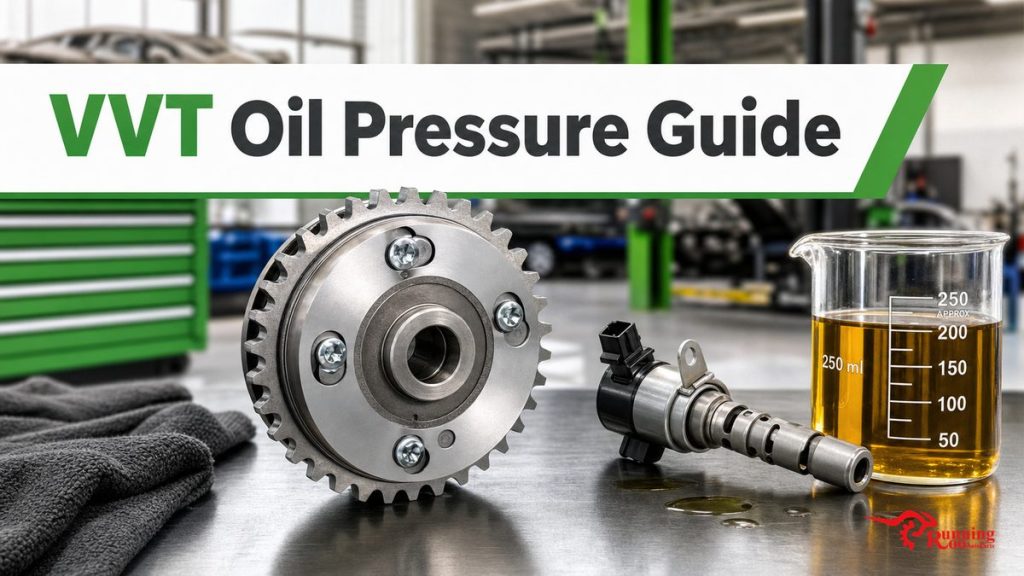
Most owners think of variable valve timing as an electronic system, but it is really a hydraulic one. The VVT gear, or cam phaser, is moved by engine oil pressure, channelled through a solenoid or oil-control valve that the engine computer commands. That single fact explains why so many “VVT faults” are really oil problems, and why the health of your VVT gear is decided more in the service bay than anywhere else.
This guide explains how oil pressure drives the VVT system, why the correct oil specification matters, how service intervals and oil condition protect the gear, and how to recognise when a VVT symptom is really an oil symptom. It is written for Australian owners who want their engine’s VVT system to live a long and quiet life.
RunningRoo Auto Parts – Based in Melbourne, Australia 🇦🇺
📞 Free 24/7 Pickup Available (Contact 0425890125)
💬 Any questions? Message or Call us anytime! We’re here to help.Why Choose RunningRoo?
✅ Aussie Owned & Operated | 🚚 Fast Shipping | 🤝 Friendly Support
How oil pressure moves the VVT gear
Inside the VVT gear, pressurised oil pushes a rotor or a set of vanes to rotate the camshaft slightly relative to its drive sprocket. The engine computer commands the oil-control solenoid, which directs oil into one side of the mechanism or the other, advancing or retarding the valve timing in real time. When the engine is cold, a locking pin holds the gear in a fixed position until oil pressure builds, which is why a worn pin produces a brief cold-start rattle.
This mechanism is entirely dependent on a clean, pressurised oil supply. The correct oil pressure is what makes the gear respond quickly and accurately, and the correct oil condition is what keeps the tiny internal passages and the solenoid from clogging. Remove either, and the VVT system is the first to complain.
Why the oil specification matters
Engine oil is not interchangeable, and the VVT system is one of the reasons why. Modern engines specify a particular viscosity and an approval standard, and the oil must meet that specification to protect the hydraulic parts as well as the bearings. An oil that is too thick or too thin for the engine will change the pressure and response of the VVT system, while an oil that lacks the correct additives can allow sludge and varnish to form in the very passages the gear relies on.
The table below summarises the oil factors that most affect VVT life.
| Factor | How it affects VVT |
|---|---|
| Viscosity | Wrong viscosity changes VVT response and cold-start protection |
| Approval standard | The oil must meet the manufacturer’s specification |
| Sludge resistance | Clean oil keeps solenoids and passages clear |
| Service interval | Old oil loses its protective and detergent properties |
Using the oil the manufacturer specifies, changed on schedule, is the single cheapest way to protect a VVT gear that is working normally.
How low or dirty oil mimics a VVT fault
When the oil level is low, or the oil is old and sludged, the VVT system may not build the pressure it needs, and the result is a list of symptoms that look exactly like a failed gear: a cold-start rattle, rough idle, hesitation and camshaft timing fault codes. A workshop that skips the oil check and jumps straight to parts is likely to condemn a perfectly good VVT gear.
The classic sequence is a car that comes in with VVT codes, receives a proper oil and filter service, and drives away fixed. Before any VVT gear is replaced, the oil level, condition and pressure should be checked against specification, because those three checks resolve a surprising number of faults for the price of an oil change.
Service intervals and VVT longevity
Manufacturers specify oil-change intervals for a reason, and stretching them is a false economy on an engine with VVT. Over time, oil loses its ability to suspend contaminants, and the VVT system’s fine passages and the oil-control solenoid are exactly where those contaminants settle. The result is delayed VVT response at first, then sticking solenoids and worn gears later.
For Australian conditions, the schedule deserves particular respect. Stop-start traffic, sustained heat and short trips that never fully warm the engine all load the oil more heavily than the ideal test cycle, so following the severe-service interval where the manufacturer provides one is a sensible choice for protecting the VVT system.
The oil-control solenoid: the other half of the system
The VVT gear is the muscle and the oil-control solenoid is the valve that directs the oil. When the solenoid sticks or fails, the gear cannot respond even if it is mechanically perfect, and the symptoms are indistinguishable from a faulty gear. The solenoid is usually far cheaper than the gear, so it is always tested or replaced first when a VVT fault is suspected.
This is another reason the oil matters: a clean solenoid lives in clean oil, and a sludged engine tends to take its solenoids down with it. Maintaining the oil protects both halves of the system at once.
Recognising an oil problem before it becomes a gear problem
The early signs of an oil-related VVT problem are subtle: a slight delay in engine response, a momentary rattle on the first cold start of the day, or fuel economy that has crept worse. These are easy to dismiss, but they are the cheapest moment to act. Checking the oil level, having the oil condition assessed, and changing the oil and filter if it is due will often head off a full VVT repair.
If the symptoms persist after fresh, correct-specification oil, then the diagnosis moves on to the solenoid, the oil pressure and finally the gear itself. That order protects your wallet, because it tests the cheap and likely causes before the expensive part.
Keeping the whole system healthy
The complete prescription for a long-lived VVT system is simple: use the correct oil specification, change it on schedule, keep the level correct, and investigate any cold-start rattle or timing code promptly. When a gear or solenoid does need replacement, use quality parts with confirmed engine-code fitment, change the oil and filter at the same time, and confirm the oil pressure is within specification so the new part is not fed the same problem that killed the old one.
For Australian owners, that maintenance discipline is worth more than any single part. The VVT system is only as healthy as the oil that feeds it, and the oil is the one variable you control every time you service the car.
How Australian driving conditions load the oil harder
Australian conditions are harder on engine oil than many owners realise, and that directly affects the VVT system. Sustained summer heat, long periods in stop-start traffic, and the short, never-fully-warm trips that are common in suburban driving all load the oil more heavily than the ideal laboratory test cycle. In those conditions, the oil oxidises faster, loses viscosity control sooner and reaches the end of its useful life before the odometer suggests it should.
This is why the severe-service interval exists in many owner’s handbooks, and why following it is a sensible choice for protecting the VVT system. The small extra cost of an earlier oil change is trivial compared with the cost of a VVT gear or a timing-chain repair that a sludged engine invites. In a hot climate, clean oil is the cheapest insurance the VVT system has.
Choosing quality parts when the oil cannot be blamed
Once the oil, level and pressure are confirmed healthy and the fault is genuinely in the hardware, the parts you choose decide how long the repair lasts. A quality VVT gear or oil-control solenoid is manufactured to precise tolerances and will hold its timing stability and response far longer than a cheap copy. Because the labour to reach these parts is the expensive half, the parts themselves are the wrong place to save a few dollars.
The same logic applies to the oil-control solenoid, which is cheap relative to the gear and should be renewed if there is any doubt. Pairing a quality gear with a fresh, correct-specification oil change gives the new part the best possible start, and gives you the best chance of never revisiting the job.
A simple VVT health checklist
Protecting your VVT system does not require special tools, just consistent habits. Keep the oil level within the marks and use the exact specification the manufacturer specifies. Listen for any new rattle on the first cold start of the day, and do not dismiss it as “normal for an older car” without checking. Have the vehicle scanned if the engine runs rough, hesitates or uses noticeably more fuel, because timing codes are often stored before the warning light comes on. Change the oil and filter on schedule, and choose the severe-service interval if your driving is mostly short trips, heavy traffic or sustained heat.
If a VVT symptom appears, the order of investigation is the same every time: oil level and condition first, then the oil-control solenoid, then the oil pressure, and only then the gear. Working through that list in order is how you fix a VVT fault for the price of an oil change, or at least avoid condemning a good gear when the real problem is the oil or the solenoid.
Frequently asked questions
Does engine oil really affect VVT?
Yes. The VVT gear is moved by engine oil pressure, so oil level, specification and condition directly affect how it works and how long it lasts.
Can dirty oil cause a VVT fault code?
Yes. Sludged or low oil can produce VVT symptoms that disappear after a proper oil and filter service.
What oil should I use for VVT?
The exact viscosity and approval standard specified by the manufacturer for your engine. Do not substitute a different grade.
How often should I change the oil to protect VVT?
Follow the manufacturer’s interval, and consider the severe-service interval if you do short trips, heavy traffic or sustained heat.
What does the oil-control solenoid do?
It directs pressurised oil into the VVT gear under command from the engine computer. A failing solenoid mimics a faulty gear.
Why does my VVT gear rattle on cold start?
Often a worn locking pin, but low or thick oil that delays pressure build-up can produce the same sound, so the oil should be checked first.
Should I change the oil when I replace a VVT gear?
Yes. Fresh, correct-specification oil is essential to the life of a new gear or solenoid.
How do I protect my VVT system long-term?
Use the correct oil, change it on schedule, keep the level right, and address any rattle or timing code promptly.
Shop the products mentioned in this guide
- Engine VVT Timing Oil Control Valve for Mercedes-Benz SLK250 W204 A2710500578
- Oil Control Valve Solenoid for Jeep / Dodge / Chrysler 3.2–3.6L V6 5184150AF 11–19
- VVT Camshaft Gears Intake & Exhaust for Toyota Corolla 2007–2012 1.8L 2ZR-FE
- VVT gears and oil control valves on eBay
Watch on RunningRooAuto YouTube
- RunningRoo Auto Parts – trusted Melbourne parts support
- RunningRoo Auto Parts – product and fitment channel
RunningRoo Auto Parts – Based in Melbourne, Australia 🇦🇺
📞 Free 24/7 Pickup Available (Contact 0425890125)
💬 Any questions? Message or Call us anytime! We’re here to help.Why Choose RunningRoo?
✅ Aussie Owned & Operated | 🚚 Fast Shipping | 🤝 Friendly Support
Sources and further reading
- ACCC – Consumer rights and guarantees
- Product Safety Australia – vehicle recalls
- RACV – car maintenance and repair guidance
- API – Engine oil standards
- ACEA – European oil sequences
Oil viscosity, approval standards, VVT oil-pressure specifications and service intervals are engine-specific and are set out in each manufacturer’s workshop manual and owner’s handbook. Always use the oil specification and interval your vehicle’s manufacturer specifies.
RunningRoo Auto Parts – Based in Melbourne, Australia 🇦🇺
📞 Free 24/7 Pickup Available (Contact 0425890125)
💬 Any questions? Message or Call us anytime! We’re here to help.Why Choose RunningRoo?
✅ Aussie Owned & Operated | 🚚 Fast Shipping | 🤝 Friendly Support