
By RunningRoo Auto Parts — written from the desk of our Product Manager
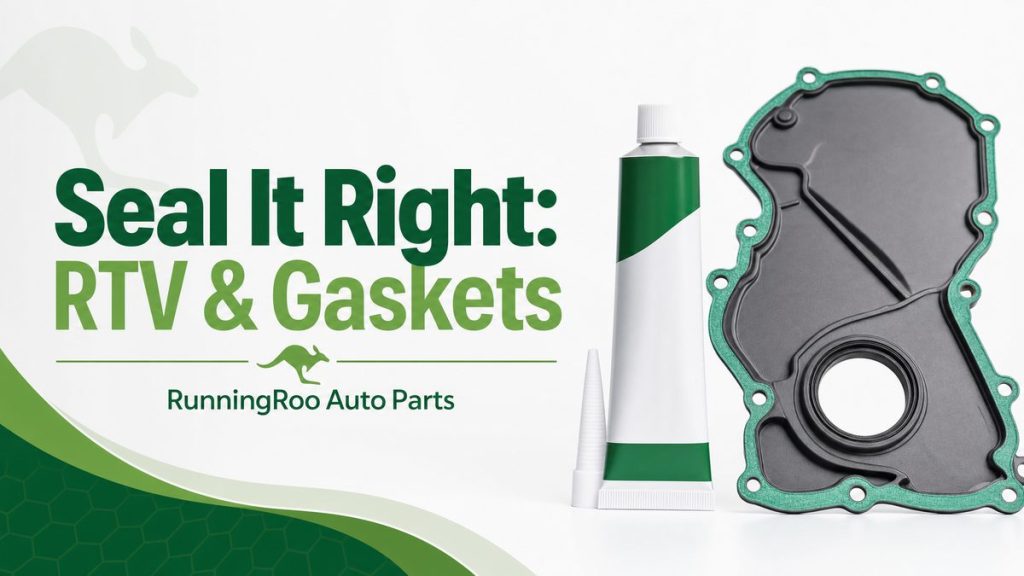
The most common reason a timing chain job comes back with an oil leak is not the chain — it is the sealing. Modern engines are sealed with a combination of rubber and metal gaskets and RTV silicone, and getting the surfaces clean, the bead right and the cure time right is what separates a dry engine from one that weeps oil for the rest of its life. This guide explains when to use RTV, when to use a gasket, and how to apply each correctly, so the timing job you are doing now stays sealed.
RunningRoo Auto Parts – Based in Melbourne, Australia 🇦🇺
Free 24/7 Pickup Available (Contact 0425890125)
Any questions? Message or Call us anytime! We’re here to help.
Why Choose RunningRoo?
Aussie Owned & Operated | Fast Shipping | Friendly Support
When to use RTV and when to use a gasket
RTV, short for room-temperature-vulcanising silicone, is used where the manufacturer specifies a formed-in-place gasket — typically between machined metal surfaces such as a timing cover and the block, or an oil pan and the block. It fills minor surface imperfections and handles thermal expansion well. A pre-formed gasket, by contrast, is used where a cut rubber or composite gasket is specified, often with locating grooves or metal inserts to control compression.
The golden rule is to follow what the manufacturer designed. Some covers use RTV only, some use a gasket only, and some use both, with RTV at the joints and corners where the gasket meets a machined seam. Mixing them up, or using RTV on a gasket that was designed to run dry, is a common cause of leaks.
The symptoms of a failed seal
A failed timing-cover seal usually shows up as an oil weep or leak down the front or rear of the engine, oil residue around the cover, a burning-oil smell as oil lands on the exhaust, and a dropping oil level. On engines where the timing cover also seals a coolant passage, a failed seal can allow coolant and oil to mix, producing a milky residue. Because a small leak can grow into a serious low-oil problem, a leak around the timing cover is worth addressing early.
| Symptom | Likely cause | Check |
|---|---|---|
| Oil weep down engine front | Timing cover seal | Inspect cover and seams |
| Burning-oil smell | Oil on exhaust | Trace the leak |
| Oil and coolant mixing | Cover gasket failure | Check for milky oil |
| Leak returns after timing job | Poor surface prep or bead | Re-seal with correct procedure |
How to apply RTV correctly
Preparation is everything. Both mating surfaces must be clean, dry and oil-free — degrease them, then wipe with a solvent that leaves no residue. Apply a continuous bead of the correct size, keeping it inside any bolt holes, and circle the bolt holes where specified. Refit the cover within the sealant’s working time, torque the bolts in the correct sequence and to the correct value, and allow the specified cure time before adding oil or starting the engine.
The most common mistakes are applying too much sealant, which squeezes out inside the engine and can block oil galleries, and applying too little or leaving a gap, which leaks. A consistent bead and correct torque are far more important than the brand on the tube.
Choosing the right gasket and sealant
Use a gasket matched to the engine by part number, and a quality RTV silicone rated for the temperatures and fluids involved — oil-resistant, sensor-safe and able to handle the engine’s operating range. Cheap silicone that hardens, shrinks or reacts with oil will leak again, so the sealant is not the place to save money.
At RunningRoo our timing kits include the correct seals and RTV sealant for the job, and we supply timing cover gaskets and sealant tubes for the popular Australian applications, so owners can seal the job once and not revisit it.
A step-by-step reseal checklist
Getting a timing cover to seal is mostly about discipline, and a simple checklist prevents almost every repeat leak. First, remove all traces of the old gasket and sealant with a plastic scraper — never a metal blade that scores the mating surface. Second, degrease both surfaces and finish with a solvent wipe that leaves no residue. Third, check the cover for flatness and cracks, because a warped plastic cover will never seal no matter how good the sealant.
Fourth, apply the sealant as a continuous bead of the correct size, keeping it inside the bolt holes and circling them where the manufacturer specifies. Fifth, refit the cover within the sealant’s working time and torque the bolts in the correct sequence and to the correct value. Finally, allow the full cure time before adding oil or starting the engine. Skipping any one of those steps is how a freshly resealed engine ends up leaking again.
The most common RTV mistakes
The mistake that causes the most engine damage is using too much sealant, because the excess squeezes out inside the engine, breaks off and can block the oil pickup or an oil gallery. The second is using too little or leaving a gap in the bead, which leaks. The third is bolting the cover down before the surfaces are properly clean, and the fourth is starting the engine before the sealant has cured.
None of these mistakes is expensive to avoid — they are all attention to detail. When a timing job leaks, the answer is almost never a more expensive sealant; it is a cleaner, more careful reseal using the correct procedure.
Choosing the right RTV for the job
Not all silicone is the same, and using the wrong type is a common cause of a repeat leak. A timing cover and oil pan need an oil-resistant, sensor-safe RTV rated for the engine’s operating temperature, because the sealant sits in hot oil and must not break down or release compounds that contaminate the oxygen sensors. A general-purpose household silicone is the wrong product for an engine and will leak or degrade.
The same care applies to the gasket. A timing-cover gasket must match the engine by part number, because the thickness and material set the clamping pressure on the cover. A gasket that is too thin leaks, and one that is too thick can prevent the cover from seating properly. Quality gaskets from a reputable supplier are made to the correct specification, while cheap gaskets can compress unevenly and fail early.
It is also worth remembering that the sealant and gasket are the cheap part of a timing job, and the labour to do it again is the expensive part. Choosing the correct, quality sealing parts the first time is the cheapest way to ensure the job stays dry.
Torque sequence and cure time
The way a timing cover is bolted down matters as much as the sealant under it. Covers should be tightened in a diagonal or specified sequence, in stages, to spread the clamping load evenly across the gasket or sealant bead. Tightening one bolt fully before the others can pinch the gasket, warp a plastic cover and leave a leak in the corner you tightened last.
Cure time is the other half of the seal. RTV has a working time, during which the cover must be fitted, and a cure time, during which it sets to full strength. Starting the engine or adding oil before the sealant has cured can wash the bead out or break the seal, which is why the tube’s cure time should be respected even when it means leaving the car overnight.
These two details — torque and cure — are where most repeat leaks come from, and they cost nothing to get right. A clean surface, a correct bead, a staged torque sequence and a full cure add up to a timing cover that stays dry for the life of the job.
Frequently asked questions
Can I use RTV instead of a gasket?
Only where the manufacturer specifies a formed-in-place seal. On a gasket-designed cover, use the gasket, and add RTV only at the corners where specified.
How long should RTV cure before starting the engine?
Follow the tube’s instructions — usually a working time of a few minutes and a full cure of 12 to 24 hours before oil and heat are applied.
Why does my timing cover still leak after resealing?
Usually surface contamination, an uneven bead, incorrect torque or a warped cover. Clean, apply and torque carefully.
Should I replace the timing cover gasket with the chain?
Yes. The gasket and any sealant must be renewed whenever the cover comes off, and they are normally included in a complete timing kit.
Can too much RTV damage an engine?
Yes. Excess sealant can squeeze inside, break off and block the oil pickup or galleries, causing serious damage. A consistent, correctly sized bead is essential.
Do I need a new gasket or just sealant?
Follow the manufacturer’s design. Some covers are RTV-only, some use a gasket, and some use both with sealant at the corners. Never substitute one for the other.
How important is the bolt torque when sealing a cover?
Very important. Uneven torque warps the cover and squeezes the sealant unevenly, which is a common cause of leaks. Torque in the correct sequence to the correct value.
Can I use a metal scraper to remove old sealant?
No. A metal blade can score the machined surface and create a permanent leak path. Use a plastic scraper and a solvent wipe instead.
How do I know how much RTV to apply?
Follow the bead size the manufacturer specifies — usually a few millimetres. The bead should be continuous, inside the bolt holes, and just large enough to fill the gap without squeezing out inside the engine.
Can I reuse a timing cover gasket?
No. Gaskets are one-time-use sealing parts and should be renewed whenever the cover comes off. Reusing a compressed gasket is a common cause of a leak that returns after the job.
Does the type of coolant or oil affect the sealant?
Yes. The sealant must be rated for the fluids and temperatures it will contact — oil-resistant and sensor-safe for a timing cover. Using the wrong silicone can soften, shrink or contaminate the sensors.
Shop the parts mentioned in this guide
- Timing Chain Kit with 75ml RunningRoo RTV Sealant for Honda 2.4L K24W
- Timing Kit with 75ml RTV Sealant for Honda Odyssey 2.4L K24W7 / K24W8
- Timing Cover Gasket 4792005AC for Dodge 2.7L / 3.5L V6
- Timing Cover Gasket & Seal for Audi A1 / VW Golf / Jetta 1.4 TSI
Watch on RunningRooAuto YouTube
- RunningRoo Auto Parts – trusted Melbourne parts support
- RunningRoo Auto Parts – product and fitment channel
RunningRoo Auto Parts – Based in Melbourne, Australia 🇦🇺
Free 24/7 Pickup Available (Contact 0425890125)
Any questions? Message or Call us anytime! We’re here to help.
Why Choose RunningRoo?
Aussie Owned & Operated | Fast Shipping | Friendly Support
Sources and further reading
- Gasket — Wikipedia
- Permatex — gasket makers and sealants
- RACV — car maintenance and repair guidance
- CarsGuide — Australian motoring advice
RunningRoo Auto Parts – Based in Melbourne, Australia 🇦🇺
Free 24/7 Pickup Available (Contact 0425890125)
Any questions? Message or Call us anytime! We’re here to help.
Why Choose RunningRoo?
Aussie Owned & Operated | Fast Shipping | Friendly Support