
An inspection report is more useful than a guess when a Mazda MPS or CX-7 owner is considering a replacement VVT actuator. The phrase lock-pin wear describes a particular possible finding; it should not become a label applied to every engine noise. Before buying a gear, ask the workshop to distinguish the observed symptom, the physical evidence and the condition of the associated timing drive. Those distinctions help an Australian owner authorise the right scope of work.
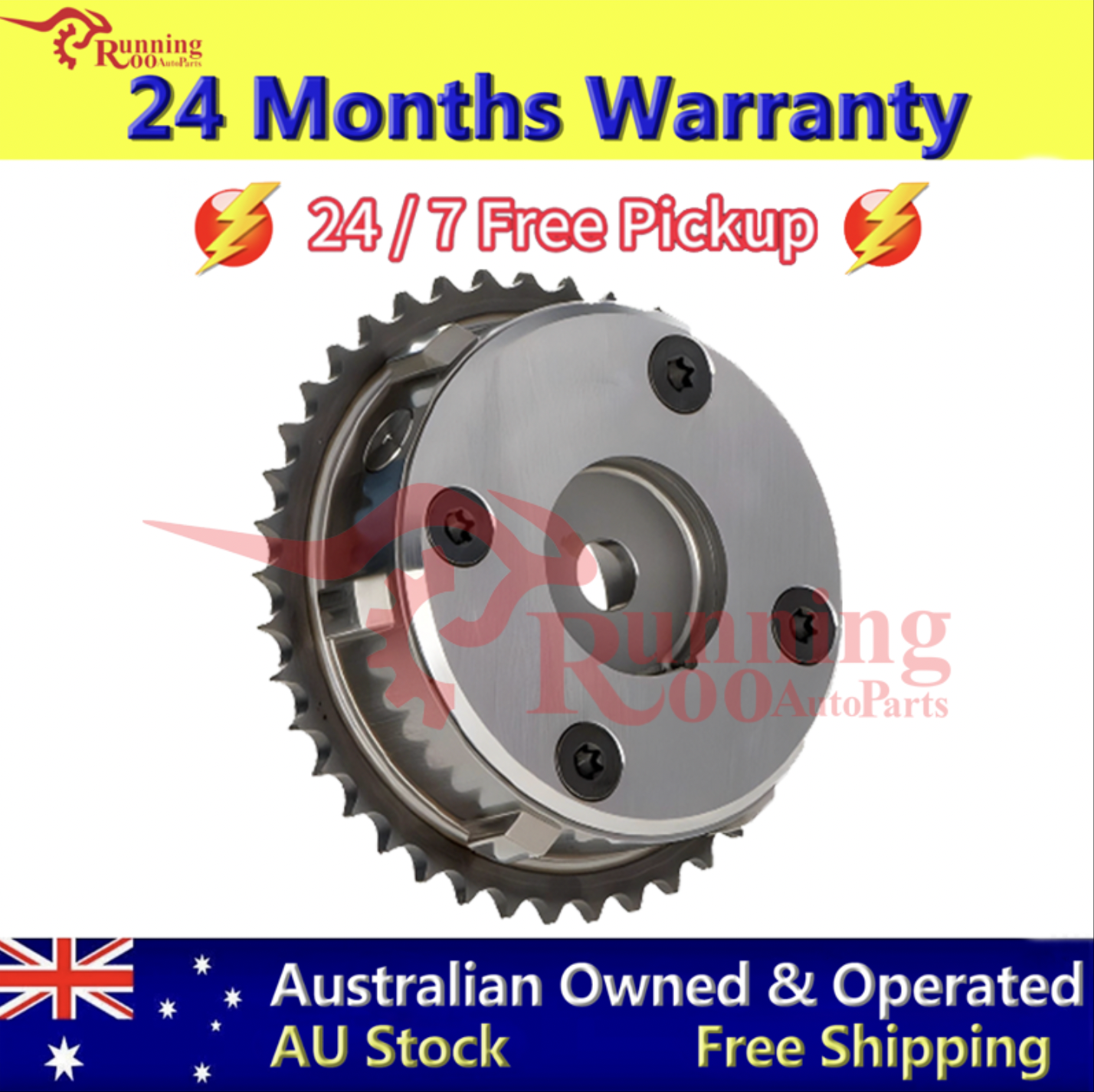
RunningRoo offers a standalone VVT camshaft adjuster listed with reference L3K9-12-4X0C for selected Mazda 2.3 turbo enquiries. The product is a purchasing option after identification and diagnosis, not a diagnostic test in itself. Confirm the VIN, fitted engine code, complete OE reference and workshop findings. This guide concentrates on documenting actuator inspection evidence rather than repeating a general fitment list or assuming that all MPS noises share one cause.
What the manufacturer record actually establishes
Mazda North American Operations' historical SSP87 document discusses particular L3T-equipped vehicles with VVT noise or timing-chain noise. It identifies wear at the VVT rotor lock-pin hole and VVT-case breakage as possible causes of the described cold-start ticking condition, and separately discusses chain-related noise. The document therefore supports distinguishing actuator findings from chain findings. It does not establish the fault in an individual Australian vehicle or provide current Australian warranty eligibility. Mazda North American Operations SSP87, historical technical scope
Use that technical history as context for a professional inspection, not a shortcut around one. A publication's model years, production ranges and regional programme terms must stay attached to the publication. Do not tell an Australian owner that a historical overseas programme guarantees a free repair, or that every vehicle outside its stated range is unaffected. Current vehicle-specific information and the mechanic's actual findings govern the repair decision.
Record the symptom before interpreting it
Ask the owner to describe when the noise occurs, how long it lasts and whether it has changed. Record recent servicing, known previous timing work and any relevant warning or running concern. A technician can use this history to decide how to reproduce and investigate the issue. The history should not be rewritten afterwards to fit the component that happens to have been ordered.
If a recording is available, keep it with the job details and note the circumstances. A recording made beside the front of an engine is not the same as a confirmed source location. Different sounds can overlap, and a phone does not measure component wear. It is reasonable to ask the workshop what evidence moved the diagnosis from a general noise complaint to a specific actuator or chain-drive finding.
Separate the actuator assessment from the chain assessment
A mechanic may find that more than one component needs attention, but each recommendation should have an explanation. Ask whether the actuator was assessed independently and whether the chain drive has a separate documented concern. Avoid treating a noisy actuator as proof that every chain component is worn, or treating a chain repair as proof that an actuator is serviceable. The actual inspection and applicable manufacturer procedure should determine the scope.
This separation also improves the quotation. A standalone actuator order should identify any additional work and consumables required for its installation. A broader timing repair should specify the chain-related parts separately. An owner can then compare the proposal with the confirmed findings rather than relying on an undefined phrase such as full VVT job. The goal is an appropriate repair, not the maximum possible number of new components.
| Evidence category | Useful detail | What it does not prove alone |
|---|---|---|
| Owner observation | Start conditions, duration and change over time | The exact failed internal component |
| Noise recording | Date and operating circumstances | A measured lock-pin or chain condition |
| Actuator inspection | Identified location and technician interpretation | The condition of every timing-drive part |
| Chain assessment | Relevant findings under the correct procedure | That the VVT actuator is automatically sound |
| Product identification | VIN, engine code and full OE reference | A diagnosis based solely on catalogue fitment |
| Repair validation | Recheck of the original concern and recorded results | A lifetime guarantee against future engine noise |
Make inspection photographs useful
A photograph should show the relevant feature and enough of the component to identify it. If the technician records damage, ask for a brief caption explaining the location and significance. A highly magnified image without orientation can be difficult for the owner, supplier or a later workshop to interpret. Include the old component's marking where practical and keep it distinct from photographs of the replacement part.
Do not ask an unqualified owner to dismantle an actuator to obtain a more dramatic image. Any disassembly or inspection must follow the appropriate professional procedure. The report can describe what was confirmed without turning a buying guide into an improvised repair manual. Where the component cannot be conclusively assessed from an available image, the correct response is to explain the limitation rather than claim certainty.
Match the standalone product to the actual requirement
The linked RunningRoo offer describes one VVT camshaft gear. Its L3K9-12-4X0C reference is the starting point for a specific enquiry. The page also contains a broader list of related references; those should not all be treated as synonyms for the same standalone actuator. In a timing system, related numbers can identify different parts. Ask for confirmation of the exact supplied component and the reference applicable to the vehicle.
This matters when an owner forwards only a screenshot of a long reference list to a workshop. The mechanic may need one particular actuator while the owner assumes that the listing includes a chain or several associated parts. Send the direct product link and the approved inventory instead. If additional components are needed, identify them separately before the order is placed and before the vehicle is dismantled.
Keep turbo and non-turbo enquiries separate
A broad Mazda 2.3 description is not enough to approve the part. The linked offer is presented for selected turbo applications, and the fitted engine identity must be established. Do not transfer a non-turbo gear listing or an apparently similar component into the order because the capacity matches. The VIN, engine code, OE reference and relevant build details should all support the selection.
Imported vehicles and engine changes deserve particular attention. The model designation used in an overseas source may differ from the Australian badge, and registration information may describe the original engine. Tell RunningRoo and the mechanic about any known replacement or conversion. A clear photograph of the identifying marking can support the enquiry, but it should be considered together with the vehicle record and catalogue information rather than used in isolation.
Ask what the workshop will do with the finding
An inspection result should lead to a defined action. If the workshop confirms actuator damage, ask whether the proposed replacement addresses that finding and what else must be inspected during the job. If the finding is uncertain, ask what further evidence is needed. This approach avoids both premature replacement and an open-ended investigation with no explanation of the next decision point.
Do not expect the parts supplier to certify the condition of the engine from a message. RunningRoo can clarify the product, stock and package details, and can review identification information for the order. The workshop remains responsible for the diagnosis and repair method. Keeping those responsibilities clear makes support more effective because each party receives the information it can actually use.
Do not invent a performance promise
Replacing a confirmed faulty actuator is a repair decision, not a guaranteed power upgrade. Avoid claims that the new part will add a particular output, eliminate every noise or permanently solve unrelated running problems. The appropriate expectation is that the workshop will install a suitable component as part of a justified repair and validate the original concern using the applicable information.
Similarly, a historical manufacturer document should not be used as an endorsement of an aftermarket product. The document supports the technical point attributed to it; the retailer listing describes the offered part. These are different sources of information. Buyers should ask about the current supplied specification and sale terms without assuming that a matching reference makes every commercial claim a statement from Mazda.
Plan the collection and subsequent record
At handover, ask the mechanic to identify the installed part, the associated work and the relevant checks performed. If another concern remains, record it separately. Keep the invoice, inspection photographs and product reference together. A later workshop can then understand why the actuator was replaced and whether the timing chain was assessed or renewed during the same visit.
For Australian supply, RunningRoo offers friendly support, Melbourne local pickup in Blackburn VIC by appointment and fast dispatch subject to stock and preparation. Confirm the exact actuator before arranging a tight workshop booking. An order based on a documented finding is easier to manage than an urgent purchase based on a noise description alone, especially if the engine is already partially dismantled.
Related RunningRoo reading: Mazda MPS 2.3 Turbo VVT Gear L3K9-12-4X0C: Fitment, Fault Checks and Ordering. That article addresses a related but separate question or application; it does not establish interchangeability with this product.
A better enquiry than my MPS rattles
A useful enquiry states the vehicle identity, fitted engine, full OE reference and the mechanic's conclusion. It might explain that the workshop has identified an actuator issue and is separately assessing the chain drive. Attach clear photographs if they help identify the requested part. This is an example of an enquiry format, not a claim about any specific customer's repair.
If the diagnosis is not yet confirmed, say that clearly. You can still ask about availability and package contents while the workshop investigates, but an available part should not determine the conclusion. The aim is to have the right component ready when the evidence supports replacement, with no confusion about what the standalone gear includes or what other work belongs in the estimate.
Frequently asked questions
Does a start-up rattle prove lock-pin wear?
No. It is a symptom requiring professional assessment. Mazda's historical document identifies particular possible actuator and chain concerns within its scope, but it does not diagnose an individual car. Ask the workshop what evidence supports the proposed component replacement and whether related timing-drive findings have been recorded separately.
Does SSP87 give my Australian vehicle current warranty cover?
Do not assume so. The cited document is a historical North American programme with defined scope. It is used here for its technical context, not as a current Australian entitlement. Any question about manufacturer coverage should be checked with Mazda for the specific VIN, market and circumstances.
Is the linked product a complete timing-chain kit?
The selected offer describes one standalone VVT gear. Confirm the current inventory with RunningRoo. Do not interpret a list of related reference numbers as a package containing every associated timing component. Ask the mechanic to specify any chain, guide, tensioner, seal or fastener requirements separately.
Should I order a non-turbo Mazda 2.3 actuator instead?
Only if the correct vehicle-specific identification establishes that it is the required part. Do not substitute on capacity or appearance alone. The linked offer concerns selected turbo applications. Provide the VIN, fitted engine code and complete OE reference so the exact configuration can be checked before installation.
What photographs are useful for a parts enquiry?
Include the component marking and a clear overall view, plus any workshop-labelled detail relevant to identification. Keep old and new parts distinguishable. A photograph of an internal feature needs context and professional interpretation; it should not be treated as a standalone diagnosis or a reason for the owner to dismantle an actuator.
How do I arrange supply from RunningRoo?
Call 0425 890 125 with the direct product link and the workshop's approved request. Confirm stock, contents and fitment before arranging Melbourne pickup by appointment or Australian dispatch. RunningRoo provides friendly local support, while the installing workshop carries out the diagnosis, installation and validation of the repair.
Related RunningRoo video
Variable Valve Timing Explained | VVT, VVT-i, VANOS & Valve Lift | RunningRoo. This channel video provides related educational context. It is not proof that the filmed component is the exact supplied item, a vehicle-specific diagnosis or a substitute for current manufacturer procedures.
Sources and scope
Offer and stock information checked on 16 November 2026. Retailer descriptions identify the offered contents; the manufacturer sources support the technical points attributed to them within their stated market and model scope. The purchasing examples and suggested questions are editorial guidance. Use current vehicle-specific manufacturer information and professional diagnosis for the actual repair.