A search for a Mazda 3 MAF sensor 197400-2010 in Australia should begin with diagnosis and end with a verified part match. Poor running, hesitation or an engine warning can prompt an air-flow-meter search, but those symptoms do not identify a replacement by themselves. This guide focuses on the ZL01 / 197400-2010 candidate listed by RunningRoo and explains what to establish before ordering it for a Mazda 3 or a separately confirmed Ford application.
Open Mazda 3 MAF sensor 197400-2010 Australia at RunningRoo and matching RunningRoo eBay listing to see the actual offer, then contact RunningRoo on 0425 890 125 with the VIN, engine code and old sensor reference. The business is Australian-operated, with friendly support and Melbourne local pickup in Blackburn by appointment. Ask about fast dispatch for confirmed available stock once the correct product and destination have been established.

What the advertised ZL01 / 197400-2010 item includes
The retailer identifies this item as a mass air flow sensor or air flow meter, using the references ZL01 and 197400-2010. The seller description specifies a five-pin connection and one sensor. It names Mazda and Ford applications, including Mazda 3, Ford Laser and Ford Escape in the title. These are application leads for checking, not permission to treat all of those vehicles as electrically identical.
For the Mazda 3, the detailed seller information includes BK applications with LF and L3 engine references. Other model families and engines also appear in the broader retail text. Keep the enquiry tied to the vehicle being repaired. A buyer with a later Mazda 3, a different engine or a modified intake should not assume that the familiar model name is enough to establish compatibility.
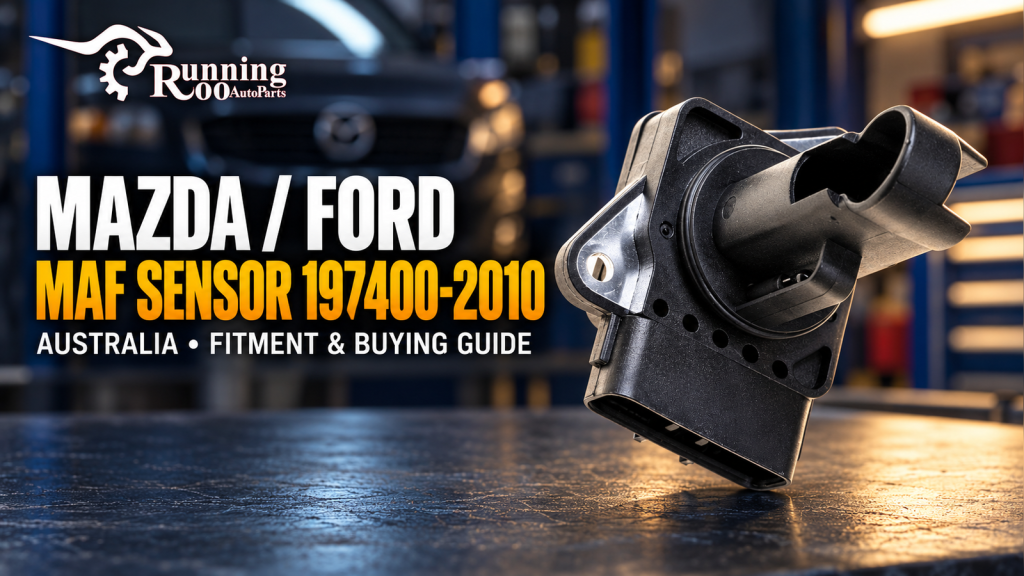
The package description does not promise a complete air-box assembly, replacement intake duct, wiring repair kit or a performance tuning product. Confirm any required mounting seal or hardware separately. The product photograph helps identify the sensor body and connector, but the correct calibration and application must also be established; a similar outline and the same pin count do not independently prove a match.
What a MAF sensor does, according to its manufacturer sources
DENSO: mass air flow sensor function and diagnosis explains that the MAF measures intake air and provides information used by the engine controller for fuel delivery. DENSO also identifies intake contamination, filter-related issues and leaks as relevant checks, and cautions that cleaning may damage a sensor. This is general manufacturer guidance about MAF systems, not evidence that the aftermarket item sold here is manufactured by DENSO or has DENSO certification.
HELLA: air-mass sensor function and troubleshooting describes air-mass-sensor operation and diagnostic checks, including attention to the sensor and its electrical connections. Use that material as background for understanding the workshop's findings. The actual Mazda or Ford service information must govern circuit identification, expected readings and any installation or adaptation requirements for your engine. This article does not supply a universal five-pin wiring diagram or a generic pass/fail air-flow value.
The useful technical distinction is between an observed running problem and a confirmed measurement-system fault. Ask the technician what evidence identifies the sensor itself rather than a surrounding issue. A replacement should be ordered because that evidence and the application check support it, not because a search result places the words “rough idle” next to a part number.
Record the symptom without diagnosing it yourself
Write down when the problem occurs: during starting, at idle, under load or after a particular repair. Include the warning message or diagnostic-code report exactly as supplied by the workshop. A complete code description is more useful than a remembered fragment, and any operating conditions recorded with it should remain attached to the report. Do not erase information merely to see whether a warning returns before the vehicle is assessed.
Also note recent air-filter work, intake changes or electrical repairs. These facts help the technician choose the correct inspection path; they do not prove that the most recent person to touch the car caused the fault. Avoid drawing conclusions from timing alone. The purpose of the record is to make diagnosis more efficient and the final parts request more accurate.
If the vehicle is running poorly enough to affect safe operation, ask the repairer how it should be transported or assessed. Do not conduct repeated road tests solely to create a more dramatic symptom video. The parts enquiry can proceed with the vehicle identification and existing reference while the workshop determines the safest and most useful diagnostic approach.
Five pins are an identification feature, not a test procedure
The seller's five-pin description is useful when comparing photographs, but it does not assign a function to each terminal. Do not infer terminal positions from a different sensor on the internet. Have the repairer use the applicable circuit information and approved test method. This guide does not recommend applying battery voltage to any terminal, bridging wires or probing a connector without the correct specification.
Photograph the sensor label, connector face, plug latch and mounting arrangement. Keep the image sharp enough to read 197400-2010 or whatever number is actually present. If the marking is incomplete, send the unedited photograph and explain what can be read. Filling in missing digits from a retail title creates false certainty and can turn a helpful identification clue into a wrong order.
If the fitted sensor has an aftermarket reference, provide that as well as the vehicle details. Ask the supplier to confirm the application through an appropriate cross-reference rather than assuming it shares the same calibration. Where the intake assembly has been changed, tell the workshop and supplier what hardware is fitted and whether the engine management remains standard.
MAF purchasing checklist
| Evidence | What to record | Why it matters before ordering |
|---|---|---|
| Vehicle identity | VIN, build date, model series and engine code | Narrows the exact application |
| Existing sensor | Full reference and clear label photograph | Connects the enquiry to a specific component |
| Connector | Five-pin layout, plug shape and latch photograph | Flags physical differences without inventing pin assignments |
| Intake arrangement | Original or modified hardware and mounting photographs | Prevents assumptions based only on the vehicle badge |
| Diagnostic finding | Workshop report, complete codes and relevant test conclusions | Supports replacement of the sensor rather than guessing from symptoms |
| Package contents | Sensor, seal and hardware confirmation | Avoids assuming a complete intake repair kit |
| Supply arrangement | Destination postcode or collection appointment | Helps coordinate the actual repair date |
Use this table to organise information, not to approve a sensor from a photograph. The final application confirmation should include the part being supplied and the vehicle requirement. If either side of that match remains uncertain, ask for the missing detail. It is better to resolve an unreadable reference before checkout than to discover a mismatch after the intake has been dismantled.
Cleaning, replacement and the temptation to experiment
DENSO's published caution about cleaning is a reason not to turn a general internet tip into a universal service instruction. This article does not recommend a solvent, brush or compressed-air cleaning method for the advertised sensor. Ask the workshop to follow the guidance applicable to the actual component and to explain whether replacement is justified by its findings.
Unplugging a sensor and noticing a change in running also should not be treated as a standalone approval to buy another one. The workshop must interpret behaviour using the correct engine-management information. A different response after a connection is disturbed does not, by itself, establish which component is at fault. Keep the diagnostic discussion separate from the shopping decision until the evidence is clear.
When replacement is recommended, ask what surrounding conditions have been checked and what must be corrected before the new part is installed. The order should be part of a repair plan, not an attempt to conceal a recurring symptom. Retain the report so a later concern can be compared with the original findings instead of repeating the same unstructured parts replacement.
Mazda and Ford applications need their own confirmation
The title's reference to Mazda 3, Ford Laser and Ford Escape makes the item discoverable across several searches. It does not establish that every model year, engine capacity or market version in those families uses this sensor. A Ford enquiry should identify the actual Ford VIN and engine, while a Mazda enquiry should identify the actual Mazda. Do not borrow a fitment answer given for someone else's vehicle.
The same caution applies within one badge. “Mazda 3” spans different generations and engine configurations, and the seller's detailed application information must be read in full. If the old sensor number disagrees with the candidate, ask why before ordering. A supplier may be able to resolve the difference, but this article does not invent a supersession chain to make every apparent mismatch disappear.
For a workshop handling several cars, label each set of photographs with the corresponding job reference. Mixing a Mazda label photograph with a Ford vehicle description can create a convincing but incorrect enquiry. Keep the VIN, engine code, sensor marking and diagnosis together as one record. That simple administrative step is particularly useful when two similar-looking sensors are being ordered at the same time.
Buying from RunningRoo in Australia
Compare Mazda 3 MAF sensor 197400-2010 Australia at RunningRoo and matching RunningRoo eBay listing, then choose the checkout channel that suits your order. Confirm the current contents and stock on that channel. If the workshop requires a particular reference, quote it exactly and retain the supplier's answer. Do not infer an OE manufacturing origin, performance improvement or fuel-saving percentage from an aftermarket listing that has not established those claims.
Phone 0425 890 125 for friendly Australian-operated support and to discuss Melbourne local pickup in Blackburn by appointment. For delivery outside Melbourne, supply the postcode and ask about fast dispatch for available stock. Confirm the handling arrangement before scheduling installation. A dispatch estimate and a carrier arrival estimate are different pieces of information, and both should be understood for a time-sensitive repair.
On arrival, check the supplied item against the order and the approved identification photographs. If something differs, contact the seller before fitting or altering the sensor. Have the installer follow the correct mounting, connection and final verification procedure. Keep the packaging and invoice until the supplied component and repair outcome have been reviewed.
Frequently asked questions
Will 197400-2010 fit my Mazda 3 BK?
It is a listed candidate for specified Mazda 3 applications, but your VIN, engine code, build information and existing sensor must still be checked. The BK designation alone is not the complete application record. Send the old reference and connector photographs so the supplier can investigate the actual match instead of relying only on the model name.
Does the same sensor fit every Ford Laser or Escape?
No such broad claim is made. Those names appear in the advertised product title, but the correct engine and variant still matter. Provide Ford-specific identification and the fitted sensor marking. A Mazda fitment confirmation cannot automatically be transferred to a Ford, even when an online search presents both vehicles beside the same aftermarket candidate.
Does a MAF-related code prove that the sensor is faulty?
A code is diagnostic information, not a complete parts order. Ask the workshop to interpret it using the relevant service procedure and the vehicle's condition. The replacement decision should follow the resulting evidence. This guide does not assign a sensor fault from a code alone, and it does not promise that installing the advertised item clears every engine warning.
Can I clean the old sensor instead of replacing it?
Follow the applicable manufacturer's instructions and the repairer's assessment. DENSO's general guidance cautions that cleaning can damage a MAF, so this article does not offer a universal cleaning recipe. Do not touch or treat the sensing element based on an unrelated video. Establish what the actual sensor requires before choosing cleaning, replacement or further diagnosis.
Is the RunningRoo item a genuine DENSO sensor?
The DENSO source is cited for technical background only. It does not certify the origin of the aftermarket item in this offer. Confirm the current product branding and specification directly with RunningRoo if that is important to the order. Reference numbers and general manufacturer explanations should not be used to imply an unverified genuine-parts claim.
How do I arrange Melbourne collection or dispatch?
Call 0425 890 125 with the product reference, vehicle details and desired supply arrangement. Blackburn local pickup is by appointment after availability is confirmed. Fast dispatch can be discussed for available stock and your destination. Keep the workshop informed of the confirmed timing, and allow for a comparison of the delivered part before installation begins.
The final decision should be evidence-led
A strong MAF order brings together a workshop finding, a complete vehicle identity and an exact sensor match. It also states whether any seal or mounting item is required separately. That is more useful than replacing a sensor because several online symptoms sound familiar or because two connectors appear similar in a small photograph.
Once those points are settled, use Mazda 3 MAF sensor 197400-2010 Australia at RunningRoo or matching RunningRoo eBay listing and save the confirmation with the repair records. RunningRoo can support the Australian supply and identification process; the applicable vehicle service information governs diagnosis and installation. The objective is the right sensor for a defined repair, with no unsupported promise of extra power, improved economy or universal compatibility.
Sources and evidence boundaries
DENSO: mass air flow sensor function and diagnosis; HELLA: air-mass sensor function and troubleshooting. Manufacturer information supports only the limited context described above. Retail contents and application leads come from the linked seller offers and are not independent OEM certification. Use the applicable complete service information for the actual vehicle and repair.
Review the RunningRoo product and the corresponding eBay offer, or call 0425 890 125. Contact RunningRoo with VIN, engine code and OE details for friendly Australian-operated support. Ask about Melbourne local pickup in Blackburn by appointment and fast dispatch for confirmed available stock; confirm item-specific fulfilment before booking labour.