
By RunningRoo Auto Parts — written from the desk of our Product Manager
The DQ200 seven-speed dual-clutch gearbox is fitted to millions of Volkswagen, Audi, Škoda and SEAT vehicles on Australian roads, and its single most common failure point is the mechatronic unit — the combined electro-hydraulic assembly that controls every gear change. When it fails, the gearbox jerks, loses gears or drops into limp mode, and a dealer quote can be eye-watering. The good news is that a quality replacement mechatronic unit costs a fraction of a dealer unit. This guide explains exactly what the mechatronic unit is, how to recognise a failing one and how to choose and fit the correct replacement.
RunningRoo Auto Parts – Based in Melbourne, Australia 🇦🇺
📞 Free 24/7 Pickup Available (Contact 0425890125)
💬 Any questions? Message or Call us anytime! We’re here to help.Why Choose RunningRoo?
✅ Aussie Owned & Operated | 🚚 Fast Shipping | 🤝 Friendly Support
What the DQ200 mechatronic unit actually is
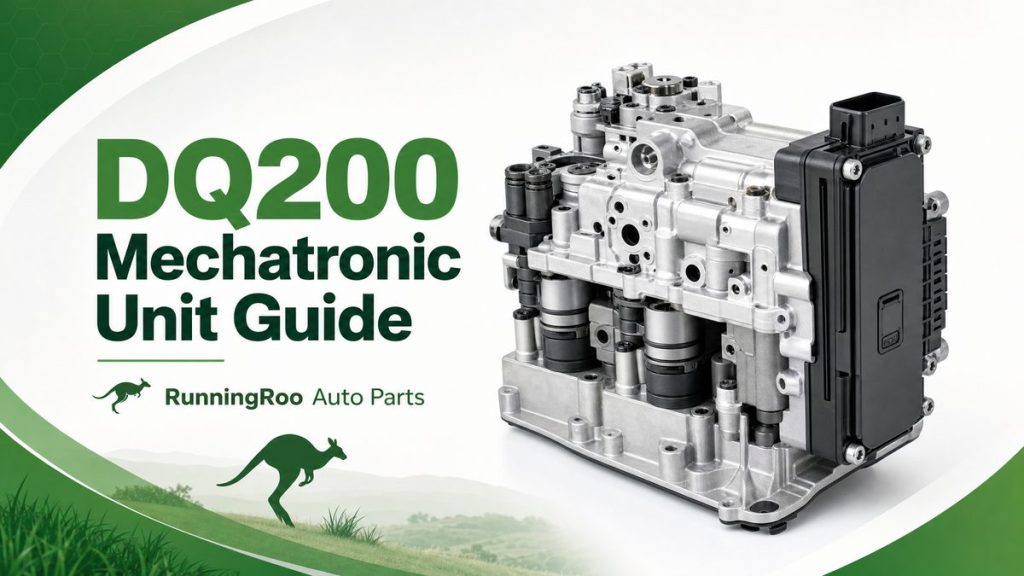
The DQ200 mechatronic unit is a single assembly that combines two jobs: a hydraulic valve body that directs fluid to the shift forks and clutches, and the transmission control unit (TCU) electronics that command it. It sits inside the gearbox, bolted to the case, and reads the input-speed, output-speed, pressure and temperature sensors while driving the solenoids and shift forks in real time.
Because the electronics and hydraulics are merged, a “mechatronic fault” can be either electrical or hydraulic. The most common genuine failures are a cracked pressure accumulator body, a failed pump, worn or sticking solenoids, and TCU faults such as corrupted memory or lost communication. On the DQ200 the part is coded to the vehicle, so a replacement also needs coding and basic settings before it will shift correctly.
The symptoms of a failing mechatronic unit
The classic symptoms are jerky or delayed shifts, especially between first and third gear, a gearbox warning on the dashboard, loss of drive or refusal to engage a gear, and fault codes pointing at the mechatronic, the solenoids or the pressure system. In many cases the car goes into limp mode and locks into a single gear as a protection strategy.
These symptoms overlap with clutch wear, so a correct diagnosis is essential before spending on a mechatronic. The table below separates the most common causes.
| Symptom | Likely cause | First check |
|---|---|---|
| Jerky 1st–3rd shifts | Mechatronic or clutch | Scan codes; check adaptation |
| Pressure / accumulator fault codes | Mechatronic hydraulic fault | Inspect accumulator; test pressure |
| Lost communication with TCM | TCU or wiring | Check connector; test TCU |
| No drive / won’t move | Mechatronic or clutch fork | Scan codes; inspect shift forks |
| Limp mode, stuck in gear | Mechatronic or solenoid | Read the transmission codes |
The part numbers that matter
The DQ200 mechatronic was revised several times, and matching the right part number is the single most important step. Common part numbers include 0AM927769D, 0AM927769E, 0AM927769G and 0AM927769K, with the later 0CW-generation units used on newer models. The index letter matters, because a unit with the wrong software or hardware revision may not communicate with your car even if it physically bolts in.
Always read the part number from your original unit rather than trusting a generic listing. The unit must also be matched to the vehicle for coding and component protection, so confirm the coding path with your workshop before ordering.
Choosing the right replacement unit
You have three broad options: a new genuine unit, a remanufactured or repaired unit, and a tested second-hand unit. A new unit is the most expensive; a remanufactured unit is disassembled, rebuilt with new wear items and re-tested; a tested used unit is checked on a bench or vehicle. For most Australian owners, a remanufactured or tested unit with a written warranty offers the best balance of price and reliability.
Whichever you choose, buy from a supplier who states the exact part number, confirms what was tested or replaced, and offers a real warranty. A unit sold as “untested pull-out” is a gamble that rarely pays off.
Fitting and coding the mechatronic unit
Fitting a DQ200 mechatronic is an advanced job. The gearbox must be drained, the unit unbolted with the shift forks, and the replacement fitted with clean, careful handling of the hydraulic circuit. After fitting, the unit must be coded to the vehicle, component protection removed, and a basic-settings routine run so the gearbox re-learns the clutch kiss points and shift-fork positions.
Skipping the basic settings is the most common reason a “good” mechatronic still shifts badly after installation. If you are not confident with the coding and adaptation, buy the quality unit yourself and have a VW gearbox specialist fit and program it — that keeps the parts cost down while leaving the technical stage to a professional.
0AM vs 0CW: which generation do you have?
The DQ200 mechatronic evolved from the original 0AM generation to the later 0CW generation, and the two are not interchangeable. The 0AM units cover the earlier cars, while the 0CW is the revised version used on newer models with updated software and hardware. The part number on your original unit tells you which one you need — 0AM927769D, E, G or K for the 0AM generation, and the 0CW-specific numbers for the later units.
Mixing the generations causes communication and coding problems even when the unit physically bolts in. Always read the number off the original unit and confirm the generation with your workshop before ordering, because a generic “fits Golf” listing is not enough to guarantee the right unit for your car.
The most common mechatronic fault codes
The codes that point to the DQ200 mechatronic are stored in the transmission controller rather than the engine computer. Pressure faults point to the accumulator or pump, solenoid faults point to the valve body, and communication or coding faults point to the TCU. A “lost communication with TCM” code is an electronic fault, while jerky-shift codes with pressure references are hydraulic.
Recording every code before clearing them is essential, because the combination of codes tells you whether the fault is electrical or hydraulic — and that determines whether you need a TCU, a valve body or a complete mechatronic unit. Clearing the codes and hoping they do not return hides the diagnostic information you need.
Preventive care for the DQ200
The DQ200 mechatronic is sensitive to the condition of its hydraulic oil. Regular mechatronic oil changes with the correct specification oil help prevent the accumulator and solenoid wear that cause most failures. Avoiding harsh launches and letting the gearbox complete each shift smoothly also reduces the load on the clutches and shift forks.
If you notice the first hint of a jerky shift or a gearbox warning, address it early. Catching a mechatronic fault at the solenoid or accumulator stage is far cheaper than waiting for the unit to fail completely, and it can be the difference between a valve-body repair and a full unit replacement.
Frequently asked questions
What is a DQ200 mechatronic unit?
It is the combined electro-hydraulic assembly inside the DQ200 gearbox that controls the clutches and shift forks — the valve body and the transmission control unit in one unit.
What are the symptoms of a bad mechatronic?
Jerky or delayed shifts, a gearbox warning light, loss of drive, limp mode, and fault codes for pressure, solenoids or the TCU.
Which part number do I need?
Match the part number on your original unit, such as 0AM927769D, 0AM927769E, 0AM927769G or 0AM927769K, and confirm the 0AM or 0CW generation.
Does a mechatronic need coding after replacement?
Yes. It must be coded, component protection removed, and basic settings run before the gearbox will shift correctly.
Can I fit a mechatronic myself?
It is an advanced job. A confident DIYer can do the mechanical fit, but coding and basic settings usually need specialist diagnostic tools.
How long does a DQ200 mechatronic last?
There is no fixed life. Many units last well over 150,000 km with clean hydraulic oil, while others fail early from contamination or hard use.
Can I use a 0CW unit in a 0AM car?
No. The generations are not interchangeable, and the wrong unit will cause communication and coding problems. Match the original part number.
Key takeaways
The DQ200 mechatronic unit is the combined valve body and control electronics that sits at the heart of the gearbox, and most DQ200 shifting faults trace back to it. Matching the part number and generation, testing the unit before buying, and completing the coding and basic settings after fitting are the three things that separate a successful repair from a failed one.
For Australian owners, the most cost-effective path is usually a quality, tested or remanufactured unit from a supplier who confirms fitment and offers a warranty, fitted and programmed by a VW specialist. That combination gives a reliable gearbox at a fraction of a dealer repair.
How to confirm fitment before ordering
Before ordering a mechatronic unit, gather the part number from your original unit, the vehicle’s VIN, the build year and the engine code, and send them to the supplier to confirm fitment. A reputable supplier will verify the part number and generation before dispatch, because a mechatronic is not a part you want to discover is wrong after the gearbox is apart.
Confirm whether the unit is supplied tested and whether it comes with any programming support, and clarify who will handle the coding and basic settings after fitting. A few minutes confirming these details up front avoids a wrong unit, a failed coding attempt and a repeat of the labour.
Mechatronic fault or clutch fault?
The DQ200 mechatronic and the clutch pack produce overlapping symptoms, so telling them apart is the most important part of the diagnosis. A mechatronic fault usually produces gear-selection problems, pressure or solenoid codes, and jerky shifts that vary with gear. A clutch fault produces judder on take-off, slip under load and a burning smell, and the shifts themselves are usually still selected correctly.
The fault codes settle the question in most cases, because pressure, solenoid and communication codes point to the mechatronic, while clutch-slip codes point to the clutch. A scan before any parts are ordered prevents the classic mistake of replacing the mechatronic when the clutch was the real problem, or vice versa.
Shop the parts mentioned in this guide
- DQ200 0AM 7-Speed DSG Mechatronic (Valve Body & TCU) 0AM927769D + programming
- 0CW DQ200 7-Speed DSG Mechatronic (Valve Body & TCU) 0AM927769K
- DQ200 0AM Automatic Transmission Valve Body for VW / Audi / Škoda
- DQ200 0AM 7-Speed DSG Mechatronic 0AM927769E + program — eBay
Watch on RunningRooAuto YouTube
- RunningRoo Auto Parts – trusted Melbourne parts support
- RunningRoo Auto Parts – product and fitment channel
RunningRoo Auto Parts – Based in Melbourne, Australia 🇦🇺
📞 Free 24/7 Pickup Available (Contact 0425890125)
💬 Any questions? Message or Call us anytime! We’re here to help.Why Choose RunningRoo?
✅ Aussie Owned & Operated | 🚚 Fast Shipping | 🤝 Friendly Support
Sources and further reading
- Direct-shift gearbox — Wikipedia (DQ200 0AM)
- BorgWarner — transmission control systems
- Volkswagen Australia
- RACV — car maintenance and repair guidance
RunningRoo Auto Parts – Based in Melbourne, Australia 🇦🇺
📞 Free 24/7 Pickup Available (Contact 0425890125)
💬 Any questions? Message or Call us anytime! We’re here to help.Why Choose RunningRoo?
✅ Aussie Owned & Operated | 🚚 Fast Shipping | 🤝 Friendly Support