
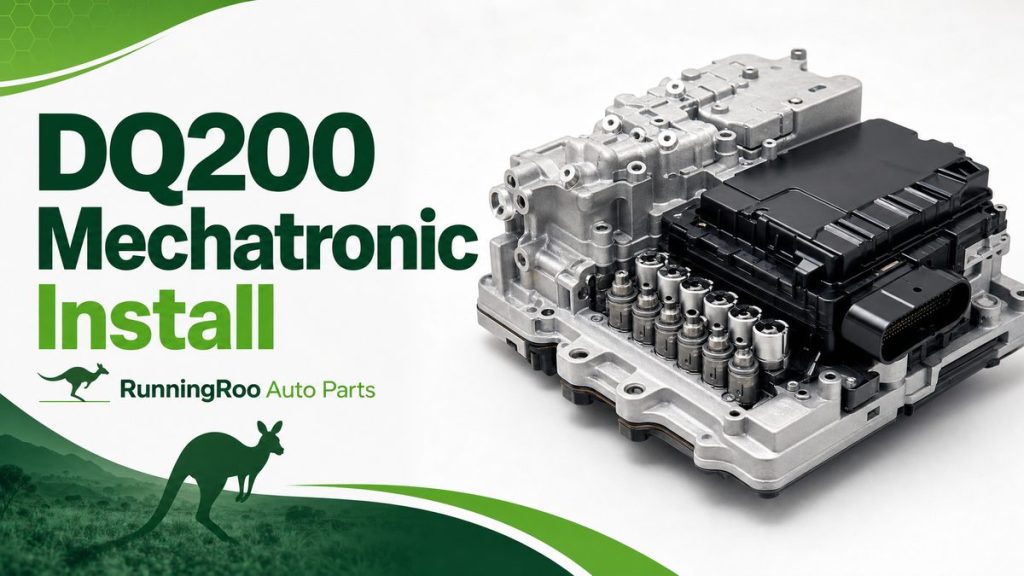
By RunningRoo Auto Parts — written from the desk of our Product Manager
Fitting a DQ200 mechatronic unit is one of the more advanced jobs on the Volkswagen Group’s 7-speed DSG, but it is well documented and achievable with care, the right tools and a disciplined sequence. The mechanical fit is only half the job — the coding and basic settings afterwards are what make the gearbox shift correctly. This guide walks through the complete process, so you can decide whether to tackle it yourself or hand the programming stage to a specialist.
RunningRoo Auto Parts – Based in Melbourne, Australia 🇦🇺
📞 Free 24/7 Pickup Available (Contact 0425890125)
💬 Any questions? Message or Call us anytime! We’re here to help.Why Choose RunningRoo?
✅ Aussie Owned & Operated | 🚚 Fast Shipping | 🤝 Friendly Support
The tools and preparation
The job needs a capable diagnostic tool such as VCDS or ODIS for the coding and basic settings, torque wrenches, triple-square and Torx sockets, and a clean work area. The gearbox oil and the mechatronic hydraulic oil must be drained first, so fresh oil of the correct specification should be on hand before you start.
Cleanliness is critical. The mechatronic’s hydraulic circuits are tightly toleranced, and a single particle of grit can cause a sticking valve and a repeat failure. Work on a clean bench and keep the open ports covered while the unit is out.
Removing the old unit
Disconnect the battery, raise and support the car safely, and remove the undertray and any covers needed to reach the gearbox. Drain the gearbox oil and the mechatronic hydraulic oil into clean containers, noting the condition — glitter in the oil suggests mechanical damage beyond the mechatronic.
Disconnect the loom, remove the retaining bolts, and carefully withdraw the mechatronic with the selector forks, keeping the forks in their correct order and orientation. Note the exact routing of the connectors and the position of the forks before removal.
Fitting the new unit
Transfer or confirm the selector forks on the new unit, then offer the mechatronic into place and bolt it down in the correct sequence and to the correct torque. Reconnect the loom, refill the gearbox and mechatronic oils to the correct levels using the correct procedure, and refit the covers and undertray.
The fill procedure matters — the DQ200 has separate oil circuits, and the levels are set at specific temperatures or by a measured amount. Getting this wrong causes poor shifting or damage.
The coding and basic settings stage
This is the stage that makes or breaks the job. The new unit must be coded to the vehicle, component protection removed, and a basic-settings routine run so the gearbox re-learns the clutch kiss points and shift-fork positions. Skipping this step leaves a mechanically perfect install that shifts badly or stays in limp mode.
Because this stage needs specialist tools and knowledge, many owners do the mechanical fit themselves and then have a VW gearbox specialist perform the coding and adaptation. That keeps the cost down while ensuring the programming is done correctly.
The most common installation mistakes
The first mistake is contamination — opening the hydraulic circuit in a dirty workspace and introducing grit that causes a sticking valve. The second is refitting the selector forks in the wrong order or orientation. The third is getting the oil fill wrong, and the fourth is skipping the basic settings after reassembly.
The thread that runs through all four is impatience. The installs that work first time are the ones that keep everything clean, follow the correct fork and bolt sequence, fill the oils precisely and complete the coding and adaptation properly.
The oil fill procedure
The DQ200 has two separate oil circuits — the gearbox oil and the mechatronic hydraulic oil — and each has its own specification and fill level. The levels are usually set by a measured fill or at a specific temperature, and getting either wrong causes poor shifting or damage.
Fill the gearbox and mechatronic oils with the correct specification, follow the level-setting procedure exactly, and recheck the levels after the first run. The oil is not an afterthought in this job; it is part of what makes the new unit shift correctly.
Choosing between DIY and professional
The mechanical fit is achievable for an experienced DIYer with the right tools, but the coding and basic settings need specialist diagnostic equipment and knowledge. Many owners choose a middle path: do the mechanical install themselves, then have a VW gearbox specialist perform the coding and adaptation.
That keeps the cost down while leaving the programming stage — the part that most often goes wrong — to a professional. If you are not confident with the mechanical side either, buying the unit yourself and having a specialist do the whole job is still cheaper than a dealer repair.
Step-by-step sequence at a glance
The whole job follows a predictable order, and the people who skip a stage are usually the ones chasing a fault afterwards.
| Step | What happens | Why it matters |
|---|---|---|
| Prepare and disconnect | Battery off, car supported, undertray removed | Safe access and no accidental power-up |
| Drain both oils | Gearbox and mechatronic circuits drained | Clean working area and correct refill later |
| Remove the mechatronic | Loom off, bolts out, forks kept in order | Fork order and orientation are critical |
| Fit the new unit | Forks confirmed, bolts torqued in sequence | Correct mechanical alignment |
| Refill and refit | Both circuits filled to spec, covers refitted | Correct level prevents poor shifting |
| Code and adapt | Component protection removed, basic settings run | The unit learns the clutch and fork positions |
Component protection, coding and adaptation in detail
The DQ200 mechatronic is protected by the Volkswagen Group’s component protection, which ties the module to the vehicle. A replacement unit must be matched to the car with the correct diagnostic tool before it will operate normally. After that, the gearbox runs a basic-settings routine that measures the clutch kiss points and the selector-fork positions.
This is not a generic “clear the codes” step. The routine needs the gearbox at the correct temperature and the correct procedure, which is why many owners do the mechanical work and then hand the coding to a Volkswagen or DSG specialist. The mechanical fit and the programming are two different skill sets, and both have to be right for the gearbox to shift correctly.
Common faults to check after the install
After a mechatronic replacement, the first test is whether the gearbox selects all gears and completes the basic settings. If it stays in limp mode or the routine will not run, the usual suspects are a wiring or connector issue, a fork fitted in the wrong position, an incorrect oil level, or a coding or adaptation step that was not completed.
Work through those checks in order rather than assuming the new unit is faulty. The vast majority of post-install problems are installation or programming issues, not a defective part, which is exactly why the preparation, fork order and coding stage deserve so much attention.
Key takeaways
Fitting a DQ200 mechatronic unit is a clean, disciplined job whose success depends on the correct fork and bolt sequence, the correct oil fill and, critically, the coding and basic settings afterwards. The mechanical fit is only half the job.
For most owners, the best path is a quality, correctly matched unit with a written warranty, fitted carefully and programmed by a VW specialist. That combination gives a reliable gearbox at a fraction of a dealer repair.
Quick reference: installation checklist
Work through this list for a clean mechatronic installation:
- Disconnect the battery and drain the gearbox and mechatronic oils.
- Keep the open ports covered and work on a clean bench.
- Note the selector-fork order and orientation before removal.
- Bolt the new unit in the correct sequence and torque.
- Refill both oil circuits to the correct level with the correct specification.
- Code the unit, remove component protection and run basic settings.
A checklist-driven install is what separates a mechatronic that shifts perfectly from one that stays in limp mode.
Frequently asked questions
Can I fit a DQ200 mechatronic myself?
The mechanical fit is possible for an experienced DIYer, but the coding and basic settings need specialist tools, so many owners use a specialist for that stage.
What oil does the DQ200 mechatronic use?
A dedicated mechatronic hydraulic oil, separate from the gearbox oil, in the correct specification.
Do I need to code the new unit?
Yes. Component protection and vehicle coding mean the unit must be matched to the car before it works.
What is basic settings?
It is the routine that lets the gearbox re-learn the clutch and shift-fork positions after a mechatronic replacement.
How long does the installation take?
The mechanical fit is usually a few hours, with the coding and adaptation adding another hour or so.
Can I skip the basic settings?
No. Skipping the basic settings leaves the gearbox shifting badly or in limp mode, even with a perfectly fitted unit.
What happens if I get the oil fill wrong?
An incorrect oil level or the wrong oil causes poor shifting or damage, so the fill procedure must be followed exactly.
How do I know if the selector forks are in the right order?
Photograph and label them before removal, then transfer them in the same order and orientation. If in doubt, have a DSG specialist confirm the installation before reassembly.
Why does the basic settings routine sometimes fail?
It can fail when the gearbox is at the wrong temperature, a connector is not seated, a fork is misplaced, or the coding step was not completed, so check those items before blaming the unit.
Do I need to renew the selector forks with the mechatronic?
Not always, but they must be transferred in the correct order and orientation if they are reused, because a misplaced fork is a common cause of post-install shifting faults.
Can I reuse the old gasket or cover bolts?
Always use the correct fresh seals, gaskets and torque sequence. Reusing a damaged gasket or over-tightening the cover bolts can cause leaks and uneven clamping.
Can I drive the car before the coding is done?
No. The unit must be coded and the basic settings run before the gearbox will shift correctly.
Shop the parts mentioned in this guide
- DQ200 0AM 7-Speed DSG Mechatronic (Valve Body & TCU) 0AM927769D + programming
- 0CW DQ200 7-Speed DSG Mechatronic (Valve Body & TCU) 0AM927769K
- DQ200 0AM Automatic Transmission Valve Body for VW / Audi / Škoda
- DQ200 0AM 7-Speed DSG Mechatronic 0AM927769E + program — eBay
Watch on RunningRooAuto YouTube
- RunningRoo Auto Parts – trusted Melbourne parts support
- RunningRoo Auto Parts – product and fitment channel
RunningRoo Auto Parts – Based in Melbourne, Australia 🇦🇺
📞 Free 24/7 Pickup Available (Contact 0425890125)
💬 Any questions? Message or Call us anytime! We’re here to help.Why Choose RunningRoo?
✅ Aussie Owned & Operated | 🚚 Fast Shipping | 🤝 Friendly Support
Sources and further reading
- Direct-shift gearbox — Wikipedia (DQ200 0AM)
- BorgWarner — transmission control systems
- Volkswagen Australia
- RACV — car maintenance and repair guidance
RunningRoo Auto Parts – Based in Melbourne, Australia 🇦🇺
📞 Free 24/7 Pickup Available (Contact 0425890125)
💬 Any questions? Message or Call us anytime! We’re here to help.Why Choose RunningRoo?
✅ Aussie Owned & Operated | 🚚 Fast Shipping | 🤝 Friendly Support