
By RunningRoo Auto Parts — written from the desk of our Product Manager
The single biggest mistake in ordering a timing chain kit is matching by the car’s model name instead of the engine code. The same badge can hide two or three different engines across years and markets, and a kit for the wrong engine will not fit — or worse, will fit the sprockets but have the wrong chain length or tensioner. This guide explains how timing chain kits are identified, how to read your engine code and how to confirm fitment before you order.
RunningRoo Auto Parts – Based in Melbourne, Australia 🇦🇺
📞 Free 24/7 Pickup Available (Contact 0425890125)
💬 Any questions? Message or Call us anytime! We’re here to help.Why Choose RunningRoo?
✅ Aussie Owned & Operated | 🚚 Fast Shipping | 🤝 Friendly Support
Why engine codes matter more than model names
Engine manufacturers identify engines by a short code — EA888, N20, YD25, 1GR-FE, M272 and so on — and this code, not the model name, is what a timing chain kit is matched to. A Volkswagen Golf can use several EA-generation engines, and a Holden Commodore can use both V6 and V8 engines with completely different timing systems. Ordering by model name alone is how wrong kits get shipped.
The engine code is usually on the vehicle’s data sticker, in the owner’s manual, or stamped on the engine itself. Record it, along with the VIN and build year, before searching for parts.
What a fitment check should include
A proper fitment check matches the engine code, the VIN and the build year to the kit’s application list. The table below shows the information to gather and why it matters.
| Information | Why it matters |
|---|---|
| Engine code | Identifies the exact timing system |
| VIN | Confirms the vehicle and build |
| Build year | Separates early and late revisions |
| Original part number | Matches the exact chain and tensioner |
Reading the engine code
The engine code is most reliably found on the vehicle data sticker, often in the spare-wheel well, the door jamb or the service book, as a three- or four-character code. It can also be stamped on the engine block or cylinder head. If you cannot find it, a VIN decode from a workshop or parts supplier will identify the engine.
For the most certainty, read the part number off the original timing chain or tensioner if the engine is already apart. That number is the definitive reference for ordering the correct replacement.
Confirming the kit contents
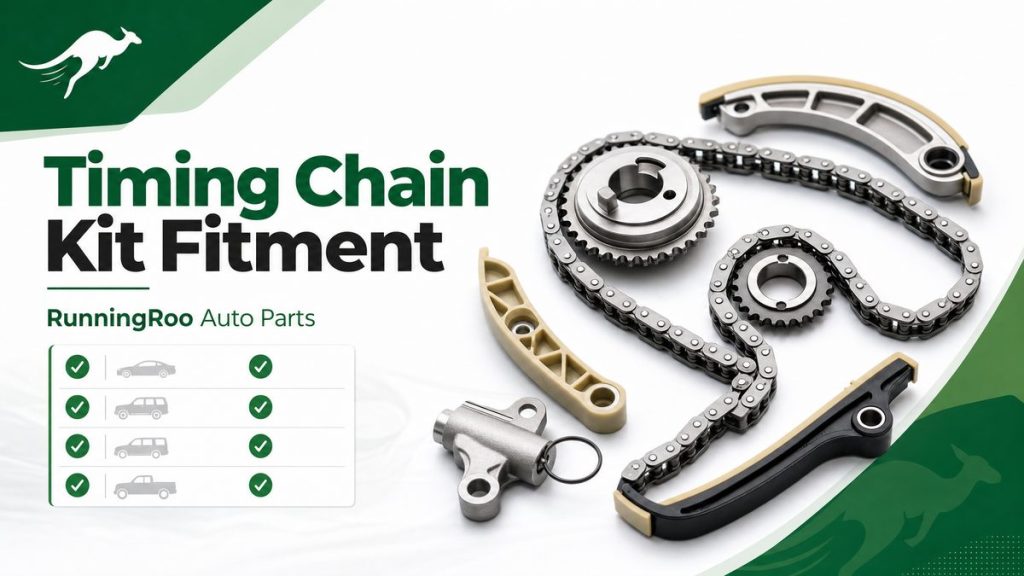
Before ordering, confirm exactly what the kit includes, because on some engines the VVT gears, oil-pump chain or balance-shaft chain are sold separately. A kit that omits a critical component stops the job halfway, so a photograph of the complete kit and a written contents list are worth requesting.
This is also the moment to confirm whether the kit uses the updated tensioner and guides for engines with known weaknesses, and whether the correct seals and fasteners are included.
Send your details to confirm fitment
The fastest way to be certain is to send the engine code, VIN, build year and original part number to the supplier and ask them to confirm the kit before dispatch. A reputable supplier welcomes the check, and it is the cheapest insurance against a wrong kit that cannot be returned once fitted.
How engine codes are structured
Engine codes are short identifiers that manufacturers stamp on the block and list in the documentation — for example EA888, N20, YD25, 1GR-FE and M272. The code identifies the engine family and often the generation, which is exactly what a timing chain kit is matched to. Two engines can share a family name but have different chains, tensioners and sprockets across generations, so the full code matters.
Learning your engine code takes a minute and is the single most useful piece of information for ordering any engine part correctly. It is far more reliable than the model badge on the boot.
Avoiding the wrong-kit mistakes
The most common mistakes are ordering by model name, ignoring the generation or revision, and assuming a kit for a similar engine will fit. A kit for an earlier generation may have a different chain length, tensioner or guide set, and a kit for the wrong engine may fit the sprockets but fail immediately.
The fix is simple: gather the engine code, VIN and build year, and confirm the kit against the supplier’s application list before ordering. A few minutes of checking prevents a wrong kit that cannot be returned once fitted.
Using the VIN decode
The VIN is the most reliable way to identify the exact engine and build when the engine code is hard to read. A workshop or parts supplier can decode the VIN to confirm the engine, the model year and the relevant revisions, which removes the guesswork from the order.
Send the VIN together with the engine code when you order, and ask the supplier to confirm the kit contents and the updated parts before dispatch. That confirmation is the cheapest insurance against a mid-job surprise.
Common fitment mistakes
The most common mistakes are ordering by model name, ignoring the generation or revision, and assuming a kit for a similar engine will fit. A kit for an earlier generation can have a different chain length, tensioner or guide set, and a kit for the wrong engine may fit the sprockets but fail immediately on start-up.
The other common mistake is not checking the kit contents, so the job stalls when a VVT gear or oil-pump chain is missing. Confirming the engine code, the contents and the updated parts before ordering prevents all of these.
Key takeaways
Matching a timing chain kit by engine code and VIN is the single most important step in ordering, because the same model can hide several engines across years and markets. A complete kit with the updated tensioner and guides, confirmed against the supplier’s application list, is the difference between a correct order and a wrong kit that cannot be returned once fitted.
Taking the few minutes to confirm fitment before ordering is the cheapest insurance on a timing chain job, and it is exactly what a reputable supplier expects you to do.
Reading a VIN decode
A VIN decode identifies the exact vehicle, engine and build from the 17-character VIN, which removes the guesswork when the engine code is hard to read or the model spanned multiple engines. A workshop or parts supplier can perform the decode, and many parts catalogues accept the VIN directly to return the correct kit.
This is the most reliable way to confirm fitment when you are unsure, and it is worth the extra minute because a wrong timing chain kit cannot be returned once fitted.
Quick reference: fitment checklist
Before ordering a timing chain kit, gather and confirm the following:
- The engine code from the data sticker, manual or engine block.
- The full VIN and the build year.
- The original part number if the engine is already apart.
- Whether the engine uses the updated tensioner and guides.
- Whether the kit includes the VVT gears and oil-pump chain where applicable.
- The complete kit contents and a written fitment confirmation from the supplier.
Confirming these details up front prevents a wrong kit that cannot be returned once fitted, and it is the cheapest insurance on the whole timing chain job.
Frequently asked questions
How do I find my engine code?
Check the vehicle data sticker, the owner’s manual or the engine block, or ask a workshop to decode the VIN.
Can I match a timing chain kit by model name?
Not reliably. The same model can use several engines, so match by engine code and VIN.
What if I order the wrong kit?
A fitted kit usually cannot be returned, so confirming fitment before ordering is essential.
What is included in a timing chain kit?
The chain, tensioner, guides, sprockets or gears, and the seals and fasteners — with VVT gears or the oil-pump chain where applicable.
Should I send my VIN when ordering?
Yes. The VIN, engine code and build year together confirm the correct kit.
Can two engines share a family but use different kits?
Yes. Generations and revisions can change the chain, tensioner and guides, so the full engine code matters.
What if I cannot read my engine code?
Ask a workshop or supplier to decode the VIN, which identifies the exact engine and build.
Should I check the kit contents before ordering?
Yes. Confirm the kit includes the chain, tensioner, guides, sprockets and seals, and the VVT gears or oil-pump chain where applicable.
Can I use the VIN instead of the engine code?
Yes. A VIN decode identifies the exact engine and build, which is the most reliable way to confirm fitment.
What if my engine code is worn off?
Use the VIN to decode the engine, or read the part number off the original chain or tensioner if the engine is already apart.
Does the build year matter for fitment?
Yes. Engines are revised during production, and a kit for an earlier or later revision can have different parts.
Can a dealer confirm the right part for free?
Dealers can quote the genuine part number, and many aftermarket suppliers will confirm fitment from the VIN at no cost before you order.
What happens if I fit a kit for the wrong generation?
The chain length, tensioner or guides may be wrong, causing a rattle, incorrect timing or engine damage, which is why fitment is confirmed before ordering.
Are timing chain kits returnable?
Usually not once fitted, which is why a written fitment confirmation before ordering is the cheapest protection.
Why do two kits for the same model differ?
The model can span multiple engines and years, and the kit reflects the specific engine and generation, which is why engine-code fitment is essential.
What should I do if my kit arrives and a part looks different?
Stop and confirm with the supplier before fitting, because a different tensioner or guide may be an updated part or, occasionally, the wrong kit.
Shop the parts mentioned in this guide
- Timing Chain Kit for VW / SEAT / Škoda / Audi 2.0 TSI & 1.8 TSI EA888
- Timing Chain Kit for Toyota 1GD / 2GD Hilux / Hiace / Fortuner 2.4–2.8L Diesel
- Timing Chain Kit for Ford Ranger PX / Mazda BT-50 3.2 TDCI 2011
- Timing Chain Kit for Hyundai i20 / i30 / Kia Rio 1.4–1.6 G4FA / G4FC — eBay
Watch on RunningRooAuto YouTube
- RunningRoo Auto Parts – trusted Melbourne parts support
- RunningRoo Auto Parts – product and fitment channel
RunningRoo Auto Parts – Based in Melbourne, Australia 🇦🇺
📞 Free 24/7 Pickup Available (Contact 0425890125)
💬 Any questions? Message or Call us anytime! We’re here to help.Why Choose RunningRoo?
✅ Aussie Owned & Operated | 🚚 Fast Shipping | 🤝 Friendly Support
Sources and further reading
- Timing chain — Wikipedia
- Gates — timing system products
- Cloyes — timing chain kits
- CarsGuide — Australian motoring advice
RunningRoo Auto Parts – Based in Melbourne, Australia 🇦🇺
📞 Free 24/7 Pickup Available (Contact 0425890125)
💬 Any questions? Message or Call us anytime! We’re here to help.Why Choose RunningRoo?
✅ Aussie Owned & Operated | 🚚 Fast Shipping | 🤝 Friendly Support