
A Hyundai G4GC cam-chain enquiry and a scheduled timing-belt service are related conversations, but they are not the same parts order. An owner can buy a small cam-chain set and still have a separate belt-service requirement to address. Equally, a belt service does not automatically mean that every component associated with camshaft timing must be replaced. The practical task is to coordinate the two decisions using the correct engine identification, service history and workshop findings.
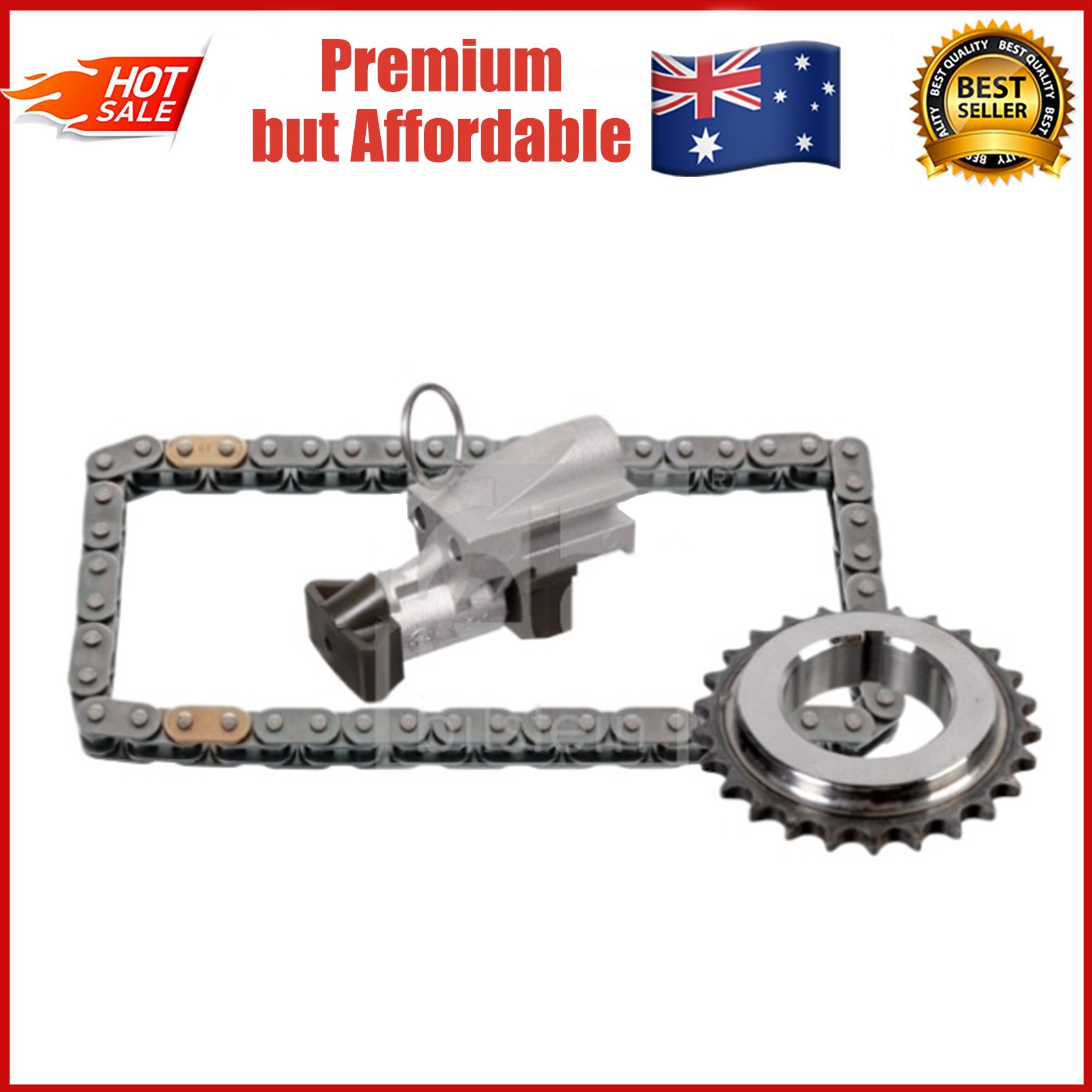
This Australian guide focuses on planning that coordination. RunningRoo lists a G4GC camshaft timing-chain product, and the current product photograph shows a compact chain arrangement rather than a complete belt-service package. Confirm the supplied contents directly before ordering. Do not infer a complete service scope from the word timing in a title. Provide the VIN, fitted engine code, relevant OE numbers and the mechanic's assessment so the order supports the work actually required.
Establish the engine before discussing the service
A model name such as Elantra, i30 or a related Kia is not enough to choose the repair procedure. Record the VIN, build information and actual engine code. If the vehicle has a replacement engine, make that clear from the beginning. Parts and service records should follow the fitted assembly as well as the vehicle identity. An assumption based on a familiar badge can send the conversation towards a different timing arrangement.
The linked offer uses G4GC wording, but broad or awkward catalogue titles should not be treated as technical specifications. Ask the workshop to identify the specific chain-related component it intends to renew and the applicable OE reference. If the seller's description is brief, request an inventory instead of guessing from the photograph. This is particularly important when the owner is purchasing parts independently for a mechanic who has already agreed a narrower repair scope.
Why belt and cam-chain planning must remain distinct
Hyundai's archived G4GC engine workshop manual contains separate information for the timing-belt system and the camshaft/CVVT-related assembly. That manufacturer structure is the technical basis for treating the tasks separately. The manual also addresses inspection of belt-drive components and contamination-related considerations. It is an archived document for its stated engine application; the workshop should use the current instructions and service schedule for the actual Australian vehicle. Hyundai G4GC manufacturer workshop manual, archived copy
The purchasing implication is not that both systems always need replacement together. It is that the mechanic should explain what work belongs to each. A timing-belt service may have its own scheduled requirement and component list. A cam-chain replacement needs its own justification and inventory. Coordinating access can be sensible where the procedures overlap, but overlap should not become a blanket rule that every owner must authorise the largest possible package.
Recover the service history before setting a deadline
Look for invoices that identify the belt service, date, odometer reading and components replaced. A handwritten note saying timing done may not distinguish a belt from a cam chain, or confirm the associated work. If the record is incomplete, tell the workshop what is known and what is not. The mechanic can then advise how to assess the vehicle against the applicable maintenance schedule and inspection requirements.
This article deliberately does not publish one kilometre or year interval for every G4GC-labelled vehicle. Schedules can depend on the exact application, market and operating conditions. Use the owner's maintenance information and qualified advice for the particular car. Do not extend a belt-service interval simply because a chain was recently replaced, and do not assume that a new belt proves the condition of the separate camshaft-related components.
Turn two conversations into one clear quotation
Ask for the estimate to distinguish scheduled belt work from any diagnosis-led cam-chain work. Each section should identify its parts and the reason for replacement. If the workshop proposes doing both during the same booking, ask which labour operations overlap and which remain separate. This makes it possible to judge the combined job fairly without assuming that all additional work is either unnecessary or effectively free.
The estimate should also identify consumables and any parts that will be assessed only after access. A supplier's chain package is not a guarantee that every seal, fastener or belt-drive item is included. If the mechanic finds another concern, agree how authorisation will be handled before work continues. That arrangement is especially valuable when the vehicle is needed daily and the owner wants to avoid a rushed decision after dismantling.
| Planning item | Information to confirm | Mistake it prevents |
|---|---|---|
| Engine identity | VIN, build details and fitted G4GC code | Using the procedure for another engine |
| Belt history | Date, distance and itemised previous service | Assuming timing done means every drive component |
| Cam-chain finding | Mechanic's diagnosis and exact requested parts | Replacing a chain solely because a belt is due |
| Package contents | Written inventory from the current seller offer | Treating a small chain set as a belt-service kit |
| Combined labour | Shared access and separate operations | Comparing unlike repair quotations |
| Completion record | Belt and chain work itemised separately | Creating another ambiguous service history |
Check contamination and leakage as separate findings
If the workshop identifies leakage or contamination during inspection, ask it to describe the source and the proposed correction. Replacing a timing-related component without addressing a confirmed associated problem can leave the repair plan incomplete. However, the presence of oil elsewhere in an engine bay does not automatically prove that the belt or chain area is affected. The technician needs to establish what has actually been exposed and what the applicable procedure requires.
Photographs can help the owner understand the finding when they show the location clearly. Keep those photographs with the job record rather than relying on a vague statement that everything was oily. The purpose is to support a specific scope decision. Avoid using a general cleaning product or owner-selected treatment as a substitute for the workshop's inspection and repair of a confirmed leak.
Compare the delivered components before the booking progresses
Have the workshop review the exact RunningRoo link before ordering. Once the parts arrive, compare them with the approved inventory while they remain unused. Confirm the references, quantities and relevant interfaces. A photograph that shows a chain, tensioner and gear does not independently establish every dimension or application detail. Where the listing provides limited written information, direct confirmation is preferable to an assumption based on appearance.
If the delivered package differs from what the mechanic expected, contact RunningRoo with the order details and clear photographs. Do not combine unidentified components from old and new sets merely to complete the job that day. The workshop should determine whether a part is suitable under the correct procedure. A short delay to resolve a genuine discrepancy is more transparent than an undocumented substitution that complicates later diagnosis.
Keep the installation procedure with the installer
Timing work involves alignment, tensioning and fastening requirements that depend on the exact application. The workshop needs the appropriate Hyundai information and tools. This guide does not replace that information with a simplified list of marks, torque values or rotation instructions. An owner can make a well-informed purchase without taking responsibility for technical steps that belong to the qualified installer.
Ask the mechanic to confirm that the applicable procedure will be followed and that required replacement fasteners and sealing items have been considered. If the workshop proposes departing from that procedure, ask for the technical reason before authorising the change. A retail package description cannot approve an alternative installation method. RunningRoo can clarify what is supplied, while the installer is responsible for how it is used on the vehicle.
Decide what the final check must demonstrate
A scheduled belt service and a complaint-driven chain repair have different starting points. For scheduled work, the record should identify the service performed and the relevant completion checks. For a noise or running complaint, the workshop should also revisit the original concern under suitable conditions. A new parts invoice is evidence of a purchase, not proof that an unrelated symptom has been resolved.
Ask whether any separate issue remains and what follow-up is recommended. The answer should be specific enough that the owner knows what to monitor after collection. Do not invent a universal running-in rule or a promise that the engine is now maintenance-free. Future servicing still follows the applicable vehicle schedule and the mechanic's advice based on the work actually completed.
Give the next owner a better record
An itemised invoice should say whether the job involved the belt drive, cam-chain components or both. Record the product references, relevant consumables and any confirmed additional repairs. If the service history previously contained only a note saying timing done, this is an opportunity to replace ambiguity with useful detail. Keep the documents together with the engine-identification information, particularly on a vehicle with a replacement engine.
This record also makes later maintenance planning more accurate. A future workshop should not have to guess which system was renewed from the date of a generic timing invoice. Clear documentation can prevent both unnecessary repeat work and an overlooked scheduled task. It is a practical benefit of coordinating the job carefully, even when the owner has no interest in the mechanical details.
Related RunningRoo reading: Hyundai G4GC Camshaft Chain Kit Australia: i30 and Elantra Buying Guide. That article addresses a related but separate question or application; it does not establish interchangeability with this product.
Arrange the parts around the confirmed scope
RunningRoo is Australian-operated and offers friendly assistance with product enquiries. Melbourne local pickup in Blackburn VIC is by appointment, and fast dispatch depends on confirmed stock and preparation. Give the supplier the workshop's actual list and the product link so everyone is discussing the same package. Ask about delivery arrangements before committing to a tightly scheduled repair booking.
If the mechanic needs belt-service parts as well as the cam-chain offer, identify those as separate requirements. Do not assume that the linked chain product includes them or that a similar model title proves compatibility. A good order is one that connects a verified application to a defined inventory. That approach allows the owner to coordinate both jobs without confusing their purposes or duplicating work unnecessarily.
Frequently asked questions
Does the G4GC cam-chain offer replace a timing-belt service?
No. Confirm what the package contains and keep the belt-service requirement separate. The applicable Hyundai information distinguishes the systems, and the vehicle's maintenance schedule still needs to be followed. Ask the workshop to identify whether it is quoting belt work, cam-chain work or both, with the parts itemised accordingly.
Should the chain be changed whenever the belt is due?
Do not make that an automatic rule. Ask for the workshop's inspection findings and the applicable procedure. There may be a reason to coordinate work, but the recommendation should be explained. Shared access does not by itself prove that every component needs replacement or that all additional labour disappears.
What if my invoice only says timing replaced?
Ask the previous workshop for clarification if possible. Look for part numbers, itemised components or photographs that distinguish the belt from the cam-chain assembly. If the history remains uncertain, tell the current mechanic. Do not infer that both systems were renewed from an ambiguous description or a single service stamp.
Can I use a service interval found for another Hyundai model?
Use the schedule for the exact vehicle, engine and market instead. A similar model name or shared engine-family term is not enough to establish the correct interval. The workshop can help interpret the applicable maintenance information and operating conditions without transferring a generic number from an unrelated online guide.
What details help RunningRoo confirm the order?
Send the VIN, fitted engine code, build details, OE references and the mechanic's specific parts request. Include the product link and any uncertainty about package contents. If a replacement engine is fitted, disclose that history. This is more reliable than asking for a timing kit based only on the registration or badge.
Is Melbourne pickup available for this job?
Arrange pickup by appointment after confirming the item and current stock. Call 0425 890 125 for friendly support and supply options. Interstate workshops can ask about dispatch and delivery. The parts purchase should follow the confirmed repair scope, while diagnosis, installation and final checks remain with the qualified mechanic.
Related RunningRoo video
Timing Chain Rattle: Wear Symptoms & When to Replace | RunningRoo. This channel video provides related educational context. It is not proof that the filmed component is the exact supplied item, a vehicle-specific diagnosis or a substitute for current manufacturer procedures.
Sources and scope
Offer and stock information checked on 16 November 2026. Retailer descriptions identify the offered contents; the manufacturer sources support the technical points attributed to them within their stated market and model scope. The purchasing examples and suggested questions are editorial guidance. Use current vehicle-specific manufacturer information and professional diagnosis for the actual repair.