
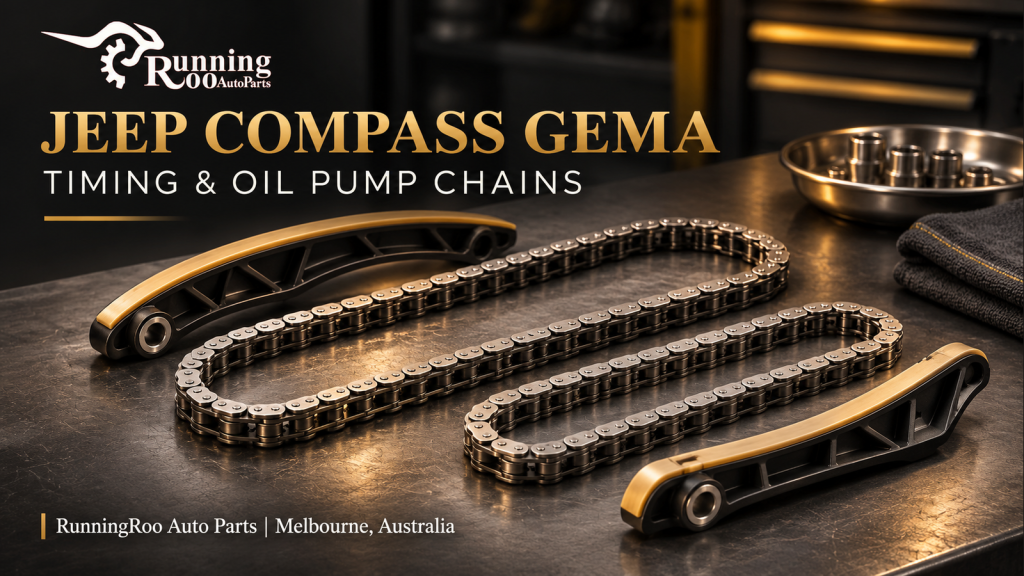
The RunningRoo Jeep Compass GEMA timing chain kit is advertised with both a main chain and an oil pump chain. For an Australian repair enquiry, that second drive is an important part of the package description. It should be discussed with the workshop rather than overlooked behind the general words “timing kit.” Confirm the petrol engine application, exact component references and required repair scope before deciding whether this nine-component offer is appropriate.

This guide focuses on the linked Jeep Compass and related GEMA petrol listing, whose title describes 2.0 and 2.4-litre applications from 2007 to 2013. It does not extend that offer to every Compass, Patriot, Journey or later 2.4-litre engine. It also does not treat a diesel Compass chain kit as an equivalent product. The purpose is to turn the listing into a clear parts enquiry grounded in the actual vehicle and the workshop's findings.
Identify the petrol application before comparing kits
Jeep's original 2007 Compass manufacturer feature document identifies a 2.4-litre four-cylinder engine and lists manual and CVT transmission options in that market's specification. It is useful historical model context, but it does not establish Australian aftermarket-kit compatibility. The car's actual VIN, engine identification and current manufacturer parts information remain the basis for the order. Do not use a North American launch document as a substitute for identifying the vehicle in the workshop. Jeep/Chrysler manufacturer media: 2007 Compass feature availability; historical market-specific model context
The word Compass can lead to several different engine-related search results. Start the enquiry with petrol or diesel, displacement, build information and the engine code established by the mechanic. RunningRoo also has other Compass-related parts offers; their existence does not make their components interchangeable. A title containing the right model name but the wrong engine is still the wrong starting point for a repair.
If the vehicle's history includes an engine replacement, tell the supplier and workshop. The original VIN provides important background, but the installer must identify the assembly now present. Keep the original and installed-engine information separate until the relationship is confirmed. This avoids ordering from a registration description when the physical engine or its component version needs additional verification.
Read the two-chain inventory carefully
The retailer description lists a main timing chain with 180 links and an oil pump chain with 36 links. It also lists one sprocket described with 27/38-tooth details, a primary tensioner, two main-chain guides, an oil pump tensioner and two oil-pump guides. These are seller-listed package details, not independent manufacturer specifications for every vehicle in the application table. Ask the supplier to confirm the current contents against the workshop's requirement.
The chain counts and sprocket description are useful enquiry details, but they are not enough on their own to prove a match. The workshop should identify the required parts using appropriate manufacturer information. A count that looks similar should not override an unresolved engine or OE-reference difference. Likewise, the product photograph is a visual aid, not a dimensioned engineering drawing establishing every feature of the supplied components.
| Advertised item | Listed detail | Confirmation required |
|---|---|---|
| Main timing chain | One, described as 180 links | Correct version for the identified engine |
| Oil pump chain | One, described as 36 links | Match to the required lower-drive component |
| Sprocket | One, described with 27/38 teeth | Exact position and reference |
| Primary tensioner | One | Application and current supplied version |
| Main-chain guides | Left and right | Required rail shapes and references |
| Oil pump tensioner | One | Match to the workshop parts list |
| Oil-pump guides | Left and right | Confirm both required pieces are supplied |
A chain in the box is not a complete oil-system repair
The inclusion of an oil pump chain should not be read as inclusion of an oil pump. Ask the workshop to name each required component separately. If the diagnosis involves the pump, another assembly or a broader lubrication concern, that is additional scope to be evaluated. A retail chain package cannot establish the condition of all related parts, and a product title should not be used to imply that it repairs every cause of an oil-related warning.
Similarly, a main chain in the package does not automatically include camshaft adjusters or electrical control components. The linked inventory should be the starting point for confirming what is supplied. If a quotation uses broad phrases such as “complete timing repair,” ask the mechanic to explain what that means for this particular engine and which items sit outside the RunningRoo offer. This keeps the parts order and workshop proposal aligned.
The distinction is especially useful when comparing two kits. One may include the lower-drive chain and guides while another may cover a different selection of timing components. Neither piece count nor a photograph alone explains which matches the required work. The correct comparison is between the workshop's documented inventory and each supplier's current packing list.
Do not turn an application table into a universal interchange chart
The product description mentions several Chrysler-group and Fiat models in addition to Jeep Compass and Patriot. Those entries identify the seller's advertised range; they do not establish that every engine sharing a family name uses exactly the same components. The enquiry should remain tied to one vehicle. If the customer is repairing a Compass, supply the Compass identifiers rather than asking the workshop to infer fitment from a Journey or Caliber example.
Engine size is also insufficient on its own. A 2.4-litre description can appear in listings for different generations and technical configurations. Ask the supplier to confirm the actual offer against the VIN, engine code and OE references provided by the installer. Do not extend the title beyond its stated range because another online page describes a later car with the same displacement.
Imported vehicles and unfamiliar market variants deserve the same disciplined approach. Provide the original market information when available and let the workshop decide which manufacturer catalogue and procedure apply. The answer may require more than a registration lookup. A clear statement of the unresolved identifier is preferable to a broad promise that the kit fits all GEMA applications everywhere.
What the workshop should establish before ordering
Ask the mechanic to explain the reported concern, its confirmed findings and the proposed replacement scope. A noise, warning or fault description should not be converted directly into an order for every part in a package. The workshop may need further assessment before it decides whether the main drive, lower drive or another component is involved. The owner should understand which conclusions are final and which remain provisional.
Provide service records and a short timeline of the symptom. Keep any diagnostic report with the enquiry rather than forwarding a cropped fault-code image without context. The supplier can use the vehicle identifiers to discuss the product, but an unseen vehicle cannot be diagnosed from a kit name. This guide supplies no test thresholds, tightening values or timing-mark instructions; current vehicle-specific manufacturer information governs the actual repair.
Ask the workshop to distinguish inspection items from confirmed replacement items. This makes a quotation easier to understand and gives the owner a clear point at which further approval may be needed. If an additional finding changes the required package, tell RunningRoo before dispatch or installation. The original enquiry should not become an obligation to use a product after the professional assessment has changed.
Put the main drive and lower drive on the same job sheet
A practical inventory can have separate sections for the advertised main-chain components and oil-pump-drive components. Add any other procedure-based requirements as separate lines. Mark each as included in the kit, supplied elsewhere, retained following assessment or awaiting confirmation. The purpose is not to make the owner perform the mechanic's work; it is to make the commercial scope visible to everyone involved.
Where a component description is ambiguous, ask for its exact reference and position before purchase. The single sprocket with the listed tooth details is one such point worth confirming in writing. Do not reinterpret an unclear phrase as two separate gears or silently add another sprocket to the order. A concise supplier answer can prevent a misunderstanding that a large product photograph might otherwise conceal.
Keep consumables and any additional required parts separate from the kit count. The workshop should determine those requirements under its applicable procedure. This article does not prescribe a particular sealant, fastener replacement rule or fluid specification. It recommends documenting those items so the owner does not assume that a nine-component chain offer is the entire workshop bill or the complete list of materials needed.
Compare quotes by contents and responsibility
A useful quote comparison includes the exact retail product, the additional items, diagnosis and installation scope. Ask which party is responsible for confirming the application and what happens if an unexpected finding changes the job. A lower headline kit price may simply describe fewer components. A higher workshop total may include work or materials absent from another proposal. Compare the written scope before drawing conclusions from the totals.
Do not use a generic national replacement-cost figure as a promise for an individual Compass. Access, condition, required assessment and agreed work can differ. The attending workshop should quote for the actual vehicle. RunningRoo can confirm its current product price and availability through the linked offer, while the installer explains the complete repair proposal. Keeping those roles separate helps the owner make a practical decision.
An owner arranging the repair remotely should nominate one workshop contact for technical questions. Supply the same VIN, engine identification and product links to all parties. Avoid having one person discuss a petrol kit while another searches for a diesel application under the same model name. The order reference should bring those conversations together and preserve the final confirmed scope.
Melbourne pickup and Australian workshop supply
RunningRoo is Australian-operated in Blackburn, Victoria, offering friendly support and Melbourne pickup by appointment. Call ahead after the parts match is confirmed so the correct order can be prepared for collection. If an interstate workshop needs the kit, confirm the recipient and delivery details against its booking. Fast dispatch is subject to available stock and the agreed order; it is not a universal guarantee of delivery on a particular day.
Ask the workshop when it wants to check the package against the required inventory. Ideally, any discrepancy is raised before the vehicle is committed to the relevant work. Retain the packaging and labels until the installer has confirmed the supplied components. If something does not match the written agreement, contact RunningRoo with the order reference and clear photographs before fitting an uncertain part.
The local support benefit is a direct conversation about the actual offer. It should not be expressed as a promise that a part fits because the supplier is nearby. Fitment still depends on the vehicle identifiers and professional confirmation. Convenient collection and correct application are complementary parts of a successful order, and both should be settled before the workshop relies on the delivery.
Keep an accurate repair record
After completion, retain the invoice and the workshop report describing the work performed. Where both chain drives were part of the repair, ask the record to identify them clearly rather than listing only “timing kit.” Keep the engine information and any separately fitted components with the file. That record helps a later service provider understand the repair without assuming that every related engine part was replaced.
If a concern remains or returns, contact the workshop with a factual description and the repair reference. Avoid deciding from a recent invoice that the issue must be unrelated or must be caused by the kit. The professional should assess the vehicle. RunningRoo can provide product information where needed, while the workshop determines the current mechanical condition and appropriate next steps.
Frequently asked questions
Does this kit include an oil pump?
The listed contents include an oil pump chain, tensioner and guides, not an oil pump assembly. Confirm the current packing list before purchase. If the workshop requires a pump or another component, it should identify that item separately. A lower-drive chain package should not be described as a complete repair for every lubrication-system concern.
Are the link counts guaranteed for every Compass?
The 180-link and 36-link descriptions come from the retailer's advertised package. They are not presented here as universal manufacturer specifications. Ask the qualified installer to identify the required components for the actual engine and have RunningRoo confirm the current supplied parts against that requirement.
Can this petrol kit replace the Compass diesel kit?
Do not treat them as alternatives on the basis of the model name. Establish the actual fuel type, engine code, build information and OE references first. A diesel-related Compass listing represents a different enquiry. The supplier and workshop must confirm the exact product for the vehicle being repaired.
Are VVT gears included in this offer?
The inventory described here does not add intake or exhaust camshaft adjusters. If the diagnosis requires them, ask for their precise references and a separate supply confirmation. Do not infer inclusion from the general phrase “complete timing kit” or from another product page with similar model names.
Should both chains be replaced whenever there is a noise?
The workshop must determine the appropriate scope from its findings and current procedure. A noise alone does not prove that every packaged component needs replacement. Ask for a written explanation of the recommendation and keep confirmed findings separate from parts still awaiting inspection.
Can I collect the confirmed kit in Melbourne?
Arrange Blackburn pickup by appointment with RunningRoo on 0425 890 125. Send the VIN, engine code, OE references and workshop diagnosis first so the correct offer is being discussed. Interstate dispatch is also available subject to confirmed stock and delivery arrangements, with friendly support from an Australian-operated supplier.
Related reading: Timing Chain Kit Buying Guide. This guide covers a separate question or package; the link does not establish component interchangeability.
Sources and scope
Product offer and stock status checked on 12 November 2026. Retailer descriptions identify the offered parts; manufacturer material supports only the technical points attributed to it. Workshop planning examples are editorial guidance, not vehicle-specific procedures. Current manufacturer information for the actual vehicle takes priority.