
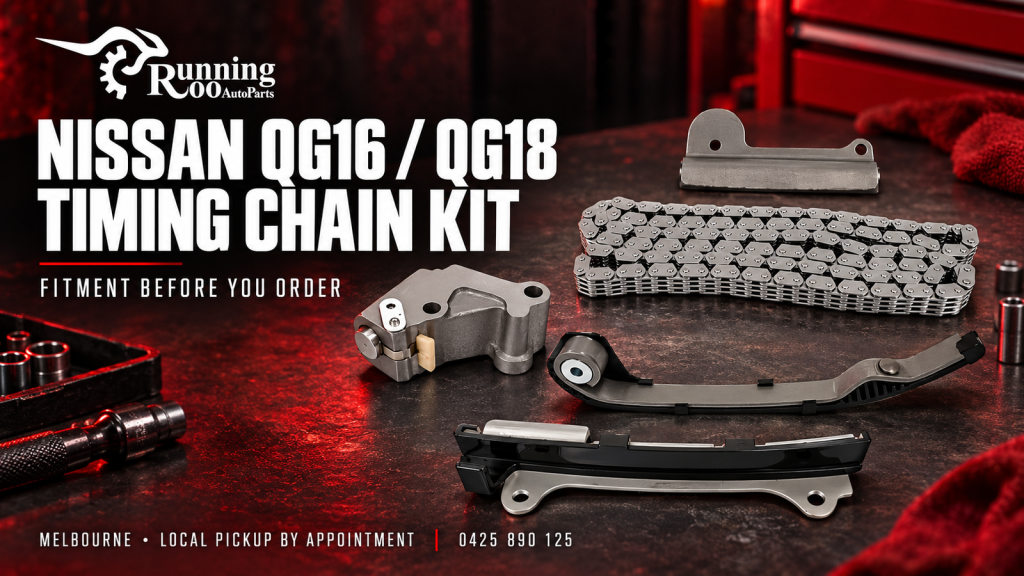
Buying a QG timing chain kit for an Australian Nissan Pulsar
A Nissan Pulsar N16 with a QG engine deserves a parts decision based on the engine actually fitted to the car. Searching for a QG18DE timing chain kit in Australia is a useful starting point, but displacement, registration year and a photograph cannot finish the compatibility check. Before ordering, establish whether the engine is QG16DE or QG18DE, record its identifying details and ask a qualified workshop what it has diagnosed. The right purchase should match both the vehicle and the repair plan.
RunningRoo lists a QG16DE/QG18DE timing chain kit for selected Pulsar and Almera applications. The corresponding RunningRoo eBay listing gives buyers a second ordering route. These are aftermarket product listings, not a promise that every car carrying those model names accepts the same components. Send your VIN, engine code, OE references and workshop findings before paying. For friendly Australian support, call 0425 890 125 and discuss Melbourne local pickup by appointment or the current fast dispatch options.
Separate the vehicle badge from the engine identity
An owner often starts with a registration search because that is the information immediately available. It can help a supplier locate a vehicle, but it should be accompanied by the VIN and engine code. A car may have a replacement engine, and an older imported vehicle can differ from the local version associated with its badge. Tell the supplier about an engine replacement instead of assuming the current registration record describes every mechanical component.
Build a small identification pack before asking for a quote. Include the full VIN, build date, model designation, engine code and any readable numbers on the removed components. Take clear photographs without dismantling parts merely for a photograph. If the workshop has already opened the engine, ask it to record the guide shapes and tensioner mounting details. These observations help resolve a catalogue question; they do not replace the manufacturer’s parts lookup.
QG16DE and QG18DE are distinct engine identifiers. A listing covering both describes the seller’s proposed application range, so the useful question is whether this exact kit matches your particular build. Avoid shortening the enquiry to “Nissan 1.8 chain”. That phrase can attract results for other engine families. The extra few minutes spent establishing the complete identifier can prevent a delivery arriving at the workshop with a superficially similar but unsuitable part.
What this particular kit covers
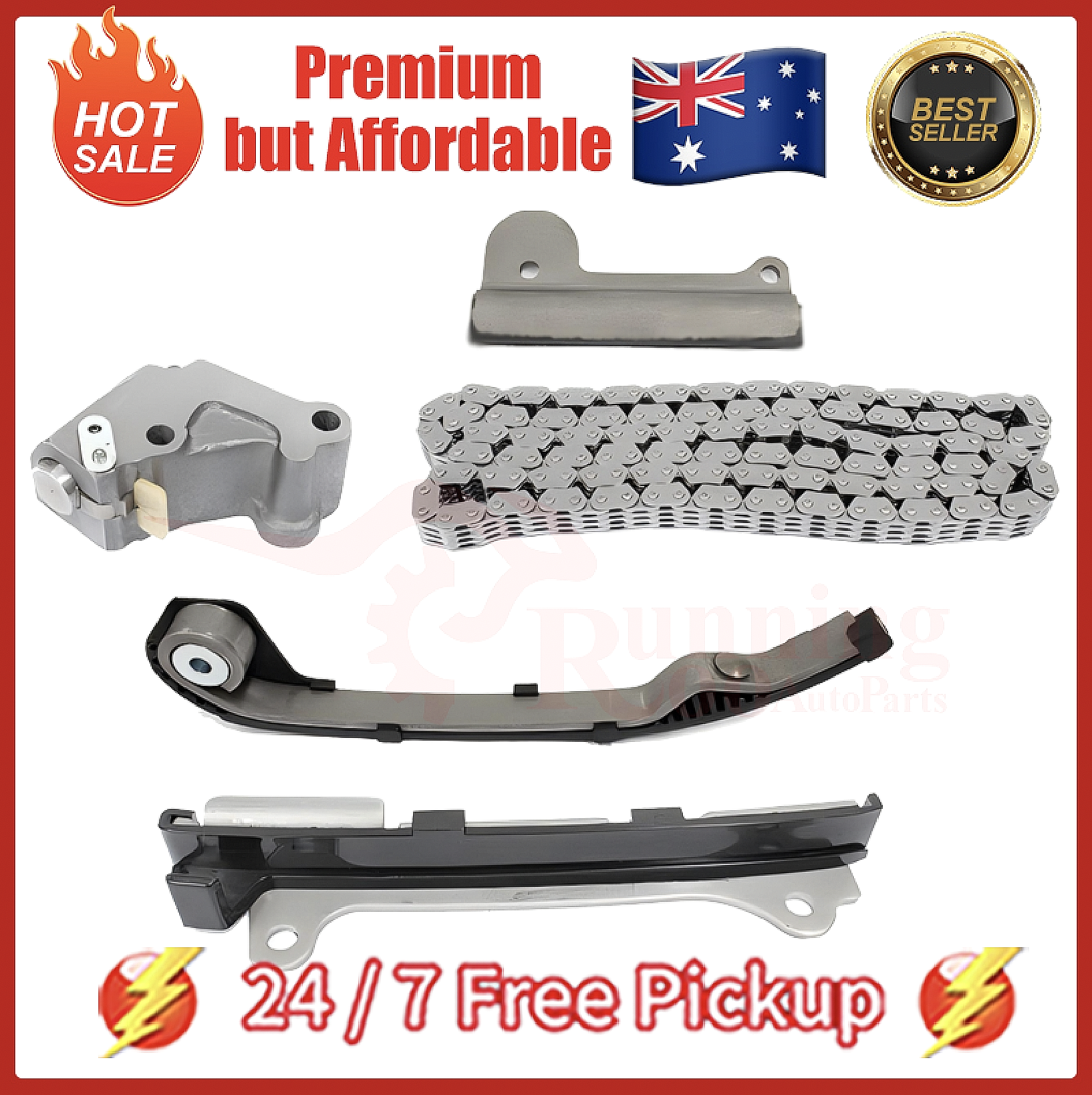
The selected RunningRoo product description lists one chain, one tensioner and three guides. Its scope is therefore different from a package that expressly includes crankshaft sprockets, camshaft sprockets or a variable valve timing gear. Do not add those items to your mental shopping list simply because another QG advertisement shows a larger collection. The current written contents and the confirmed order should agree before dispatch. Review the selected kit here.
| Ordering question | What to establish | Why it matters |
|---|---|---|
| Engine identification | QG16DE or QG18DE, VIN and build | Narrows the actual application |
| Chain package | Chain, tensioner and three guides as listed | Defines the advertised supply scope |
| Sprockets | Reuse or replacement decision from the workshop | They are not assumed included |
| VVT gear | Whether fitted and whether replacement is diagnosed | A chain kit is not a VVT diagnosis |
| Sealing materials | Separate repair-manual shopping list | Prevents workshop delays |
| Collection or freight | Confirmed pickup booking or dispatch estimate | Makes the booking realistic |
A kit can be suitable for the proposed timing repair without being a complete engine repair in a box. The mechanic may need sealing products, a front seal, fluids or fasteners that are outside the advertised package. Ask for a written supplementary list after the repair scope is agreed. This avoids confusing a sensible additional consumables charge with an unexpected change to the kit itself.
What the factory material contributes
Nissan’s QG18DE engine mechanical material distinguishes the timing chain, its guides, tensioner and sprockets. It specifies alignment checks and warns against moving the crankshaft and camshafts independently after chain removal because valve and piston interference can occur. This is why a timing kit is a workshop repair requiring the applicable procedure, rather than a collection of parts to install by matching a product photo. The source is Nissan’s QG18DE engine mechanical manual, reproduced as a PDF.
That historical factory document is useful for system context, but its model edition is not automatic authority for every Australian Pulsar or Almera. The installer should obtain the current procedure for the actual vehicle. This article deliberately does not supply borrowed torque values, sealant bead dimensions or a universal timing-mark sequence. A value copied from the wrong edition can be more misleading than no value at all.
Turn a noise complaint into an actionable workshop report
Before the appointment, describe what you hear in ordinary terms. Does it happen only on the first start after the vehicle has sat overnight? Does it remain after the engine is warm? Was it noticed immediately after other work? Give the workshop the sequence of events and any warning lamps you have observed. A brief recording made safely from outside the engine bay can communicate a complaint, but it cannot establish the worn component on its own.
Ask the workshop to distinguish the reported symptom from its conclusion. “There is a noise” is an observation. “The timing chain assembly requires replacement” should be supported by the relevant checks. If a fault code has been recorded, request the complete code and the technician’s interpretation instead of a generic label from a phone application. A parts supplier can use a good diagnosis to confirm an order; it cannot examine your engine through a checkout page.
A particularly useful repair report states what was inspected, what failed the applicable check and what further assessment will be possible only after access is gained. This allows you to approve the initial job while setting a clear limit for additional work. Ask the workshop to contact you before expanding the scope to sprockets or a VVT gear. That agreement keeps the decision tied to evidence and avoids an open-ended parts purchase.
Chain-only package or a larger repair order?
The choice is not a contest between the largest box and the lowest advertised price. If the workshop has established that the selected chain, tensioner and guide package suits the diagnosed repair, it may be an appropriate starting point. If it has separately identified damaged sprockets or a faulty adjustment gear, obtain a revised itemised order. Do not buy a smaller kit expecting those separately named components to appear in the parcel.
Equally, a high odometer reading does not by itself tell you the contents of the correct repair order. Ask what has been measured or observed and how each proposed component relates to that finding. A workshop can explain the practical implications of access and labour overlap without promising that every old part must always be replaced. Keep the estimate, the supplier’s fitment reply and your approval together so the eventual invoice has a clear reference point.
For an older daily driver, scheduling matters as much as the shopping basket. Discuss whether the workshop wants the parts delivered before the vehicle arrives or prefers to inspect first and order second. The first arrangement can reduce waiting when the diagnosis is settled; the second may be more appropriate when the condition of internal components is still unknown. Choose the arrangement with the mechanic who will be responsible for the repair.
Compare two quotes on the same basis
Write down the proposed parts, labour, consumables, freight and any diagnostic charge separately. A cheap kit advertised elsewhere may have fewer guides, omit a tensioner or represent a different engine. Conversely, a more expensive quote might include work that has not yet been justified. The useful comparison is the price of the same confirmed repair scope, supported by clear communication about installation responsibility and the current terms applying to the order.
Use the RunningRoo eBay item when eBay checkout suits your purchasing workflow, or use the website product page for a direct order. Send the item reference with your enquiry so the reply applies to the exact package. Avoid mixing a screenshot from one variant with a purchase from another. If you are ordering for a workshop, make sure the name on the order and the intended delivery address are correct.
Prepare for arrival and installation
On arrival, compare the supplied package with the invoice and agreed contents before the workshop begins. Keep the labels and packaging available until the job is complete. Report a discrepancy with photographs and the order reference while the components remain uninstalled. There is no benefit in asking a technician to modify a part simply because a parcel has already arrived; an unresolved fitment question belongs back with the supplier and the vehicle identification record.
Ask the workshop to explain its handover checks and provide a record of what was replaced. Note whether the original complaint has been rechecked under comparable conditions. Keep that information with the vehicle’s service history. A documented repair is easier to understand later than a receipt saying only “timing parts”, especially if the car is sold or a different workshop services it in the future.
A worked example of a complete QG enquiry
Imagine an owner who has been told that a Pulsar needs “a timing kit” but has not yet received an itemised estimate. Buying immediately leaves two questions unanswered: which engine is installed, and whether the mechanic expects sprockets as well as the chain package. The better next step is to obtain those details and send the workshop the selected product link. This example is an ordering scenario, not a claim about a particular customer’s repair.
The enquiry should identify the car through its VIN and build information, state QG16DE or QG18DE as confirmed by the mechanic, and attach the relevant reference numbers. It should then ask whether the advertised chain, tensioner and three guides match the requested work. If the installer expects additional components, those should appear on a separate list before checkout. That gives the supplier a concrete question and gives the owner a meaningful total to compare.
Suppose the workshop can identify the kit requirement but will decide on sprocket condition only after gaining access. Record that limitation in the estimate. Agree who will approve a further purchase and how the workshop will communicate the finding. You can then plan the initial order without pretending that every later inspection outcome is already known. This keeps the purchase practical while preserving the mechanic’s responsibility for the final repair scope.
Keep a useful record for an older Pulsar
Older vehicles often accumulate invoices that use different shorthand names for the same job. Create a single record containing the engine identifier, the selected item link, the supplier’s fitment reply and the final workshop invoice. Add the date and odometer reading recorded by the installer. There is no need to make your own technical claims about wear limits or future service life; the value lies in accurately recording what was supplied and fitted.
When another parts question arises, that record can show whether the previous job involved only the advertised chain package or also separately purchased gears. It also helps an owner explain the vehicle’s history without relying on memory. Keep it available for the next service and pass relevant details to a future workshop rather than describing the repair simply as “everything was changed”.
Frequently asked questions about QG timing kit orders
Does every Nissan Pulsar N16 use this kit?
No universal claim is made here. The listing names selected QG16DE and QG18DE applications. Your VIN, actual engine code, component references and supplier confirmation must establish the match. An N16 badge or the year on a registration document is only part of the identification process.
Does the selected kit include a VVT gear?
The selected product’s written contents list a chain, tensioner and three guides. Do not assume a VVT gear is supplied. If the workshop requires one, ask RunningRoo to identify and quote the correct additional component, or confirm a different package in writing before ordering.
Should I purchase a kit as soon as I hear a rattle?
Arrange diagnosis first. Tell the workshop when the symptom occurs and provide the available service history. Buying a chain kit solely from a noise description risks paying for components that do not address the actual complaint. The order should follow the workshop’s confirmed repair scope.
Can I use an overseas manual for my Australian car?
An overseas factory manual can explain the system, but applicability still matters. Ask the installer to use repair information matched to your VIN, market and engine. Do not transfer torque values or installation steps just because the engine family looks familiar.
Can a Melbourne workshop collect the order?
Discuss collection with RunningRoo before sending a driver. Pickup is by appointment in Blackburn, VIC. Confirm that the fitment check is complete, the order is ready and the collector has the correct reference. Call 0425 890 125 to coordinate.
Related reading and Australian support
For the broader purchasing process, read Timing chain kit fitment: match the engine and Questions to ask your mechanic before a timing repair. These guides provide supporting context; the engine and product reference in this article remain the focus of your order.
Visit RunningRoo Auto Parts or the contact page to discuss your enquiry. Australian customers can call 0425 890 125; from overseas, use +61 425 890 125. RunningRoo is Australian-operated in Blackburn, VIC, offering friendly support, Melbourne local pickup by appointment and current fast dispatch options subject to stock and order confirmation. Send your VIN or chassis identification, complete engine code, OE number and professional diagnostic findings before ordering.
Factory and official source notes
- Nissan QG18DE Engine Mechanical manual — timing chain section — Third-party reproduction of factory material. Historical QG18DE engine manual; use applicable current vehicle procedure. Technical paragraph only; not aftermarket product approval.
Technical context is drawn from the named manufacturer documents. Product descriptions establish advertised supply scope; they do not replace factory fitment or diagnosis. Historical documents are not represented as the latest repair instructions.