
By RunningRoo Auto Parts — written from the desk of our Product Manager
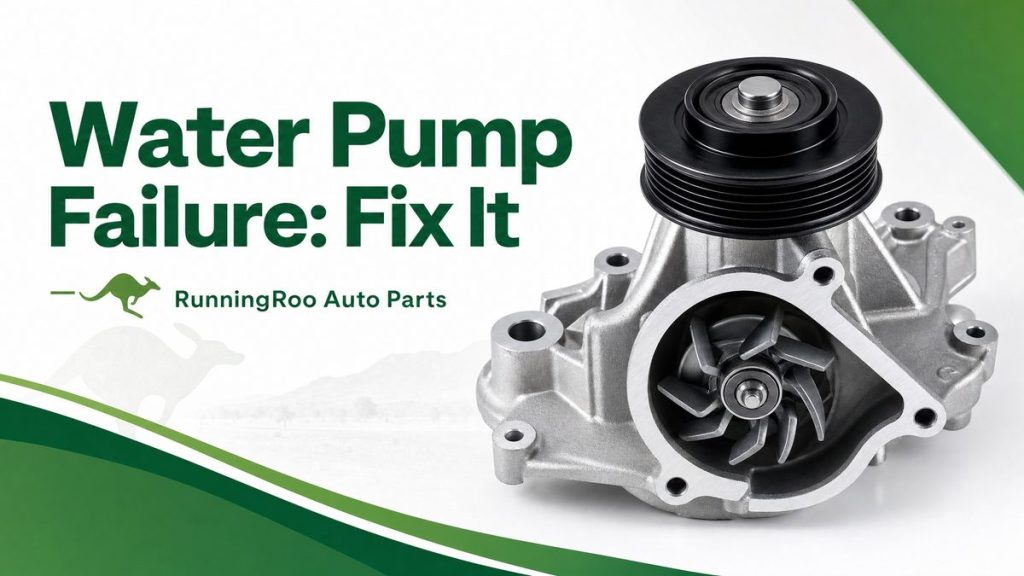
The water pump is the heart of the cooling system, circulating coolant through the engine and radiator to keep temperatures stable. When it fails, the consequences range from a slow coolant leak to sudden, engine-destroying overheating. The good news is that a water pump is usually easy to reach and inexpensive to replace, especially when it is caught early. This guide explains the difference between mechanical and electric water pumps, how to recognise a failing one and how to replace it correctly.
RunningRoo Auto Parts – Based in Melbourne, Australia 🇦🇺
📞 Free 24/7 Pickup Available (Contact 0425890125)
💬 Any questions? Message or Call us anytime! We’re here to help.Why Choose RunningRoo?
✅ Aussie Owned & Operated | 🚚 Fast Shipping | 🤝 Friendly Support
Mechanical vs electric water pumps
Most engines use a mechanical water pump driven by the timing belt, the timing chain or an accessory belt. Its impeller spins to push coolant through the block, and its shaft seal and bearing wear with time. A mechanical pump usually fails gradually — first a weep of coolant from the seal, then a noisy bearing, and finally a seized or leaking pump.
An increasing number of modern cars also use electric water pumps. Some are auxiliary pumps that circulate coolant after shutdown or support the heater, while others are the main pump, controlled by the engine computer rather than a belt. Electric pumps fail electrically or mechanically and often set their own fault codes. The two types fail differently, so knowing which your car has is the first step.
The symptoms of a failing water pump
The classic signs are a coolant leak from the front of the engine, often as a stain or drip below the pump, a whining or grinding noise from the pump bearing, and overheating or a fluctuating temperature gauge. A failing pump can also cause poor heater output, and on engines where the pump is driven by the timing belt or chain, a seized pump can cause catastrophic engine damage.
| Symptom | Likely cause | First check |
|---|---|---|
| Coolant weep below pump | Shaft seal worn | Inspect the pump area |
| Whining / grinding noise | Bearing worn | Listen; check for play |
| Overheating, heater cold | Impeller or flow problem | Test coolant flow |
| Coolant level dropping | Leak from pump or hoses | Pressure test the system |
| Electric pump fault code | Electric pump failed | Scan codes; test the pump |
How to test a water pump
Start by checking the coolant level and looking for leaks around the pump and its gasket. A pressure test of the cooling system will reveal external leaks, and with the engine warm, you can feel the top radiator hose to confirm coolant is flowing. A pump with a worn bearing will show play when the pulley is rocked, and a noisy pump is usually confirmed by listening to the front of the engine.
On electric-pump cars, a scan tool can often actuate the pump and read its speed or current draw, which confirms whether the pump or its wiring is at fault. Do not assume the pump is bad until the level, the hoses and, on electric systems, the fault codes have been checked.
Replacing the water pump correctly
Replacing a mechanical pump usually means draining the coolant, removing the belt and any covers, unbolting the old pump, and fitting the new one with a fresh gasket or O-ring. The bolts should be torqued in sequence, and the system refilled with the correct coolant and bled of air. On engines where the water pump is driven by the timing belt or chain, the pump should be replaced together with the timing kit, because the labour is already spent and the belt or chain usually needs renewal at the same time.
The most common mistakes are leaving the old gasket on the block, overtightening the bolts, and failing to bleed the system, which causes false overheating. A correctly fitted pump with a properly bled system is the difference between a repair that stays fixed and one that returns.
Timing belt vs timing chain driven pumps
On many engines the water pump is driven by the timing belt, and on others by the timing chain or an accessory belt. This matters for the repair, because a timing-belt-driven pump is usually replaced together with the belt and tensioner as a kit — the pump is cheap and the labour is already spent. A timing-chain-driven pump, by contrast, may be driven separately and replaced on its own.
If your engine uses a timing belt and the pump is due, replacing the pump at the same time as the belt is the standard practice and avoids paying the labour twice. Always confirm how the pump is driven on your engine before ordering parts.
Coolant flush and bleeding
Whenever the water pump or coolant is disturbed, the system should be refilled with the correct coolant and bled of air. An air pocket in the cylinder head gives a false high-temperature reading and causes localised overheating even when the pump is fine. Run the engine to temperature with the heater on, and top up as the level settles.
Flush the system if the coolant is old or contaminated, because contaminated coolant corrodes the pump impeller and shortens the life of the new pump. A properly bled system with the correct coolant is the difference between a repair that stays fixed and one that returns with the same symptoms.
Preventive maintenance
The best protection for a water pump is clean coolant at the correct concentration, changed on schedule. Contaminated or old coolant corrodes the impeller and wears the seal, which is the leading cause of premature pump failure. Address any coolant leak or overheating promptly, because a small weep can quickly become a seized pump.
On timing-belt engines, plan the water pump replacement with the belt interval, and on electric-pump cars, address any pump fault code early rather than waiting for the pump to fail completely.
Frequently asked questions
What are the symptoms of a bad water pump?
A coolant leak from the front of the engine, a whining or grinding noise, overheating, and a dropping coolant level.
Should I replace the timing belt with the water pump?
Yes, where the pump is driven by the timing belt. The belt and pump are usually replaced together because the labour is already spent.
Can a water pump cause overheating?
Yes. A worn impeller or a seized pump stops coolant flow and causes the engine to overheat.
How much does a water pump cost in Australia?
A quality aftermarket pump is inexpensive, and most are accessible. Always confirm fitment by engine code.
What coolant should I use?
Use the specification in the owner’s manual and the correct coolant-to-water ratio, and bleed the system after refilling.
Can I drive with a leaking water pump?
For a short distance to a workshop, possibly, but a leaking pump can fail suddenly and cause overheating, so it is best replaced promptly.
Why is my heater blowing cold?
A failing water pump or an air pocket in the cooling system can stop hot coolant reaching the heater core. Check the coolant level and bleed the system.
Key takeaways
A water pump failure shows up as a coolant leak, a noisy bearing or overheating, and on timing-belt engines the pump is normally replaced with the belt as a kit. Testing the system, matching the pump by engine code and bleeding the cooling system correctly are the three steps that make the repair last.
Catching a water pump at the first sign of a leak or noise is far cheaper than the engine damage that a seized pump can cause, so any cooling-system symptom is worth investigating promptly.
How to confirm the right water pump
Water pumps are engine-specific, so confirm fitment by engine code and OE part number rather than by model name alone. The same car model can use different pumps across engines and years, and a pump with the wrong impeller direction or drive type will not cool correctly even if it bolts on.
Confirm whether your pump is belt-driven, chain-driven or electric, and whether the job should include the timing belt kit or a thermostat. Send the engine code and VIN to the supplier to confirm the correct pump before ordering, and check that the gasket or O-ring is included.
Step-by-step mechanical pump replacement
The job starts with draining the coolant and removing the drive belt and any covers blocking the pump. The old pump is unbolted, the mating surface is cleaned of old gasket, and the new pump is fitted with a fresh gasket or O-ring. The bolts are torqued in sequence, and the system is refilled with the correct coolant and bled of air.
On timing-belt engines the pump is normally replaced together with the belt, tensioner and idlers as a kit, because the belt must come off to reach the pump and the labour is already spent. On timing-chain or accessory-belt engines the pump can often be replaced on its own.
Testing an electric water pump
An electric water pump can be tested with a scan tool, which can usually actuate the pump and read its speed or current draw. If the pump does not run when commanded, check its power and ground supply and its fuse before condemning the pump. A pump that runs but draws no current may have a failed impeller or a dry-running condition.
Because electric pumps are controlled by the engine computer, a fault code is often the first sign of a problem. Replacing the pump with the correct part for the engine, and bleeding the system properly, restores normal cooling without the belt-driven pump’s mechanical failure modes.
Can a water pump leak only when cold?
Yes. The seal can weep when the engine is cold and reseal as it warms, which is why a slow coolant loss is worth tracing even when no leak is visible.
Is a water pump a DIY job?
On many cars, yes, with basic tools and the correct procedure. On timing-belt engines it is usually best done as part of a belt kit by someone with the right timing tools.
Shop the parts mentioned in this guide
- Electric Coolant Water Pump for BMW F30 / F31 / F10 / F25 / E84 / E89 N20 2.0L
- BMW X3 Water Pump Petrol 3.0 X28i N52N F25 11517583836
- Electric Water Pump for Toyota Camry / Lexus / Corolla Hybrid 161A0-39035
- Additional Cooling Water Pump for Audi A4 B8 / A5 / A6 / Q5 / Q7, VW Amarok / Touareg
Watch on RunningRooAuto YouTube
- RunningRoo Auto Parts – trusted Melbourne parts support
- RunningRoo Auto Parts – product and fitment channel
RunningRoo Auto Parts – Based in Melbourne, Australia 🇦🇺
📞 Free 24/7 Pickup Available (Contact 0425890125)
💬 Any questions? Message or Call us anytime! We’re here to help.Why Choose RunningRoo?
✅ Aussie Owned & Operated | 🚚 Fast Shipping | 🤝 Friendly Support
Sources and further reading
- Water pump — Wikipedia
- Bosch — engine cooling systems
- RACV — car maintenance and repair guidance
- CarsGuide — Australian motoring advice
RunningRoo Auto Parts – Based in Melbourne, Australia 🇦🇺
📞 Free 24/7 Pickup Available (Contact 0425890125)
💬 Any questions? Message or Call us anytime! We’re here to help.Why Choose RunningRoo?
✅ Aussie Owned & Operated | 🚚 Fast Shipping | 🤝 Friendly Support