
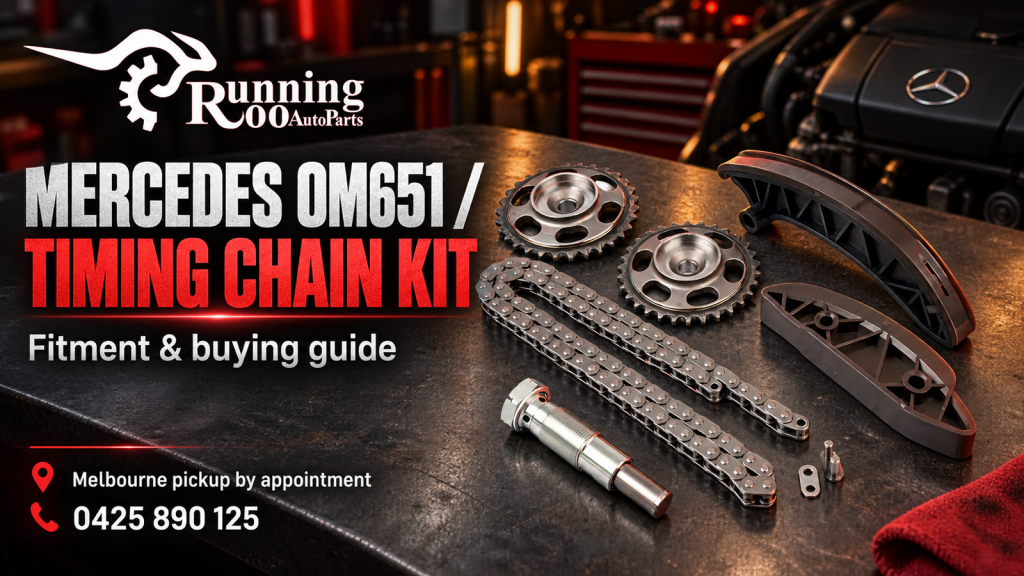
For a Mercedes OM651 timing chain kit, the useful purchasing question is not simply whether the advert says “Sprinter” or “Vito”. It is whether the package matches the complete engine variant, the vehicle’s production details and the repair that has actually been diagnosed. A commercial vehicle booking can involve downtime, delivery commitments and workshop scheduling, so identifying the right parts before disassembly deserves careful attention.
The RunningRoo OM651 timing chain kit with gears is also offered through a matching eBay active listing. The advertised contents are one 96-link chain, two cam gears, one tensioner and left and right guides. This guide explains how to assess that offer and coordinate the purchase. It does not supply a universal repair procedure or promise compatibility with every Mercedes diesel carrying a 2.1 or 2.2 badge.
RunningRoo provides Australian-operated parts support from Blackburn, Melbourne. Call 0425 890 125 for friendly support with the product enquiry. Melbourne local pickup is by appointment. Ask about confirmed stock and current fast dispatch arrangements before committing a workshop to a particular delivery date.
VIN · complete engine code · full OE reference
Professional diagnosis · supplied contents · required extras
Stock confirmation · dispatch or pickup appointment · workshop booking
Start with the full OM651 suffix
The product application list includes several OM651 suffixes across passenger vehicles and vans. That breadth makes the full engine identification more important, not less. A van’s body designation and advertised capacity are useful search terms, but they should be accompanied by the VIN and exact engine code when the supplier checks the package. Where available, include the OE references requested by the workshop.
A vehicle’s first registration date may not be its build date. Imported vehicles and replacement engines introduce further reasons to avoid ordering from a badge alone. Explain any engine replacement or previous major repair when making the enquiry. If the mechanic has identified a mismatch between the chassis record and installed engine, resolve it before placing the order rather than relying on a general compatibility table.
For a fleet enquiry, keep each vehicle separate. Two vans with the same branding and similar registration years should not automatically receive identical parts orders. Give each enquiry a vehicle or job reference, and retain the fitment response against that reference. This makes it easier for the workshop, purchaser and person collecting the parts to know which package belongs to which vehicle.
The OM651 chain and gear arrangement
Daimler’s OM651 Introduction into Service Manual describes a combined gear and chain drive on the engine’s output side. Its camshaft section shows the chain linking the drive arrangement to the camshaft sprockets, while the gear-drive section identifies additional driven systems. This manufacturer material explains why “with gears” in a product title needs a precise contents check. It does not mean the package renews the entire gear train.
The same document explicitly distinguishes introductory technical information from current repair and diagnosis information. Accordingly, use it here as architectural background. Your technician needs the applicable Mercedes workshop information for the actual vehicle and job. A blog cannot safely reduce the repair to a few shared timing marks, a generic tightening figure or a tool list borrowed from another engine suffix.
What the advertised package contains
| Item in the RunningRoo description | Advertised amount | Purchasing question |
|---|---|---|
| Timing chain | 1, described as 96L | Is this the chain specified for the confirmed engine and repair? |
| Cam gears | 2 | Are their identities and applications confirmed? |
| Chain tensioner | 1 | Does the supplied version match the job requirements? |
| Left guide | 1 | Which guide is supplied and how is it identified? |
| Right guide | 1 | Is the current package consistent with the written list? |
| Other gears, seals, bolts and fluids | Not established as included | What must be ordered separately? |
Use this table as a purchasing checklist, not a replacement for the supplier’s current packing list. A mechanic may need additional items under the applicable procedure, and a particular diagnosis may involve components outside the advertised kit. Have the workshop mark each requirement as included, separate or still awaiting inspection. That turns a vague “complete kit” conversation into a clear parts plan.
Compare the website OM651 package with the corresponding eBay offer on the same basis. Prices, delivery options and terms may differ by channel or change over time. The important comparison is the identified package and final order terms, rather than the title alone. Obtain clarification if a photograph or structured listing field seems inconsistent with the seller’s written description.
A practical brief for a van with a new noise
Describe the concern in everyday language first: when it started, when it occurs, whether the vehicle is cold or warm, and whether its behaviour changed after recent work. Include the service records that you have. If a driver is reporting the issue to a fleet manager, ask them to record the conditions instead of naming a part they think has failed.
The workshop can then assess the vehicle using the relevant diagnostic information. Ask for the findings that justify the proposed chain work and for any remaining uncertainty. A noise description, a warning lamp and a confirmed mechanical fault are different pieces of evidence. Buying a kit before that distinction is resolved can leave the vehicle waiting for another component while the original complaint remains unexplained.
Do not ask a driver to keep running a vehicle to demonstrate a concerning noise for a supplier. Operating or transport decisions should follow the vehicle handbook and the inspecting professional’s advice. A parts seller can identify an advertised kit and discuss its availability; it cannot establish the condition of a particular van through the product page.
Plan downtime using confirmed information
For a working Sprinter or Vito, parts availability is only one part of the timetable. The workshop must confirm when it can inspect the vehicle, whether further checks are needed and when it can undertake the repair. The supplier must confirm the parts and dispatch or pickup arrangement. Keep those stages separate so that a provisional stock enquiry does not become an unsupported promise that the van will return to service on a particular day.
Ask the mechanic what information is needed before ordering and what may only be known after inspection. A useful quotation can distinguish confirmed work from possible additional work. Agree how the workshop will contact you if the scope changes and who has authority to approve it. This is particularly helpful when the driver, owner and person paying the invoice are different people.
Where possible, have the identified package checked before the planned repair begins. A delivered parcel is not automatically a verified parts match. Allow time for the workshop to compare the labels and components with its requirements, and keep the supplier contact details accessible. If there is a discrepancy, resolve it while the engine is still assembled whenever circumstances allow.
Ask what “gears included” actually covers
The website specifically describes two cam gears. It does not state that every gear in the OM651 drive arrangement is supplied. That distinction matters when comparing a quotation that includes this package with one that includes additional hardware. Ask the mechanic to name each extra component and explain why it is required, rather than treating every use of the word “gear” as the same item.
Similarly, do not infer that the kit includes gaskets, sealing materials, replacement fasteners or every item removed for access. The workshop should use the current procedure to identify those requirements. An accurate order can be smaller or larger than an owner initially expects; what matters is that the scope follows the vehicle and diagnosis rather than an assumption about the word “kit”.
Avoid silently substituting a different package because it has a similar engine name. If the exact agreed product becomes unavailable, send the proposed alternative to the installer and ask the supplier to explain its references and contents. Keep the final decision in writing. Substitution is a new fitment decision, even when the replacement listing looks almost identical.
Buying from an Australian-operated local supplier
RunningRoo’s Blackburn location offers a practical contact point for Melbourne buyers who want to discuss the order and arrange collection. Call 0425 890 125 before travelling, confirm the appointment and ask what order reference is needed. If someone else is collecting on behalf of your business, agree that arrangement directly with RunningRoo.
For delivery outside Melbourne, send the destination postcode and ask for the current dispatch expectation. Fast dispatch is useful, but it should not be confused with a guaranteed arrival date or a guaranteed repair completion date. Carrier movement, workshop availability and any extra parts remain separate considerations. Plan using the confirmed information for your order rather than a general estimate copied from an older purchase.
Friendly support is most effective when the enquiry is specific. Include the VIN, full engine code, exact website or eBay link, the mechanic’s part requirements and the intended delivery or pickup arrangement. A concise complete enquiry usually resolves more than several messages containing only a vehicle badge and a photograph of an unrelated kit.
Documentation to retain after ordering
Save the order confirmation, fitment response, listing link and any agreed packing list. Ask the workshop to record the supplied parts with the repair invoice. If the vehicle is part of a fleet, store those documents under its own identifier rather than in a general folder for all Mercedes purchases. That makes future service enquiries more reliable.
On receipt, check packaging condition and the delivered identification before installation. Raise discrepancies with the supplier and keep the components unmodified while the issue is reviewed. The installer should not have to guess whether a nearly matching component was intended to be a substitute. Clear photographs of labels and the disputed item are more useful than a broad statement that the parcel looks different.
After repair, ask for a plain-language explanation of what was replaced and what verification was completed. Record any follow-up recommendations separately from the finished work. This helps the next driver or workshop understand the vehicle’s history without assuming that every related system was renewed simply because a timing chain kit appears on the invoice.
Watch related RunningRoo videos
Timing Chain Rattle: Wear Symptoms & When to Replace | RunningRoo — General timing-chain background; not a demonstration of this engine or the exact kit.
These videos were found on the RunningRoo AutoParts channel and their watch pages were checked. Use them to understand the discussion and prepare questions for your workshop. They do not confirm this aftermarket product’s fitment, replace manufacturer service information or diagnose your vehicle. Ask the technician to identify the exact component and repair procedure that apply to your engine.
Frequently asked questions
Is every 2.1 or 2.2 CDI Mercedes covered by this kit?
No. Capacity and CDI badging do not establish the full engine variant or parts requirement. This guide concerns the advertised OM651 package. Confirm the VIN, engine suffix, production information and applicable OE references before ordering, especially for imported vehicles or vehicles with replacement engines.
Does “with gears” mean a complete engine gear train?
No. The stated contents list two cam gears. Do not extend that description to every gear or driven assembly. Have the workshop identify any additional components and compare its requirements against a current written packing list from RunningRoo.
Can I use this article as an installation guide?
No. It is a product selection and repair-planning guide. The introductory Daimler source provides background, while the current vehicle-specific workshop information must govern installation and diagnosis. Tool selection, tightening specifications and access procedures belong with the qualified technician performing the repair.
Should all similar vans in my fleet use the same kit?
Only after each application has been checked. Similar model names do not replace individual VIN and engine verification. Keep a separate record for each vehicle so that the confirmed package, supplier response and repair invoice remain correctly associated.
Where can I buy the verified package?
Review the RunningRoo OM651 product or the matching eBay listing. Both are real product routes checked for this guide. Confirm the current contents and terms through the channel you choose, and keep the installer’s approval with your order records.
Is local pickup possible for a workshop booking?
Yes, Melbourne local pickup is by appointment in Blackburn. Call 0425 890 125 to confirm readiness before arranging collection. RunningRoo’s Australian-operated service can also discuss dispatch options when pickup does not suit the repair schedule.
Related RunningRoo guides
For broader background, read Timing chain kit fitment and engine codes and Questions to ask your mechanic before a timing-chain repair. Keep the specific engine, reference and product scope of this article in mind when moving between guides. A general explanation does not establish interchange with another application.
Technical sources and verification scope
Product availability and eBay Active Listings were checked on 9 October 2026. Stock, package contents and terms can change. Obtain current written fitment confirmation before purchase. Technical context comes from manufacturer-issued material listed below; copies on third-party archives are identified. Historical training and introductory documents are background, not substitutes for current vehicle-specific diagnosis and repair information.
- Daimler AG — OM 651 Introduction into Service Manual, 2008 — Manufacturer document on a third-party archive; pages 16–18 explain the chain and gear layout. Current WIS is required for repair.