
A brief metallic rattle immediately after an overnight start is one of the most recognisable complaints on some Honda K24 engines. The difficult part is deciding whether the noise comes from the VTC actuator, the timing chain tensioner, a worn chain, low oil pressure, or an unrelated accessory. Replacing parts on sound alone can become expensive very quickly.
Quick answer: a harsh rattle lasting roughly one to three seconds only after the engine has been parked for several hours often points toward the variable timing control actuator. A rattle that continues when warm, appears during acceleration, or is accompanied by timing-related fault codes needs a broader timing-system diagnosis.
What the K24 VTC actuator does
The VTC actuator—also called the intake camshaft phaser—changes the relationship between the intake camshaft and crankshaft. Engine oil pressure moves the actuator internally, while the engine control module commands timing changes through the oil control system. This helps the engine balance idle quality, torque, fuel economy and emissions.
When the engine is switched off, the actuator is designed to return to and lock in its base position. If the internal locking mechanism does not hold correctly, the actuator can move briefly before oil pressure builds on the next cold start. That movement may produce the characteristic start-up rattle.
Why Honda K24 engines can rattle at cold start
Honda documented a cold-start rattle on selected four-cylinder Accord vehicles in Service Bulletin 09-010. The bulletin identifies the VTC actuator as the probable cause for the affected vehicles and lists actuator part number 14310-R44-A01. It is useful technical evidence, but it is not a universal diagnosis for every K24-powered Honda.
The same general sound can also be caused or amplified by:
- Incorrect oil viscosity, low oil level or overdue oil
- An oil filter with poor anti-drainback performance
- A sticking VTC oil-control solenoid or restricted oil passage
- A weak timing-chain tensioner
- Excessive timing-chain or guide wear
- Valve-clearance, accessory-drive or starter-related noise
VTC actuator or timing chain? Key differences
| Observation | More consistent with VTC actuator | More consistent with chain/tensioner wear |
|---|---|---|
| When the noise occurs | First cold start after a long rest | May occur cold, warm or during engine-speed changes |
| Duration | Usually very brief as oil pressure rises | May persist or return repeatedly |
| Driveability | Often otherwise normal | May include rough running, reduced performance or difficult starting |
| Diagnostic evidence | Noise pattern may be present without a fault code | Cam/crank correlation or VTC performance codes may be stored |
| Physical inspection | Actuator locking action requires correct workshop testing | Guide condition, tensioner extension and chain timing require inspection |
This table is a diagnostic guide, not a substitute for inspection. A worn chain can be quiet during a workshop visit, and a VTC actuator fault may not store a diagnostic code.
A sensible diagnostic sequence
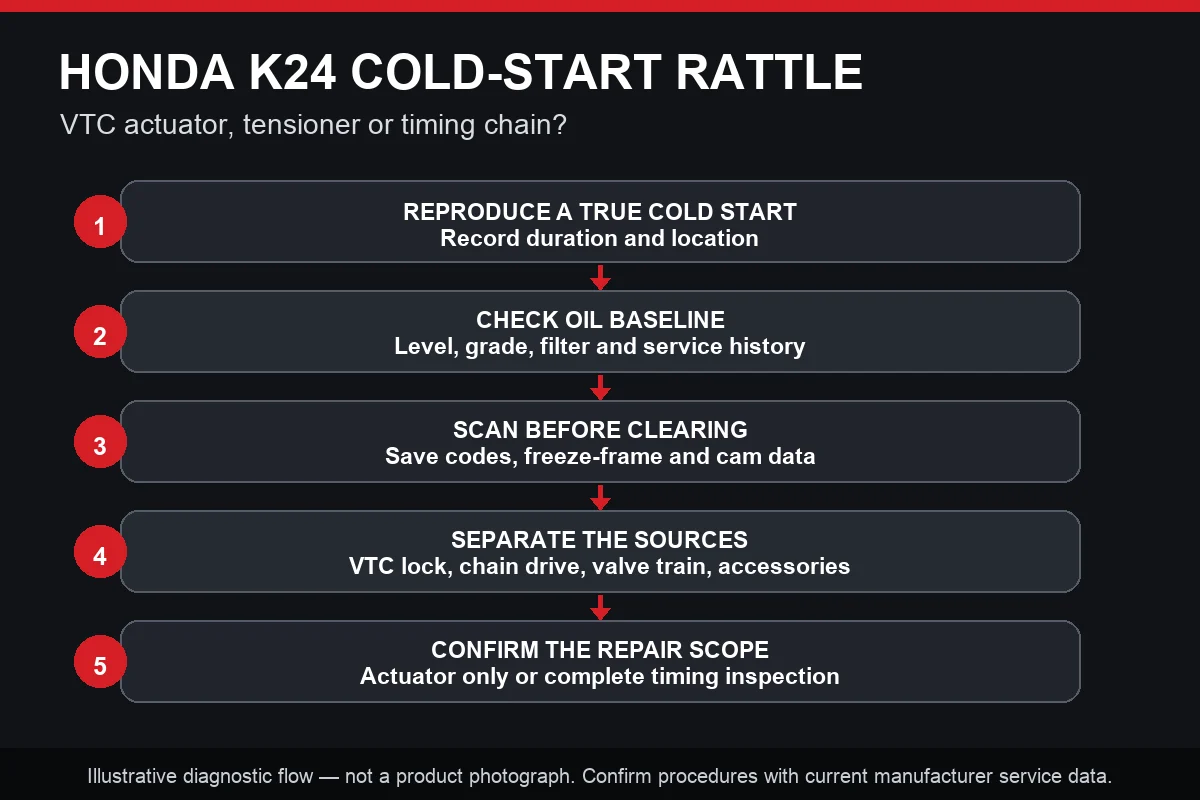
1. Reproduce the exact cold-start condition
Leave the vehicle parked long enough for oil to drain back, then record the first start with the bonnet open. Note the duration, location and whether the noise disappears completely. Repeatedly restarting a recently run engine may hide the symptom.
2. Check oil level, condition and specification
The VTC system is hydraulically operated. Correct oil level and the viscosity specified for the exact vehicle are therefore essential. If the oil is badly degraded or the service history is unknown, correct that baseline before condemning a mechanical component.
3. Scan the engine control module
Check stored, pending and history fault codes, not only the dashboard warning light. Camshaft timing, oil-control and cam/crank correlation codes can change the direction of the diagnosis. Review live camshaft-command and actual-position data where the scan tool supports it.
4. Separate top-end timing noise from accessories
A technician can use controlled listening methods to determine whether the noise is strongest near the timing cover, cylinder head, starter or accessory drive. Do not place hands or tools near a running belt or fan.
5. Inspect the complete timing system when evidence demands it
If the noise persists, the engine has correlation codes, or there is evidence of timing deviation, inspection should extend beyond the actuator. The chain, guides, tensioner, sprockets, oil passages and oil-control components work as a system.
When replacing only the VTC actuator makes sense
An actuator-only repair is most defensible when the symptom closely matches the documented short cold-start rattle, oil condition is correct, scan data does not indicate broader timing error, and the chain system passes inspection. If the engine has high kilometres, uncertain maintenance or continuous chain noise, replacing a single actuator without inspecting the rest of the timing drive can be false economy.
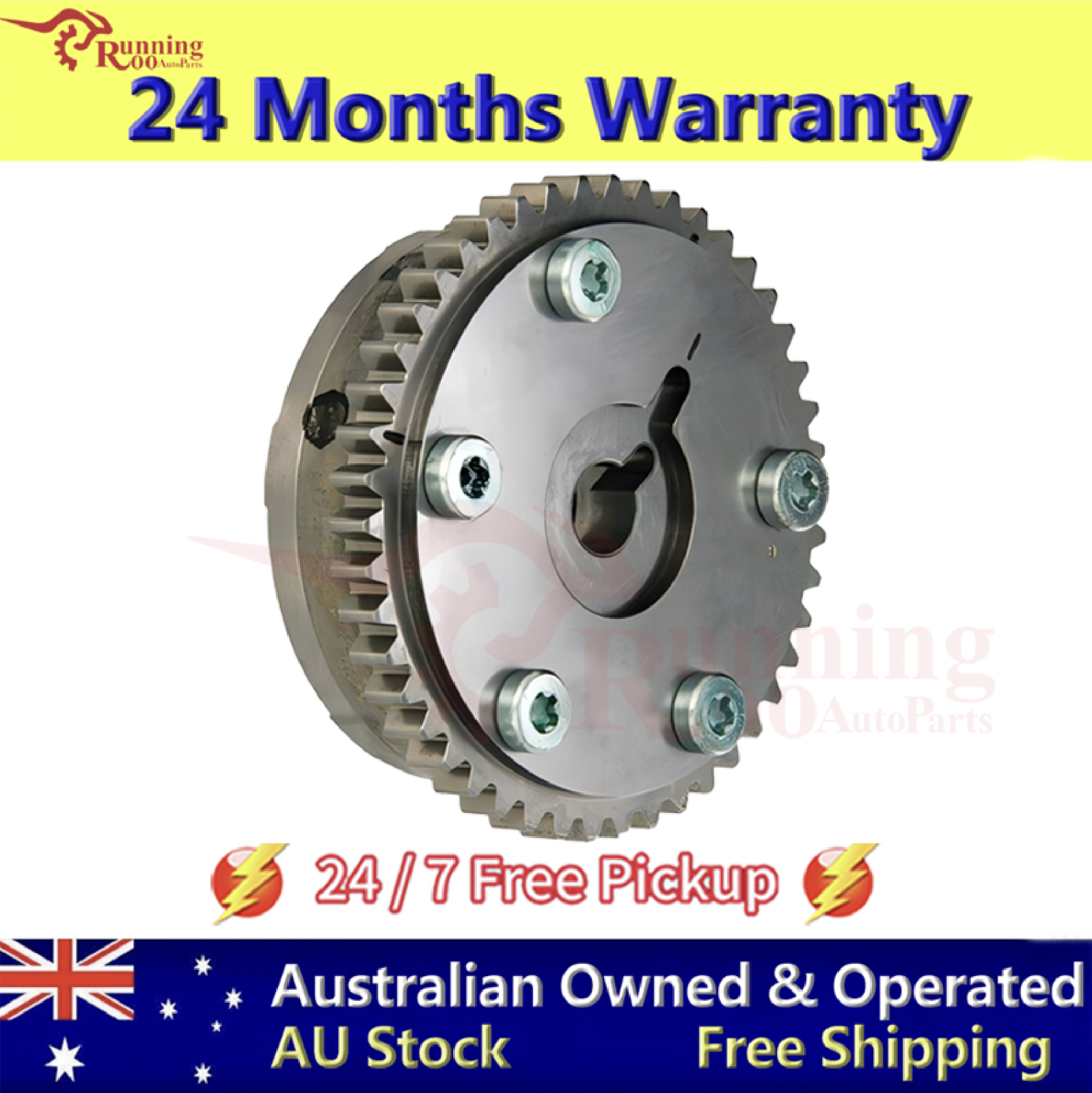
RunningRoo stocks a Honda 2.4L VTC actuator listed against 14310-R44-A01. Always confirm the OE number, engine code and VIN before ordering; K24 is an engine family, not one universal fitment.
Important installation considerations
- Follow model-specific workshop timing and tightening procedures.
- Prevent the timing chain from losing tension or jumping position during the repair.
- Use the specified sealant only where required and keep oil passages clean.
- Prime lubricated components as directed by service information.
- Rotate the engine by hand and verify timing before first start whenever the procedure requires it.
- Clear codes, confirm oil level and perform a true cold-start recheck after repair.
This is an advanced timing repair. Incorrect cam timing can cause serious engine damage, so professional installation is recommended unless the technician has the correct tools and model-specific service information.
Frequently asked questions
Can thicker oil cure a K24 start-up rattle?
Using oil outside Honda’s specified viscosity is not a reliable repair. It may alter how quickly pressure reaches the actuator while creating other lubrication problems. Diagnose the cause and use the correct oil for the vehicle and operating conditions.
Does a start-up rattle mean the timing chain has stretched?
No. A short rattle can come from the VTC actuator or tensioner without measurable chain stretch. Conversely, a worn chain may cause correlation faults or persistent noise. Inspection and scan data are more useful than the sound alone.
Will a new actuator fit every Honda K24?
No. K24 variants use different calibrations and components across models and years. Match the original part number and verify the VIN before purchase.
Can the vehicle still be driven?
A brief rattle does not reveal the condition’s severity. If the noise becomes continuous, warning lights appear, the engine runs poorly or oil pressure is uncertain, stop driving and arrange diagnosis. Continuing with a genuine timing fault can greatly increase repair cost.
Final recommendation
Treat a Honda K24 cold-start rattle as a diagnostic clue rather than an automatic parts order. Establish the oil-service baseline, reproduce the cold-start sound, scan the vehicle and distinguish a locking VTC actuator from a worn chain or tensioner. Once the evidence points to the actuator, matching the exact OE number is the safest route to a durable repair.
Fitment and technical information should always be checked against the vehicle VIN and current manufacturer service data. This article is general information and does not replace professional diagnosis.