
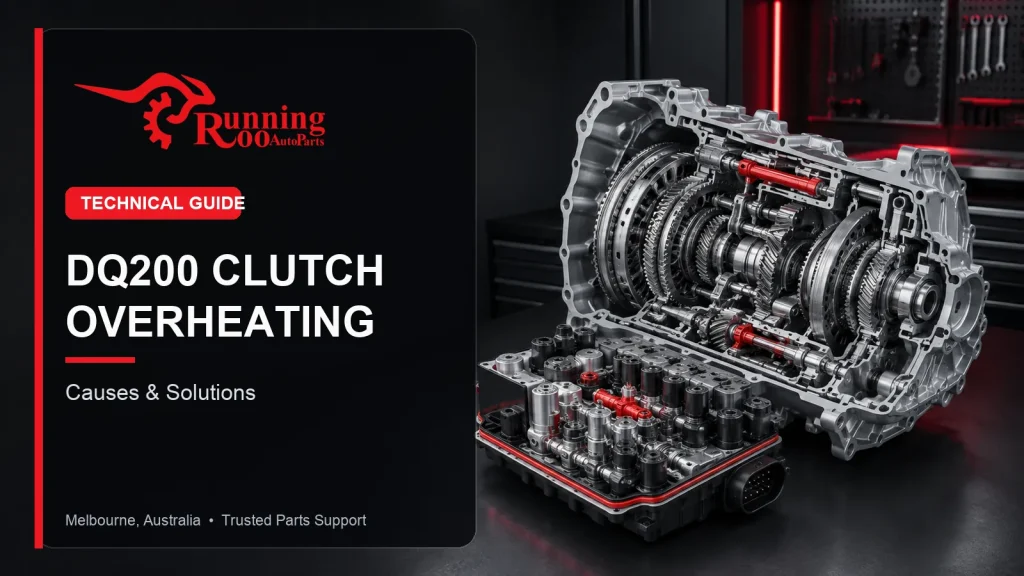
G’day everyone. I’m the Senior Product Manager here at RunningRoo Auto Parts, Australia’s trusted aftermarket automotive parts specialist. If you drive a Volkswagen, Audi, Skoda or Seat with the seven-speed DQ200 DSG and spend a lot of time in stop-start traffic, you may have noticed the gearbox getting hot or the clutch starting to judder. In this guide I’ll explain why the DQ200 dry clutch overheats, the symptoms to watch for, and what your repair options cost in Australia.
The DQ200 uses a dry dual-clutch design, which means the two clutches are not bathed in oil like a wet-clutch DSG. This makes the clutch lighter and more efficient, but it also means the clutch relies on airflow and careful engagement to manage heat, and it can overheat in heavy traffic.
All prices below are in Australian dollars and are indicative only. If you would rather talk through your own symptoms before reading further, our Melbourne-based team can help over the phone.
RunningRoo Auto Parts – Based in Melbourne, Australia 🇦🇺
Free 24/7 Pickup Available (by appointment)
Any questions? Call us anytime: 0425 890 125
Why Choose RunningRoo? Aussie Owned & Operated | Fast Shipping | Friendly Support
Why the DQ200 dry clutch overheats
In a dry clutch, the issue is friction heat. When the car pulls away from a stop, the clutch slips slightly to transmit power, and that slip generates heat. In normal driving this heat is dissipated easily, but in stop-start traffic the clutch is engaged and released constantly, and the heat builds faster than it can escape.
The DQ200 uses a hydraulic mechatronic to actuate the clutch, and the control module monitors clutch temperature and slip. When the clutch gets too hot, the gearbox may protect itself by changing the way it shifts, or by limiting how quickly it engages drive.
Prolonged creeping in traffic, hill starts, towing and aggressive launches all push the clutch temperature higher, which is why Australian urban driving is one of the hardest environments for the DQ200.
Common symptoms of an overheating DQ200 clutch
The most common symptom is a judder or shudder when pulling away, which gets worse as the gearbox gets hot. You may also notice a hot smell, a transmission warning, or the gearbox holding onto a gear or shifting differently in heavy traffic.
In more advanced cases the clutch can glaze, which leaves the judder permanently even when the gearbox is cold. The table below summarises the typical symptoms.
| Symptom | What it usually means | Likely cause |
|---|---|---|
| Judder on take-off | Heat-related clutch slip | Overheated / glazed clutch |
| Hot smell from gearbox | Clutch overheating | Heavy stop-start use |
| Transmission warning | Protective mode | Clutch temperature high |
| Poor engagement when hot | Clutch glazing | Repeated overheating |
How the DQ200 manages clutch temperature
The control module continuously monitors clutch slip and temperature, using data from the mechatronic and the engine. It adjusts the clutch engagement to balance smoothness against heat, and it can reduce the number of clutch slip events in traffic to protect the clutch.
This is why a DQ200 in heavy traffic may feel like it is shifting differently or holding a gear longer than normal. The gearbox is making a deliberate decision to reduce the heat being generated by the clutch, even if it feels less crisp.
In extreme cases the control module may also briefly reduce the amount of power it allows the engine to deliver, or place the gearbox into a protective mode until the clutch has cooled. This is a design safeguard rather than a fault, but it is a clear signal that the clutch is being worked hard.
Understanding this protective behaviour is important, because it means a temporary change in shifting in traffic is not always a fault. It is the gearbox looking after itself.
Which DQ200 models are affected
The DQ200 is fitted to a huge number of Volkswagen Group vehicles, and the dry-clutch overheating behaviour applies across the whole family. The gearbox codes 0AM and 0CW are the two most common, and both use the same dry clutch and mechatronic design.
The vehicles that are most affected are those fitted with the lower-torque petrol and diesel engines, where the lightweight dry clutch is used. If your car does a lot of city driving or heavy traffic, it is among the most likely to see clutch heat-related issues.
| Gearbox | Type | Typical vehicles |
|---|---|---|
| 0AM / 0CW DQ200 | Dry dual-clutch | VW, Audi, Skoda, Seat |
| DQ250 / 02E | Wet dual-clutch | Higher torque models |
Dry clutch vs wet clutch: why heat matters
The key difference between a dry and a wet dual-clutch is how heat is managed. A wet clutch is bathed in oil, which carries heat away constantly, so it can tolerate more slip and more repeated launches before overheating.
A dry clutch has no oil bath, so it relies on the surrounding air and on the design of the clutch pack to dissipate heat. This makes it more sensitive to sustained slipping and repeated low-speed engagement.
This trade-off is why manufacturers use a dry clutch in smaller, lower-torque applications where a lighter and more efficient clutch is an advantage, while reserving wet clutches for higher-torque and more demanding use.
| Type | Heat management | Best for |
|---|---|---|
| Dry clutch (DQ200) | Air-cooled, less tolerance | Lower torque |
| Wet clutch (e.g. DQ250) | Oil-cooled, more tolerant | Higher torque |
How to avoid DQ200 clutch overheating
The simplest way to protect the clutch is to avoid long periods of creeping in heavy traffic. Where possible, ease off the brake and let the car roll forward steadily rather than repeatedly creeping a few metres at a time, which forces the clutch to slip over and over.
Allow the gearbox to complete a full pull-away rather than stopping and starting constantly, and avoid aggressive launches or holding the car on a hill using the accelerator. These small changes in driving style make a real difference to clutch temperature.
If the gearbox has already shown signs of overheating, it is worth having the clutch assessed before it glazes or wears out completely. An early diagnosis is far cheaper than a clutch replacement.
How to tell clutch heat from a real fault
A clutch that is simply hot will usually recover once the car moves at a steady speed and the clutch stops slipping. If the judder disappears after you have been driving for a while, it is likely heat-related rather than a mechanical failure.
If the judder is present even when the clutch is cold, or if it is accompanied by fault codes and harsh shifts, that points to glazing or a mechatronic problem rather than simple heat. A scan tool and a road test will separate the two quickly.
It is also worth noting that repeated overheating is what causes the permanent damage. Each time the clutch gets very hot, the friction material can glaze, and once it is glazed the judder becomes a permanent feature rather than something that disappears in normal driving.
Signs the clutch is already glazed
A glazed clutch will judder on take-off even when the gearbox is cold, and the judder tends to be worse on a gentle pull-away than a firmer one, because the clutch is slipping more. You may also notice the clutch engaging higher up or the gearbox compensating with more slip.
If you notice these signs, the clutch friction material has likely reached the point where it needs to be replaced, rather than being a matter of simply changing your driving style.
Servicing the DQ200 to keep heat under control
Regular servicing of the gearbox fluid and the mechatronic fluid is part of keeping the DQ200 healthy. Clean, correct-specification fluid keeps the hydraulic system working precisely, which reduces the amount of clutch slip the gearbox needs to use.
Following the service schedule and having the clutch adaptation checked by a specialist can also help, because a correctly adapted clutch engages more cleanly and generates less heat in normal driving.
For drivers who spend a lot of time in city traffic, it is worth understanding that a DQ200 is happiest when it is allowed to move at a steady pace rather than creeping slowly for long periods. This is one of the few cases where a small change in driving behaviour has a direct effect on how long the clutch lasts.
If you are buying a used DQ200-equipped car, a test drive in stop-start traffic is a good way to see how the clutch behaves when hot. A car that judders after a few minutes of creeping may need clutch work soon, even if it feels fine when it is cold.
The good news is that a DQ200 clutch can be replaced, and once it is fitted and adapted the gearbox can be returned to smooth, reliable operation.
What a repair costs in Australia
If the clutch has glazed or worn out from repeated overheating, a clutch kit replacement is usually the correct fix. If the overheating has damaged the mechatronic or the clutch actuator, that may need attention as well. The chart below compares indicative costs.
__CHART__
These figures are a guide only. The only way to get an accurate price is to have the clutch and mechatronic properly diagnosed first.
Where to buy DQ200 clutch and mechatronic parts
RunningRoo Auto Parts stocks the DQ200 clutch kit, complete mechatronic units and accumulator housings at a fraction of typical retail pricing, with Melbourne pickup and Australia-wide delivery.
- 0AM DQ200 DSG7 Transmission Clutch Kit Gen1 for VW / Audi
- 0CW DQ200 7-Speed DSG Mechatronic (Valve Body & TCU)
- Valve Body Accumulator Housing for DSG DQ200
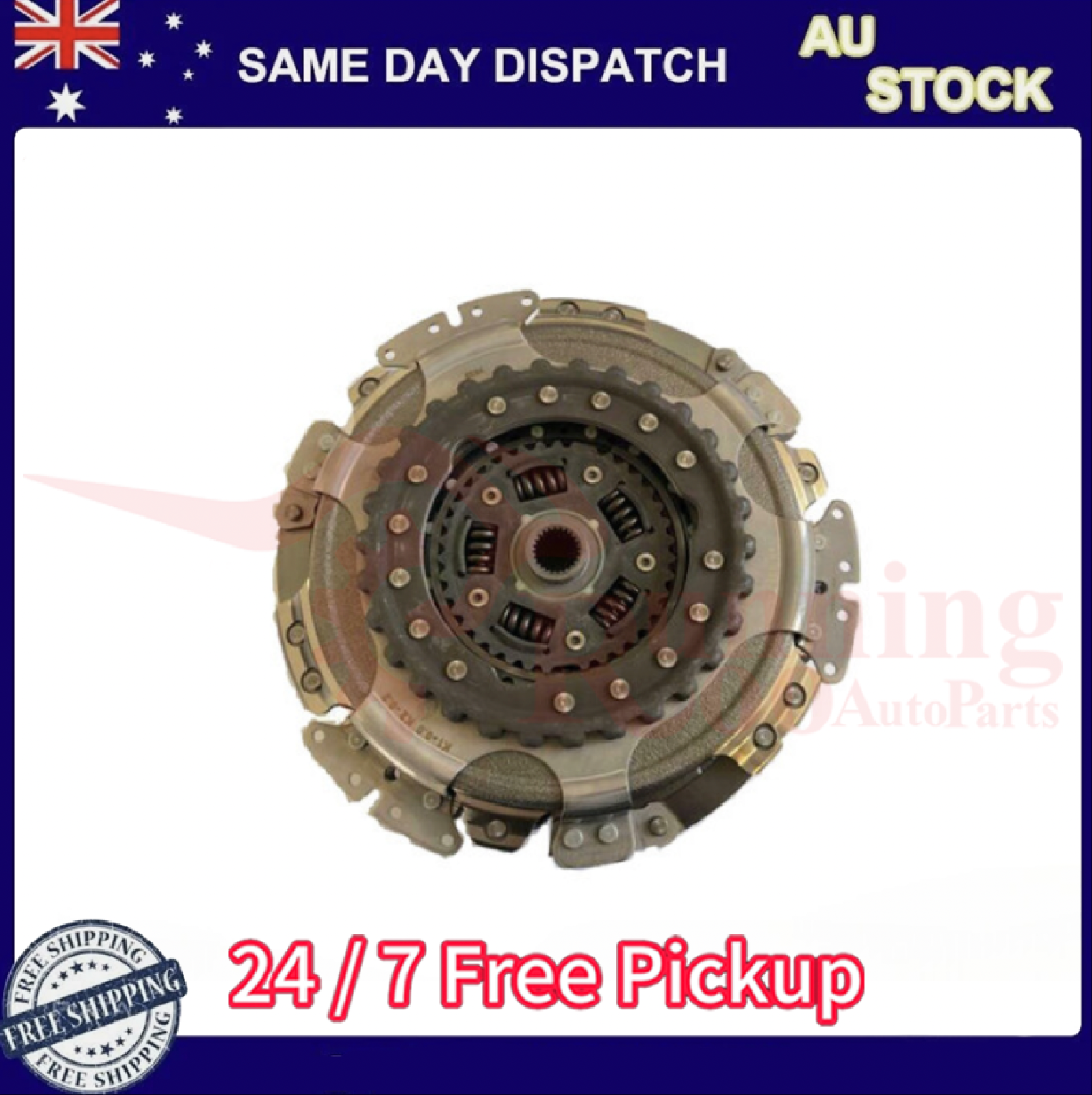
Watch what happens when a dry dual-clutch is damaged below, then browse the complete range on our eBay store.
Watch: VW dry dual clutch — what happens if the clutch is damaged?
You can also browse the full range here: RunningRoo Auto Parts on eBay Australia.
Not sure whether your judder is clutch or mechatronic? Our Aussie team can help you narrow it down before you order.
RunningRoo Auto Parts – Based in Melbourne, Australia 🇦🇺
Free 24/7 Pickup Available (by appointment)
Any questions? Call us anytime: 0425 890 125
Why Choose RunningRoo? Aussie Owned & Operated | Fast Shipping | Friendly Support
Frequently asked questions
Why does my DQ200 clutch overheat in traffic?
In stop-start driving the dry clutch slips repeatedly to pull away, generating heat faster than it can dissipate, which raises the clutch temperature.
What are the symptoms of a DQ200 clutch overheating?
Judder on take-off, a hot smell, a transmission warning, and the gearbox shifting differently in heavy traffic are the main signs.
Can an overheating DQ200 clutch be fixed?
If the clutch has only glazed slightly, a replacement clutch kit is the fix. If the mechatronic or actuator is also damaged, that may need attention too.
How much does a DQ200 clutch replacement cost?
In Australia a DQ200 clutch replacement is typically in the low-to-mid thousands, depending on the workshop and whether adaptation is included.
Is a DQ200 dry clutch worse than a wet clutch?
Not worse overall, but it manages heat differently. A dry clutch is more sensitive to sustained slipping, while a wet clutch is oil-cooled and more tolerant of repeated launches.
How do I stop my DQ200 clutch overheating?
Avoid prolonged creeping in traffic, ease off and let the car roll rather than stopping and starting, and avoid aggressive launches or holding the car on a hill with the accelerator.
Do I need to re-adapt the gearbox after a clutch replacement?
Yes. Basic settings and clutch adaptation are essential after a clutch replacement so the control module learns the new engagement points.
Still unsure what is causing your judder? Call us anytime and we’ll help you get to the bottom of it.
RunningRoo Auto Parts – Based in Melbourne, Australia 🇦🇺
Free 24/7 Pickup Available (by appointment)
Any questions? Call us anytime: 0425 890 125
Why Choose RunningRoo? Aussie Owned & Operated | Fast Shipping | Friendly Support
References
Key data in this article is drawn from the following official manufacturer sources:
- Volkswagen Group — DQ200 7-speed dry-clutch DSG technical documentation (gearbox codes 0AM / 0CW), clutch temperature management and dry dual-clutch description.
- Volkswagen Australia — DSG (DQ200) voluntary safety recall announcement, June 2013.