
By RunningRoo Auto Parts — written from the desk of our Product Manager
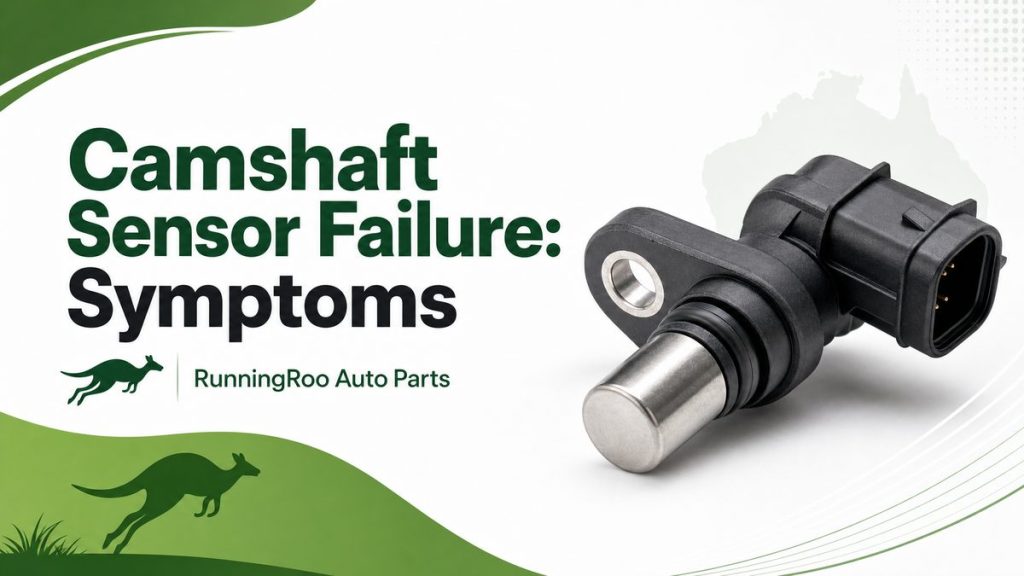
The camshaft position sensor tells the engine computer exactly where the camshaft is, so the fuel injection and ignition can be timed to each cylinder. When this sensor fails, the engine can run badly, stall or refuse to start altogether. It is a small, inexpensive part that is usually easy to reach, which makes it a satisfying DIY repair — provided you confirm it is actually the sensor and not the wiring, timing or a related component. This guide explains what the sensor does, how to recognise a failing one and how to replace it correctly.
RunningRoo Auto Parts – Based in Melbourne, Australia 🇦🇺
Free 24/7 Pickup Available (Contact 0425890125)
Any questions? Message or Call us anytime! We’re here to help.
Why Choose RunningRoo?
Aussie Owned & Operated | Fast Shipping | Friendly Support
What the camshaft position sensor does
The camshaft position sensor is a Hall-effect or magnetic sensor mounted near the camshaft sprocket or the end of the camshaft. It detects the passing of a reluctor tooth or a series of teeth and sends a signal to the engine computer, which uses it to synchronise fuel injection and, on many engines, the ignition timing. The crankshaft position sensor does a similar job at the crank, and the two signals are compared to confirm the valve timing is correct.
Because the sensor works in a hot, oily and vibrating environment, its internal electronics and its wiring degrade over time. When the signal becomes weak or intermittent, the engine computer can no longer determine the camshaft position reliably, and the symptoms appear.
The symptoms of a failing camshaft sensor
The most common symptoms are difficulty starting or an engine that cranks but will not fire, intermittent stalling, rough running or hesitation, and a loss of power. A failing sensor often sets codes such as P0340 to P0349, and because the crankshaft and camshaft signals are compared, a sensor fault can also surface as a timing-correlation code that is sometimes mistaken for a stretched timing chain.
In some cases the engine will run in a limp mode, or the fault will be intermittent and only appear when the engine is hot. The table below separates the camshaft sensor symptoms from the faults that are easily confused with them.
| Symptom | Likely cause | First check |
|---|---|---|
| Cranks, no start | Cam or crank sensor, fuel, spark | Scan codes; test sensor signal |
| Intermittent stalling | Cam sensor or wiring | Test sensor; check connector |
| P0340–P0349 code | Camshaft sensor circuit | Ohm/scope test; inspect wiring |
| Timing correlation code | Cam sensor or stretched chain | Compare sensor signals; check chain |
| Runs rough only when hot | Sensor breaking down | Test sensor warm |
How to test a camshaft position sensor
Start with a full scan to capture the exact code, then inspect the sensor’s connector and wiring for corrosion, chafing or a loose pin. A multimeter can check the sensor’s power, ground and signal, and on a magnetic sensor the winding resistance can be measured against specification. The most reliable test is an oscilloscope, which shows whether the sensor is producing a clean waveform as the engine is cranked, but for most owners the practical approach is to test the circuit and, if the wiring is sound, replace the sensor and re-test.
Because a camshaft sensor fault can mimic a stretched timing chain, it is worth having the timing correlation checked before condemning either part. If the cam and crank signals are in time and the sensor circuit is good, the sensor itself is the likely culprit.
Choosing a quality camshaft position sensor
A camshaft position sensor must produce the correct signal for the engine computer, so it needs to match the engine by OE part number and engine code. A quality aftermarket sensor is built to the same electrical specification and will read correctly from the first start, while a cheap, unbranded sensor can produce a weak or noisy signal that triggers the same fault codes it was meant to fix.
We recommend buying from a supplier who states the fitment clearly and backs the part with a warranty, and replacing the sensor with a known-good part rather than gambling on the cheapest listing. The part is cheap, but the diagnosis is the valuable part.
Replacing the sensor correctly
Most camshaft sensors are held by a single bolt and are accessible from the top or side of the engine. Disconnect the battery, unplug the connector, remove the old sensor, and fit the new one with its O-ring or seal. Check that the connector is clean and clicks home, then clear the codes and confirm the engine starts and runs normally.
The most common mistakes are damaging the wiring when unplugging a brittle connector, leaving the O-ring off, and replacing the sensor without first confirming the wiring and timing are sound. If the new sensor does not clear the fault, stop and investigate the circuit rather than replacing further parts.
Camshaft vs crankshaft position sensors
The camshaft and crankshaft position sensors work as a pair, but they measure different shafts and fail in slightly different ways. The crankshaft sensor tracks the crank’s rotation and is the primary timing reference for ignition and fuel, while the camshaft sensor identifies which stroke the engine is on so the injectors fire at the right time. A failed crankshaft sensor usually prevents the engine from starting at all, while a failed camshaft sensor often allows the engine to run but causes rough running, stalling or a no-start on some vehicles.
Because the engine computer constantly compares the two signals, a fault in either sensor can set a timing-correlation code that looks like a mechanical timing problem. This is why a camshaft sensor fault is so often misdiagnosed as a stretched timing chain, and why checking both sensor signals is an essential step before the timing is condemned.
The most common camshaft sensor fault codes
The P0340 to P0349 range covers the camshaft position sensor circuits. P0340 is a general camshaft sensor circuit malfunction, while P0341 indicates the camshaft signal does not match the crankshaft signal. On engines with multiple camshafts, the codes repeat for each bank and each intake or exhaust cam. A P0340 with a no-start points to the sensor or its wiring, while a P0341 that appears with a rattling timing chain is more likely to be genuine mechanical timing drift.
As with all sensor faults, recording the exact code and checking the wiring before replacing the part is the difference between a quick fix and an expensive misdiagnosis. A multimeter or scope test of the signal is the reliable way to confirm whether the sensor is the culprit.
A step-by-step camshaft sensor replacement
Replacing a camshaft position sensor is usually a quick job, and doing it in the right order avoids the mistakes that turn it into a frustrating one. Start by disconnecting the battery to avoid shorting the sensor circuit, then locate the sensor and photograph the connector and wiring route before unplugging anything. Unplug the connector carefully — on older engines the plastic can be brittle — and remove the single retaining bolt.
Withdraw the old sensor and compare it with the new one before fitting, because some engines use different sensors for the intake and exhaust cams and a visually identical but electrically different part will not work. Fit the new sensor with its O-ring or seal, torque the retaining bolt to the correct value, and reconnect the plug firmly until it clicks.
Reconnect the battery, clear the stored fault codes, and start the engine. Confirm the engine starts and idles smoothly, then take it for a short drive to make sure the code does not return. If the same code comes straight back, stop and check the wiring and the timing rather than replacing the new sensor.
Frequently asked questions
What are the symptoms of a bad camshaft position sensor?
Hard starting or a no-start, intermittent stalling, rough running, a loss of power and codes such as P0340–P0349.
Can a bad camshaft sensor cause a no-start?
Yes. If the engine computer cannot determine the camshaft position, it may refuse to fire the injectors, leaving the engine cranking without starting.
Is a camshaft sensor the same as a crankshaft sensor?
No. They measure the camshaft and crankshaft respectively, and the computer compares both signals. A fault in either can produce similar symptoms.
Can a camshaft sensor fault be mistaken for a timing chain problem?
Yes. A timing-correlation code can come from a failing cam sensor as well as a stretched chain, so the signals should be checked before condemning either.
How much does a camshaft sensor cost in Australia?
A quality aftermarket sensor is inexpensive and usually quick to fit. Always confirm fitment by engine code.
What does code P0340 mean?
It indicates a camshaft position sensor circuit malfunction. It can be caused by the sensor, its wiring or its connector, and needs a circuit test to confirm.
Can a bad camshaft sensor damage the engine?
It does not cause mechanical damage itself, but a wrong cam signal can make the engine run badly and, if confused with a timing problem, can lead to unnecessary and expensive repairs.
Can a camshaft sensor cause the engine to crank but not start?
Yes. On many engines the computer needs a valid camshaft signal to fire the injectors, so a dead sensor can leave the engine cranking without starting.
How do I tell whether it is the cam or crank sensor?
The fault code and a scope test of both signals are the reliable way. In general, a failed crank sensor stops the engine entirely, while a cam sensor fault often allows running with misfires or stalling.
Are aftermarket camshaft sensors reliable?
A quality aftermarket sensor matched to the engine code is reliable and a fraction of the dealer price. A cheap, unbranded sensor can produce a weak or noisy signal that repeats the same fault code.
Does a camshaft sensor need to be programmed after replacement?
On most vehicles, no — the sensor is a simple plug-in part and the engine computer reads it immediately. A few vehicles may require the fault codes to be cleared with a scan tool after fitting.
How long does a camshaft position sensor last?
There is no fixed interval — the sensor is designed to last for many years, but heat, oil contamination and vibration eventually wear it out, so it is replaced when it fails rather than on a schedule.
Shop the parts mentioned in this guide
- Camshaft Position Sensor 10456162 for Holden Commodore V6 3.8L VR–VY
- Camshaft Position Sensor for Holden Commodore VZ / VE / VF Gen4 6.0–6.2L V8 12591720
- Crankshaft Position Sensor 23731-EC01A for Nissan Pathfinder R51 / Navara D40 2.5L
- Throttle Position Sensor for Holden Jackaroo / Rodeo 08-22620-4P202
Watch on RunningRooAuto YouTube
- RunningRoo Auto Parts – trusted Melbourne parts support
- RunningRoo Auto Parts – product and fitment channel
RunningRoo Auto Parts – Based in Melbourne, Australia 🇦🇺
Free 24/7 Pickup Available (Contact 0425890125)
Any questions? Message or Call us anytime! We’re here to help.
Why Choose RunningRoo?
Aussie Owned & Operated | Fast Shipping | Friendly Support
Sources and further reading
- Crankshaft position sensor — Wikipedia
- Bosch — engine management and sensors
- RACV — car maintenance and repair guidance
- CarsGuide — Australian motoring advice
RunningRoo Auto Parts – Based in Melbourne, Australia 🇦🇺
Free 24/7 Pickup Available (Contact 0425890125)
Any questions? Message or Call us anytime! We’re here to help.
Why Choose RunningRoo?
Aussie Owned & Operated | Fast Shipping | Friendly Support