
By RunningRoo Auto Parts — written from the desk of our Product Manager
Variable valve timing faults are some of the most misdiagnosed problems in a modern engine. The VVT gear and the VVT solenoid sit in the same system, can produce the same cold-start rattle and timing codes, and yet need very different repairs. Replacing a healthy solenoid when the gear is worn, or the other way around, is a common and expensive mistake. This guide explains what each component does, how their failures differ and how to confirm the fault before spending money.
RunningRoo Auto Parts – Based in Melbourne, Australia 🇦🇺
📞 Free 24/7 Pickup Available (Contact 0425890125)
💬 Any questions? Message or Call us anytime! We’re here to help.Why Choose RunningRoo?
✅ Aussie Owned & Operated | 🚚 Fast Shipping | 🤝 Friendly Support
What the VVT gear and solenoid do
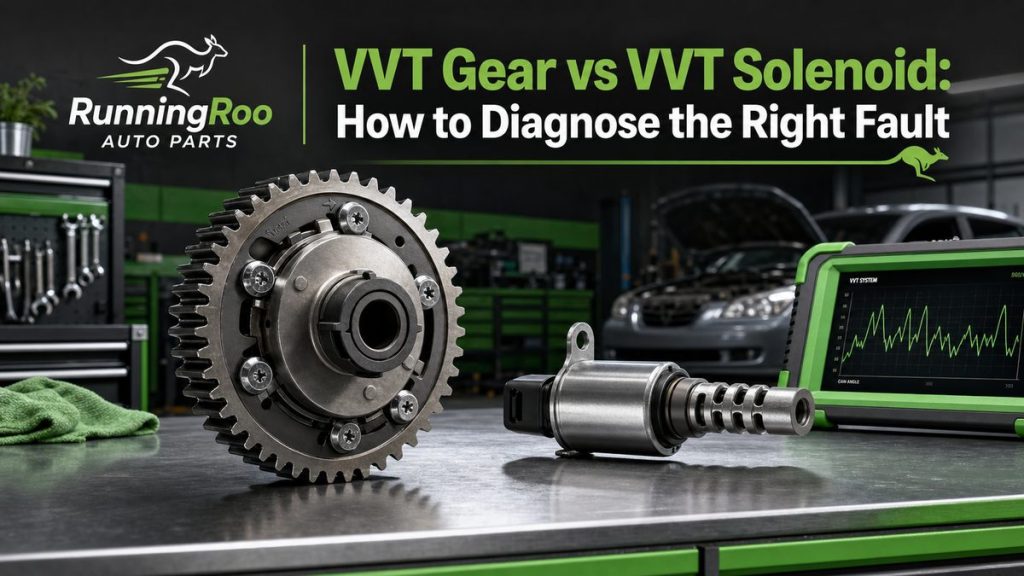
The VVT solenoid is an electrically controlled oil valve that directs engine oil into the VVT gear. The VVT gear, also called a cam phaser or camshaft adjuster, uses that oil pressure to advance or retard the camshaft. The solenoid is the control side, and the gear is the mechanical side.
When the system fails, the symptom often looks identical because both a blocked solenoid and a worn gear can prevent the camshaft from reaching the correct position.
How the symptoms overlap
The table below shows why the two faults are often confused.
| Symptom | Solenoid cause | Gear cause |
|---|---|---|
| Cold-start rattle | Low oil pressure or stuck valve | Worn lock pin |
| Timing over-advanced/retarded | Incorrect oil flow | Internal stop or vane wear |
| Rough idle | Solenoid duty-cycle fault | Camshaft timing drift |
| Reduced power and economy | Slow valve response | Gear cannot hold position |
Diagnosis: scan data first
The first step is a full scan for timing codes and live data. A solenoid fault often appears as an electrical circuit code, while a gear fault usually appears as a timing-correlation or camshaft-position code. Watching the desired and actual camshaft angle on a scan tool can show whether the system is trying to move but not reaching the target.
This live-data check is the cheapest part of the diagnosis, and it usually points the repair in the right direction before any parts are removed.
Oil pressure and oil condition
Before condemning either component, check the oil level and condition. The VVT system is hydraulic, so low oil, dirty oil or a blocked oil passage can cause the same symptoms as a failed solenoid or gear. An overdue oil change can starve the system and produce a rattle or timing code.
Fresh oil of the correct specification is sometimes the cheapest fix. If the symptom remains after an oil service and the live data still points to the VVT system, then the solenoid or gear becomes the likely fault.
How to confirm the solenoid
The solenoid can usually be tested by checking its electrical resistance, applying controlled power and listening or feeling for the valve to click, or using a scan tool to command it on and off while watching camshaft position. A solenoid that is open-circuit, shorted, stuck or slow to respond should be replaced.
Because the solenoid is usually easier to reach than the gear, it is often tested first. That is sensible, but it should be a test, not a guess.
How to confirm the gear
The VVT gear is usually confirmed when the solenoid and oil circuit are healthy but the camshaft still cannot reach or hold its target angle. A cold-start rattle that disappears after oil pressure builds, or a rattle that returns when the engine is hot, often points to a worn gear lock pin or internal stop.
On many engines, the definitive check is made once the timing cover is off and the gear can be inspected directly. Reaching the gear is the expensive part, which is why the diagnosis should be confirmed first.
When to replace both
On a high-mileage engine where the VVT system has failed, the solenoid and gear have usually been working in the same dirty oil for the same distance. If the gear is being replaced because of wear, renewing the solenoid at the same time is often wise, especially if the solenoid is inexpensive and accessible.
The labour is the expensive part of the job, so replacing a worn gear and a tired solenoid together avoids a second visit for the other component.
The cost difference between the two repairs
A VVT solenoid replacement is usually the cheaper and easier repair because the solenoid is often accessible from outside the timing cover. A VVT gear replacement is more expensive because reaching the gear usually means opening the timing system.
The table below gives indicative Australian figures.
| Repair | Parts cost | Labour | Ballpark total |
|---|---|---|---|
| VVT solenoid | $100–$300 | 1–2 hours | $250–$600 |
| Single VVT gear | $200–$400 | 2–4 hours | $600–$1,000 |
| VVT gear + timing chain kit | $600–$1,200 | 6–12 hours | $1,500–$3,000 |
Because the gear repair is the expensive one, the diagnosis should rule out the solenoid, oil and wiring first. Replacing a gear when a solenoid was the fault is the most expensive mistake in the VVT system.
The safe repair sequence
The safest repair sequence is: check the oil, scan the system, test the solenoid, confirm the wiring, and only then inspect the gear. On a high-mileage engine where the gear is confirmed worn, renew the chain, tensioner and solenoid while the timing system is open.
That order avoids the two most common VVT mistakes: replacing a healthy solenoid or replacing a healthy gear.
Key takeaways
The VVT gear and VVT solenoid are two different parts of the same hydraulic system, and they often produce the same symptoms. A scan and live-data check, followed by an oil and solenoid test, is the correct order of diagnosis. The gear is usually only confirmed once the simpler causes have been ruled out.
For the best value, confirm the fault before buying parts, and replace the solenoid and gear together where the engine is high-mileage and the timing system is already open.
Why the supplier matters
The best-value VVT parts come from suppliers who state the exact engine application, the intake or exhaust position and the part number. A supplier who confirms the engine code before dispatch is worth a small price difference, because that support prevents the most common VVT mistake — fitting the wrong part.
Avoid buying a VVT gear from a photo alone. Intake and exhaust gears often look nearly identical, so fitment must be confirmed by engine code, position and part number.
Quick reference: VVT diagnosis checklist
Use this list before replacing a VVT solenoid or gear:
- Read all timing and VVT-related fault codes.
- Watch desired versus actual camshaft angle on the scan tool.
- Check the oil level, condition and pressure.
- Test the solenoid electrically and with a scan command.
- Rule out wiring and connector faults.
- Inspect the gear directly if the timing system is already open.
Following this list prevents the most expensive VVT mistake: replacing the wrong part.
After the repair: confirmation checks
After a VVT solenoid or gear is replaced, clear the learned values where required and run the correct adaptation or basic settings. The engine should be scanned again to confirm the timing codes have not returned, and the oil level should be rechecked after the first run.
If the rattle or timing code returns, do not assume the new part is faulty. Recheck the oil, wiring and the other VVT component before opening the engine again.
Frequently asked questions
Can a VVT solenoid and VVT gear cause the same symptoms?
Yes, because both sit in the same hydraulic system and can prevent the camshaft from reaching the correct position.
How do I know if the solenoid or gear is faulty?
Use scan data, check oil pressure, test the solenoid and rule out wiring before suspecting the gear.
Can dirty oil cause a VVT fault?
Yes. Low or dirty oil can starve the system and cause rattle or timing codes that look like a failed part.
Should I replace the solenoid with the gear?
On a high-mileage engine it is often wise, because both have worked in the same oil and the labour is already spent.
Can I test a VVT solenoid at home?
A basic resistance and click test is possible, but scan-tool control and live data give a much better diagnosis.
Why is the gear harder to diagnose?
It is usually reached only after the timing cover is removed, so the simpler causes should be ruled out first.
Will an oil change fix a VVT rattle?
Sometimes, if the rattle was caused by dirty or low oil. If it returns, the solenoid or gear is the likely cause.
Is a VVT gear replacement expensive?
The part is usually modest, but the labour is high because reaching the gear often means opening the timing system.
Can a wiring fault mimic a VVT solenoid failure?
Yes. A damaged connector, open circuit or poor earth can produce the same codes, so the wiring should be checked before replacing the solenoid.
Should I replace the chain and tensioner with the VVT gear?
On a high-mileage engine, usually yes, because the chain and gear wear together and are reached by the same labour.
How long does a VVT solenoid replacement take?
It is often a one-to-two-hour job because the solenoid is usually accessible without opening the timing cover.
How long does a VVT gear replacement take?
It depends on the engine, but it is usually a multi-hour job because the timing cover must be removed.
Can I replace a VVT gear without the correct locking tools?
No. The timing must be set precisely, and an interference engine can be damaged if the timing is wrong.
What should I do if the VVT code returns after replacing the solenoid?
Recheck the oil, wiring and connector first, then watch live data and inspect the gear before opening the timing system.
Can a VVT gear fail without setting a fault code?
Yes, especially in the early stages when it only rattles on cold start, so the noise should be investigated even if no code is stored.
Shop the parts mentioned in this guide
- VVT Camshaft Gears (Intake & Exhaust) for Toyota Corolla 2007–2012 1.8L 2ZR-FE
- 2x Camshaft Adjusters for Mitsubishi Lancer EVO X 2.0 / ASX / Outlander 4B11
- CVVT Timing Camshaft Gear for Hyundai Veloster / Tucson / Elantra 24370-2B700
- Intake Camshaft VVT Actuator / Phaser for Toyota Camry 2AR-FE — eBay
Watch on RunningRooAuto YouTube
- RunningRoo Auto Parts – trusted Melbourne parts support
- RunningRoo Auto Parts – product and fitment channel
RunningRoo Auto Parts – Based in Melbourne, Australia 🇦🇺
📞 Free 24/7 Pickup Available (Contact 0425890125)
💬 Any questions? Message or Call us anytime! We’re here to help.Why Choose RunningRoo?
✅ Aussie Owned & Operated | 🚚 Fast Shipping | 🤝 Friendly Support
Sources and further reading
- Variable valve timing — Wikipedia
- BorgWarner — variable cam timing systems
- RACV — car maintenance and repair guidance
- CarsGuide — Australian motoring advice
RunningRoo Auto Parts – Based in Melbourne, Australia 🇦🇺
📞 Free 24/7 Pickup Available (Contact 0425890125)
💬 Any questions? Message or Call us anytime! We’re here to help.Why Choose RunningRoo?
✅ Aussie Owned & Operated | 🚚 Fast Shipping | 🤝 Friendly Support