
By RunningRoo Auto Parts — written from the desk of our Product Manager
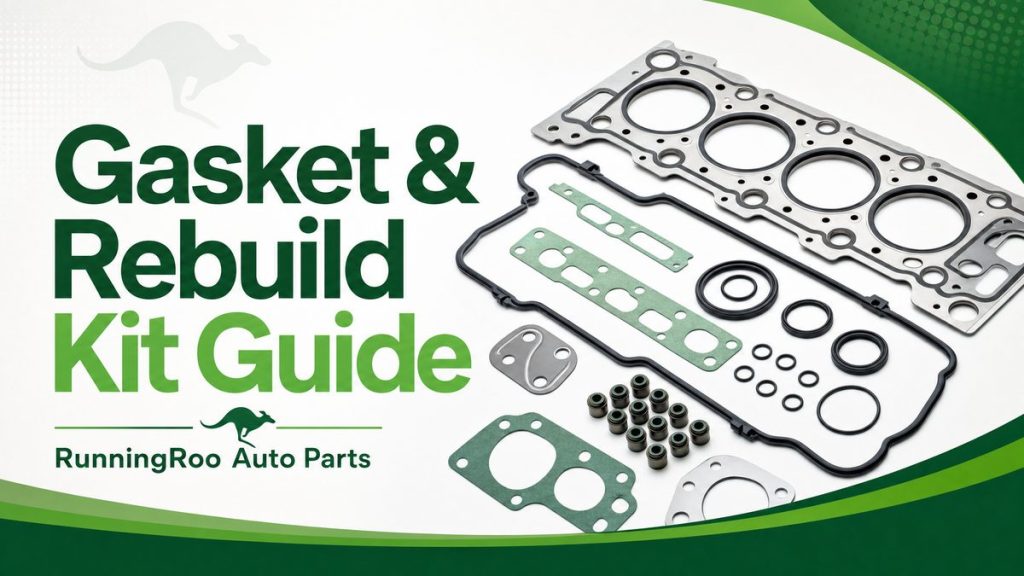
Almost every major engine repair — a head gasket, a timing chain job or a full rebuild — depends on one thing done right: the sealing. Gaskets and seals are the inexpensive parts that keep oil, coolant and compression where they belong, and choosing the wrong or incomplete set turns an engine job into a leaking nightmare. This guide explains the difference between gasket types, what a quality gasket set should include, and how to choose the right kit for the job you are doing.
RunningRoo Auto Parts – Based in Melbourne, Australia 🇦🇺
📞 Free 24/7 Pickup Available (Contact 0425890125)
💬 Any questions? Message or Call us anytime! We’re here to help.Why Choose RunningRoo?
✅ Aussie Owned & Operated | 🚚 Fast Shipping | 🤝 Friendly Support
The gaskets and seals in an engine
An engine is sealed by a collection of different gaskets and seals. The head gasket seals the cylinder head to the block and holds combustion pressure, coolant and oil apart. The timing cover gasket, oil pan gasket and cam cover gaskets seal the outer covers. Rubber and metal seals handle the crankshaft and camshaft ends, while O-rings and formed-in-place silicone seal the smaller joints and oil galleries.
Each type has a specific material and thickness that sets the clamping pressure and the seal. A quality gasket set matches the original specification for every piece, so the engine seals correctly the first time.
What a quality gasket set should include
A complete engine gasket set, or a top-end set, should include every gasket and seal you will disturb during the job — the head gasket, cam cover gaskets, intake and exhaust gaskets, valve stem seals, and the various O-rings and seals. A timing-related kit should include the timing cover gasket or the correct RTV sealant. The table below summarises the common kit contents.
| Kit type | Typically includes | Used for |
|---|---|---|
| Head gasket set | Head gasket, stem seals, cam cover, intake/exhaust | Head removal |
| Full gasket set | Everything above plus sump and timing seals | Engine rebuild |
| Timing cover gasket | Cover gasket or RTV sealant | Timing chain jobs |
| Oil gallery gasket set | Small O-rings and gallery seals | Specific oil leaks |
Choosing the right gasket kit
Match the kit to the engine by engine code and OE part number, and confirm exactly what is included before ordering. A cheap, incomplete set that omits a critical seal means the job stops halfway or leaks afterwards. A quality set from a reputable supplier is manufactured to the correct thickness and material, and includes the fasteners or sealant where needed.
For a rebuild, a full gasket set is the sensible choice, because replacing every seal while the engine is apart prevents the frustrating job of chasing one leak after another on an engine that has just been rebuilt.
Installing gaskets correctly
The two rules of gasket installation are clean surfaces and correct torque. Both mating surfaces must be clean, dry and oil-free, and the bolts must be torqued in the correct sequence and to the correct value. Where the manufacturer specifies a formed-in-place sealant, apply it as a continuous bead of the correct size and allow the specified cure time.
Reusing a compressed gasket is a false economy, because it has already taken a set and will not seal again. Always replace every gasket and seal you disturb, and use the correct one-time-use bolts where specified.
Gasket materials: MLS, composite and graphite
Head gaskets come in several materials. A multi-layer steel, or MLS, gasket is made of stacked steel layers with a coating and is the standard on modern engines, sealing high compression and the different pressures of oil and coolant. A composite gasket uses a fibre and metal core and is common on older engines, while a graphite gasket is softer and was used on some older designs.
The material must match the engine, because an MLS gasket needs a smooth, flat surface while a composite gasket tolerates slightly less-perfect surfaces. Using the wrong type can cause an immediate failure, so match the gasket to the engine by part number rather than guessing.
Head gasket failure symptoms
A failed head gasket shows itself in a few classic ways. Coolant and oil can mix, producing a milky residue in the oil or coolant. The engine can overheat, or lose coolant without an external leak. White smoke from the exhaust points to coolant entering the combustion chamber, while a misfire and rough running can come from compression leaking between cylinders.
Any of these symptoms warrants a compression or leak-down test and a check of the coolant for combustion gases before condemning the head gasket. Catching a head gasket early prevents the warped head and further damage that a long-running failure causes.
Torque and sequence
Gaskets only seal correctly when the fasteners are tightened in the right sequence and to the right torque. The manufacturer’s torque sequence spreads the clamping load evenly across the gasket, and on many engines the bolts are tightened in stages and then angle-tightened. Reusing old bolts where one-time-use bolts are specified leads to uneven clamping and a failed seal.
This is why a head gasket or rebuild job should always follow the workshop procedure for your engine, and why clean, flat surfaces and the correct fasteners are just as important as the gasket itself.
Frequently asked questions
What is a head gasket set?
It is a kit containing the head gasket and the other gaskets and seals disturbed during a cylinder head removal, such as cam cover and intake/exhaust gaskets and valve stem seals.
What is the difference between a head gasket set and a full gasket set?
A full gasket set includes everything in a head set plus the lower-engine gaskets and seals, such as the sump and timing seals, for a complete rebuild.
Can I reuse a gasket?
No. Gaskets take a set when compressed and will not seal reliably a second time. Always replace them.
How do I choose the right gasket kit?
Match the engine code and OE part number, and confirm the kit contents before ordering.
Do I need RTV sealant with a gasket?
Only where the manufacturer specifies it, usually at the corners and joints. Follow the design rather than substituting sealant for a gasket.
What are the symptoms of a blown head gasket?
Coolant and oil mixing, overheating, coolant loss without a leak, white exhaust smoke and a misfire.
Can I reuse head bolts?
Only if the manufacturer allows it. Many modern engines use one-time-use stretch bolts that must be replaced.
Key takeaways
A quality gasket set matched to the engine is the foundation of any successful head, timing or rebuild job. Clean surfaces, the correct gasket materials, and the correct torque sequence and fasteners are just as important as the gasket itself, and reusing old gaskets or bolts is a false economy.
Confirm the kit contents and engine fitment before ordering, and follow the workshop procedure for your engine. A complete, correctly fitted gasket set is what keeps oil, coolant and compression where they belong for the life of the repair.
How to confirm the right gasket kit
Gasket kits are engine-specific, and the same car model can use different engines across years, so confirm fitment by engine code and OE part number. Check exactly what the kit includes before ordering, because a head gasket set and a full gasket set are different, and a missing seal stops the job halfway.
Send the engine code, VIN and the original part number to the supplier, and confirm whether one-time-use bolts and the correct sealant are included or need to be ordered separately. A complete, correctly matched kit is the difference between a rebuild that seals and one that leaks.
A typical head gasket job step by step
The job starts with draining the coolant and oil, removing the intake and exhaust manifolds, the timing components and the camshafts or valvetrain as required, and then the cylinder head itself. The head and block surfaces are cleaned and checked for flatness, because a warped head will fail again even with a new gasket. The head may need machining before reassembly.
The new gasket is fitted dry or as specified, the head is lowered into place, and the bolts are tightened in the correct sequence, in stages and to the correct torque or angle. The timing is set, the manifolds refitted, and the coolant and oil refilled before the first start.
After the rebuild: run-in and checks
After a head gasket or rebuild, run the engine to temperature and check for leaks, correct coolant level and a stable idle. Some engines have a run-in procedure for the camshaft or piston rings, which must be followed to avoid damage. Recheck the torque of accessible fasteners after the first heat cycle if the manufacturer specifies it.
Watch the coolant level and oil condition over the following weeks, because any coolant loss or oil contamination after the job points to a sealing problem that needs attention. A properly assembled engine with the correct gasket set should stay dry and stable.
Do I need to machine the cylinder head for a head gasket?
It depends on the engine and the failure. Many modern engines require a flat, smooth surface for an MLS gasket, so the head should be checked for flatness and machined if warped.
What is the difference between a gasket and a seal?
A gasket seals between two flat surfaces, while a seal works on a rotating or sliding shaft. Both are renewed in a full rebuild.
Can I do a head gasket myself?
It is an advanced job requiring the correct torque sequence, timing tools and often machining. Most owners use a professional for a head gasket.
How long does a head gasket job take?
It is a major job, often a full day or more depending on the engine, because the head, timing and manifolds must all come off and be refitted to the correct procedure.
Do I need new coolant and oil after a head gasket job?
Yes. The coolant and oil are drained and must be replaced with the correct specification during the job, and any contamination should be flushed out.
Shop the parts mentioned in this guide
- Full Gasket Kit with Head Gasket for Toyota 1AZ Engine 04111-28143
- EA888 2.0T Engine Overhaul Rebuild Kit for VW / Audi A4 / A5 / A6 / Q5 CDN / CCZ
- Timing Cover Gasket 4792005AC for Dodge 2.7L / 3.5L V6
- Oil Gallery Gaskets 13533JK21A / 13533JK21B for Infiniti G35 / G37 / EX35 / FX35
Watch on RunningRooAuto YouTube
- RunningRoo Auto Parts – trusted Melbourne parts support
- RunningRoo Auto Parts – product and fitment channel
RunningRoo Auto Parts – Based in Melbourne, Australia 🇦🇺
📞 Free 24/7 Pickup Available (Contact 0425890125)
💬 Any questions? Message or Call us anytime! We’re here to help.Why Choose RunningRoo?
✅ Aussie Owned & Operated | 🚚 Fast Shipping | 🤝 Friendly Support
Sources and further reading
- Head gasket — Wikipedia
- Gasket — Wikipedia
- RACV — car maintenance and repair guidance
- CarsGuide — Australian motoring advice
RunningRoo Auto Parts – Based in Melbourne, Australia 🇦🇺
📞 Free 24/7 Pickup Available (Contact 0425890125)
💬 Any questions? Message or Call us anytime! We’re here to help.Why Choose RunningRoo?
✅ Aussie Owned & Operated | 🚚 Fast Shipping | 🤝 Friendly Support