
A DQ200 reinforced valve body can belong in a properly diagnosed repair, but it should not be the first answer to an unexplained electrical event. If your Volkswagen, Audi or Skoda developed a gearbox warning after a flat battery, difficult starting or a long period parked, the useful question is what the workshop has established about the power supply. This Australian buying guide explains how to organise that evidence before committing to a thickened mechatronic assembly. It is a parts-selection conversation, not a procedure for testing a live transmission connector.
The aim is to avoid buying an expensive hydraulic and electronic assembly for a problem that has not been isolated. Equally, a battery-related event should not be used to dismiss a genuine mechatronic defect. The two findings can coexist. RunningRoo can help confirm the offered part and supply arrangement once the vehicle identity and workshop findings are available; diagnosis of the vehicle remains a separate professional task.
What the manufacturer information actually establishes
Volkswagen's starter-battery information explains that the battery supplies the vehicle's electrical components and identifies voltage falling under load among reasons for assessment. Volkswagen: starter batteries and battery servicing Its original seven-speed DSG presentation describes an electrically powered hydraulic pump within the mechatronic system. Volkswagen: original seven-speed DSG design, 2008 Those points explain why electrical supply deserves attention in a repair investigation. Neither document establishes that a particular warning means the battery is defective, or that an aftermarket reinforced housing is the correct repair.
For the buyer, the practical distinction is between a symptom and a confirmed cause. “Gearbox warning appeared” describes an event. “The workshop checked the applicable supply circuit and identified a specific failure” describes evidence. Ask for the second kind of statement before converting the first into a parts order. There is no universal voltage number in this guide because the test method, operating conditions and manufacturer's specifications need to match the actual vehicle.
Build a useful timeline before the appointment
Write down when the first warning appeared, whether starting was normal, and whether anyone had charged, replaced or disconnected the battery. Include dates of recent accessory installation, vehicle storage and previous repairs. Report what happened without deciding what caused it. For example, “warning appeared on the first start after three weeks parked” gives the technician a reproducible context. “Battery destroyed the gearbox” makes a conclusion that the available information may not support.
If a roadside provider attended, keep the written report and any measurements they supplied. A short note that the car restarted is useful, but it is different from a full investigation of an intermittent fault. Tell the workshop whether the warning disappeared, returned immediately or reappeared on a later journey. Do not repeatedly drive a car with unresolved warnings to collect more examples. Follow the vehicle's instructions and arrange assistance when its safe operation is uncertain.
Ask for an electrical assessment with a defined outcome
A useful workshop request is: please establish whether the electrical supply is suitable for the manufacturer's diagnostic process before recommending a replacement mechatronic unit. The technician should choose the required battery, charging, connection and circuit checks using the vehicle's service information. The buyer does not need a list of connector pins, improvised test loads or a collection of numbers copied from a different gearbox. The buyer needs the conclusion, its basis and any unresolved limitations.
Ask whether the findings were recorded while the reported problem was present. If the car behaved normally during the visit, the report should say so. A result collected under different conditions may still be valuable, but its limits matter. Request the original scan report and relevant observations before codes are cleared as part of the workshop's process. That creates a more useful starting point if the fault later returns or a second specialist becomes involved.
| Information to request | What it contributes | What it does not prove |
|---|---|---|
| Battery or roadside report | Records the starting point and work already performed | That the mechatronic unit is healthy |
| Workshop supply assessment | Shows electrical checks were considered for this vehicle | That every hydraulic fault is excluded |
| Original scan report | Preserves fault wording and recorded context | That the named component must be replaced |
| Mechatronic identification | Connects the diagnosis to the fitted assembly | Universal interchangeability across DQ200 versions |
| Written repair recommendation | Defines which findings justify the proposed parts | A guarantee against unrelated future faults |
Separate three possible purchasing outcomes
The first possible outcome is that the workshop resolves a supply-related problem and does not recommend a valve body. In that situation, there is no reason to order a reinforced assembly merely because it was on the original shortlist. Keep the report and follow the workshop's advice about further observation. Good parts selection includes recognising when the correct purchase is no purchase at all.
The second outcome is that supply checks are satisfactory and evidence supports a mechatronic repair. Now the discussion can move to the exact replacement assembly, its hardware identity and the agreed preparation. The third outcome is mixed or incomplete evidence. There may be a confirmed electrical repair plus an unresolved gearbox concern. Ask what additional assessment is necessary and whether the parts decision can wait. Treat “not yet established” as a valid status instead of filling the gap with a product assumption.
Where the RunningRoo reinforced assembly fits
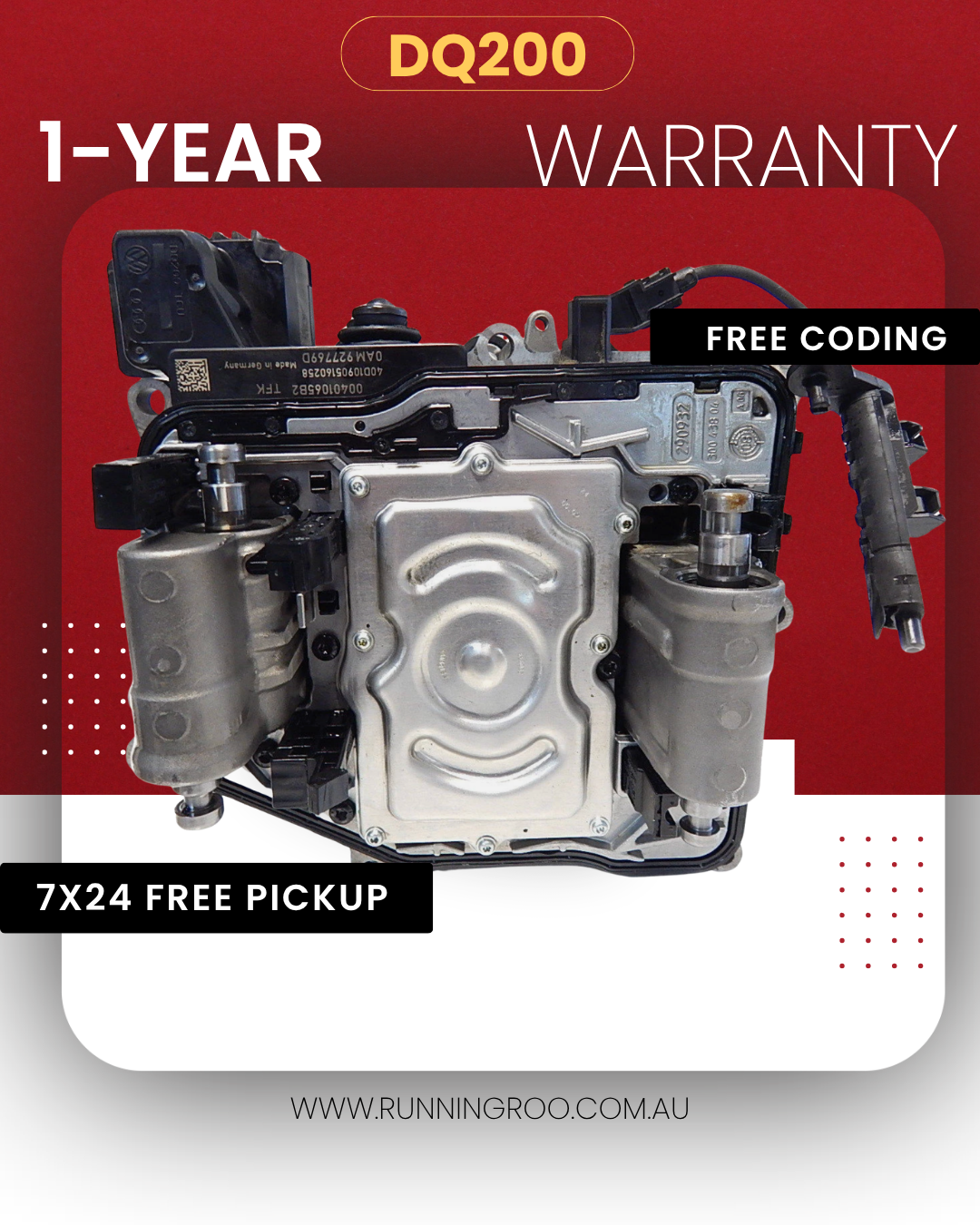
The linked RunningRoo offer is a DQ200/0AM reinforced thick valve body and TCU package, advertised with controller reference 0AM927769D. Its description also includes 0AM325065S. These references are starting points for checking the offered assembly, not permission to swap every unit carrying a similar number. A gearbox family name, model badge or photograph is not enough to establish compatibility with the controller and software arrangement in your car.
There is an important supply detail to settle before payment. The product title refers to programming, while its description asks for VIN information when programming is required and includes wording about an unprogrammed unit. Obtain written confirmation of what will be supplied for your order. Ask who prepares the controller, what information they require, and which vehicle-side work remains with the installing workshop. Do not infer a universal plug-and-play service from the title.
Send identification that can be checked
Provide the VIN, engine code, transmission identification and clear photographs of accessible labels supplied by the workshop. Include the complete OE reference, including its final letter, rather than an abbreviated number typed from memory. If the vehicle has had a replacement gearbox or controller, mention that history. The current installed hardware needs to be reconciled with the vehicle record, particularly where an earlier repair changed the original configuration.
Keep the diagnostic conclusion separate from the identification photographs. One establishes why a repair is recommended; the other helps establish which part belongs in that repair. Combining them in a single enquiry is efficient, but neither replaces the other. A good message might state the vehicle identity, the workshop's conclusion, the current module reference and the exact linked offer being considered, followed by a request to confirm the supply and programming scope.
Do not turn a housing upgrade into an electrical promise
The word reinforced describes the advertised housing-related product feature. It is not evidence that the assembly can tolerate an unresolved electrical problem, correct damaged wiring or remove the need for proper diagnostic conditions. Ask the workshop to complete any required vehicle-side work as part of the agreed repair. Purchasing a different housing should never become the reason an identified supply fault is left unresolved.
Likewise, a photograph of a thicker wall is not an electrical test report. It may help illustrate the component being marketed, but it cannot establish communication integrity, calibration suitability or the condition of another component on the car. When comparing offers, place structural claims, electronic preparation and vehicle diagnosis in separate columns. That makes it easier to see what each supplier is actually promising and what still needs independent confirmation.
Quote the job in stages
Ask for an assessment stage, a parts stage and a completion stage. The assessment stage should explain the identified fault and outstanding uncertainty. The parts stage should name the exact assembly and preparation arrangement. The completion stage should describe the workshop's applicable manufacturer checks and the evidence you will receive at collection. A staged quote makes it possible to approve informed work without pretending that every unknown has already been resolved.
If the car is needed for work or family transport, discuss timing before scheduling installation. Confirm physical stock, any preparation lead time and the workshop appointment together. A parcel dispatch estimate is not a completed-repair date. Melbourne customers can ask RunningRoo about local pickup in Blackburn VIC by appointment; interstate customers can confirm dispatch and delivery options after the exact supply arrangement is settled. Friendly local support is most useful when it is connected to a clearly identified order.
A practical example without a remote diagnosis
Consider an owner whose car displayed a gearbox warning after needing roadside starting assistance. One approach is to order a reinforced mechatronic unit immediately and hope it addresses everything. A more useful enquiry asks the workshop to document the electrical assessment and determine whether a separate transmission fault remains. This example does not suggest that roadside starting caused damage, or that a new battery will cure the gearbox. It shows how to avoid jumping over the evidence needed for a purchase.
If the workshop ultimately recommends the linked assembly, send RunningRoo the resulting identification and repair scope. If the workshop instead recommends further investigation, preserve the product enquiry without treating it as an approved order. Either result is progress because the next action is supported by a finding. The value of the process is a better matched repair decision, not a promise that one component will solve every symptom.
Records worth keeping after the repair
Keep the original fault report, the electrical assessment, the final invoice and the replacement assembly identification together. Record what preparation was supplied with the part and what the workshop performed on the vehicle. These documents help a future technician distinguish an old electrical event from a new complaint. They also give the owner a clearer account than an invoice that simply says “DSG repaired”.
At collection, ask the workshop to explain its conclusion in ordinary language. Which problem was confirmed? Which work addressed it? What remained untested or outside scope? If a warning returns, follow the vehicle's instructions and contact the workshop with the new details. Avoid assuming that every later warning proves either the battery or the replacement assembly was responsible. The repair record provides context for another assessment; it is not a substitute for one.
Related RunningRoo video
DQ200 DSG Mechatronic Diagnosis, Replacement & Adaptation | RunningRoo. This channel video provides related educational context. It is not proof that the filmed component is the exact supplied item, a vehicle-specific diagnosis or a substitute for current manufacturer procedures.
Frequently asked questions
Does a flat battery mean I need a DQ200 reinforced valve body?
No. A flat-battery event is useful history, not a valve-body diagnosis. Have the electrical supply and gearbox complaint assessed professionally. Only order the replacement assembly when the workshop has a reason to recommend it and the exact hardware and supply arrangement have been confirmed.
Can I use one voltage reading to rule out an electrical problem?
This guide does not provide a universal pass value. Ask the technician to use the correct manufacturer procedure and record the relevant conditions. A number without its test context is less useful than a documented assessment explaining what was checked and what remains uncertain.
Will a reinforced housing fix poor electrical connections?
Do not buy it on that assumption. Housing-related product claims and the vehicle's electrical condition are separate matters. Ask the workshop to address any identified connection or supply issue rather than expecting a different assembly to compensate for it.
Is programming automatically included?
Confirm the arrangement in writing. The linked offer's title and descriptive wording need to be reconciled for your order. Provide the VIN and fitted module details, then establish the supplied preparation and any installation, coding or commissioning work required at the vehicle.
Can RunningRoo diagnose my car from the warning message?
A warning description helps start an enquiry but cannot replace examination of the vehicle. RunningRoo can assist with the product offer, identification questions and supply arrangements. A qualified workshop should establish the fault and the repair procedure before parts are selected.
Can I collect the confirmed part in Melbourne?
Ask RunningRoo about Blackburn VIC pickup by appointment after stock and preparation are confirmed. Australian-operated support and fast dispatch subject to availability are also available for a properly identified order. Call 0425 890 125 to discuss the linked product and the details your workshop has supplied.
Related RunningRoo reading: What Is DQ200 Lost Communication with TCM?. That article addresses a related but separate question or application; it does not establish interchangeability with this product.
Sources and scope
Offer and stock information checked on 13 November 2026. Retailer descriptions identify the offered contents; the manufacturer sources support the technical points attributed to them within their stated market and model scope. The purchasing examples and suggested questions are editorial guidance. Use current vehicle-specific manufacturer information and professional diagnosis for the actual repair.