
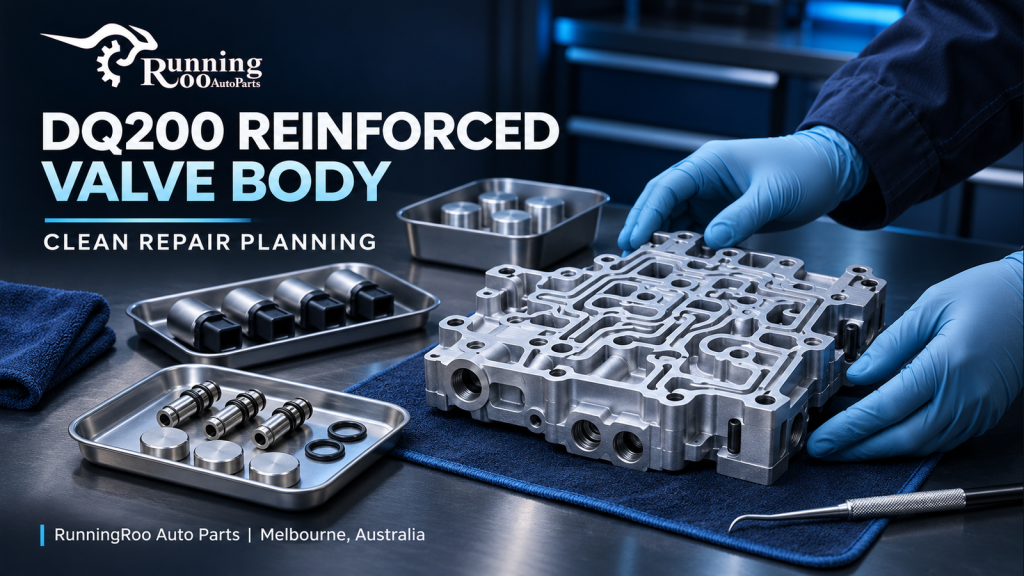
Planning a DQ200 reinforced mechatronic repair involves more than identifying the replacement housing. The workshop also needs a clear approach to cleanliness, component identity and any unexpected contamination found during the job. A thickened valve-body description does not remove those responsibilities. For Australian owners comparing repair proposals, the useful question is how the installer will protect the confirmed assembly and respond if the condition of the old system changes the repair plan.
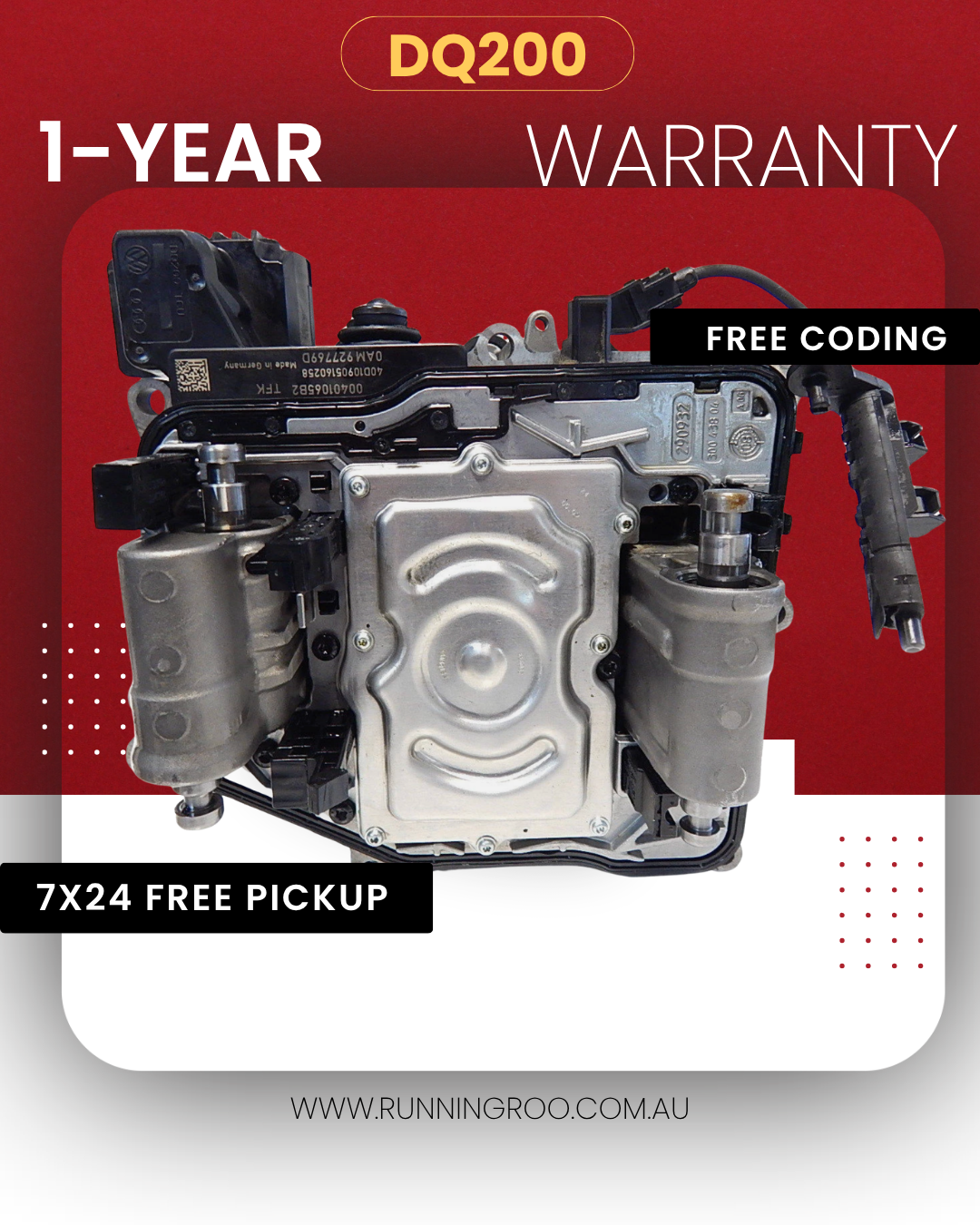
This is a workshop-planning guide, not a valve-body cleaning recipe. It does not specify solvents, flushing methods, fluid quantities or disassembly steps. Those details must come from current manufacturer information for the actual transmission and the supplied assembly. The emphasis here is on communication: what to agree before work begins, which findings deserve a pause and how to keep the replacement product separate from assumptions about the rest of the vehicle.
The technical boundary behind the planning
Schaeffler's DQ200 training material identifies separate oil circuits for the mechatronic unit and mechanical gearbox. That design distinction matters when discussing a concern loosely described as “dirty DSG oil.” The workshop must identify which area it is discussing rather than treating every fluid observation as a description of one common circuit. The training document is background information, not permission to apply a universal fluid or cleaning procedure. Schaeffler: VW DSG technical training; DQ200 circuit background, not a universal repair procedure
LuK's manufacturer-authored dry double-clutch repair guide also emphasises skilled personnel, appropriate equipment and current repair instructions. Its general repair guidance includes cleaning dirty transmission components before new parts are installed. This older guide concerns its specified clutch repair context; it should not be turned into a current universal mechatronic overhaul method. The article draws only the general planning lesson that the correct procedure and controlled working conditions need to be established before repair. LuK/Schaeffler: 2012 dry double-clutch repair guide, manufacturer-authored document hosted by Oscaro; general professional-repair context only
For the customer, these distinctions lead to a practical request: ask the workshop to describe its repair scope and the source of its vehicle-specific procedure. A clean-looking bench photograph cannot establish that an internal assembly has been assessed correctly. Likewise, a dark fluid photograph alone cannot identify the cause, extent or suitable remedy. Ask the professional to explain what was actually observed and what further assessment it requires.
Define what is arriving before opening anything
The linked RunningRoo offer is described as a DQ200 0AM thickened valve-body mechatronic assembly with TCU and a programming-related title. Confirm the supplied form, included components and agreed preparation before the workshop begins. Do not assume that a photographed bare housing, a seal kit and an assembled mechatronic unit describe the same delivery. Product photographs help identify the offer, but a written packing and supply description should settle the order.
Ask whether the installer expects to receive an assembled replacement or to carry out a component-level repair. Those are different work scopes. If the supplier sends a prepared assembly, do not assume it should be opened for an informal inspection. If a component-level job is proposed, the qualified repairer must establish the appropriate procedure, equipment and assessment criteria. The owner should not authorise improvisation simply because a reinforced housing appears straightforward in a video.
The programming arrangement must also be explicit. A word in the listing title does not resolve what information is required, what preparation is included or what work remains after installation. Keep these questions in the same written enquiry as the hardware scope. That prevents a workshop from receiving a physically suitable-looking part while discovering that a separate, essential part of the planned service was never agreed.
Keep diagnosis and contamination observations distinct
If a workshop reports debris, residue or unexpected fluid condition, ask it to record the location and observation precisely. “Contamination found” is a starting point, not a complete diagnosis. The relevant follow-up may depend on where the material was seen and which part of the assembly is involved. The article does not identify a cause from colour, texture or a photograph, and neither should an owner attempting to interpret the job remotely.
Ask for the observation to be recorded before the proposed remedy obscures the original condition. A dated photograph with a component label and a short workshop explanation is more useful than an unlabeled close-up. The owner need not handle the material or collect a sample personally. If examination is appropriate, the workshop can decide how to preserve information using its professional process and applicable handling requirements.
Keep the original symptom on the record as well. A new observation during dismantling may change the scope, but it should not erase why the vehicle was presented. The repair file should show the sequence: reported concern, diagnostic findings, work authorised, additional observation and revised recommendation. This makes it possible for the owner to understand why the initial parts plan may need to change without assuming that every discovery proves the same failure.
| Planning point | Question to settle | Useful record |
|---|---|---|
| Supplied assembly | What exactly will arrive? | Written order and packing description |
| Procedure | Which current instructions govern the work? | Workshop reference for the exact transmission |
| Unexpected material | Where was it found and what is confirmed? | Dated labelled observation |
| Scope change | Does the finding affect the planned replacement? | Revised recommendation before proceeding |
| Part identity | Which unit belongs to which vehicle? | VIN, OE references and job number |
| Completion | What checks were performed under the procedure? | Final workshop report |
Agree on a pause point for unexpected findings
A useful authorisation includes a point at which the workshop contacts the owner before expanding the job. For example, if an unexpected condition makes the planned assembly replacement insufficient or inappropriate, the workshop should explain the finding and revised recommendation. This does not mean the owner must make a technical judgement alone. It means the commercial approval should follow a clear professional explanation rather than an assumption that the original parts order covers every possible discovery.
Ask what information the workshop wants from RunningRoo if the scope changes. It may need confirmation of supplied contents or identification details before proceeding. Provide one order reference and one responsible contact so the enquiry stays coherent. Avoid sending different interpretations of the same finding to several people and treating the first quick reply as a final diagnosis. The attending repairer has the vehicle and should lead the technical assessment.
Do not make an improvised flushing or chemical-cleaning request based on general online advice. The correct response is a procedure question for the qualified workshop. This guide deliberately provides no additive recommendation or solvent list. “Clean it thoroughly” is not sufficiently specific to authorise a method on a complex assembly. The workshop should be able to explain the proposed work within its current technical information and the supplier's agreed requirements.
Separate old parts, new parts and paperwork
From a job-management perspective, keep the replacement order clearly identified with the vehicle and work order. Packaging labels, supplier references and any agreed preparation details should remain available to the installer. The objective is traceability, not decorating a bench. A component from another job should not become the comparison reference merely because it looks similar or shares a short part-number prefix.
Ask the workshop how it records removed components that are relevant to the diagnosis. Whether items are retained or returned depends on the agreed arrangement, but their identity should not be lost before the owner receives an explanation. If a supplier assessment becomes necessary, obtain instructions before sending anything back. A useful return enquiry includes the order number, vehicle identity and workshop report rather than an unlabelled assembly accompanied by a brief message saying it did not work.
The same discipline applies to photographs. A supplier product picture shows the advertised offer; a workshop photograph shows a particular observed item. Keep those categories clear. Do not attach an illustrative cover image to a repair file as though it shows the fitted component. RunningRoo's editorial images are intended to introduce the subject, while the actual product listing and the workshop's own records support the specific order.
The owner can improve communication without doing the repair
Owners can contribute accurate history, complete identifiers and prompt decisions about clearly explained scope changes. They do not need to remove covers, handle fluid or inspect internal parts. Before the appointment, prepare the VIN, engine code, transmission identification and OE references available from the workshop. Add previous repair invoices and a short description of the current concern. Mark anything uncertain rather than filling it in from a similar car online.
If the vehicle has already been worked on elsewhere, tell the current installer what was changed and provide the paperwork. This avoids treating an unknown prior intervention as a factory condition. If the owner only has a verbal account, label it as such. A practical repair file can contain both confirmed records and unanswered questions, provided the distinction remains visible to everyone making decisions.
For a Melbourne customer, appointment pickup from RunningRoo in Blackburn can help coordinate a confirmed parts order with the workshop booking. For an interstate customer, arrange an agreed recipient and contact person. Fast dispatch is subject to stock and any preparation already agreed. Neither collection nor shipping speed should determine the technical scope; the identification and repair plan should be settled first.
A clean repair plan is not a durability guarantee
Correct handling and an organised procedure are important parts of professional work, but they do not justify an unlimited-life promise. This article does not quantify the durability of the reinforced housing or claim that it eliminates future transmission faults. It also does not imply that any particular workshop has failed to follow proper practice. The purpose is to help the customer ask precise questions and recognise the boundaries of the available evidence.
The supplier's responsibility for describing the product and the installer's responsibility for assessing the vehicle need to be stated clearly. If a proposal relies on a claim that the replacement solves every possible mechatronic or gearbox problem, ask for the claim to be narrowed to the diagnosed requirement. A specific repair objective is easier to understand and document than a broad assurance that everything will now be stronger or trouble-free.
At completion, request a report describing the work performed and the checks made under the applicable procedure. Keep the fitted-unit identity and any relevant findings about removed parts. If an issue remains, record it accurately rather than presenting the job as complete because a new assembly has been installed. The final report should distinguish the supplied part from the outcome of the whole repair.
An illustrative workshop conversation
An owner asks for a reinforced DQ200 unit after an initial assessment. Before ordering, the workshop confirms the vehicle identification and explains whether it wants an assembled replacement. During the work, it observes something that needs further investigation. Instead of continuing under the original assumption, it documents the finding and contacts the owner with a revised recommendation. RunningRoo is asked only for the product and supply information relevant to that decision.
This example is deliberately procedural. It does not claim that a particular material was present or that a particular cleaning action would solve it. Its value is in the decision points: identify, agree, observe, document and reassess when necessary. That approach leaves the technical judgement with the professional who can inspect the actual vehicle and consult current manufacturer information.
For the owner comparing suppliers, the best enquiry therefore combines accurate fitment information with a clear description of what the workshop intends to receive. RunningRoo can discuss the linked product, confirmed stock and practical supply arrangements. The workshop must determine whether the application and condition support the proposed repair. Keeping both roles clear supports an efficient order without overstating what a reinforced housing alone can achieve.
Related RunningRoo video
RunningRoo: DQ200 mechatronic assembly and testing. This is related educational context, not confirmation that the filmed part is the exact supplied item or that its procedure applies to this engine or transmission. Use current manufacturer information and professional diagnosis for the actual vehicle.
Frequently asked questions
Does a thicker housing make contamination irrelevant?
No such conclusion is supported by the housing description. The workshop still needs to assess the vehicle and follow the current procedure for the exact transmission and supplied assembly. A physical feature of one component does not replace the broader repair assessment, correct identification or controlled working practices.
Should I ask for a universal DSG flush before fitting the unit?
Do not prescribe a generic method from this article. Ask the qualified workshop which procedure applies to the actual assembly and its findings. The mechatronic and mechanical gearbox must be identified correctly in the discussion. Fluid, cleaning and repair instructions should come from current applicable technical information, not a general parts guide.
Can a photograph establish the cause of debris?
A photograph can document an observation, but it cannot by itself establish a complete diagnosis. Ask the workshop to identify the location, describe what is confirmed and explain the proposed next assessment. Keep the original symptom and diagnostic findings with that record so the repair history remains understandable.
Should the new assembly be opened to check it?
Confirm the supplied form and inspection requirements with the supplier and installer before handling it. Do not assume a prepared assembly should be opened for an informal inspection. The scope of any component-level work must be agreed and performed by a qualified repairer following appropriate current information.
What happens if the workshop changes the repair plan?
Ask for the finding and revised recommendation before approving additional scope. Inform RunningRoo promptly if the required product or preparation changes. Use the same order and vehicle references in every discussion. This avoids treating an earlier parts confirmation as approval for a different repair requirement.
How do I arrange a confirmed replacement order?
Send RunningRoo the VIN, engine code, transmission and OE identifiers, plus the workshop diagnosis and required supply scope. Call 0425 890 125 for friendly support, current availability and Blackburn pickup by appointment. Australian dispatch can be arranged once the correct assembly and any preparation are agreed.
Related reading: DQ200 Upgraded Valve Body Handover Australia: A Workshop Acceptance Checklist. This guide covers a separate question or package; the link does not establish component interchangeability.
Sources and scope
Product offer and stock status checked on 12 November 2026. Retailer descriptions identify the offered parts; manufacturer material supports only the technical points attributed to it. Workshop planning examples are editorial guidance, not vehicle-specific procedures. Current manufacturer information for the actual vehicle takes priority.