
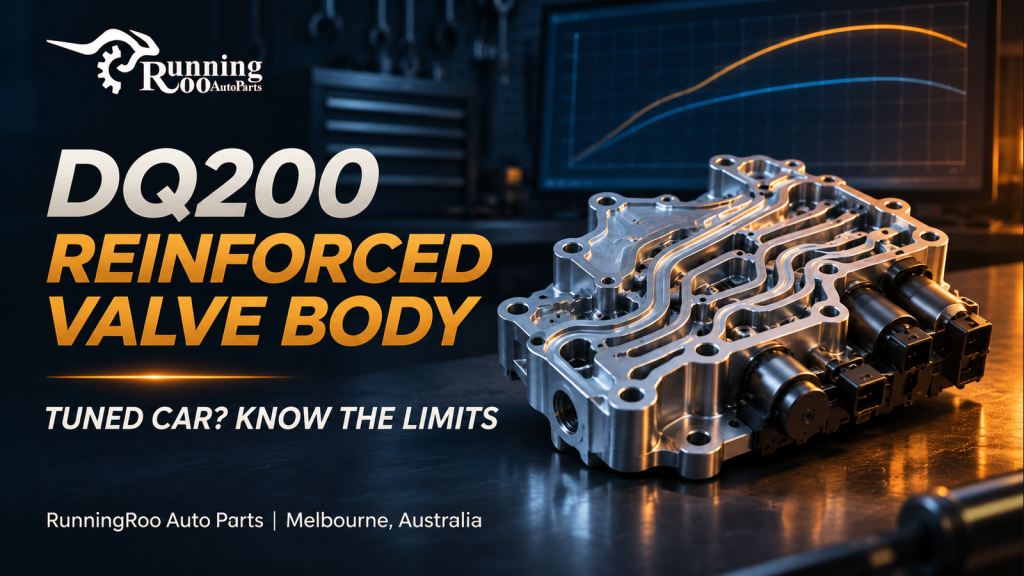
A DQ200 thickened valve body is a component description, not a new torque rating for a tuned car. If an Australian workshop is considering the RunningRoo reinforced mechatronic assembly for a modified vehicle, the parts discussion needs to include the vehicle's present specification as well as its original identity. A housing change alone is not evidence that an entire transmission can reliably handle a particular remap, driving programme or competition use.
This guide addresses a narrow question: what should a buyer establish when a reinforced DQ200 assembly is being considered for a car whose engine or transmission software may have changed? It does not recommend tuning, supply a safe power target or promise a performance improvement. It gives owners and workshops a way to communicate the actual application before selecting a part, without confusing a repair component with a tested drivetrain upgrade package.
What the original design information actually tells us
Volkswagen's 2008 introduction of its seven-speed DSG describes a dry dual-clutch transmission for engines producing up to 250 Nm. That is historical manufacturer design context. It is not a fresh rating for every later variant, an assessment of an individual used gearbox or proof of the capacity of the RunningRoo product. The vehicle's exact version and current manufacturer information still matter. Volkswagen 2008 seven-speed DSG introduction; historical original-system design context only
The important purchasing distinction is between a published original-system description and evidence for a modified application. A supplier would need relevant, specific evidence to support an increased capacity claim. A photograph of thicker material, a different casting or a customer report does not supply that evidence by itself. This article therefore does not assign the reinforced assembly a higher torque number or treat any advertised engine output as an approved operating limit.
Nor should the historical figure be used as a simple diagnostic threshold. It does not tell an owner that a fault must occur above a particular number or cannot occur below it. Condition, correct identification and the workshop's findings are separate considerations. Use manufacturer documentation to understand the original context, then ask qualified professionals to assess the actual vehicle rather than attempting to calculate a safe repair from a single headline specification.
Separate the housing, controller and complete driveline
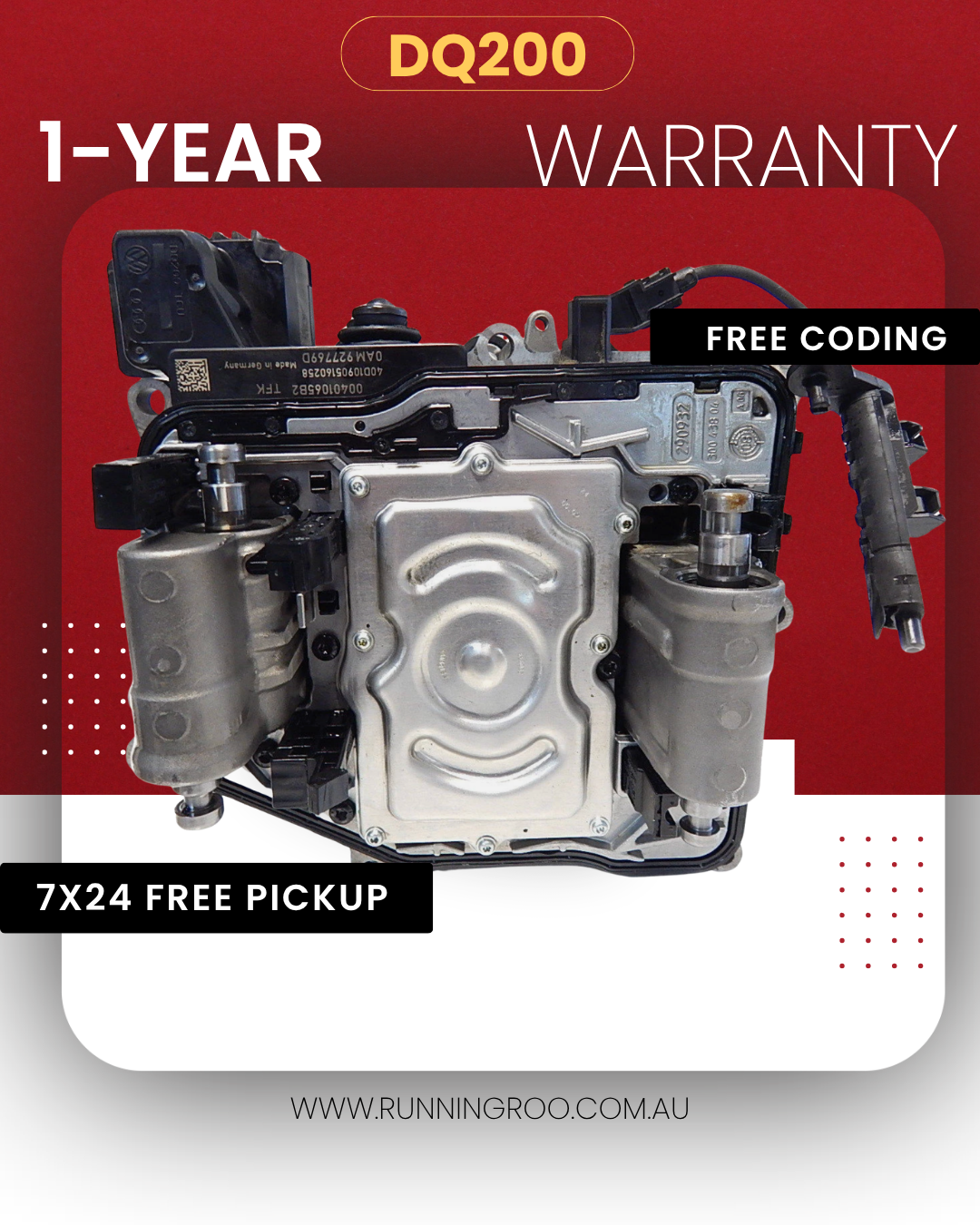
The RunningRoo listing is an offer for a DQ200 0AM mechatronic assembly described with a thickened valve body and TCU. That retail description is narrower than the entire transmission, and much narrower than the complete vehicle. A claim about a housing cannot automatically be extended to clutches, gears, mounts, engine calibration or other parts. The buyer should ask exactly which supplied component is modified and what evidence accompanies that description.
Similarly, a title that mentions programming does not establish a performance calibration. Programming for an agreed replacement application and changing a vehicle's performance characteristics are different propositions. Obtain a written explanation of any service included with the order. Ask whether the supplying and installing parties are discussing the original vehicle configuration, an existing modified configuration or a proposed change. Leaving this ambiguous creates an avoidable misunderstanding even before the parts arrive.
The correct enquiry is not simply “will the stronger one fit?” A better enquiry describes the VIN, engine code, transmission code, current controller identity, known modifications and the professional diagnosis. It then asks whether the specific offered assembly is suitable for the intended repair under those conditions. If the supplier cannot confirm that application from the information provided, the answer should remain unresolved until the workshop supplies the missing evidence.
Tell the workshop what has changed
Owners sometimes know only that a previous owner purchased a “stage” tune. That label is not a complete technical specification. Record the name of the provider, any available invoices, when the change occurred and what information was supplied with it. If the history is uncertain, say so. Do not fill gaps with an assumed factory specification or an output figure from another car with the same badge.
Include changes that the owner can document, such as engine software, transmission software or replaced drivetrain components. The workshop can decide which information is relevant to its assessment. Keep original and current information in separate fields: the VIN identifies the vehicle's origin, while an invoice or diagnostic report may describe later work. Neither should silently overwrite the other. This is especially important if the car has moved between tuners or has been returned partially to an earlier configuration.
The owner does not need to extract software or change settings to prepare an enquiry. Ask the attending professional to record the necessary identifiers using its normal diagnostic process. Preserve the findings instead of relying on a memory of a screen. A clear statement that the present calibration is unknown is better than presenting an uncertain value as confirmed factory data.
| Information | Useful evidence | Avoid assuming |
|---|---|---|
| Original vehicle | VIN and manufacturer identification | Current software is unchanged |
| Current transmission | Full identification from workshop | All seven-speed DSG units are equivalent |
| Modification history | Provider records and dated invoices | A stage label defines every setting |
| Reinforced component | Exact product and written supply description | Housing thickness establishes system torque capacity |
| Programming arrangement | Agreed written service scope | Replacement programming is a performance tune |
| Repair decision | Professional findings for this car | Another owner's outcome predicts this result |
Ask for evidence behind performance language
Words such as upgraded, reinforced, heavy-duty and stronger can describe different things. They may refer to a physical feature, a supplier's design intention or a tested result. Those categories should not be treated as interchangeable. For the product under discussion, ask the supplier to explain the feature being described and to identify any limits on the available evidence. The buyer should not convert a descriptive phrase into a guaranteed service life or a quantified performance claim.
If a seller offers a capacity figure, ask which exact assembly was evaluated, under which conditions and whether the result applies to the proposed vehicle configuration. Ask what was included in the evaluated system. A statement about a complete transmission package is not automatically transferable to one housing fitted to a different assembly. An owner does not need to become a test engineer to recognise that the identity and scope of the evidence must match the claim.
This distinction protects an informed purchase rather than dismissing the value of a replacement part. A suitable component can be useful for an agreed repair without carrying a claim that it changes every operating limit. RunningRoo's product can be discussed on its actual supply and application evidence. The workshop should explain the repair objective in concrete terms and leave unsupported performance promises out of the order.
Diagnosis remains a separate job
A tuned car with a transmission concern still needs a professional diagnosis. Neither the presence of a tune nor the availability of a reinforced unit proves the cause of the symptom. The workshop should distinguish recorded findings from assumptions and explain why it proposes a particular component. Ask for the complete report rather than a single fault-code screenshot without the surrounding assessment.
Describe when the concern occurs in ordinary terms: after starting, during a particular change, once warm or under another observed condition. Do not repeatedly provoke the fault to obtain a more dramatic video. A workshop may need a controlled assessment, but that is different from an owner attempting a high-load test on public roads. The article's purpose is to prepare a responsible parts discussion, not to prescribe a road-testing routine.
If another workshop previously changed software or parts, provide its paperwork before further work begins. The new installer should know which observations predate those changes and which followed them. A simple timeline can be valuable: date of modification, date of first symptom, inspection date and proposed repair. Avoid claiming that sequence alone proves causation. It is information for the professional to evaluate, not a conclusion the owner must reach in advance.
Make the intended use explicit
Tell the supplier and installer how the car is intended to be used. Everyday commuting, occasional recreational driving and a competition project are not interchangeable descriptions of an application. This article does not establish suitability for any of those uses. The point is that a supplier cannot provide a meaningful answer if the intended use is concealed or described inaccurately.
Keep the enquiry factual. “The car has an undocumented tune and the workshop is investigating a transmission fault” is more useful than “it only has a mild tune.” The second phrase asks the recipient to accept an undefined judgement. If a modification provider supplies information, pass it to the workshop without rewriting it as a manufacturer approval. Any disagreement about the specification should be resolved by the relevant professionals before the replacement order is finalised.
For a project vehicle, write down what has not yet been decided. A planned future tune should not be folded into an approval for the car's current configuration. If the future specification changes, obtain a new assessment rather than assuming that a previous parts confirmation covers it. The same approach is useful when a car is being returned to its original configuration: record what work is actually completed and what remains proposed.
Agree on supply and installation responsibilities
Before ordering, ask who is responsible for confirming the hardware match and who is responsible for the vehicle's software assessment. Identify any preparation required before dispatch and the tasks that remain with the installer. The answer should refer to the exact RunningRoo listing and the actual vehicle information, not to a generic description of DQ200 replacement. Keep the agreement with the order reference so both parties can retrieve it.
Ask for the applicable product and service terms in their current form, especially if the application involves modifications. Do not assume that another customer's terms or an old screenshot describes this order. This is a request for clarity about the commercial arrangement, not a statement about statutory rights or a recommendation to accept particular exclusions. Any legal or insurance question should be taken to the appropriate qualified adviser or provider.
RunningRoo's Melbourne location can make communication and collection convenient. Pickup is by appointment in Blackburn VIC, and stock or preparation must be confirmed before travelling. For an interstate workshop, arrange delivery to the agreed recipient and make the modification information part of the same enquiry. Friendly support and fast dispatch are useful only when everyone is working from the correct specification.
Use a written application summary
A useful summary can fit on one page: original vehicle identity, present transmission identity, known modifications, unresolved history, workshop findings, exact proposed product and agreed responsibilities. It should contain no guessed torque rating for the replacement housing. Add the date and the contact responsible for answering open questions. This keeps the discussion focused when several people are involved and reduces the chance that one person sees only the attractive headline of a product listing.
For illustration, imagine an owner who wants to replace a diagnosed assembly on a car carrying an unknown remap. The owner supplies the modification invoice and asks the workshop to establish the current configuration. The workshop then confirms the intended repair and discusses the assembly with RunningRoo. The outcome may be an approved order, a request for more information or a revised plan. The example deliberately does not presume that every modified car is suitable or unsuitable.
After the repair, retain the fitted-part identity and the installer’s findings alongside the modification records. Describe the completed work accurately when discussing the vehicle later. “A reinforced mechatronic assembly was supplied for the documented repair” is a different statement from “the gearbox is rated for more torque.” Only make the latter claim if appropriate evidence specifically supports it. Good records preserve that distinction for future servicing and ownership.
Related RunningRoo video
RunningRoo: DQ200 mechatronic diagnosis, replacement and adaptation. This is related educational context, not confirmation that the filmed part is the exact supplied item or that its procedure applies to this engine or transmission. Use current manufacturer information and professional diagnosis for the actual vehicle.
Frequently asked questions
Does the thickened valve body increase the DQ200 torque rating?
No increased system rating is established by the housing description alone. This guide does not assign one to the RunningRoo assembly. Ask for specific evidence supporting any performance claim and ensure it applies to the complete configuration being discussed. Original manufacturer design information is useful context, but it is not a certification of a modified used vehicle.
Can I use the unit on a remapped car?
That requires application-specific confirmation from the supplier and qualified installer. Provide the known software and hardware changes, the vehicle identifiers and the professional diagnosis. Do not treat another customer's installation or a shared model badge as approval. If the current tune is unknown, disclose that uncertainty before ordering.
Does “plus program” mean a performance tune is included?
Do not interpret the title that way. Ask for a written account of the service included with the exact order and what remains with the workshop. Replacement preparation, vehicle-specific configuration and performance modification are separate matters. The product title should never be the only record of the agreement.
Should I remove or alter a tune before diagnosis?
Discuss that with the qualified workshop and the modification provider. This article does not prescribe software changes. Preserve the current identification and history so the professionals can decide what information and testing they need. Changing things without a coordinated plan can make the sequence of events harder to understand.
Is a fault automatically caused by tuning?
No such conclusion should be made from the label alone. The workshop must assess the actual car and explain its findings. Supply the modification history because it is relevant context, while keeping observations and conclusions separate. A reinforced part should be selected for an established repair requirement, not as a substitute for diagnosis.
How can I discuss the product with RunningRoo?
Call 0425 890 125 with the VIN, engine and transmission codes, OE references, workshop diagnosis and modification records ready. RunningRoo is Australian-operated and offers friendly support, Blackburn pickup by appointment and dispatch subject to confirmed stock and preparation. Ask for the final application and supply scope in writing before purchase.
Related reading: DQ200 Thickened Mechatronic Quote Australia: Parts, Programming and Workshop Scope. This guide covers a separate question or package; the link does not establish component interchangeability.
Sources and scope
Product offer and stock status checked on 12 November 2026. Retailer descriptions identify the offered parts; manufacturer material supports only the technical points attributed to it. Workshop planning examples are editorial guidance, not vehicle-specific procedures. Current manufacturer information for the actual vehicle takes priority.