
A camshaft adjuster fault on a Volkswagen Group 3.6-litre engine is easy to misdiagnose and even easier to order incorrectly. Part numbers 03H109087A and 03H109088A look similar, but a one-digit difference in an OE number can identify a different position, revision or application. They should never be treated as interchangeable without checking the vehicle and the removed component.
Quick answer: before buying a VW 3.6 camshaft adjuster, record the VIN and engine code, scan every engine fault code, verify mechanical timing, and compare the complete number on the original adjuster. Do not choose 03H109087A or 03H109088A from the vehicle model alone.
What a camshaft adjuster does
The 3.6-litre Volkswagen Group engine uses variable camshaft timing to change valve timing as operating conditions change. Engine oil is directed through control valves to the camshaft adjuster, allowing the engine control module to move the camshaft relative to the timing drive.
Correct adjustment supports smooth idle, usable torque, emissions control and fuel efficiency. Because the system depends on clean oil, hydraulic pressure, accurate sensor feedback and correct base timing, an adjuster-related fault code does not automatically prove that the adjuster itself is defective.
Symptoms that can point toward an adjuster problem
- A metallic rattle from the timing area during start-up
- Rough or unstable idle
- Reduced response or uneven power delivery
- Check-engine light
- Camshaft timing that does not follow the commanded position
- Cam/crank correlation or camshaft-position performance codes
- Hard starting after timing work
- Increased fuel consumption or emissions-related faults
These symptoms overlap with timing-chain wear, guide or tensioner faults, a sticking oil-control valve, low oil pressure, wiring defects and camshaft-position sensor faults. Diagnosis must identify which part of the system has stopped behaving correctly.
03H109087A vs 03H109088A: what can be confirmed
| Reference | RunningRoo listing | What to verify before ordering |
|---|---|---|
| 03H109087A | Camshaft adjuster listed for selected Audi Q7, Volkswagen Touareg, Passat/CC and related 3.6L applications | VIN, engine code, adjuster position and number on original component |
| 03H109088A | OEM INA camshaft adjuster listed for selected Audi Q7, Volkswagen Touareg, Porsche Cayenne, Passat and related 3.6L applications | VIN, engine code, adjuster position, supersession and original number |
The table intentionally does not label one number as a substitute for the other. Fitment data can vary by market, engine code, production date and catalogue supersession. A seller title is not a replacement for VIN-level confirmation.
Why model-only fitment is risky
Names such as Q7, Touareg, Cayenne and Passat cover multiple engines and production revisions. Even within a 3.6-litre application, the intake and exhaust sides, cylinder-bank position or component revision may use different numbers. An incorrect adjuster may physically resemble the original while having an incompatible locking position, oil circuit or calibration.
The safest evidence, in order, is:
- The complete OE number on the removed component
- VIN and engine-code lookup in a current parts catalogue
- Production date and market specification
- Visual comparison of mounting, oil ports and timing references
A professional diagnostic sequence
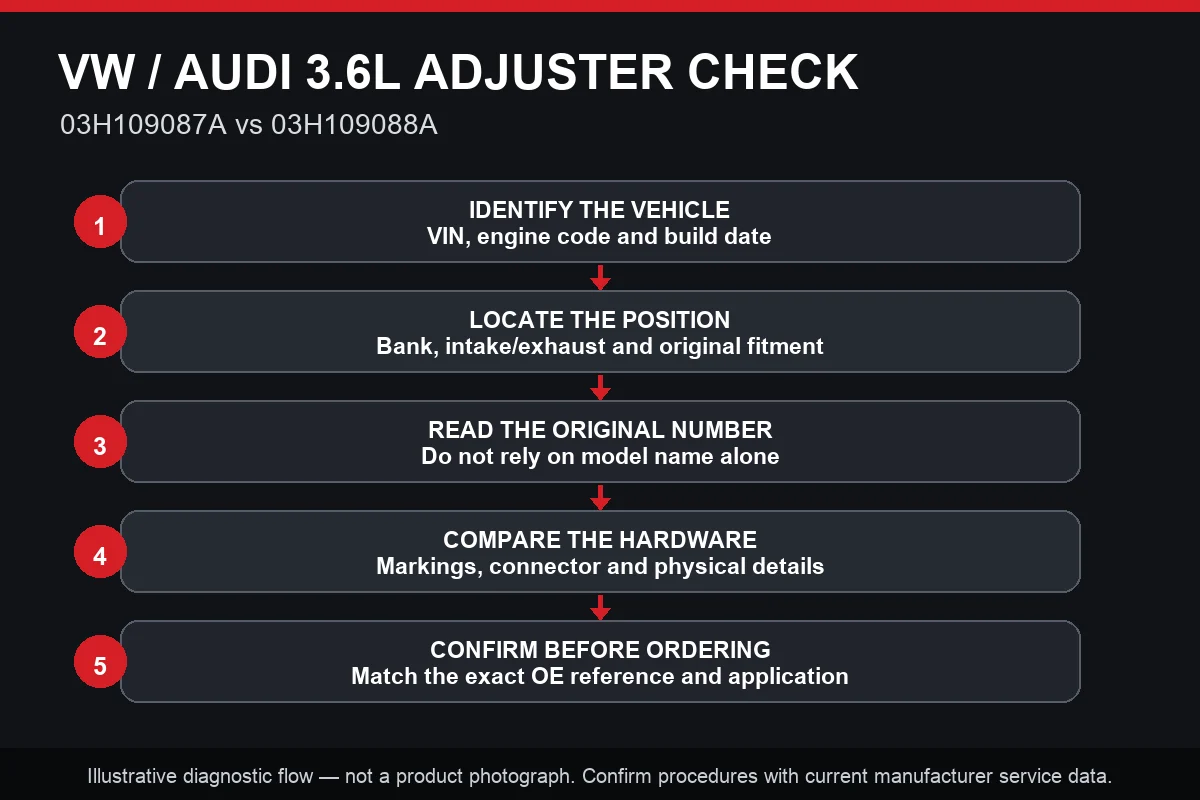
1. Record codes and freeze-frame data
Read stored, pending and history codes before clearing them. Note the bank, camshaft and fault type. A correlation code, an electrical-circuit code and a slow-response code describe different diagnostic directions.
2. Confirm the oil-service baseline
Check oil level, condition and the specification required for the exact engine. Sludge, an incorrect filter, restricted oilways or low pressure can prevent a healthy adjuster from reaching its commanded position.
3. Compare commanded and actual camshaft position
With a suitable scan tool, compare desired cam angle with actual feedback during controlled operating conditions. A position that responds slowly, overshoots or remains fixed gives useful evidence, but the result must be compared with the other bank or camshaft and interpreted with service data.
4. Test the control valve and electrical circuit
Inspect the connector, wiring and oil-control solenoid. Where manufacturer procedures permit, carry out an output test and verify that the control circuit responds. Replacing an adjuster will not repair a broken wire or blocked solenoid screen.
5. Verify mechanical timing
If scan data or noise suggests a base-timing problem, inspect the chain drive using the correct locking tools and reference procedure. A stretched chain, worn guide or weak tensioner can make a good adjuster appear faulty.
6. Inspect the removed component
Once access is justified, check for abnormal free play, locking failure, impact marks, debris and oil-port contamination. Record all markings before disposal; they may be essential if the catalogue lists more than one possible unit.
Choosing the correct RunningRoo product
RunningRoo currently lists both relevant references:
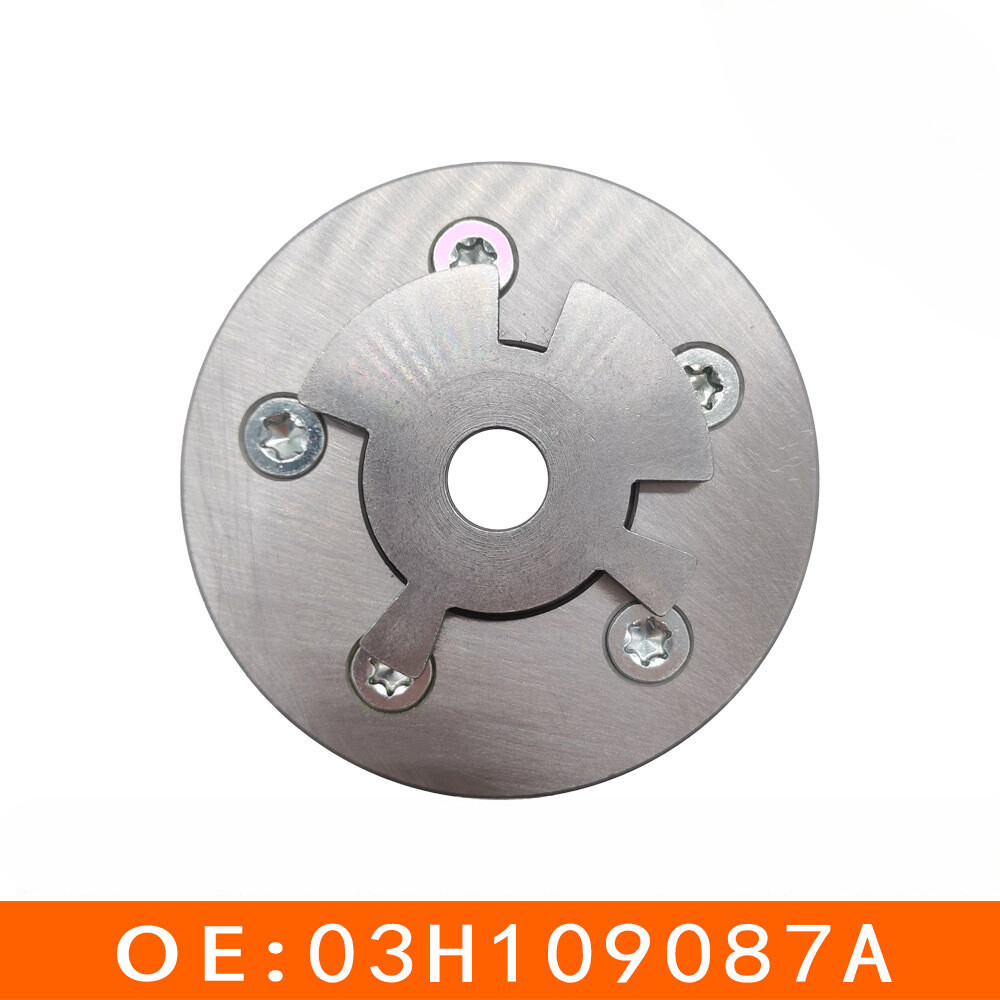
- 03H109087A camshaft adjuster for selected 3.6L applications
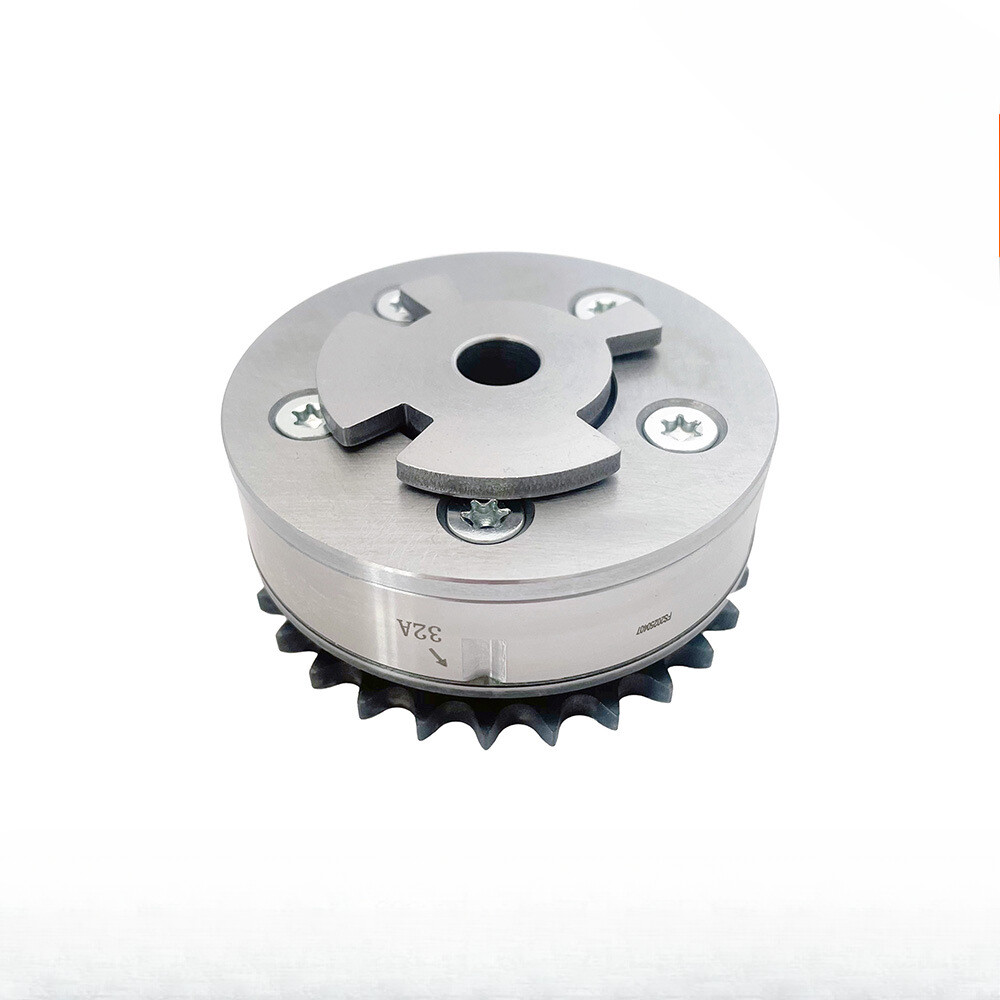
- 03H109088A OEM INA camshaft adjuster for selected 3.6L applications
Send the VIN, engine code and a clear photograph of the original number when requesting fitment assistance. If the original number has been superseded, confirmation should come from a current catalogue rather than visual similarity.
Should both adjusters be replaced together?
There is no universal rule. The decision depends on the confirmed failed position, access labour, engine condition and the inspection results for the remaining timing components. Replacing multiple units without diagnosis increases cost, while replacing only one component in a badly worn timing system can lead to repeat labour. The workshop should explain which evidence supports the repair scope.
Installation points that matter
- Use the correct engine locking and timing tools.
- Do not rotate the crankshaft or camshafts independently when the chain is released unless the service procedure permits it.
- Replace single-use fasteners and seals specified by the manufacturer.
- Keep oil galleries and adjuster ports free of sealant and debris.
- Verify all timing marks and rotate the engine by hand before start-up.
- Confirm oil pressure, clear codes and compare actual cam angles after repair.
Frequently asked questions
Can I identify the correct adjuster from the fault code?
A code may identify a bank or camshaft function, but it does not confirm the part number. Use the code for diagnosis, then identify the component through the VIN, engine code and original markings.
Will an oil change fix a noisy adjuster?
Correct oil can restore hydraulic performance when the problem is contamination or an incorrect viscosity, but it cannot repair mechanical wear or a failed locking mechanism. Do not use an oil change to postpone investigation of persistent timing noise.
Are 03H109087A and 03H109088A interchangeable?
Do not assume so. Treat them as separate references until a VIN-specific catalogue or qualified parts specialist confirms the exact application and any valid supersession.
Can a camshaft sensor cause similar symptoms?
Yes. Sensor signals, wiring, base timing and actuator movement are interdependent. Electrical testing and live data help prevent replacing a mechanical part for an electrical fault.
Final recommendation
A successful VW/Audi 3.6L camshaft-adjuster repair begins with identification, not removal. Separate hydraulic, electrical and mechanical causes, verify base timing, then match the complete OE number. That process protects both the engine and the customer from an expensive wrong-part diagnosis.
Fitment varies by VIN, engine code and production date. Use current manufacturer service information and a qualified technician for timing-system repairs.