

The Mitsubishi 4B11 engine uses MIVEC variable valve timing to change camshaft position using engine-oil pressure. When a VVT gear—or camshaft sprocket/actuator—does not lock or move correctly, the result can include start-up rattle, timing-performance codes, rough running and reduced response. The same symptoms can also come from an oil-control valve, low oil pressure or timing-chain wear.
Quick answer: do not diagnose a 4B11 VVT gear from noise alone. Check oil condition and pressure, scan commanded versus actual cam position, test the oil-control circuit, and verify mechanical timing. Replace the gear only when the evidence rules out hydraulic, electrical and chain-drive causes.
How the 4B11 MIVEC system works
MIVEC is Mitsubishi’s variable valve-timing system. Pressurised oil is directed through an oil feeder control valve into passages in the camshaft and VVT sprocket. Internal chambers move the sprocket’s rotor relative to its housing, advancing or retarding camshaft timing. A locking mechanism holds the unit in its base position when hydraulic pressure is unavailable.
The engine control module compares crankshaft and camshaft sensor signals, commands a target angle, and checks whether the camshaft reaches it. A problem anywhere in that chain—oil supply, solenoid, wiring, sensor, sprocket, timing chain or base timing—can produce a VVT-related code.
Common symptoms of a 4B11 VVT problem
- Brief metallic rattle during start-up
- Rattle or clatter that changes with engine speed
- Rough or unstable idle
- Flat response or inconsistent power delivery
- Check-engine light and camshaft-timing performance codes
- Camshaft angle that responds slowly or does not follow the target
- Hard starting after previous timing work
- Increased fuel use or emissions faults
Turbocharged 4B11T and naturally aspirated 4B11 applications do not necessarily use identical components or calibrations. Always identify the exact engine and original gear before ordering.
VVT gear vs oil-control valve vs timing chain
| Possible cause | Typical evidence | Confirmation needed |
|---|---|---|
| VVT gear/actuator | Locking rattle, internal play or position that fails to hold/respond correctly | Service-manual actuator inspection and elimination of oil/control faults |
| Oil feeder control valve | Electrical code, sticking spool or poor response to an output test | Electrical, resistance and controlled functional testing |
| Oil supply problem | Dirty oil, low pressure or restricted passage | Correct oil baseline and pressure/flow checks |
| Timing chain, guide or tensioner | Persistent noise, timing deviation or excessive mechanical wear | Mechanical timing and component inspection |
| Cam/crank sensor or wiring | Intermittent signal or circuit code | Connector, wiring and signal testing |
A methodical diagnostic process
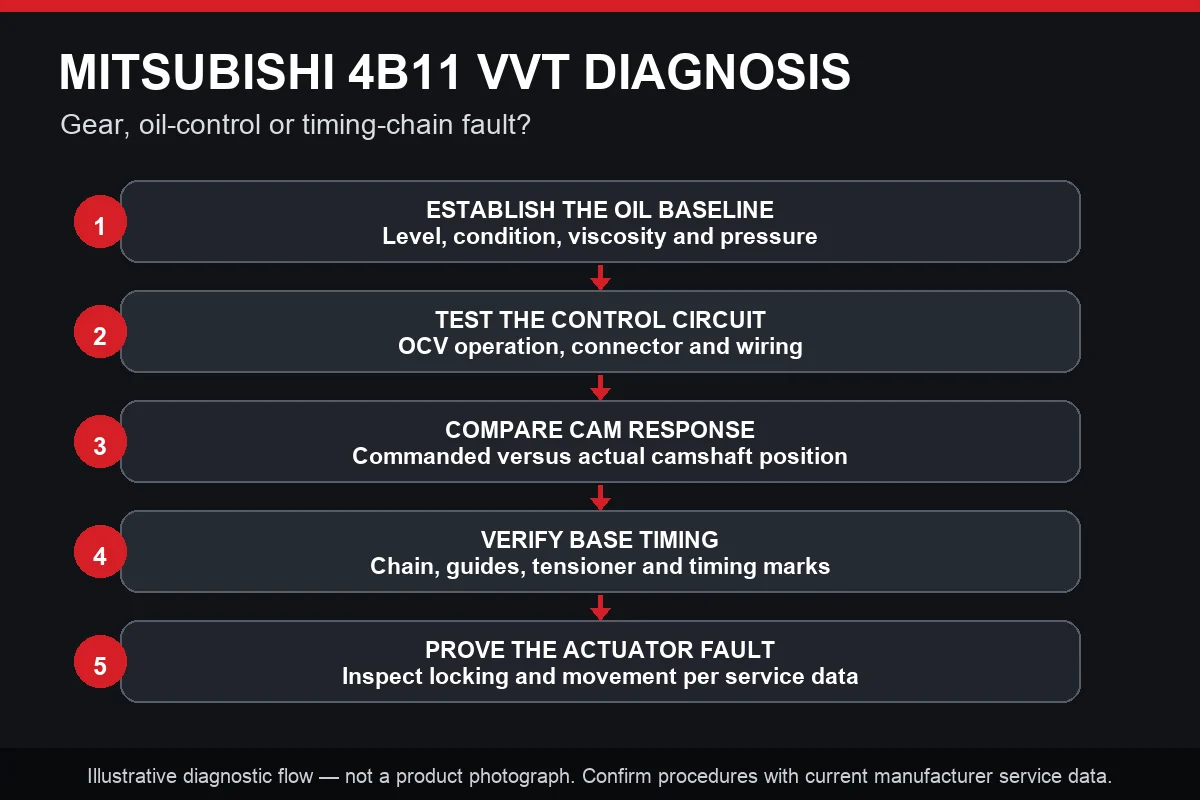
1. Identify the exact 4B11 application
Record the VIN, engine code, model, build date and whether the engine is turbocharged. Lancer, Evolution X and Outlander applications can differ. Previous engine swaps or cylinder-head replacements make identification from the model badge even less reliable.
2. Check oil level and service history
MIVEC is hydraulically controlled. Low oil, incorrect viscosity, sludge or delayed pressure can affect actuator operation. Correct an obvious lubrication problem before interpreting camshaft response, while remembering that fresh oil cannot repair mechanical wear.
3. Scan codes and live data
Save current, pending and history codes with freeze-frame data. Compare desired and actual camshaft position under the controlled conditions specified by the service procedure. Check both response speed and the camshaft’s ability to return to its base position.
4. Test the oil-control valve and circuit
Inspect connectors for oil contamination, damaged locks or stretched wiring. Use the correct wiring diagram and manufacturer test process. A sticking control valve or blocked filter can starve a healthy VVT gear of the pressure it needs.
5. Verify mechanical timing
Cam/crank correlation evidence or continuing chain noise justifies a mechanical timing check. Inspect chain condition, guides, tensioner operation and timing marks with the correct locking procedure. Do not rotate the crankshaft and camshafts independently when the chain is released unless service information specifically permits it.
6. Inspect the VVT gear correctly
Mitsubishi service information describes controlled inspection of VVT sprocket movement and the stopper pin. This is not a casual bench test: oil can spray when air pressure is applied, and incorrect clamping can damage the camshaft or sprocket. Use the specified method and safety precautions.
When replacement is justified
A VVT gear replacement is supported when hydraulic supply and control are correct, wiring and sensors pass testing, base timing is correct, and the actuator fails its locking or movement inspection. If the chain system is also worn, replacing the actuator alone may leave the original noise or code unresolved.
RunningRoo lists an intake and exhaust VVT gear set for selected Mitsubishi Lancer, Evolution X and Outlander 4B11 applications. Confirm the VIN, turbo/non-turbo specification, original markings and required positions before purchase.

Should intake and exhaust gears be replaced together?
Not automatically. Some applications or failures involve one position, while access labour and wear history may support a broader repair. The correct scope depends on diagnosis, the exact engine configuration and inspection of both gears, the chain, guides and tensioner. A workshop should document which component failed rather than replacing a pair only because they are sold together.
Installation considerations
- Use model-specific timing marks and locking procedures.
- Replace any bolts, seals or gaskets designated as single-use.
- Keep all oil passages and control-valve screens clean.
- Lubricate components as directed before first start.
- Verify chain tension and timing after rotating the engine by hand.
- Confirm oil level and pressure before evaluating the repair.
- Clear codes, perform any required relearn and compare live cam angles.
Incorrect cam timing can cause severe engine damage. A VVT gear replacement should be carried out by a technician with the correct service data and timing tools.
Frequently asked questions
Does a 4B11 start-up rattle always mean the VVT gear is bad?
No. A tensioner, chain, accessory or delayed oil pressure can sound similar. Record the exact cold-start event and combine the noise pattern with scan and inspection evidence.
Can a faulty oil-control valve trigger a cam timing code?
Yes. If oil cannot reach the actuator at the commanded pressure, the camshaft may not move correctly even though the gear is mechanically sound.
Will clearing the code reset MIVEC?
Clearing a code removes diagnostic evidence but does not repair the cause. Save freeze-frame data first, complete the repair, then clear codes and verify live operation.
Are all 4B11 VVT gears the same?
No. Application, production date, turbo specification and position can matter. Use VIN and original-component identification instead of the engine-family name alone.
Final recommendation
A 4B11 VVT gear should be the conclusion of a diagnosis, not the beginning. Establish the oil baseline, test the control circuit, compare actual and commanded timing, and inspect the chain drive. Once an actuator fault is proven, exact fitment and disciplined installation are the keys to avoiding repeat labour.
This article is general technical information. Confirm the vehicle against current Mitsubishi service data and use a qualified technician for internal timing-system work.