
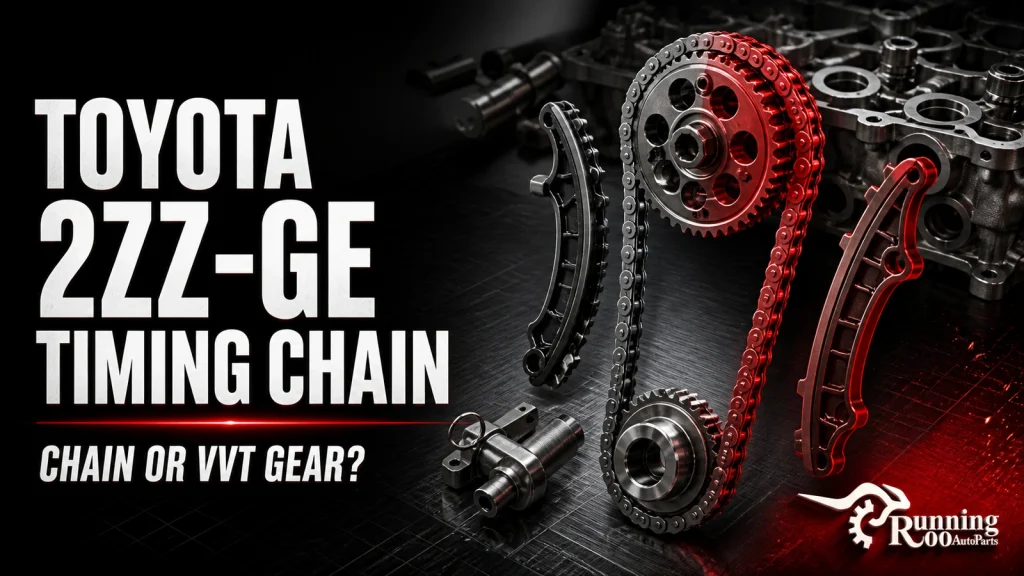
A rattle from a Toyota 2ZZ-GE does not automatically mean the timing chain needs replacement. The noise may come from the chain tensioner, guides, the intake VVT gear, delayed oil pressure or an accessory. Because the 2ZZ-GE combines a chain-driven timing system with variable cam timing and variable valve lift, correct diagnosis matters before the engine is dismantled.
Quick answer: a short start-up rattle can point toward a tensioner or VVT gear, while continuing noise, timing deviation or correlation codes raise concern about the chain drive. Check oil condition, scan camshaft data and verify mechanical timing before choosing a 2ZZ-GE timing chain kit.
How timing works on the 2ZZ-GE
The 1.8-litre 2ZZ-GE uses a timing chain to synchronise the crankshaft and camshafts. Its VVTL-i system combines variable intake-cam phasing with a separate high-lift mechanism. The VVT gear changes the intake camshaft’s phase using engine-oil pressure; it does not replace the chain’s job of maintaining base mechanical timing.
This distinction is important. A VVT control fault can change camshaft position even when the chain and timing marks are correct, while a worn chain can prevent accurate correlation even when the VVT gear responds normally.
Symptoms and what they may mean
| Symptom | Possible causes | Useful next check |
|---|---|---|
| Brief rattle after a long rest | VVT gear locking issue, tensioner drain-back or delayed oil pressure | True cold-start recording and oil baseline |
| Continuous chain-area rattle | Chain, guide or tensioner wear | Mechanical inspection and timing verification |
| Rough idle or poor response | Incorrect cam timing, VVT-control fault or unrelated engine issue | Full scan and commanded/actual cam data |
| Cam/crank correlation code | Base timing error, chain wear, sensor signal or actuator position | Signal testing plus mechanical timing check |
| Problem began after repair | Incorrect timing marks, tensioner release or VVT gear installation | Stop running and recheck the complete procedure |
Timing-chain noise vs VVT-gear noise
Evidence that supports a chain-drive problem
- Noise continues after oil pressure has stabilised
- Guide material or metallic debris is found in the oil
- The tensioner is overextended or cannot maintain tension
- Mechanical timing marks do not align as specified
- Cam/crank deviation remains outside specification
Evidence that supports a VVT-gear problem
- A repeatable brief rattle after the engine has been parked
- The gear does not lock or move correctly under the service-manual test
- Oil supply and the control valve test correctly but cam response remains abnormal
- Base mechanical timing is correct
There is overlap, and more than one component can be worn. A high-kilometre engine may have a weak tensioner and an actuator problem at the same time.
A disciplined diagnostic sequence
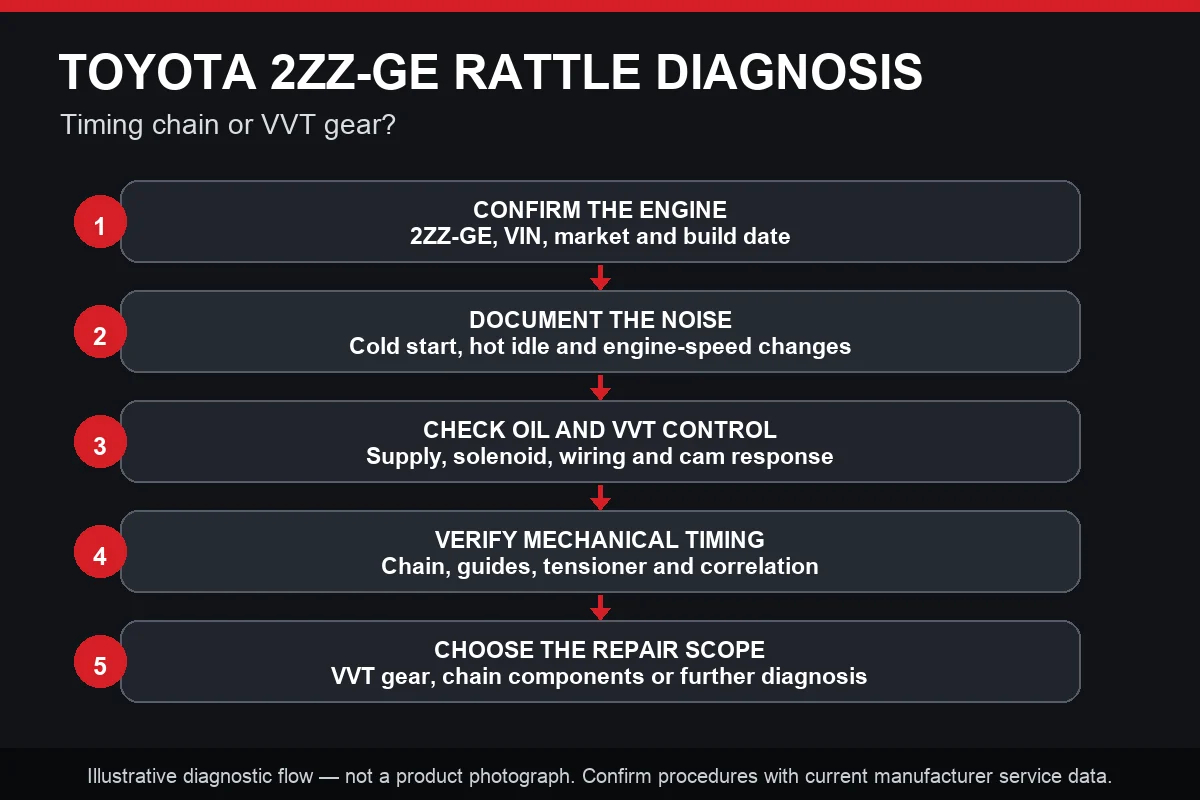
1. Confirm that the engine is a 2ZZ-GE
Do not confuse the high-output 2ZZ-GE with the related 1ZZ-FE. Record the engine code, VIN, model and build date. Celica and Corolla variants can differ by market, and engine swaps are common in enthusiast vehicles.
2. Establish oil condition and pressure
Variable cam timing and the chain tensioner depend on engine oil. Check level, viscosity, contamination, filter condition and service history. If the oil-pressure warning behaves abnormally, investigate pressure before continuing to run the engine.
3. Reproduce and locate the rattle
Record the first start after a long rest and note the duration. A technician can compare noise near the timing cover, cylinder head and accessory drive using safe listening methods. Keep tools and hands clear of moving components.
4. Scan before clearing codes
Save current, pending and history codes with freeze-frame information. Review camshaft target and actual position where available. A circuit fault for an oil-control valve requires a different test from a mechanical correlation fault.
5. Test the VVT control circuit
Inspect the oil-control valve, connector and wiring. Verify oil flow and electrical response using model-specific service information. Replacing a VVT gear will not solve a blocked passage or failed solenoid.
6. Verify mechanical timing
Toyota service information aligns the crankshaft at the specified top-dead-centre position and checks the camshaft sprocket and VVT sprocket marks against the timing-cover reference. If the marks or chain tension are wrong, correct the mechanical fault before judging VVT response.
What should a complete repair inspect?
- Timing chain for wear or damage
- Fixed and moving guides
- Hydraulic/mechanical chain tensioner operation
- Crankshaft and camshaft sprockets
- VVT timing gear and locking action
- Oil-control valve and oil passages
- Front-cover seals and relevant gaskets
A kit can reduce the risk of reusing a marginal guide or tensioner, but a kit is not a substitute for diagnosis. The repair scope should match the evidence and the contents should be checked before dismantling.
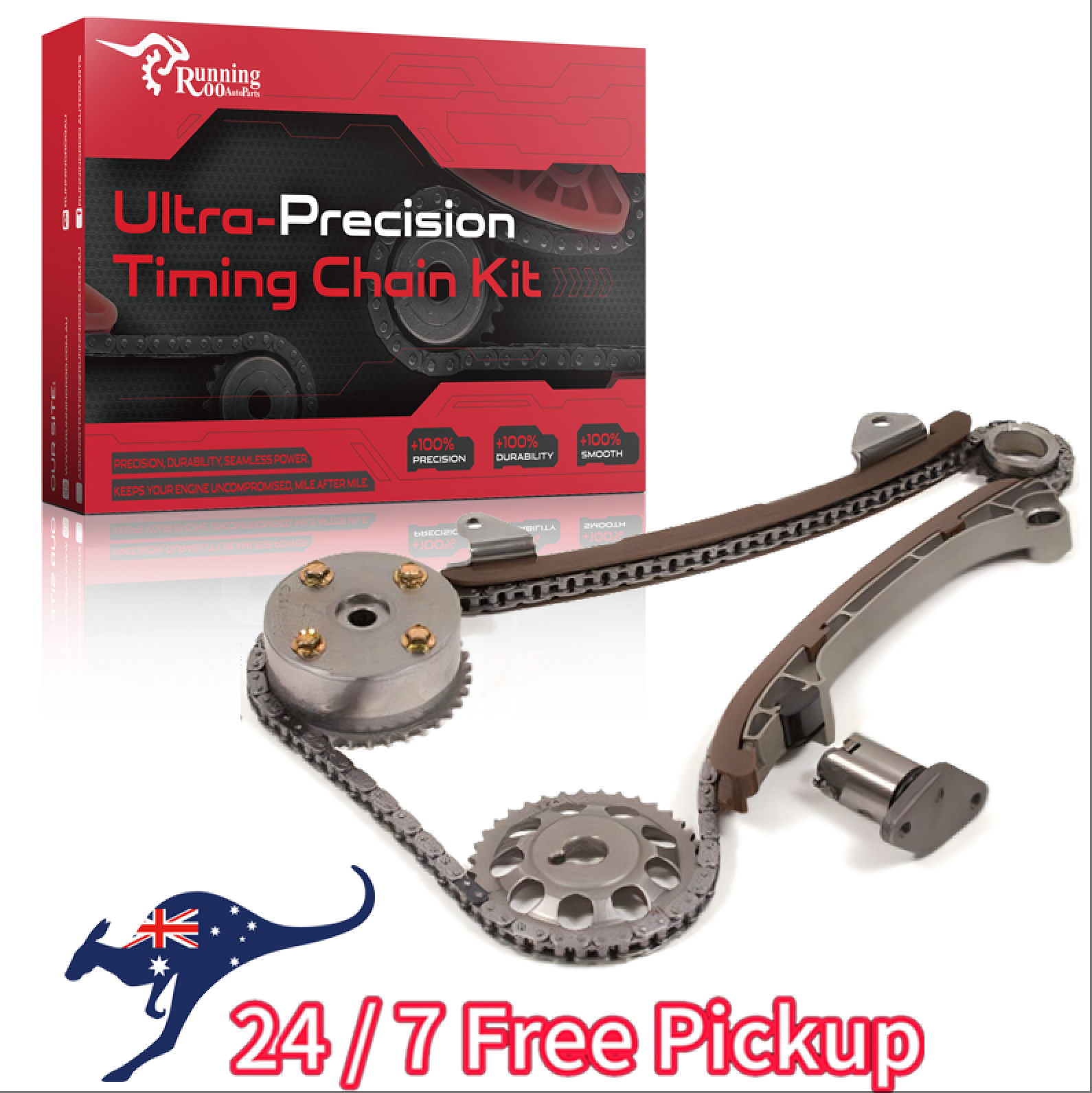
RunningRoo 2ZZ-GE kit
RunningRoo lists a timing chain kit with VVT gear for selected Toyota Celica and Corolla 2ZZ-GE 1.8L VVTL-i applications from 2000–2006. Confirm the VIN, engine code, production date and kit contents against the vehicle before purchase.
If only one component has been proven faulty, discuss whether the engine’s kilometres and labour access justify replacing the complete chain system. Conversely, if the guides and tensioner show wear, installing only a VVT gear can lead to repeat labour.
Installation details that prevent repeat problems
- Follow the exact 2ZZ-GE procedure rather than a generic 1ZZ/2ZZ diagram.
- Set the engine to the specified timing position before release.
- Keep tension on the chain so it cannot fall or jump unexpectedly.
- Install and lock/unlock the VVT gear exactly as directed.
- Replace specified single-use fasteners, seals and gaskets.
- Rotate the crankshaft by hand and recheck timing marks before first start.
- Prime lubrication points and verify oil level.
- Scan and compare camshaft operation after the repair.
The 2ZZ-GE is an interference-sensitive, high-speed engine. Incorrect timing can cause serious internal damage, so this work is best handled by a technician with the correct locking tools and service information.
Frequently asked questions
Does the 2ZZ-GE use a belt or chain?
It uses a timing chain. The accessory drive belt is separate and should not be confused with the internal timing drive.
Does VVTL-i mean there are two VVT gears?
No. Variable valve timing and the high-lift changeover mechanism are related engine-control features but perform different jobs. Identify the exact cam gear arrangement from the service manual.
Can a bad tensioner cause only a start-up rattle?
Yes, a tensioner can lose effective tension during oil drain-back, but the VVT gear and oil-pressure behaviour can produce a similar pattern. Inspection is needed before choosing either part.
Should the chain be replaced whenever the VVT gear is replaced?
Not automatically. Chain condition, tensioner extension, guide wear, kilometres and labour access determine the sensible scope. The workshop should document those findings.
Final recommendation
Diagnosing a 2ZZ-GE rattle is a process of separation: first oil and electrical control, then VVT response, then mechanical timing. Once the evidence shows which component is faulty, select a kit that matches the exact engine and verify every timing mark before the engine is started.
This article provides general information. Confirm fitment and procedures against current Toyota service data and use a qualified technician for internal engine-timing repairs.