
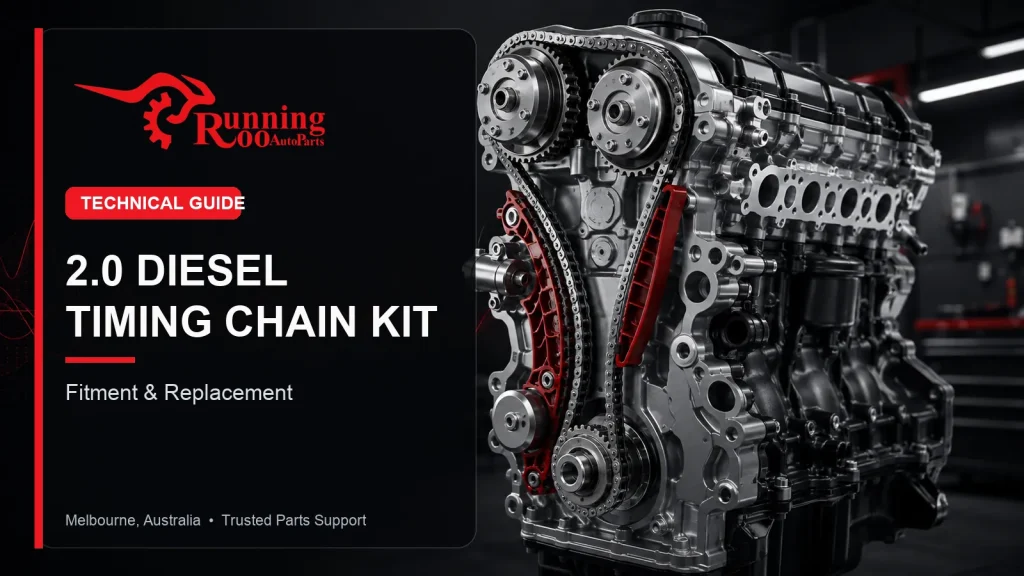
G’day everyone. I’m the Senior Product Manager here at RunningRoo Auto Parts, Australia’s trusted aftermarket automotive parts specialist. If you own a Ford Focus, Peugeot 308, Citroen C4, Volvo or one of the many other vehicles fitted with the common 2.0-litre turbo diesel, you are driving one of the most widely used diesel engines in the country. In this guide I’ll explain how the 2.0 diesel timing chain system works, the symptoms of a worn chain, and what a replacement costs in Australia.
This engine family is used across a huge range of European and some Australian-market vehicles, so the timing chain question comes up very often. The chain is designed to last the life of the engine, but on a high-kilometre or neglected example it can stretch and rattle, which is worth knowing about.
All prices below are in Australian dollars and are indicative only. If you would rather confirm the right kit for your exact engine before reading further, our Melbourne-based team can help over the phone.
RunningRoo Auto Parts – Based in Melbourne, Australia 🇦🇺
Free 24/7 Pickup Available (by appointment)
Any questions? Call us anytime: 0425 890 125
Why Choose RunningRoo? Aussie Owned & Operated | Fast Shipping | Friendly Support
How the 2.0 diesel timing chain system works
The common 2.0-litre turbo diesel used across so many brands uses a timing chain to drive the camshafts from the crankshaft, with guide rails and a hydraulic tensioner keeping the chain tight. The chain runs in the engine’s oil system, which is why clean oil is essential to its long-term health.
This engine family is also known as the 2.0 HDi or DW10 in some markets, and it powers everything from small hatches to larger SUVs and commercial vehicles. Despite the different brand names, the basic timing layout is shared, which is why the same failure modes appear across so many cars.
Like most modern chain-driven diesels, the chain is designed to last the life of the engine and is not replaced on a fixed service interval. However, on a high-kilometre or poorly serviced engine, the chain can stretch and the tensioner can weaken.
Common symptoms of a worn 2.0 diesel timing chain
The earliest sign is usually a metallic rattle from the front of the engine, most noticeable on a cold start or at idle, which fades as the engine warms and oil pressure builds. On a diesel this is easy to miss because the engine is naturally noisier.
Other symptoms include a check engine light with camshaft or crankshaft correlation codes, a rough idle, a loss of power and, in severe cases, a no-start. The table below summarises the warning signs.
| Symptom | What it usually means | Urgency |
|---|---|---|
| Cold-start rattle | Worn chain or weak tensioner | High — inspect soon |
| Check engine light | Cam/crank correlation code | High — scan now |
| Rough idle / power loss | Timing drift | High |
| No start | Jumped or broken chain | Critical — do not drive |
Why the 2.0 diesel timing chain wears
The chain wears because of the workload and oil condition. Diesels produce soot and contamination in the oil, and if the oil is not changed frequently enough, that contamination accelerates wear on the chain links and guide rails.
High kilometres are the other common factor. On an engine that has covered a lot of distance, particularly with stop-start driving or towing, the chain and tensioner can be worn well before the life of the car.
Regular oil changes with the correct diesel specification oil are the cheapest protection you can give the timing system on a 2.0 diesel.
Which vehicles are affected
The 2.0-litre diesel timing chain family is used across a very wide range of vehicles, including the Ford Focus, Peugeot 308, Citroen C4, Fiat, Volvo and many others. The exact kit can differ between brands and model years, even though the basic engine is shared.
Because of this, it is essential to match the kit to your exact engine and vehicle, rather than assuming a generic 2.0 diesel kit will fit. Confirming your engine code before ordering is the only reliable way to avoid buying the wrong parts.
| Brand / model | Engine family | Notes |
|---|---|---|
| Ford Focus | 2.0 HDi / DW10 | Common |
| Peugeot 308 | 2.0 HDi / DW10 | Common |
| Citroen C4 | 2.0 HDi / DW10 | Common |
| Volvo (various) | 2.0 diesel | Same family |
What a complete timing chain kit should include
A complete kit should include the timing chain, the guide rails, the hydraulic tensioner and the required gaskets and seals. Many kits also include the sprockets and the VVT gear where applicable.
Buying a complete kit rather than a bare chain is the safer approach, because if the chain has stretched the guides and tensioner will also be worn. Fitting a new chain against old guides simply moves the problem down the road.
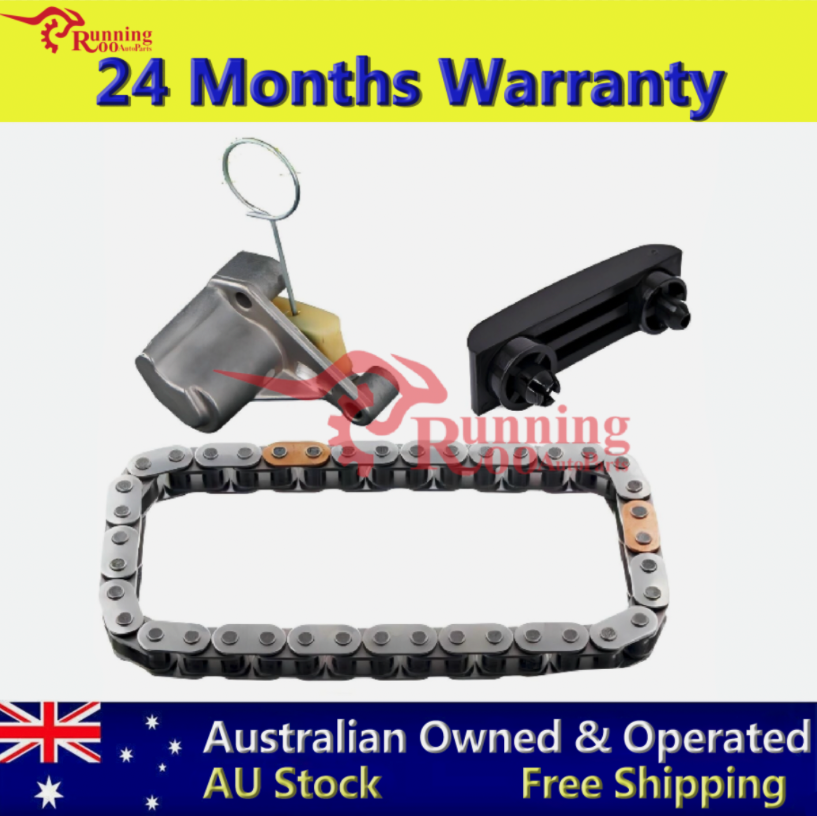
The table below shows what a complete kit should include, so you can compare quotes and avoid being sold a bare chain.
| Component | Why it matters |
|---|---|
| Timing chain | The main drive component |
| Guide rails | Wear with the chain |
| Hydraulic tensioner | Keeps the chain tight |
| VVT gear / sprockets | Completes the drive |
How much does a 2.0 diesel timing chain replacement cost
The part cost for a quality aftermarket timing chain kit for the 2.0 diesel is moderate, but the labour is significant because the front of the engine must be opened and the timing set correctly. The chart below compares indicative Australian costs.
__CHART__
These figures are a guide only. The exact cost depends on your vehicle, the extent of the kit and whether you use a workshop or do the job yourself.
Why you should not ignore a timing chain rattle
The 2.0 diesel is an interference engine, meaning the valves and pistons occupy the same space at different points in the cycle. If the chain jumps or breaks, the engine can bend valves, damage pistons and require a major rebuild or a replacement engine.
Catching the problem at the rattle stage is dramatically cheaper than repairing the damage after a chain failure. If you hear a metallic rattle from the front of the engine, have it inspected and the fault codes read promptly.
Regular oil changes with the correct diesel specification oil are the single best way to protect the chain, guides and tensioner.
A little attention to the timing system now is far cheaper than the repair that follows a chain failure.
If in doubt, have the codes read and the timing inspected before replacing anything.
How the replacement is carried out
The replacement is a front-of-engine job. The technician removes the drive belt, radiator and timing cover to access the chain, then locks the crankshaft and camshafts in position before removing the old chain, guides and tensioner as a set.
Once the new components are fitted, the engine is turned over by hand to confirm the timing marks line up, and the cover is resealed before the ancillaries are refitted. Skipping any of these steps, or reusing stretched guides, is a common cause of a repeat failure shortly after the job.
Diagnosing the fault correctly
Before any parts are ordered, the fault codes should be read and the engine inspected. A camshaft or crankshaft correlation code is a strong sign that the timing drive has drifted, even if the rattle is still intermittent.
It is also worth checking the oil level and condition, because on a diesel the oil can be contaminated with fuel or soot, which affects both the chain and the tensioner. A specialist who works on this engine family regularly will be able to confirm the diagnosis quickly.
Preventing chain wear on a 2.0 diesel
The best protection for the timing chain is regular oil changes with the correct diesel specification oil. Diesel oil carries soot and contamination, so keeping it fresh is more important than on a petrol engine.
Keeping an ear out for a cold-start rattle and acting on the first sign of trouble is equally important. An early chain or tensioner replacement is far cheaper than repairing the damage after the chain has jumped, and for a daily driver it avoids the downtime that a major engine failure would cause.
For owners of high-kilometre or ex-fleet vehicles with this engine, a timing chain inspection should be part of the routine service checklist. A specialist can listen for the early rattle and read the stored codes before a small fault becomes a large repair.
Ultimately, the 2.0 diesel is a strong and efficient engine when it is serviced correctly. With clean oil and a complete kit when the time comes, a well-maintained car will generally reward its owner with many more years of reliable service.
If you are buying a used vehicle with this engine, ask for the service history and confirm the oil has been changed at the correct intervals. A car that has been neglected on oil changes is the one most likely to hide a timing chain problem.
Also note that this engine family is so widely used that a quality timing chain kit is readily available, and the repair is well within the scope of any workshop that works on European diesels regularly.
Where to buy a 2.0 diesel timing chain kit
RunningRoo Auto Parts stocks complete timing chain kits for the common 2.0-litre diesel engine family, at a fraction of typical retail pricing with Melbourne pickup and Australia-wide delivery.
- 2.0L Diesel Timing Chain Kit for Citroen / Fiat / Ford / Peugeot / Volvo
- 2.0L Diesel Timing Chain Kit (Citroen / Fiat / Ford / Peugeot / Volvo) — Fitting Kit
- Intake Variable Timing Gear for Peugeot / Citroen
Watch a quick overview of our timing kits below, then browse the complete range on our eBay store.
Watch: RunningRoo Auto Parts — your trusted partner for timing chain kits
You can also browse the full range here: RunningRoo Auto Parts on eBay Australia.
Not sure which kit fits your vehicle? Our Aussie team can confirm it against your engine code.
RunningRoo Auto Parts – Based in Melbourne, Australia 🇦🇺
Free 24/7 Pickup Available (by appointment)
Any questions? Call us anytime: 0425 890 125
Why Choose RunningRoo? Aussie Owned & Operated | Fast Shipping | Friendly Support
Frequently asked questions
How long does a 2.0 diesel timing chain last?
With clean oil the chain can last the life of the engine, but on high-kilometre vehicles or where oil changes have been neglected it can require replacement.
What are the symptoms of a worn 2.0 diesel timing chain?
A cold-start or idle rattle, a check engine light with cam/crank correlation codes, rough idle and power loss are the main warning signs.
How much does a 2.0 diesel timing chain replacement cost?
The part cost is moderate, but the labour is significant, so a workshop replacement typically runs into the low thousands of dollars, with dealer prices higher again.
Can I replace a 2.0 diesel timing chain myself?
It is possible for an experienced mechanic with the correct tools and timing procedure, but it is not a beginner job because incorrect timing can damage the engine.
Which vehicles use this 2.0 diesel engine?
The 2.0-litre diesel timing family is used in the Ford Focus, Peugeot 308, Citroen C4, Fiat and Volvo, among many others.
Do I need to replace the guides and tensioner with the chain?
Yes. The guides and tensioner wear alongside the chain, so a complete kit should always be fitted together.
Will a timing chain rattle damage my engine if I keep driving?
Yes. A stretched chain can jump or break, and on an interference engine that can bend valves and require a major repair, so have it inspected promptly.
Still have a question about your 2.0 diesel? Call us anytime and we’ll help you get the right kit.
RunningRoo Auto Parts – Based in Melbourne, Australia 🇦🇺
Free 24/7 Pickup Available (by appointment)
Any questions? Call us anytime: 0425 890 125
Why Choose RunningRoo? Aussie Owned & Operated | Fast Shipping | Friendly Support
References
Key data in this article is drawn from the following official manufacturer sources:
- Ford / PSA Group — 2.0-litre turbo diesel (DW10 / HDi) engine technical documentation, timing chain and tensioner system description.
- Ford — factory service information and parts identification data for 2.0-litre diesel engine variants.