
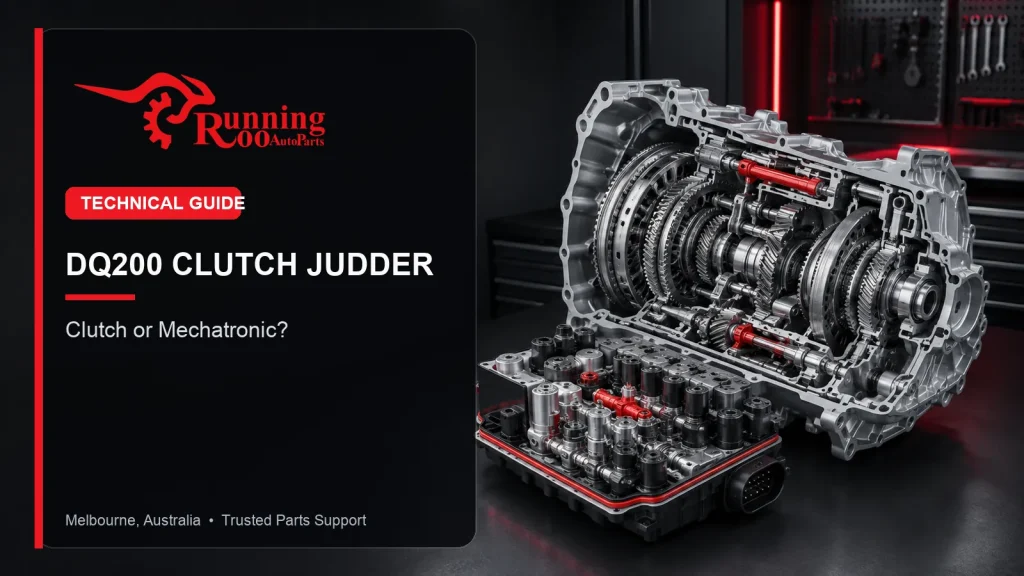
G’day everyone. I’m the Senior Product Manager here at RunningRoo Auto Parts, Australia’s trusted aftermarket automotive parts specialist. If your Volkswagen, Audi, Skoda or Seat with the DQ200 DSG judders on take-off, the most common question we hear is whether the problem is the dry dual-clutch or the mechatronic unit. In this guide I’ll explain how to tell the difference, because the two faults are fixed very differently and the cost can vary enormously.
A judder or shudder on take-off is one of the most common DQ200 complaints in Australia, and it is caused by either a worn or glazed clutch, or a mechatronic hydraulic problem. Getting the diagnosis right is the difference between a straightforward clutch replacement and a much more expensive mechatronic repair.
The confusion is understandable, because both faults share the same first symptom. The good news is that a careful scan and a short road test will usually separate them quickly, which is exactly what a specialist will do before quoting a repair.
All prices below are in Australian dollars and are indicative only. If you would rather talk through your own symptoms before reading further, our Melbourne team can help over the phone.
RunningRoo Auto Parts – Based in Melbourne, Australia 🇦🇺
Free 24/7 Pickup Available (by appointment)
Any questions? Call us anytime: 0425 890 125
Why Choose RunningRoo? Aussie Owned & Operated | Fast Shipping | Friendly Support
What causes DQ200 judder on take-off
The DQ200 uses a dry dual-clutch system, which means the two clutches are not bathed in oil like a wet-clutch DSG. The clutches engage and release through a mechanical actuation driven by the mechatronic hydraulics, and the clutch friction material wears with every launch and gear change.
When the clutch friction material becomes worn, glazed or uneven, the engagement is no longer smooth and you feel a judder or shudder as the car pulls away. This is a mechanical clutch problem and is normally fixed by replacing the clutch kit and re-adapting the gearbox.
When the mechatronic fails to supply the clutch actuator with smooth, correct hydraulic pressure, the clutch can also judder, but for a completely different reason. In that case the fix is on the hydraulic and control side of the gearbox rather than the clutch itself.
Clutch judder vs mechatronic failure: the key signs
The most reliable way to separate the two faults is to look at when and how the judder happens. A worn clutch typically judders most on gentle take-off, in low gears or when reversing, and it often improves once the car is moving and the clutch is fully engaged.
A mechatronic problem tends to produce a broader set of symptoms, including harsh or delayed shifts, missed gears and fault codes, in addition to any judder. The table below summarises the differences.
| Sign | Clutch wear | Mechatronic fault |
|---|---|---|
| Judder on take-off | Common | Possible |
| Harsh / delayed shifts | Less common | Common |
| Missed gears / flaring | Rare | Common |
| Fault codes | Often none | Usually present |
Why the DQ200 dry clutch wears
The DQ200 dry clutch is essentially two conventional-style clutches operating side by side, and like any clutch it wears with use. Every launch, gear change and bout of stop-start traffic takes a small amount of friction material, and over time the engagement point moves further out until the control module can no longer compensate cleanly.
Driving style plays a big role. Repeated creeping in slow traffic, aggressive launches and towing all accelerate clutch wear, which is why two identical cars can show very different clutch life depending on how they have been driven.
When the friction material becomes uneven or glazed, the clutch no longer engages smoothly, and that is the judder you feel on take-off.
How a scan tool helps
Reading the fault codes stored in the mechatronic is the single most useful diagnostic step, because a hydraulic or electrical mechatronic fault will normally log a code, while a purely mechanical clutch wear problem often logs nothing at all.
Beyond the codes, a specialist can look at live data for clutch engagement position and slip, which shows how far the clutch actuators have travelled to take up the engagement. Excessive travel is a strong indicator that the clutch friction material is worn.
This combination of fault codes and live clutch data is what allows a workshop to confidently choose between a clutch replacement and a mechatronic repair, rather than guessing and replacing the wrong component.
What a clutch replacement involves
A DQ200 clutch replacement involves removing the gearbox or the clutch pack, fitting a new dual-clutch assembly, and then carrying out basic settings and clutch adaptation so the control module learns the new engagement points. The job is mechanical, but the adaptation step is essential and must not be skipped.
The clutch kit itself is the main part cost, and the labour is significant because of the removal and refitting involved. A quality aftermarket clutch kit keeps the cost well below a dealer-fitted job while delivering the same function.
Once fitted and adapted, a new clutch should eliminate the take-off judder and restore smooth, predictable engagement in first gear and reverse.
Because the adaptation procedure relies on the control module measuring the new clutch, using a workshop or supplier that can carry out or guide the adaptation is important. A clutch fitted without adaptation will often still feel wrong even though the mechanical work is correct.
What a mechatronic repair involves
A mechatronic repair is a different job entirely. The mechatronic unit is removed from the gearbox, and the failed hydraulic component, such as the accumulator or a solenoid, is repaired or replaced before the unit is resealed and refitted.
This is why the diagnosis matters so much. Paying for a mechatronic repair when the clutch is worn will not fix the judder, and paying for a clutch when the mechatronic is at fault will not fix the shifting problems. A correct diagnosis saves both money and frustration.
In some cases both components have worn, particularly on higher-kilometre cars, and the two jobs may need to be carried out together. This is another reason to get a proper diagnosis rather than fixing one symptom and hoping for the best.
A specialist will usually be able to tell you whether the judder is purely mechanical, purely hydraulic or a combination, and quote the work accordingly. That clarity is worth far more than the small cost of the diagnostic time.
For owners considering a used DQ200-equipped car, a take-off judder during the test drive is a red flag worth investigating before purchase, because it may indicate an imminent clutch or mechatronic bill.
Taking a few minutes to read the fault codes and drive the car from cold can reveal a lot about the health of both the clutch and the mechatronic, and is well worth doing before you commit to any repair or purchase.
With the right diagnosis and the correct parts, the DQ200 judder is very fixable, and your car can be back to smooth, confident take-offs in a single repair.
How much each repair costs in Australia
A DQ200 clutch replacement in Australia is generally less expensive than a full mechatronic replacement, though the exact figures depend on whether you use a workshop and whether the gearbox needs additional work. The chart below compares typical indicative costs.
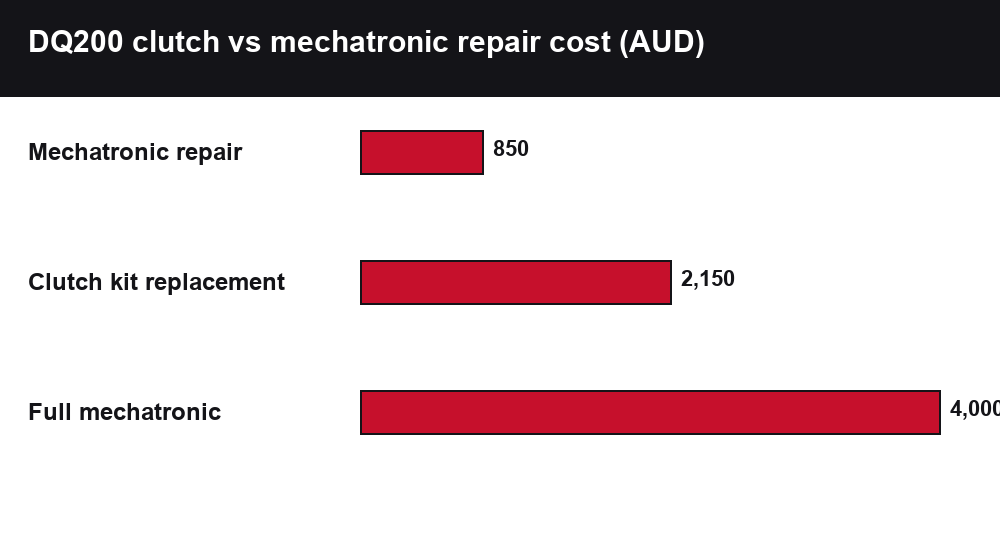
These figures are a guide only. The only way to get an accurate price is to have the fault diagnosed properly first.
| Repair | Indicative cost (AUD) | Notes |
|---|---|---|
| Clutch kit replacement | $1,500 – $2,800 | Includes adaptation |
| Mechatronic repair | $450 – $1,200 | Single hydraulic fault |
| Full mechatronic | $3,000 – $5,000 | Workshop-fitted |
Why diagnosis comes first
The worst outcome for a DQ200 owner is a series of expensive guesses. Because the clutch and the mechatronic sit next to each other and share the same actuation system, their symptoms overlap, and only a proper scan and inspection can reliably separate them.
A good diagnostic process reads the fault codes, checks the live clutch data, inspects the fluid and, where necessary, tests the hydraulic behaviour of the mechatronic. With that information the correct repair is usually obvious, and the total bill is far lower than a trial-and-error approach.
At RunningRoo Auto Parts we always recommend confirming the fault before buying parts, because a correctly diagnosed repair is faster, cheaper and far more likely to last.
| Diagnostic step | What it reveals |
|---|---|
| Read fault codes | Mechatronic electrical / hydraulic fault |
| Check clutch live data | Clutch wear / engagement travel |
| Inspect fluid | Contamination or level |
| Road test | When the judder occurs |
Preventing clutch and mechatronic wear
The best protection for the DQ200 is smooth driving and regular servicing of both the gear oil and the mechatronic hydraulic fluid. Avoiding prolonged creeping in traffic, where the clutch is held partly engaged, reduces clutch wear more than almost anything else.
Allowing the car to warm up gently and acting on the first sign of a judder or a harsh shift will also help. Early intervention usually keeps a small fault from becoming a combined clutch and mechatronic repair.
Ultimately, the DQ200 is a smooth and efficient gearbox when the clutch and mechatronic are healthy. The key is catching a fault early, diagnosing it correctly and repairing the right component the first time.
Where to buy DQ200 clutch and mechatronic parts
RunningRoo Auto Parts stocks DQ200 clutch kits, complete mechatronic units and accumulator housings at a fraction of typical retail pricing, with Melbourne pickup and Australia-wide delivery.
- 0AM DQ200 DSG7 Transmission Clutch Kit Gen1 for VW / Audi
- 0CW DQ200 7-Speed DSG Mechatronic (Valve Body & TCU)
- Valve Body Accumulator Housing for DSG DQ200
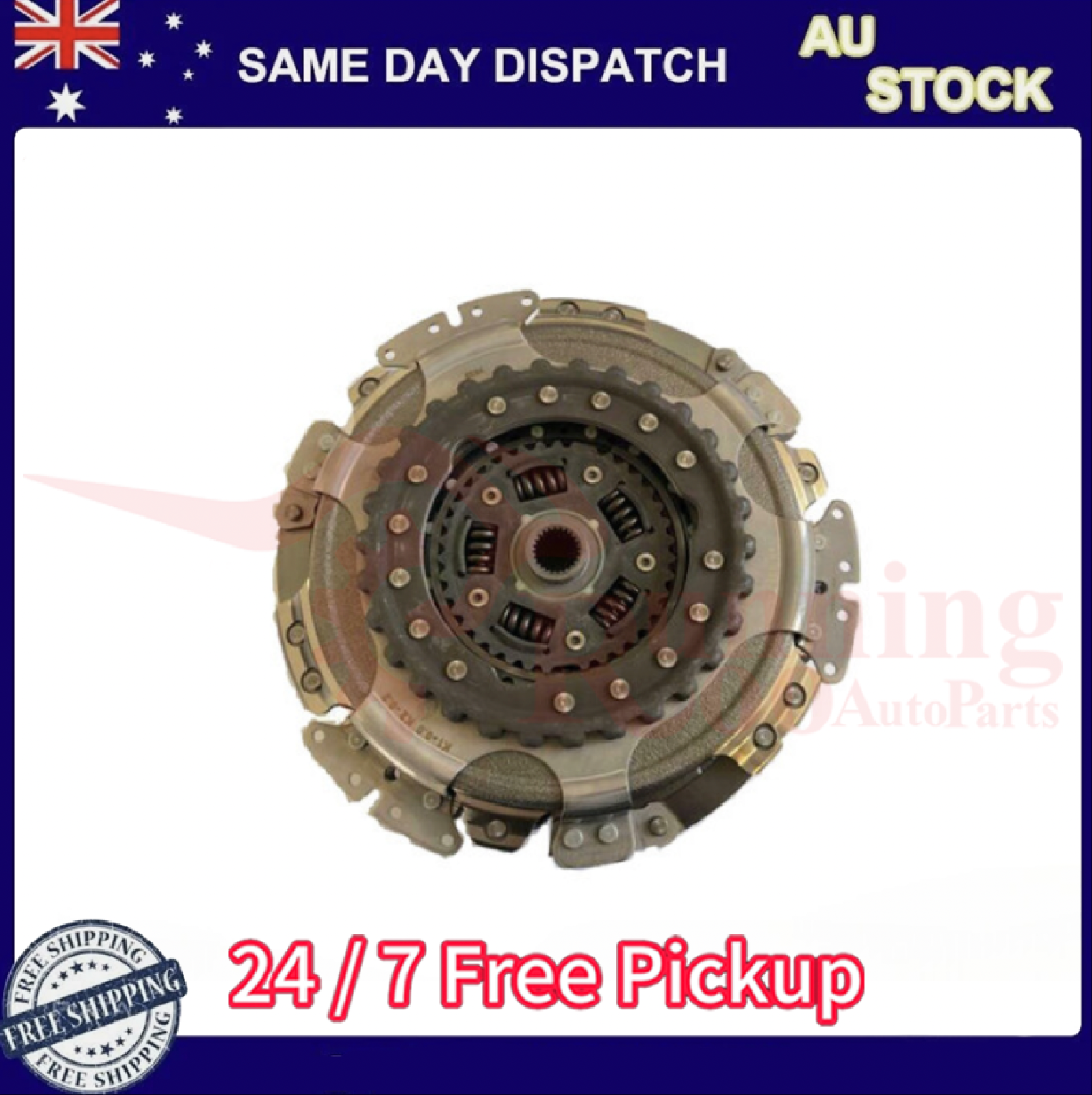
Watch what happens when a dry dual-clutch is damaged in the video below, then browse the complete range on our eBay store.
Watch: VW dry dual clutch — what happens if the clutch is damaged?
You can also browse the full range here: RunningRoo Auto Parts on eBay Australia.
Not sure whether your judder is clutch or mechatronic? Our Aussie team can help you narrow it down before you order.
RunningRoo Auto Parts – Based in Melbourne, Australia 🇦🇺
Free 24/7 Pickup Available (by appointment)
Any questions? Call us anytime: 0425 890 125
Why Choose RunningRoo? Aussie Owned & Operated | Fast Shipping | Friendly Support
Frequently asked questions
What causes DQ200 judder on take-off?
Most take-off judder is caused by a worn or glazed dry dual-clutch, but a mechatronic hydraulic fault can also cause it, so a proper diagnosis is essential.
How do I tell if my DQ200 judder is clutch or mechatronic?
A clutch fault usually judders mainly on take-off with few or no fault codes, while a mechatronic fault adds harsh or missed shifts and usually logs a code.
How much does a DQ200 clutch replacement cost?
In Australia a DQ200 clutch replacement is typically in the low-to-mid thousands depending on the workshop and whether adaptation is included.
How much does a DQ200 mechatronic repair cost?
A targeted mechatronic repair is usually around $450 to $1,200, while a full mechatronic replacement is generally several times that.
Can a DQ200 need both a clutch and a mechatronic?
Yes. On higher-kilometre cars both can wear, and the two jobs may need to be carried out together for a lasting result.
Do I need to re-adapt the gearbox after a clutch change?
Yes. Basic settings and clutch adaptation are essential after a clutch replacement so the control module learns the new engagement points.
Which cars use the DQ200 DSG?
The DQ200 is used across a range of Volkswagen, Skoda, Seat and Audi models, commonly with the 1.2 TSI, 1.4 TSI and 1.6 TDI engines.
Still unsure what is causing your judder? Call us anytime and we’ll help you get to the bottom of it.
RunningRoo Auto Parts – Based in Melbourne, Australia 🇦🇺
Free 24/7 Pickup Available (by appointment)
Any questions? Call us anytime: 0425 890 125
Why Choose RunningRoo? Aussie Owned & Operated | Fast Shipping | Friendly Support
References
Key data in this article is drawn from the following official manufacturer sources:
- Volkswagen Group — DQ200 7-speed dry-clutch DSG technical documentation (gearbox codes 0AM / 0CW), dual-clutch and mechatronic system description.
- Volkswagen Australia — DSG (DQ200) voluntary safety recall announcement, June 2013.
Fast service and delivery A+