
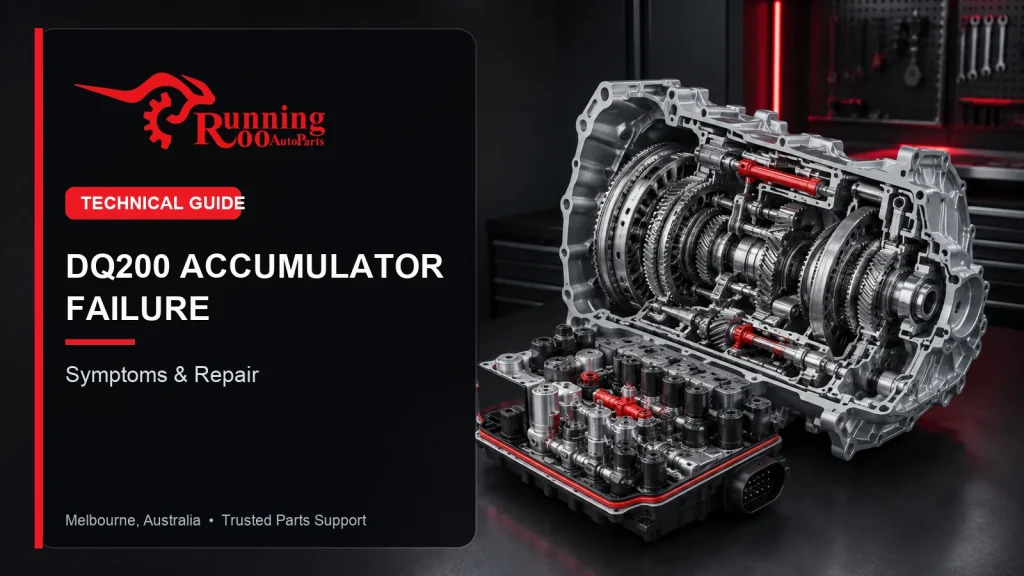
G’day everyone. I’m the Senior Product Manager here at RunningRoo Auto Parts, Australia’s trusted aftermarket automotive parts specialist. If your Volkswagen, Audi, Skoda or Seat with the seven-speed DQ200 DSG has started shifting erratically or losing drive, the pressure accumulator inside the mechatronic unit is one of the most common culprits. In this guide I’ll explain what the accumulator does, why it fails, how to recognise the symptoms and what your repair options cost in Australia.
The DQ200 mechatronic unit combines the electronic control module with the hydraulic valve body, and the accumulator is a small but critical part of that hydraulic system. When it fails, the whole gearbox can behave unpredictably, which is why so many DQ200 owners end up asking whether they need a full mechatronic replacement or just an accumulator repair.
All prices below are in Australian dollars and are indicative only. The right fix depends on your exact gearbox code and fault codes, so if you would rather confirm the diagnosis before reading further, our Melbourne team can help over the phone.
RunningRoo Auto Parts – Based in Melbourne, Australia 🇦🇺
Free 24/7 Pickup Available (by appointment)
Any questions? Call us anytime: 0425 890 125
Why Choose RunningRoo? Aussie Owned & Operated | Fast Shipping | Friendly Support
What is the DQ200 accumulator and what does it do
The accumulator is a hydraulic energy storage device built into the mechatronic unit. It stores pressurised transmission fluid so the valve body can apply the clutch actuators and move the gear selector forks instantly, even before the pump has built full pressure.
Think of it as a small pressure reservoir that smooths out the hydraulic pulses from the pump. Because the DQ200 uses a dry dual-clutch design with a hydraulically operated mechatronic, the accumulator plays a direct role in how quickly and smoothly the gearbox engages each gear.
When the accumulator housing cracks or the internal seal fails, the system can no longer hold pressure. The result is delayed engagement, harsh or missed shifts, and eventually a loss of drive because the clutches and forks cannot be moved with enough hydraulic force.
Common symptoms of accumulator failure
The most common early sign is a delayed or harsh engagement when selecting drive or reverse, particularly when the engine is cold. As the fault develops, the gearbox may also miss shifts, bang into gear, or drop into neutral on its own.
In many cases the dashboard will flash the PRNDS indicator or show a transmission warning, and a scan will log a hydraulic pressure or mechanical fault code in the mechatronic. The table below summarises the typical symptoms and what they point to.
It is worth noting that a hydraulic pressure fault code does not always mean the accumulator itself has failed. Wiring, connectors and the mechatronic pump can produce similar codes, so the fault should be confirmed before parts are ordered. A specialist who repairs these units regularly will be able to distinguish a genuine accumulator failure from a simpler electrical or fluid issue quickly.
| Symptom | What it usually means | Likely cause |
|---|---|---|
| Delayed drive/reverse engagement | Low hydraulic pressure | Accumulator leak |
| Harsh or missed shifts | Pressure instability | Accumulator / solenoid |
| Gearbox drops to neutral | Pressure loss | Accumulator housing crack |
| Flashing PRNDS / fault code | Mechatronic fault logged | Hydraulic fault |
Why the DQ200 accumulator fails
The accumulator sits inside the mechatronic housing and is exposed to constant hydraulic pressure and temperature cycling. Over time the housing can develop hairline cracks, or the internal diaphragm can degrade, allowing pressure to bleed away.
Heat is a major contributor. Cars that spend a lot of time in stop-start traffic or hot Australian summers place more stress on the hydraulic system, and the accumulator is often the first component to show the strain. Poor or old transmission fluid can accelerate the wear as well.
Because the accumulator is relatively inexpensive compared with the whole mechatronic, a careful diagnosis is worthwhile before committing to a full unit replacement. A specialist can confirm whether the fault is the accumulator, a solenoid or the control board itself.
Which DQ200 gearbox codes are affected
The DQ200 has been produced under several gearbox codes, with the 0AM and later 0CW being the two most common. Both use the same basic mechatronic layout, so the accumulator failure described here applies across the family, but the exact part number can differ between generations.
The affected vehicles span a wide range of Volkswagen Group models fitted with the lower-torque petrol and diesel engines. If you are unsure which gearbox code your car has, it can be read from the build information using your VIN, or by a specialist with the correct diagnostic tool.
Accumulator vs solenoid vs valve body: telling them apart
Because the accumulator, the solenoids and the valve body all live inside the same mechatronic housing, their symptoms can look very similar. A correct diagnosis relies on reading the stored fault codes and, in many cases, testing the hydraulic behaviour of the unit rather than guessing.
An accumulator fault usually shows up as a loss of hydraulic pressure across multiple gears, while a single solenoid fault often affects only one or two specific shifts. A valve body problem can look like either, which is why a pressure test and a careful code read make such a difference to the final repair bill.
The table below is a simple guide to how the three common failures tend to present, so you know what to ask your specialist to check.
| Component | Typical symptom pattern | Common repair |
|---|---|---|
| Accumulator | Widespread pressure loss | Replace housing / seals |
| Solenoid | One or two bad shifts | Replace solenoid |
| Valve body | Mixed mechanical faults | Repair or replace body |
Accumulator repair vs full mechatronic replacement
If the failure is confined to the accumulator housing, the mechatronic can often be repaired by replacing the accumulator and the associated seals. This is the most cost-effective fix and keeps your original, already-programmed control module in the car.
If the mechatronic has multiple faults, or the control board itself has failed, a replacement mechatronic is usually the more reliable option. The table below compares the two approaches so you can see where each one makes sense.
| Option | Best for | Indicative cost (AUD) |
|---|---|---|
| Accumulator repair | Single hydraulic fault | $350 – $800 |
| Aftermarket mechatronic | Board or multiple faults | around $1,200 |
| Workshop full replacement | Repeated or severe faults | $3,000 – $5,000 |
How much does an accumulator repair cost in Australia
The part cost for an accumulator housing is modest, but the labour to remove, open and reseal the mechatronic is where the cost adds up. A specialist accumulator repair in Australia typically falls in the range of $350 to $800 depending on the workshop and whether the mechatronic needs to be re-adapted.
By comparison, a full mechatronic replacement is usually several times that amount, so spending a little time on a correct diagnosis can save you a lot of money. The chart below shows a typical cost comparison.
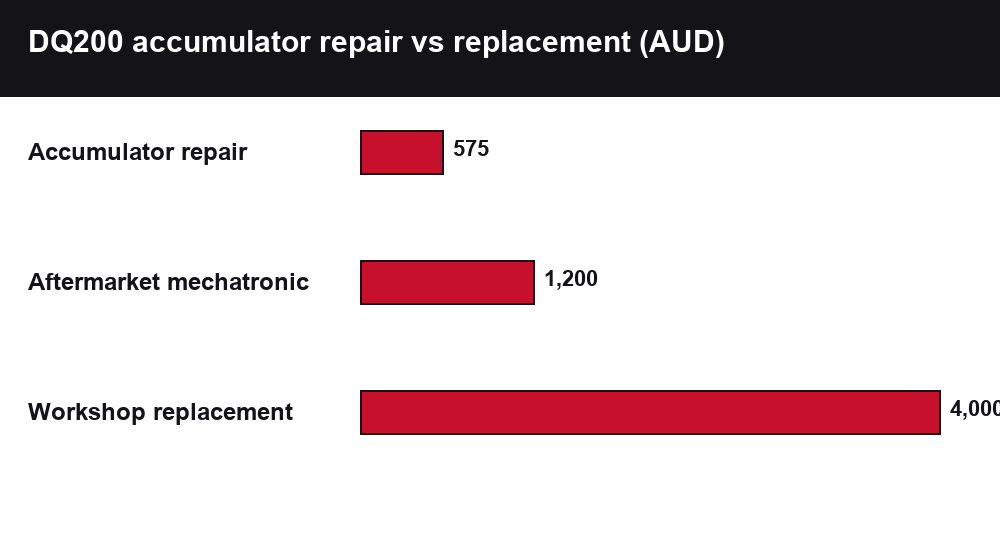
These figures are a guide. The only way to get an accurate price is to have the fault codes read and the mechatronic inspected by someone who repairs these units regularly.
Be wary of any quote that jumps straight to a full mechatronic replacement without first checking the accumulator and fault codes. A cheap, correctly diagnosed accumulator repair often restores normal shifting for a fraction of the cost of a complete unit.
How the accumulator is replaced
The repair involves removing the mechatronic unit from the gearbox, opening the housing and replacing the accumulator and its seals. The fluid is drained and refilled, and the unit is refitted and then re-adapted to the gearbox using diagnostic equipment.
Basic settings and clutch adaptation are an essential final step, because the control module needs to relearn the clutch engagement points and shift positions after the hydraulic system has been disturbed. Skipping this step can leave the gearbox shifting worse than before.
The whole job is normally completed within a day, and once the unit is resealed and re-adapted the gearbox should engage drive and reverse promptly and shift smoothly through every gear.
Because the DQ200 mechatronic is a precision hydraulic assembly, it is worth using a workshop or supplier who deals with these units specifically rather than a general mechanic. The correct sealing, fluid specification and adaptation procedure make the difference between a long-lasting repair and a unit that fails again within months.
Preventing DQ200 mechatronic failure
The single best way to protect the mechatronic is to keep the transmission fluid clean and within its service interval. The DQ200 has separate gear and mechatronic oil circuits, and both need to be serviced with the correct fluid specification.
Avoiding aggressive stop-start driving where possible and allowing the car to warm up gently in cold weather also reduces the hydraulic and thermal load on the accumulator and valve body. Early attention to any shifting change, rather than waiting for a warning light, will usually keep a small fault from becoming a large one.
If you notice a delayed engagement or a harsh shift, get the fault codes read promptly. Catching an accumulator issue early can mean the difference between a simple repair and a complete mechatronic replacement.
Where to buy DQ200 accumulator and mechatronic parts
RunningRoo Auto Parts stocks the DQ200 accumulator housing, complete mechatronic units and valve body components at a fraction of typical workshop pricing, with Melbourne pickup and Australia-wide delivery.
- Valve Body Accumulator Housing for DSG DQ200 0AM325066AC (Audi / Skoda)
- DQ200 Accumulator Housing for VW / Audi / Skoda 7-Speed DSG
- 0CW DQ200 7-Speed DSG Mechatronic (Valve Body & TCU)
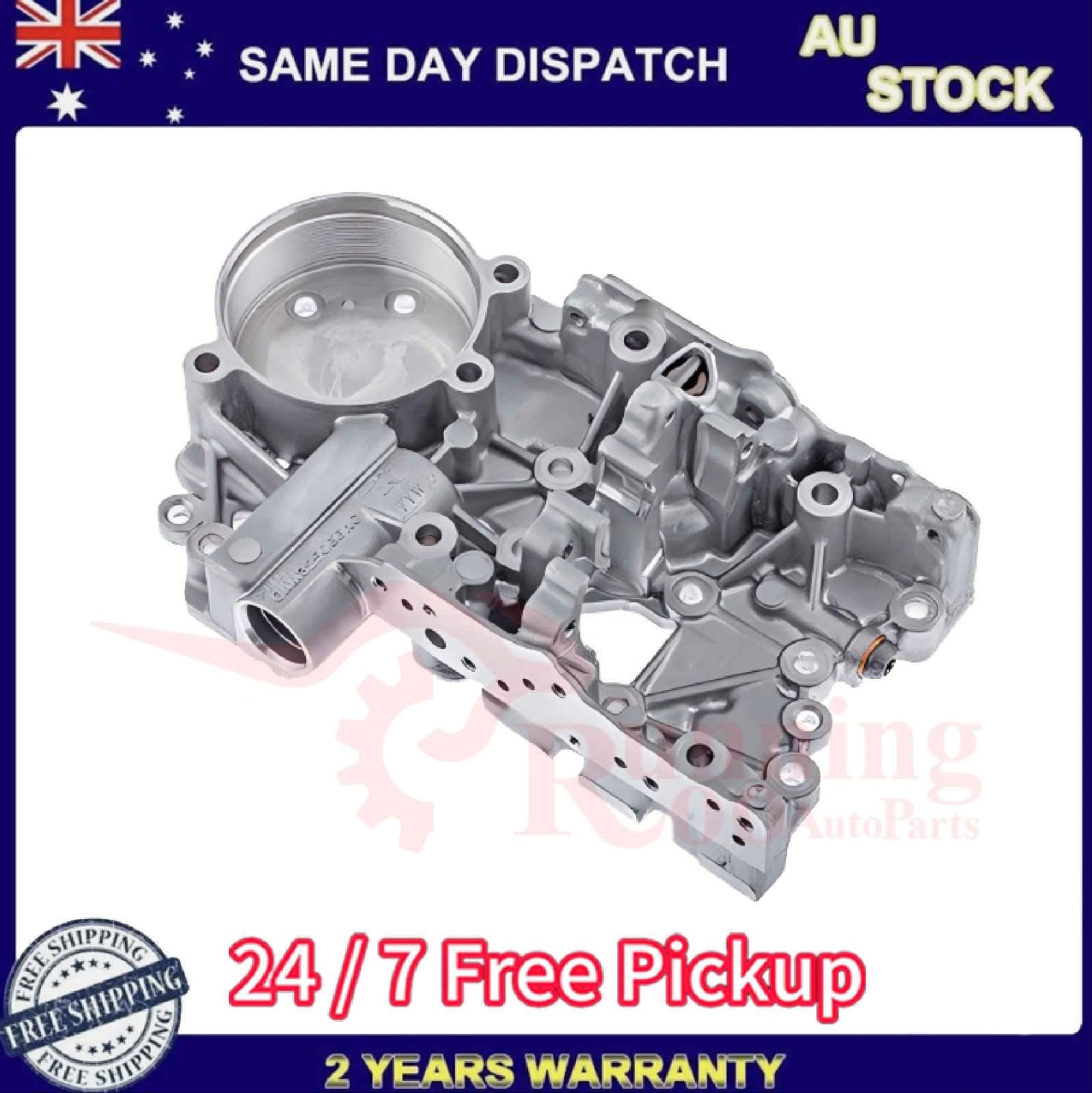
Watch the full DQ200 mechatronic assembly process below, then browse the complete range on our eBay store.
Watch: Complete DQ200 Mechatronic Unit Assembly Process
You can also browse the full range here: RunningRoo Auto Parts on eBay Australia.
Not sure whether your DQ200 needs an accumulator repair or a full mechatronic replacement? Our Aussie team can talk through the symptoms and confirm the right part against your gearbox code.
RunningRoo Auto Parts – Based in Melbourne, Australia 🇦🇺
Free 24/7 Pickup Available (by appointment)
Any questions? Call us anytime: 0425 890 125
Why Choose RunningRoo? Aussie Owned & Operated | Fast Shipping | Friendly Support
Frequently asked questions
What does the DQ200 accumulator do?
It stores pressurised transmission fluid inside the mechatronic so the valve body can move the clutches and selector forks quickly and smoothly, especially during low-speed engagement.
What are the symptoms of a failing DQ200 accumulator?
Delayed or harsh drive and reverse engagement, missed or banging shifts, the gearbox dropping to neutral, and a flashing PRNDS indicator are the main symptoms.
Can I repair just the accumulator on a DQ200?
Yes. If the fault is confined to the accumulator housing or seals, the mechatronic can often be repaired without replacing the whole unit, which is significantly cheaper.
How much does a DQ200 accumulator repair cost?
In Australia a specialist accumulator repair is typically around $350 to $800, depending on the workshop and the extent of the work.
Do I need to replace the whole mechatronic?
Not always. A full mechatronic is usually only needed if the accumulator fault is accompanied by other failures or the control board itself has failed.
Which cars use the DQ200 DSG?
The DQ200 is used across a range of Volkswagen, Skoda, Seat and Audi models, commonly with the 1.2 TSI, 1.4 TSI and 1.6 TDI engines.
Do I need to re-adapt the gearbox after an accumulator repair?
Yes. Basic settings and clutch adaptation should be carried out after the mechatronic is refitted so the control module can relearn the correct shift and engagement points.
Still unsure about the right fix for your DQ200? Call us anytime and we’ll help you narrow it down.
RunningRoo Auto Parts – Based in Melbourne, Australia 🇦🇺
Free 24/7 Pickup Available (by appointment)
Any questions? Call us anytime: 0425 890 125
Why Choose RunningRoo? Aussie Owned & Operated | Fast Shipping | Friendly Support
References
Key data in this article is drawn from the following official manufacturer sources:
- Volkswagen Group — DQ200 7-speed dry-clutch DSG technical documentation (gearbox codes 0AM / 0CW), mechatronic and hydraulic system description.
- Volkswagen Australia — DSG (DQ200) voluntary safety recall announcement, June 2013.